

More news on this day
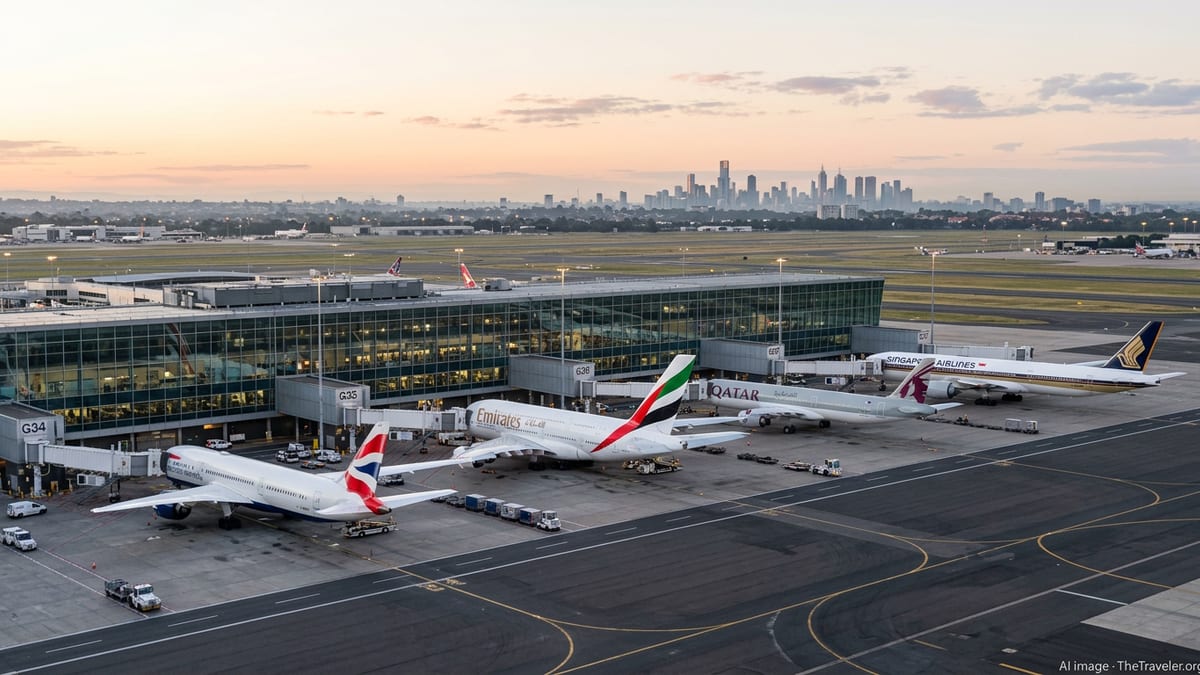
Fresh capacity and long-haul network growth from British Airways, Emirates, Qatar Airways and Singapore Airlines are converging on Melbourne, positioning Victoria’s capital for a sharp upswing in international tourism and a pivotal year for Australia’s hotels, restaurants and visitor economy.
Get the latest news straight to your inbox!
Middle Eastern and Asian Hubs Tighten Links to Victoria
Melbourne’s global air links are rapidly deepening as major carriers rebuild and expand services connecting the city to key long-haul hubs in Europe, the Middle East and Southeast Asia. Publicly available information shows that Qatar Airways has reinstated its daily Doha–Melbourne–Canberra service, restoring a key one-stop link from Victoria to Europe, the Middle East and Africa via Hamad International Airport. Industry coverage indicates that this sits alongside new Melbourne–Doha flights operated by partner Virgin Australia, lifting overall capacity between Australia and Qatar.
Singapore Airlines has also placed Melbourne at the center of its post-pandemic rebuild. According to published schedules, the airline has increased services between Singapore and Melbourne to as many as five flights per day during peak periods, returning to or surpassing pre-2020 levels. This reinforces Changi Airport’s role as a major Southeast Asian hub for Victorian travelers heading to Asia, Europe and North America, and brings more inbound passengers into Melbourne from a wide range of global origin markets.
Emirates, which uses Dubai as a primary gateway for Europe, the United Kingdom and the Middle East, continues to emphasize Australia in its long-haul strategy. Corporate filings and fleet updates highlight new Airbus A350 deliveries and retrofitted widebody aircraft being deployed across Australian routes, with Melbourne among the core east coast destinations. This capacity, layered onto an already dense Dubai–Melbourne schedule and extensive onward connections, boosts the city’s attractiveness for long-haul leisure and business itineraries.
While British Airways’ direct Australia network remains centered on Sydney, travel industry analysis notes that Melbourne is increasingly benefiting from one-stop British Airways itineraries via Asian and Middle Eastern partners. The combination of code-shares and alliance connectivity is quietly shifting more United Kingdom and European traffic through Melbourne, especially as pent-up demand for Australia continues to normalize into sustained year-round travel.
International Seat Growth Points to Tourism Surge
The strengthening role of British Airways, Emirates, Qatar Airways and Singapore Airlines in Melbourne’s long-haul mix comes against a backdrop of strong national recovery. Data cited in recent Australian aviation and tourism reports shows international passenger movements nationwide approaching or exceeding pre-pandemic levels, with load factors above 80 percent on many trunk routes. Melbourne Airport has reported record or near-record international throughput during peak holiday periods, supported by additional widebody aircraft and new frequencies.
Industry commentary suggests that capacity gains from Middle Eastern and Asian carriers are particularly significant for Victoria’s visitor economy because they concentrate on high-yield markets such as Europe, India, Southeast Asia and the Gulf states. These regions historically deliver longer stays and higher per-trip spending, especially among visiting friends and relatives, premium leisure travelers and international students returning to Melbourne’s universities.
Tourism analysts note that as more seats come online, airlines and destination marketers are increasingly able to pivot from simple recovery to growth strategies. Competitive fares on routes operated by Emirates and Qatar Airways through their global hubs, combined with Singapore Airlines’ dense Asian network and British Airways’ brand recognition in Europe and the United Kingdom, are expected to stimulate additional demand rather than merely redistribute existing passengers among carriers.
Forward-looking forecasts published by aviation and hospitality consultancies indicate that Victoria could see sustained annual growth in international arrivals over the next several years, with Melbourne positioned as both a gateway to regional destinations and a standalone city-break. This is likely to widen the geographic base of visitors, diversify source markets and reduce reliance on a narrow set of countries.
Hotels, Dining and Events Prepare for Higher Occupancy
The hospitality sector in and around Melbourne is already responding to the uplift in air connectivity from British Airways’ partner networks, Emirates, Qatar Airways and Singapore Airlines. Local media and industry reports point to strong hotel occupancy in the central business district, Southbank and Docklands, particularly during major events such as the Australian Open, Formula 1 Grand Prix and international conferences at the Melbourne Convention and Exhibition Centre.
With additional long-haul seats feeding into the city, operators are preparing for a busier pipeline of leisure and corporate guests across the year, not just during marquee events. New and refurbished international-branded hotels have been entering the market or upgrading product, while boutique properties are leaning into experiential offerings that appeal to long-stay and premium travelers arriving on full-service carriers. Revenue managers are watching airline booking curves closely, as expanded capacity from these global airlines tends to translate into earlier and more predictable accommodation demand.
Melbourne’s renowned dining scene, from laneway cafes to high-end restaurants, is also expected to benefit. Hospitality associations highlight that visitors arriving on full-service international carriers typically allocate significant spend to food, beverage and cultural activities. Increased arrivals routed through hubs such as Singapore, Doha and Dubai may broaden culinary expectations and encourage operators to showcase both local produce and globally inspired menus.
Event organizers, meanwhile, are factoring stronger air access into bids for international conferences and exhibitions. Enhanced connectivity from Europe, the Middle East and Asia improves Melbourne’s competitive position against other Asia-Pacific cities when hosting large-scale business events, which in turn drives mid-week hotel occupancy and high-value corporate travel.
Airport and City Infrastructure Undergo Expansion
The acceleration of services by carriers such as Emirates, Qatar Airways and Singapore Airlines is aligned with broader infrastructure investment in and around Melbourne Airport. Recent coverage of aviation projects details multi-billion-dollar terminal and airfield upgrades designed to increase capacity, improve passenger flows and accommodate the next generation of long-haul aircraft that these airlines are progressively introducing to their fleets.
These developments are significant for the tourism and hospitality industry because they enable higher peak throughput while maintaining service standards for international visitors. Expanded check-in areas, modernized security and passport control facilities, and upgraded retail and lounge spaces support the premium positioning of airlines like British Airways, Emirates and Singapore Airlines, which market Melbourne as a comfortable and efficient gateway.
Beyond the airport precinct, ongoing investment in airport rail links, road corridors and inner-city public transport improvements aims to shorten transfer times from arrivals halls to key hotel districts. Urban planners and tourism bodies argue that this end-to-end journey experience, from boarding long-haul flights in Europe or Asia to checking into a hotel in central Melbourne, is increasingly important in destination choice, particularly for repeat visitors and conference delegates.
The coordinated growth of airside and landside infrastructure also creates opportunities for new commercial developments, including airport hotels, business parks and logistics facilities that capitalize on expanded cargo capacity. This further intertwines Melbourne’s aviation growth with its broader economic development.
Opportunities and Risks for Australia’s Visitor Economy
While increasing capacity from British Airways, Emirates, Qatar Airways and Singapore Airlines is broadly positive for Melbourne’s tourism outlook, industry observers also point to a set of risks and dependencies. Reliance on a small number of global hubs for long-haul connectivity can expose Victoria’s visitor economy to shifts in bilateral air service agreements, competitive dynamics among Gulf and Asian carriers and changes in global travel patterns.
There is also the challenge of ensuring that regional and rural Victoria benefit from the surge in international arrivals. Tourism strategists emphasize the importance of seamless domestic connections from Melbourne to destinations such as the Great Ocean Road, Yarra Valley, Mornington Peninsula and the High Country. Partnerships between international airlines and domestic carriers, along with integrated marketing campaigns, are likely to play a key role in dispersing visitors beyond the city.
Environmental considerations remain an additional factor. As Emirates, Qatar Airways and Singapore Airlines continue to invest in more efficient aircraft like the Airbus A350 and updated Boeing 777 variants, aviation emissions per seat are expected to improve. However, tourism and hospitality stakeholders are increasingly focused on balancing growth with sustainability initiatives, including carbon-offset programs, green hotel certifications and support for public transport and low-impact experiences.
Even with these caveats, the consensus across aviation and tourism analysis is that Melbourne stands on the verge of a significant upswing in international tourism. With major global carriers reinforcing their presence and infrastructure upgrades underway, Australia’s hospitality industry is preparing for a period of robust, network-driven growth anchored in Victoria’s capital.