

More news on this day
From blizzards in North America to power and communications failures in Europe and the Middle East, a wave of disruptions in early 2026 is exposing how vulnerable global aviation networks remain to cascading shocks.
Get the latest news straight to your inbox!
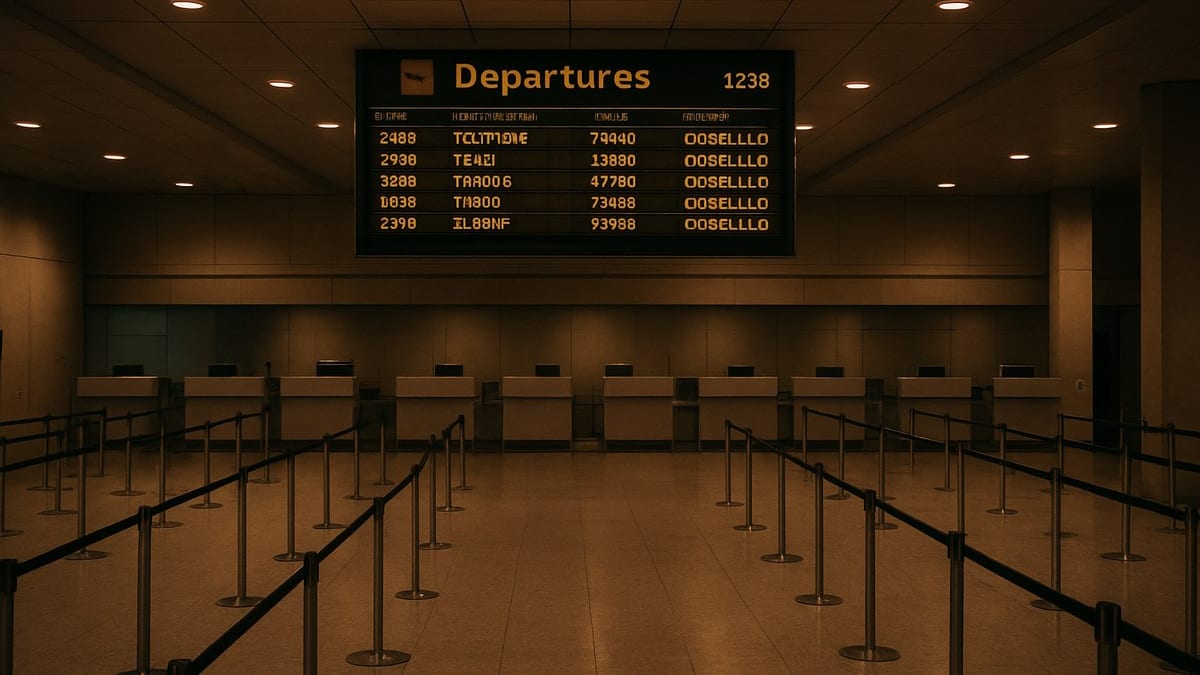
Storms and Congested Skies Push Operations to the Brink
Severe winter weather has been a major early driver of disruption in 2026, particularly across North America. A late January winter storm system brought heavy snow, high winds and freezing rain to large parts of the United States and Canada, prompting airlines to preemptively cancel thousands of flights and triggering spillover delays that lasted days in some hub airports. Publicly available operational data showed cancellation volumes approaching levels not seen since the immediate pandemic era, underscoring how weather can still overwhelm even improved planning tools.
European aviation has faced parallel challenges. Meteorological agencies reported a series of strong Atlantic systems, including Storm Goretti in early January, which disrupted traffic flows into major hubs and constrained available airspace. Air traffic flow management programs limited capacity to maintain safety margins, but the resulting queues contributed to missed connections, aircraft being out of position, and crew-duty limit problems that continued well after the worst of the weather passed.
These events highlight how modern aviation networks operate with little slack. Hub-and-spoke models, high aircraft utilization and finely tuned crew schedules create efficiency under normal conditions but amplify the impact of any shock. When multiple regions are hit by storms in quick succession, airlines have fewer spare aircraft and crews to redeploy, and even minor local disruptions can propagate rapidly across continents.
Industry analyses suggest that many carriers still rely heavily on historical weather patterns and static contingency plans. As climate variability increases the frequency and intensity of extreme events, the gap between planning assumptions and operational reality is widening, leaving networks repeatedly exposed to the same types of weather-driven bottlenecks.
IT Outages Reveal Single Points of Failure
Beyond weather, recent technology failures have underscored how dependent aviation has become on a small number of shared IT platforms and vendors. In early 2025, a defective software update linked to a cybersecurity provider caused a global IT outage that rippled through airline reservation, crew-tracking and airport operations systems, disrupting thousands of flights worldwide. Follow‑up analyses in 2026 continue to frame the incident as a warning about systemic risks created by concentrated digital infrastructure.
This year has brought fresh reminders. In January, Microsoft 365 and related cloud services experienced a major outage that affected email and collaboration tools used by airlines, airports and ground handlers. While the disruption did not directly shut down flight-critical systems, reports indicate that routine coordination tasks, passenger communications and disruption-recovery workflows slowed substantially, compounding delays during already challenging winter operations.
Airlines have also faced their own platform-specific failures. Publicly available information shows that several carriers have had to halt departures temporarily after internal system outages affecting check-in, dispatch or maintenance-release tools. A recent short-lived systems issue at JetBlue in March, for example, prompted a brief nationwide ground stop in the United States while the airline reset critical applications, illustrating how even a contained outage at a single carrier can create wider congestion as shared airports and air traffic managers adjust.
Specialist risk assessments published in recent months argue that aviation digitalization has outpaced resilience planning. Complex webs of application programming interfaces, shared data centers and third-party software mean that a single flawed update or configuration change can jump organizational boundaries. The industry discussion is increasingly shifting from individual-company redundancy to sector‑wide questions about how many independent technology stacks truly exist, and what happens when several of them fail at once.
Infrastructure Strains and Power Failures Undermine Confidence
Critical physical infrastructure has also emerged as a weak link. In January, a radio communications failure in Greece led authorities to temporarily close the country’s airspace while contingency procedures were enacted. Reports from the incident described interference across primary and backup channels, raising concerns about aging equipment and the sufficiency of redundancy in a region that anchors key east–west and north–south traffic flows.
Elsewhere in Europe, power grid vulnerabilities have drawn attention following a major outage in Berlin after an arson attack on a cable bridge in early January. While commercial aviation was not the primary target, the prolonged loss of electricity for tens of thousands of customers highlighted how quickly a local infrastructure incident can threaten airport operations, air navigation facilities and urban transport links that passengers rely on to reach flights.
In the Gulf, airspace congestion and rerouting pressures have intensified as conflicts and security concerns reshape flight corridors. Brief closures and restrictions around key hubs in early March forced airlines to divert long-haul services, lengthen flight times and adjust schedules at short notice. Industry updates point to knock-on congestion at alternative hubs and growing strain on ground infrastructure designed for more predictable traffic patterns.
These episodes are prompting renewed debate about how far aviation resilience depends on assets beyond the sector’s direct control. Airports and air navigation service providers can invest in backup generators, hardened communication lines and redundant control centers, but they remain deeply intertwined with national power grids, telecommunications networks and urban infrastructure that may be vulnerable to both cyber and physical threats.
Capacity Crunch and Fleet Constraints Limit Flexibility
Underlying many of the disruptions in 2026 is a persistent capacity crunch. Aircraft manufacturers, and Boeing in particular, have spent the past two years working through safety investigations, production caps and certification delays that have slowed deliveries of new narrow-body jets. Publicly available financial and regulatory filings indicate that Boeing’s 737 MAX family still faces a sizeable order backlog, and that some variants remain on extended certification timelines.
For airlines, the result is a narrower margin for error. Many carriers entered 2026 with fleets already heavily utilized to meet robust demand. When storms or system failures force large-scale cancellations, there are fewer spare aircraft available to recover schedules quickly. Leasing markets have tightened as airlines seek interim lift to cover delayed deliveries, with some operators turning to short-term wet leases that provide aircraft and crew but at higher cost and with limited scheduling flexibility.
Regulators and safety bodies have, at the same time, introduced or tightened crew duty rules and fatigue-management requirements. A high-profile scheduling crisis at IndiGo in 2025, triggered by the introduction of more restrictive pilot duty limits in India, is still cited in 2026 analyses as a case study in how regulatory changes can collide with already stretched networks. When large blocks of flights are disrupted, rebuilding rosters within stricter legal and safety boundaries can take days rather than hours.
These capacity and regulatory pressures mean that small operational shocks now more often tip into multi-day disruption. Passengers experience this as rolling waves of delays, aircraft swaps and missed connections, but the root causes frequently trace back to long-term fleet planning and structural constraints in the supply chain.
Toward More Resilient Global Aviation Networks
As the disruptions of early 2026 accumulate, industry voices are calling for a broader rethink of resilience in aviation. Traditional approaches have focused on individual organizations building their own backups, whether in the form of spare aircraft, redundant data centers or alternative routings. The pattern of recent events suggests that this siloed view may be inadequate for a system in which so many critical functions, from flight planning software to satellite communications, are shared across borders and competitors.
Analysts argue that more attention needs to be paid to common-mode failures, such as widely used software updates, shared air traffic systems and critical infrastructure nodes whose disruption can simultaneously affect multiple airlines and regions. Proposals range from coordinated industry stress tests that simulate multi-region outages, to clearer minimum resilience standards for IT providers serving aviation, to investment in more diverse routings and backup navigation capabilities that reduce dependence on a small number of corridors and technologies.
For travelers, the short-term impact is a continued environment of uncertainty. Reports from consumer groups and travel insurers in 2026 point to rising claims, higher premiums and growing pressure on airlines to improve transparency around disruption management, including clearer rebooking rules and faster refund processing. At the same time, a growing number of corporate travel policies are baking in additional buffers and flexibility to account for the heightened risk of missed connections and extended delays.
How the sector responds over the remainder of 2026 will shape perceptions of reliability long after this year’s storms and outages have faded. If airlines, airports, manufacturers and regulators treat the recent turbulence as an inflection point rather than a series of isolated incidents, the current disruptions may yet catalyze a more robust and adaptable global aviation network in the years ahead.