

More news on this day
A growing tangle of time zones, daylight saving rules and glitchy digital clocks is turning routine journeys into logistical puzzles, with travellers increasingly reporting missed flights, lost hotel nights and disrupted tours because the clock they trusted was wrong.
Get the latest news straight to your inbox!
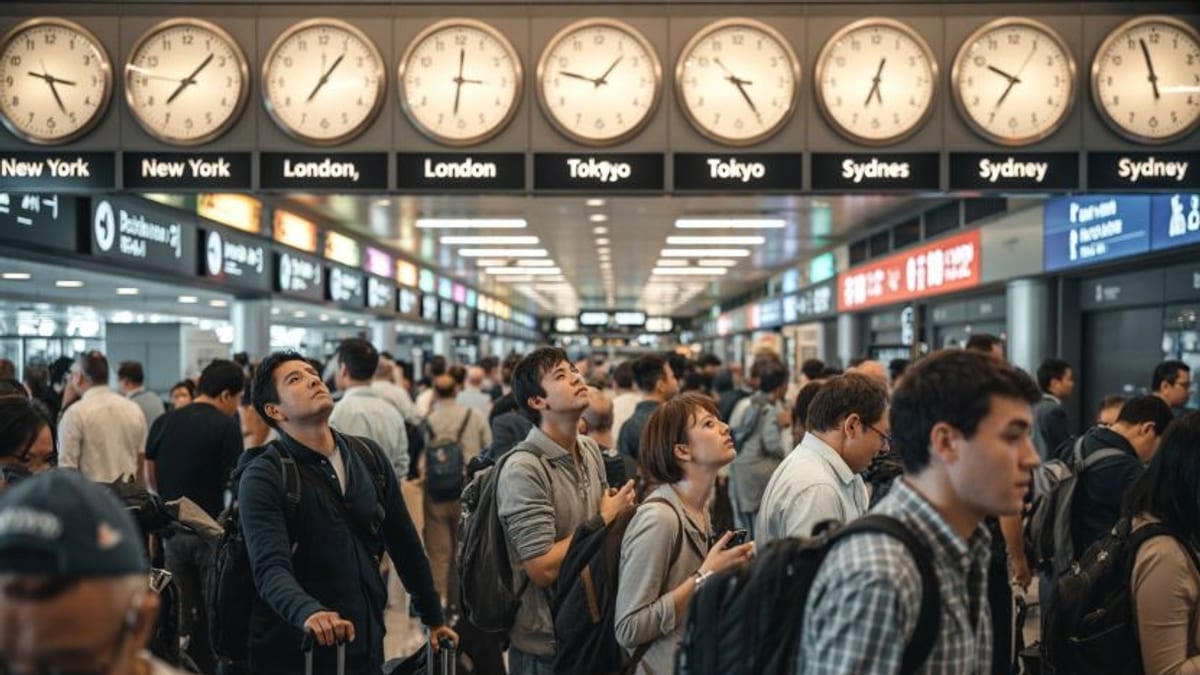
Image by Latest International / Global Travel News, Breaking World Travel News
Time Rules Are Changing Faster Than Many Travellers Realise
The modern travel industry depends on precise timing, yet the rules that govern local time remain in flux. Governments around the world continue to debate daylight saving arrangements, adjust legal time zones or, in some cases, suspend clock changes entirely. Each shift ripples through airline timetables, rail schedules and hotel check in systems.
Publicly available information shows that Russia, for example, scrapped seasonal clock changes in 2014 and now keeps permanent standard time, while much of Europe still moves clocks twice a year and is debating what should replace this system in the long term. In the United States, repeated attempts to move to permanent daylight saving or permanent standard time highlight how unsettled the political landscape remains around something as basic as what the clock should show.
The complexity increases in countries that make temporary or religiously motivated adjustments. Morocco operates on UTC+1 for most of the year, but suspends daylight saving time during Ramadan by reverting to UTC, then shifting back once the holy month ends. Airlines and travel platforms typically update schedules in advance, but travellers who rely on static information screens or outdated devices risk using a time offset that no longer applies when they travel.
These frequent legal and policy changes mean that a flight itinerary booked months ahead may be governed by a different time regime by the time departure day arrives. Official databases and reservation systems are designed to cope, yet the closer a trip gets to the changeover date, the more exposed travellers are to small discrepancies between what different systems think “local time” should be.
When Clocks Disagree, Itineraries Start To Unravel
Reports from consumer forums and travel discussion boards indicate that misunderstandings about time zones and daylight saving now rank alongside weather and strikes as a leading cause of self inflicted disruption. Travellers describe arriving at airports an hour late because their phone adjusted to local time while a printed boarding pass still reflected the previous offset, or waking for an early departure only to find that a malfunctioning alarm app had not recognised the seasonal change.
The risk is particularly high for overnight and long haul journeys that cross multiple time zones or coincide with the days when clocks move forward or back. In Europe and North America, these changes typically occur in the early hours of Sunday mornings, exactly when many red eye flights and overnight trains operate. If a schedule lists a departure at 02:30 on the night clocks fall back, that time may occur twice, and not every app makes clear whether it refers to the first or second instance of that clock reading.
Travel industry briefings note that airline schedules are built around local civil time at each airport. In practice, this means a flight that always leaves a city at 10:00 local time will still show 10:00 after a daylight saving change, even though the absolute time difference to other cities may have shifted by an hour. Travellers who plan same day connections across borders using rough mental calculations like “the next city is two hours ahead” can be caught out when that assumption is no longer true on the day they travel.
As digital planners, ride hailing services and hotel apps each apply their own interpretation of time zone data, a single mistake can cascade. A misaligned calendar entry might cause a traveller to arrive late for check in, which in turn triggers cancellation policies or missed transfers. With global air traffic rebounding and airport operations under pressure, there is less slack in the system to accommodate passengers who show up on the wrong side of a time change.
Hidden Vulnerabilities In Phones, Apps And Car Systems
Most people now assume that their phones, laptops and smartwatches will handle time zones automatically. In many cases they do, but recent user reports highlight subtle bugs that emerge when devices cross borders or when software updates coincide with seasonal clock shifts. Some travellers describe calendar events sliding by an hour, alarms firing too early or too late, or travel apps showing different departure times from airline emails for the same flight.
The underlying challenge is technical. Many apps store times using fixed offsets, while others rely on central time zone databases that must be updated promptly when laws change. If a device has not downloaded the latest data, or if an app interprets the information inconsistently, it may display a local time that is out of step with airports and transport operators using more current sources.
Vehicle systems introduce another layer of potential confusion. Drivers heading to or from airports increasingly rely on built in navigation units or connected dashboards to estimate arrival times. Reports from motorists who live near time zone borders, or who frequently cross them on road trips, describe clocks that repeatedly reset to the wrong zone, or estimate arrival times using one time offset while the driver’s phone uses another.
For travellers, the result is a patchwork of clocks that all appear authoritative yet quietly disagree. A boarding pass might show one time, a mobile calendar another, and a rental car dashboard something else again. Unless they check carefully against the airport’s own schedule shortly before departure, passengers may not notice the discrepancy until it is too late to recover.
Why Airlines And Booking Sites Struggle To Keep Up
Airlines and global distribution systems have long relied on centralised time zone and daylight saving databases to build schedules months in advance. Industry papers from organisations such as the International Air Transport Association describe an intricate process in which airports, slot coordinators and carriers must agree timetables that remain valid across seasonal changes and regulatory adjustments.
The sheer scale of modern aviation magnifies the impact of even minor timing errors. A one hour shift in a country’s official time can affect thousands of flights, forcing recoding of departure and arrival times, minimum connection buffers and crew duty windows. If any segment of that chain updates late, an itinerary displayed to a traveller on a third party booking site may temporarily differ from the one stored in the airline’s own system.
Booking platforms that aggregate fares from multiple carriers face particular challenges when governments announce time changes on short notice. Their systems must reconcile data from airlines headquartered in different regions, each following its own update cycle. In some documented cases, this has produced itineraries where connecting flights appear to leave before the previous flight arrives, or where journey times briefly show as implausibly short or long until the next data refresh.
Travel insurance providers and consumer advocates warn that misunderstandings about time definitions can also affect claims. Policies often rely on local departure and arrival times, but travellers may document their case using screenshots or calendar entries captured in a different zone. When those records do not match carrier logs, it can be more difficult to prove that a delay or missed connection occurred as described.
What Travellers Can Do Before Their Next Trip
Despite the complexity of global timekeeping, individuals can reduce their exposure to clock related problems with a few targeted checks. Travel experts consistently recommend verifying the local time of both departure and arrival cities within 24 hours of travel, using official airport or airline schedules rather than relying solely on third party apps or screenshots taken earlier.
It is also advisable to confirm whether a country will be changing clocks in the days around a trip, particularly in late March, early April and late October or early November, when many northern hemisphere locations adjust for daylight saving. Countries that suspend or modify daylight saving during religious observances or for energy policy reasons merit extra attention, as their offsets may not align with neighbouring states even if they usually do.
On the technical side, travellers are encouraged to keep devices updated and to check automatic time zone settings before long journeys. Setting critical alarms using more than one device, and cross checking appointment times after a clock change, can provide an extra layer of protection. Where possible, saving key bookings in local time with clear city labels rather than relying on generic descriptions like “home time” or “trip time” can help avoid misinterpretation later.
As debates about daylight saving and permanent time regimes continue in legislatures, the landscape of global timekeeping is likely to remain unsettled. For now, the safest approach for travellers is to treat time as a variable, not a constant, and to verify it with the same care they devote to passports, visas and tickets.