

More news on this day
Brazilian carrier GOL Linhas Aéreas is preparing to cross the Atlantic for the first time, unveiling plans for nonstop flights from Rio de Janeiro to Paris and Lisbon as it pivots from a purely regional model to long-haul international operations.
Get the latest news straight to your inbox!
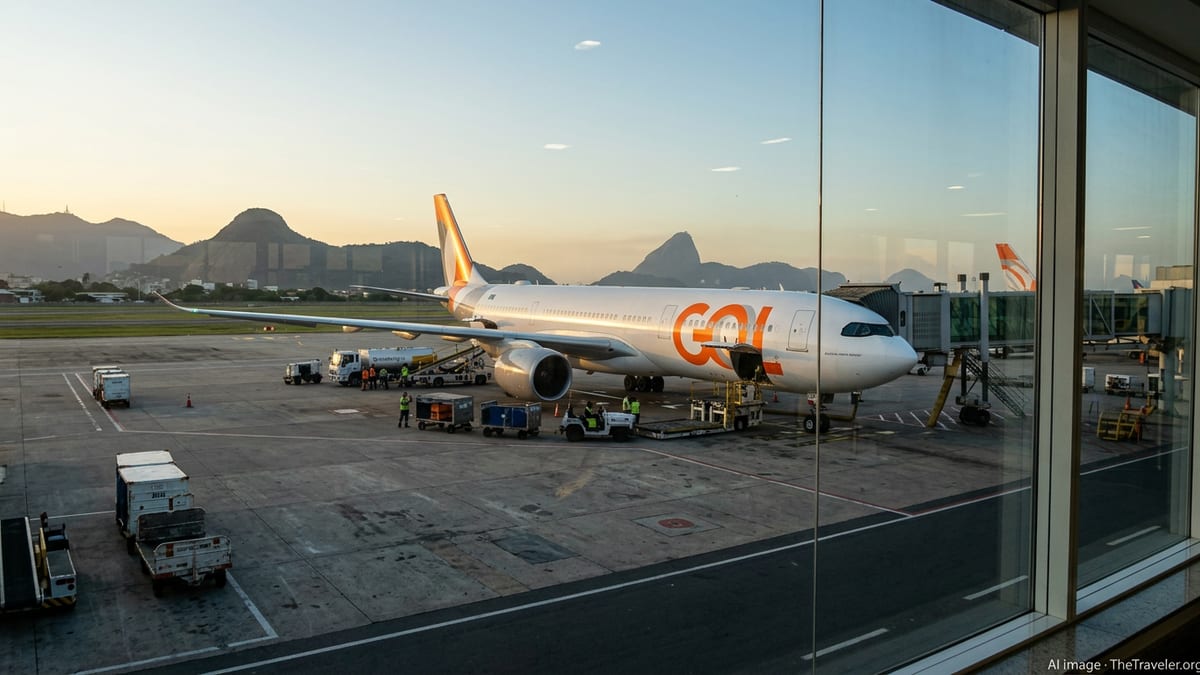
Low-Cost Pioneer Sets Sights on Long-Haul Europe
Known for transforming Brazil’s domestic market with a low-cost model built around Boeing 737s, GOL is now positioning itself for a new chapter: direct services between Rio de Janeiro and two of Europe’s most important gateways, Paris Charles de Gaulle and Lisbon. The move marks the airline’s first foray into scheduled European routes and a significant expansion of its international footprint.
The new transatlantic services are planned from Rio de Janeiro–Galeão, a hub authorities and local tourism stakeholders have long sought to reposition as the country’s main international gateway. For GOL, anchoring its first European routes in Rio underscores a strategy that blends inbound tourism potential with strong local demand for travel to France and Portugal.
While GOL has historically relied on partners such as Air France-KLM and other alliance members to connect Brazilian passengers to Europe via codeshare, the introduction of its own metal on these routes signals a gradual shift from feeder role to full long-haul player. The airline is betting that nonstop flights, paired with a cost-conscious product, will resonate with both Brazilian leisure travelers and Europe-based diaspora communities.
The European move comes as GOL works through a broader financial and operational restructuring, seeking new revenue streams and more diversified geography. Long-haul services from Rio to Paris and Lisbon are set to serve as flagship routes for that international relaunch, complementing existing regional operations across South America.
Wide-Body A330neo Fleet to Underpin Atlantic Services
To support its new European ambitions, GOL is adding Airbus A330neo aircraft to a fleet traditionally composed exclusively of narrow-body jets. The airline has confirmed plans for multiple A330neo units configured for approximately 300 passengers, tailored for high-density, long-haul markets between Brazil, Europe and North America.
The A330neo, which offers improved fuel efficiency and range compared with older wide-body types, is expected to operate the Rio to Paris and Rio to Lisbon services with a layout combining a full-service long-haul experience and the airline’s characteristic focus on cost efficiency. This will likely include a two-cabin configuration, with a premium cabin targeting higher-yield corporate and connecting traffic and a larger economy section aimed at leisure travelers and visiting friends and relatives.
For GOL, the shift into wide-body flying represents a structural change in how the airline competes. Long limited to medium-haul operations within South America and select nearby international destinations, the carrier will now manage aircraft scheduling, maintenance and crew planning for intercontinental sectors exceeding 10 hours of flight time.
Industry analysts note that the choice of a modern, fuel-efficient wide-body platform could help offset some of the inherent cost disadvantages of entering established transatlantic markets. Lower unit costs will be critical as GOL competes not just with European and Brazilian network carriers, but also with other lower-cost challengers on price-sensitive routes linking Brazil to Europe.
Strategic Hubs: Paris and Lisbon as Gateways for Brazil
Paris Charles de Gaulle and Lisbon have been selected not only for their strong point-to-point demand with Brazil, but also for their roles as onward hubs into wider Europe and beyond. From Paris, passengers can connect across continental Europe, North Africa and parts of the Middle East via partner networks, while Lisbon provides efficient links into Iberia, secondary European cities and Portuguese-speaking Africa.
For Rio de Janeiro, direct connectivity to both hubs is expected to strengthen the city’s profile as a gateway for inbound tourism, benefitting hotel, cruise and events sectors. Travel trade representatives in Brazil have long argued that improved nonstop links to Europe are critical to attracting higher-spend visitors and securing more year-round demand rather than seasonal peaks.
The choice of Lisbon is also deeply connected to historic and cultural ties between Brazil and Portugal, as well as strong family and business links. Demand on Brazil–Portugal routes has traditionally been resilient, supported by dual citizens, students and corporate travelers in sectors such as energy, technology and services. GOL is aiming to tap into this base by offering additional capacity and alternative schedules compared with incumbent carriers.
Paris, in turn, is one of the most sought-after destinations for Brazilian tourists, with strong demand for leisure, shopping and cultural travel. By operating its own flights, GOL can capture higher-margin segments of that traffic, particularly when bundled with domestic connections from across its Brazilian network into Rio.
Competitive Landscape and Partnership Dynamics
GOL’s planned European routes come amid a shifting competitive landscape on the Brazil–Europe corridor. Legacy European carriers and Brazil’s full-service airlines have long dominated nonstop links from São Paulo and Rio to major hubs including Lisbon, Paris, London and Rome, offering extensive premium cabins and global connectivity.
As a traditionally low-cost operator, GOL is likely to differentiate primarily on price and schedule, targeting value-conscious travelers who may have previously relied on connecting itineraries or indirect routings. At the same time, the airline’s move into Europe interacts with its existing partnerships, particularly with network carriers that already serve Brazil with their own long-haul capacity.
Industry observers will be watching how GOL balances cooperation and competition as it rolls out its own European flights. Codeshare agreements and interline deals can still provide valuable feed on both ends of the route, especially for secondary European cities not served nonstop from Rio, but overlapping services may require renegotiation of commercial terms and joint marketing strategies.
The expansion also comes as Brazil’s aviation market navigates currency volatility, fluctuating fuel costs and evolving regulatory frameworks. Successful execution of the Rio to Paris and Lisbon services will depend not only on demand, but also on GOL’s ability to manage these macroeconomic variables while maintaining its cost base and service standards.
What Travelers Can Expect on the New Routes
For passengers, GOL’s entry into the transatlantic market from Rio is expected to bring more choice in flight times, fares and onboard experience. The introduction of the A330neo fleet opens the door for features such as modern in-flight entertainment, improved cabin air quality and quieter interiors compared with older long-haul aircraft commonly used in the past on Brazil–Europe services.
Travelers can anticipate a product that blends elements of full-service and low-cost models, with a basic fare structure likely complemented by optional extras such as seat selection, additional baggage, priority services and upgraded meal options. The airline is expected to leverage its digital platforms to streamline booking, check-in and ancillary purchases, consistent with its approach in the domestic market.
For international visitors heading to Brazil, nonstop services to Rio from Paris and Lisbon should simplify itineraries and reduce total travel time, especially for those connecting from other European cities. Onward domestic links within Brazil via GOL’s network will extend the reach of the new routes to key destinations including São Paulo, Brasília, Belo Horizonte and major leisure hotspots.
With launch dates, schedules and introductory fares still to be fully detailed, the coming months will be critical as GOL finalizes operational plans and secures the remaining regulatory approvals. If successful, the Rio to Paris and Lisbon routes could serve as templates for further expansion to other European and North American cities, cementing GOL’s transition from regional low-cost operator to a more globally connected airline.