

More news on this day
Brazilian carrier GOL Linhas Aéreas is preparing to reshape transatlantic travel from Rio de Janeiro, outlining plans for nonstop services to Paris and Lisbon that will introduce a new standard of business-class comfort while turning Galeão International Airport into a key long-haul gateway between Brazil and Europe.
Get the latest news straight to your inbox!
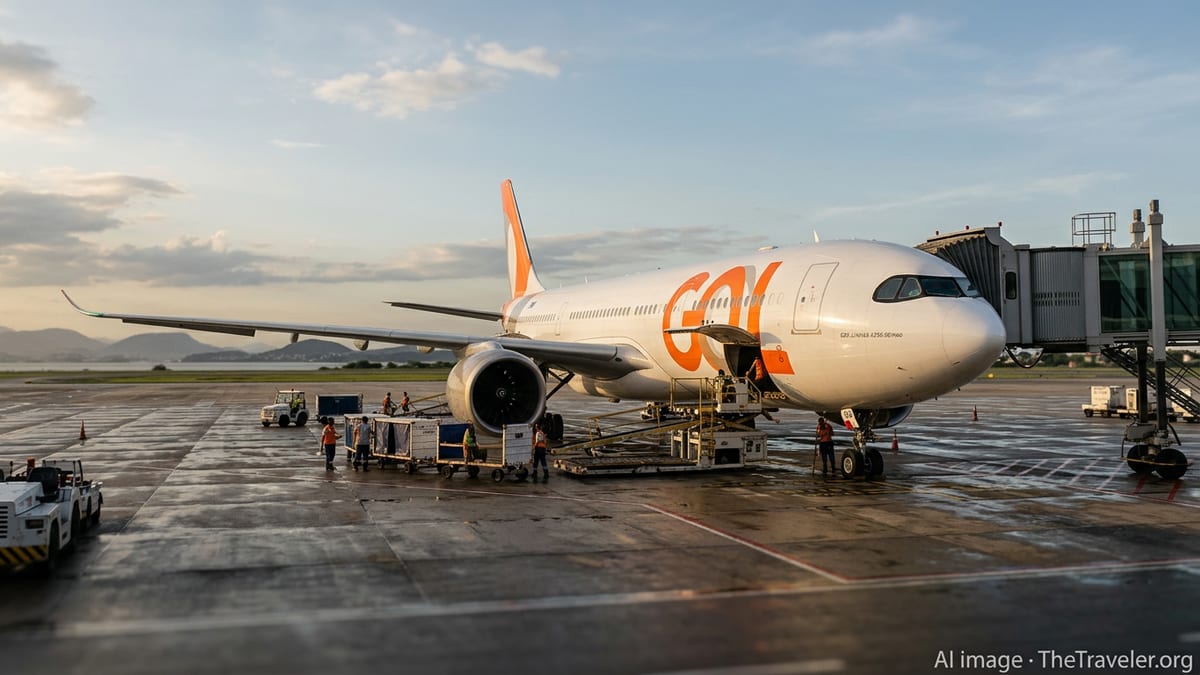
Nonstop Links From Rio to Paris and Lisbon Take Shape
Publicly available information indicates that GOL intends to add direct flights from Rio de Janeiro/Galeão to Paris and Lisbon as part of a wider long-haul expansion scheduled to ramp up from late 2026. Coverage in international travel media notes that the new European routes are expected to follow the airline’s recently announced nonstop connection between Rio and New York, underlining a strategic shift from a predominantly domestic and regional operator toward a more global network.
Industry reports suggest that Paris will be served via Orly, one of the French capital’s two main international airports, while Lisbon will provide a western European gateway with strong onward connectivity into the continent. Both routes would offer travelers in Brazil’s Southeast a nonstop option that bypasses the traditional hub of São Paulo and reduces the need for connections through third countries.
Market observers point to rising demand for Brazil–Europe travel, particularly for leisure and visiting friends and relatives, as a key driver behind the move. Tourism data published by Brazilian authorities highlight Europe as one of the most resilient long-haul source regions for inbound visitors, and airlines have been steadily rebuilding and expanding capacity on transatlantic routes since the pandemic.
Galeão Set to Become GOL’s Long-Haul Showcase
According to recent fleet and network announcements, GOL plans to establish a dedicated long-haul hub at Rio de Janeiro/Galeão, supported by the introduction of up to five Airbus A330-900neo aircraft over 2026 and 2027. The shift is notable for a carrier long associated with an all-Boeing 737 fleet and short- to medium-haul point-to-point flying.
Analysts say concentrating long-haul growth in Rio gives GOL an opportunity to differentiate itself within Brazil’s aviation landscape. Galeão has historically had spare terminal and runway capacity compared with São Paulo’s airports, and local tourism officials have been working to attract more international services to support Rio’s role as a global destination for leisure, events, and business travel.
By anchoring its new widebody operation at Galeão, GOL is also positioned to connect a broad domestic network into the transatlantic flights. The airline already serves dozens of Brazilian cities from Rio, and schedule data indicate that connections from key markets such as São Paulo, Brasília, Belo Horizonte, and major northeastern capitals could be timed to feed the planned Paris and Lisbon departures.
Business-Class Excellence at the Heart of the Strategy
GOL has begun to emphasize a new premium experience as a central pillar of its long-haul plans. The airline’s recently unveiled INSIGNIA by GOL concept, highlighted in its own marketing materials, points toward a more upscale business-class product than travelers traditionally associate with a low-cost carrier. Industry commentary surrounding the arrival of the A330-900neo fleet notes expectations of fully lie-flat seats, direct aisle access in at least part of the cabin, and enhanced privacy compared with legacy narrow-body offerings.
While detailed cabin layouts have not yet been widely published, observers anticipate a competitive business-class configuration designed to appeal to corporate travelers and high-yield leisure passengers choosing between GOL and established European and Brazilian carriers. Reports also reference upgraded soft-product elements such as improved dining, curated beverage selections, and expanded entertainment options aligned with long-haul customer expectations.
On the ground, GOL already operates a branded premium lounge at Galeão, which is likely to play a more prominent role as long-haul operations grow. For travelers departing Rio for Paris or Lisbon, this infrastructure is expected to provide a consistent premium journey from check-in through boarding, an important factor as the airline courts frequent flyers accustomed to full-service rivals.
Competitive Dynamics on the Brazil–Europe Corridor
The launch of nonstop GOL flights from Rio to Paris and Lisbon would introduce new competition on two of Brazil’s busiest transatlantic city pairs. Other carriers already operate direct services from Rio to major European hubs, and schedule filings tracked by aviation analysts show a steady recovery and, in some cases, expansion of capacity on routes linking Brazil with France, Portugal, Spain, and other European markets.
Lisbon is a particularly contested market, functioning as a connecting hub for travelers heading from Brazil to secondary European cities. GOL’s entry with widebody aircraft is likely to target both point-to-point demand between Rio and Portugal and passengers continuing to other destinations via partner airlines or interline agreements. Similarly, Paris offers a strong mix of inbound tourism to Brazil and outbound European visitors drawn to Rio’s beaches and cultural attractions.
Industry observers note that the combination of a modern, fuel-efficient fleet and an upgraded business-class product could give GOL cost and branding advantages as it competes against established players. The A330-900neo’s lower per-seat operating costs relative to older widebodies may enable the airline to balance attractive fares with the investment required for a high-quality premium cabin.
Implications for Travelers and Brazil’s Aviation Market
For travelers, the prospective nonstop routes from Rio to Paris and Lisbon mean more choice and potentially shorter total journey times, particularly for those based in or connecting via Southeast Brazil. The ability to fly directly from Rio rather than routing through São Paulo or another hub is expected to appeal to both leisure and business passengers, especially those combining a stay in the city with trips elsewhere in the country.
Travel planners point out that additional long-haul capacity from Galeão may also help smooth seasonal peaks that have historically put pressure on fares and seat availability during holidays and major events. If GOL follows through with its broader long-haul roadmap, which includes planned services to North America and other European capitals, Rio could see a more diversified mix of carriers and destinations than in recent years.
From a market perspective, GOL’s pivot toward long-haul operations marks a significant evolution in Brazil’s airline sector. The move signals renewed confidence in international demand following the airline’s restructuring and reflects a broader trend of Latin American carriers reentering or expanding in the transatlantic arena. As aircraft deliveries progress and schedules are firmed up, the Rio–Paris and Rio–Lisbon routes are likely to become bellwethers for how successfully GOL can translate its domestic brand strength into sustained long-haul success.