

More news on this day
On Gran Canaria’s sun-drenched south coast, Playa del Inglés is experiencing a split personality, shifting from sleepy winter refuge to high-intensity carnival hotspot as festival calendars expand.
Get the latest news straight to your inbox!
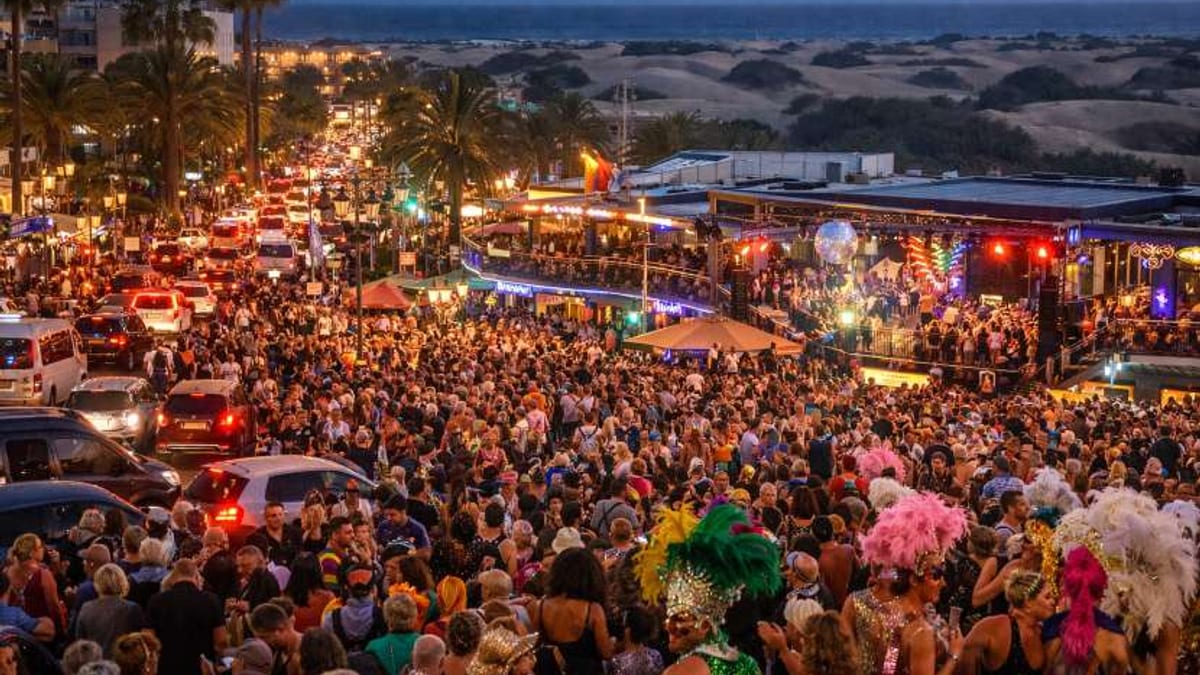
Image by Travel And Tour World
From Low-Key Resort to Festival Magnet
Playa del Inglés was long known as a straightforward beach resort, built in the 1960s to capture northern Europe’s appetite for winter sun. For decades, visitors came mainly for its broad sands, mild Atlantic climate and easy access to the Maspalomas dunes, with nightlife largely confined to hotel bars and a handful of terraces.
Over time, the resort’s profile changed as package tourism matured and cheap flights multiplied. Playa del Inglés grew into one of the largest holiday complexes in the Canary Islands, with sprawling apartment blocks, shopping centers and entertainment venues stretching inland from the beach. Travel guides note that the old “18–30” party image has softened, but the infrastructure that once catered to club-focused visitors now underpins a busy year-round events scene.
In recent years, that evolution has accelerated. Carnival schedules across Gran Canaria have been lengthening, and Maspalomas, the municipality that includes Playa del Inglés, increasingly uses its best-known beach as a stage for parades, open-air concerts and tourism festivals. The result is a resort that can feel like two destinations in one, depending on the week a traveler arrives.
Carnival Weeks Turn the Promenade into a Parade Route
Carnival has a long history in the Canary Islands, but Playa del Inglés has taken on a more central role in Maspalomas festivities. Official programs for recent editions show major events such as choreographic festivals, beachfront performances and parades running between Playa de Maspalomas and Playa del Inglés, with an annex of the beach used as an open arena for concerts and shows.
For 2025, tourism promotion materials highlight a dense schedule during Maspalomas Carnival, with key dates in late March and early April, including a flagship parade planned to roll along avenues that link the resort’s hotels to the waterfront. Provisional timetables for 2026 already reference Playa del Inglés as the end point of the sardine burial procession, underlining how firmly the resort has been written into the carnival route.
Beyond the traditional carnival period, Playa del Inglés also hosts large-scale events built around World Tourism Day and other international celebrations. In 2025, the Maspalomas Tourifest is set to transform the annex of the beach into a free, open festival over multiple days, with organizers predicting thousands of attendees on the sand and seafront. For residents and long-stay winter visitors, these concentrated bursts of activity are a sharp contrast to the quieter weeks that bookend the big dates.
LGBTQ+ Festivals Amplify the Party Season
Playa del Inglés is closely associated with LGBTQ+ tourism, anchored by the Yumbo Centrum, a multi-level shopping complex that doubles as a nightlife hub after dark. Public information from local tourism boards and resort operators describes the Yumbo as one of Europe’s main focal points for gay nightlife, with drag cabaret, clubs and late-night bars drawing international visitors.
Large LGBTQ+ events have further altered the rhythm of the resort. Annual celebrations such as Maspalomas Pride in May and Winter Pride in November are typically centered on the Yumbo and nearby areas of Playa del Inglés, attracting thousands of travelers for parades, open-air stages and themed parties. Additional festivals, including fetish-focused weeks and music-led gatherings, now punctuate the shoulder seasons.
This calendar effectively adds multiple mini-carnivals to the year. Travel operators and destination guides increasingly market Playa del Inglés as a place where visitors can combine beach time with festival experiences, especially during cooler months in mainland Europe. While many guests welcome the energy and inclusivity, others arriving in search of a “peaceful getaway” can find themselves in the middle of street parties that last into the early hours.
Balancing Nightlife, Noise and Resident Concerns
The growth in carnival-style events and nightlife has raised questions about how much festivity a compact resort can absorb. Reports from local media in 2024 detail how authorities in the wider Maspalomas area have tightened controls on late-night noise from clubs and bars after complaints from residents and hotel guests. Although those specific cases centered on neighboring zones such as Meloneras, they illustrate regional efforts to rein in sound levels in popular tourism districts.
In Playa del Inglés itself, online travel forums and destination guides describe a mixed atmosphere. Some visitors praise the resort for offering both quiet daytime relaxation and lively evenings, noting that many streets remain relatively calm while nightlife concentrates in commercial centers like Yumbo, Kasbah and Aguila Roja. Others describe certain weeks, especially during carnival and pride events, as “all-out party mode,” with crowded promenades and amplified music audible well beyond the immediate bar areas.
Resident perspectives, shared in local commentary and social media discussions, often focus less on individual parties and more on cumulative pressure from mass tourism. Concerns range from light and noise pollution to the strain on services and the transformation of once-sleepy coastal spaces into year-round entertainment corridors. The debate mirrors wider conversations across European seaside destinations grappling with overtourism and festival-driven visitor spikes.
What Travelers Can Expect in 2025 and 2026
With carnival, pride festivals and new tourism-themed events already penciled into the calendar, Playa del Inglés is unlikely to revert to its earlier image as a purely peaceful escape. Prospective visitors are being encouraged by travel advisors and online communities to pay close attention to event dates when planning trips, particularly if they have strong preferences either for lively nightlife or for quieter stays.
Those seeking a subdued ambience are often pointed toward weeks outside the main festival periods, when the resort leans back into its traditional role as a winter-sun base for beachgoers and retirees. At these times, reports suggest that noise is largely contained to familiar nightlife pockets, leaving much of the accommodation stock in relatively tranquil surroundings.
Travelers who do want to experience Playa del Inglés at full volume are more likely to target carnival weeks, May pride celebrations, or the Winter Pride period in November, when Yumbo and the beachfront function as open stages late into the night. Many tourism businesses now tailor offers and programming around these peaks, from themed hotel packages to extended bar hours within local regulations.
As 2025 and 2026 approach, Playa del Inglés stands as a case study in how a mature resort can be reshaped by festivals. Its challenge will be to keep capitalizing on headline-making celebrations without losing the quieter side that first drew visitors to its long, wind-shaped shore.