

More news on this day
Grand Teton National Park in Wyoming is turning to a surprising new ally in its long-running effort to limit disruptions from Jackson Hole Airport: lifelike robotic sage grouse that dance, puff and call in an attempt to lure real birds away from the runway and back into safer, restored habitat.
Get the latest news straight to your inbox!
Airport Wildlife Risk Prompts Unusual Tech Experiment
Publicly available information shows that conservation concerns near Jackson Hole Airport have been building for years. The airport, located entirely within Grand Teton National Park, brings hundreds of thousands of visitors a year into one of the most celebrated landscapes in the American West. It also places heavy aircraft traffic in the middle of habitat used by greater sage grouse, a sensitive species whose numbers have dropped sharply across the region.
Reports indicate that between the early 1990s and 2010s at least several dozen sage grouse were struck and killed by planes near the airport, particularly during the summer months when hens and chicks are active in open areas around the airfield. For park managers and airport planners, that history turned the birds into both a conservation priority and an aviation safety concern.
In response, Grand Teton National Park and its partners have been working to reshape the landscape south of the runway into habitat that could draw grouse away from the flight path. Over roughly eight years, crews have restored around 100 acres of former pasture to native sagebrush and grasses, replacing vegetation that had been degraded by decades of cattle grazing. The new robotic decoys are the latest step in testing whether the birds can be enticed to use this safer, rebuilt terrain.
Recent coverage in regional outlets describes the current effort as part ecological experiment and part behavioral psychology trial, using motion, sound and visual cues to make the restored fields feel like an attractive place for sage grouse to gather and breed instead of lingering near jet traffic.
From Papier-Mâché Decoys To Dancing Robo-Grouse
The move toward mechanized birds did not appear overnight. Local news reporting traces an earlier phase of the project to 2025, when Grand Teton National Park introduced handcrafted papier-mâché sage grouse decoys in the same restored field south of the airport. Those decoys were produced with the help of community partners and local students and were stationed on the landscape as static figures to signal that the area was suitable lekking ground, the term for the communal breeding sites where grouse congregate each spring.
While those early models were simple, they established the basic idea that decoys could help shift grouse behavior away from the airport. Trail cameras were used to watch for any response from real birds. According to subsequent coverage, park staff and collaborators then began experimenting with more dynamic technology in an effort to better mimic the complex displays that grouse rely on during courtship.
By spring 2026, national and science outlets were describing a new generation of decoys in Grand Teton National Park. These models, built with input from Jackson Hole High School’s robotics team, incorporate mechanical components that allow them to move in ways designed to closely resemble live grouse. Their bodies are reportedly assembled from basic materials such as foam and fabric, but their tails, heads and chests can be animated.
Some of the robotic birds can swivel, bob and even puff out their chests, echoing the booming, strutting behaviors male sage grouse use to attract females on the lek. Speakers hidden in the field play recorded calls beginning before dawn, creating a soundscape that mirrors an active breeding ground and seeks to convince passing birds that a lively gathering is already underway.
How Robot Birds Aim To Reduce Airport Disruption
The unusual use of robotic wildlife near Jackson Hole Airport is ultimately rooted in a straightforward goal: reduce the chance that real birds are drawn to the runway environment. Published accounts highlight the risk that aircraft can collide with grouse moving through the open areas around the airfield, particularly in early morning and evening when both bird and flight activity can be high.
By placing decoys and speakers in the restored field south of the airport, project partners hope to create a kind of behavioral magnet that pulls sage grouse toward habitat that is both more ecologically suitable and physically separated from jet operations. Because sage grouse often return to the same leks year after year, conservation planners see an opportunity to nudge the birds into reestablishing a traditional breeding center in an area that has been rebuilt specifically with their needs in mind.
Reports from regional and national coverage describe the effort as part of a broader pattern of wildlife management at airports, where habitat modification and deterrents are commonly used to limit conflicts between animals and airplanes. In this case, however, the strategy relies less on scaring wildlife away and more on persuading them to move voluntarily, using cues that tap into natural breeding instincts.
If the robotic birds succeed in drawing grouse into the restored habitat, the project could reduce disruptions not only for flight operations but also for visitors, who might otherwise encounter wildlife management closures or restrictions near the runway during sensitive periods of the breeding season.
Grand Teton’s Role In A Wider Robotic Wildlife Trend
Coverage in national science and technology media places the Grand Teton project within a growing movement to use robotic decoys in wildlife conservation. Similar tools have been tested with seabirds, shorebirds and other species whose breeding behavior is strongly influenced by visual and auditory social cues. The underlying principle is that a small number of convincing decoys can kick-start natural colonization of a site that has been restored or newly protected.
In the case of greater sage grouse, the challenge is magnified by the species’ regional decline. Various research summaries report that populations across the American West have fallen dramatically over the past half century due to habitat loss, energy development, grazing impacts and human disturbance. In parts of Wyoming, counts at individual leks have dropped from dozens of males to only a handful in recent years.
Robotic decoys in Grand Teton National Park are therefore serving two roles at once: a local safety tool to reduce airport strikes and a test case for how low-cost robotics might assist with the broader recovery of a high-profile sagebrush species. If real grouse begin using the restored habitat in greater numbers, it could offer a model for other national parks and protected areas that are grappling with both shrinking bird populations and nearby human infrastructure.
Observers note that the project also reflects an evolving relationship between high technology and protected landscapes. While national parks have long restricted gadgets such as drones that can disturb wildlife, carefully designed and controlled devices like robo-grouse are being explored as potential allies in preserving the very ecosystems that draw visitors in the first place.
What Travelers Might See Near Jackson Hole Airport
For travelers flying into Jackson Hole Airport this spring, the presence of robotic sage grouse will likely remain subtle. Reports indicate that the decoys are stationed in a restored field south of the runway, away from main terminal areas, and are monitored remotely using trail cameras rather than by frequent on-site visits during sensitive courtship hours.
Visitors driving the park roads near the airport or joining early morning wildlife tours in the southern sagebrush flats may, at a distance, glimpse oddly motionless or slightly jerky birds displaying in the open. From afar the decoys are designed to look convincingly like real grouse, and from the perspective of a casual traveler the effect may simply register as part of the landscape’s normal spring activity.
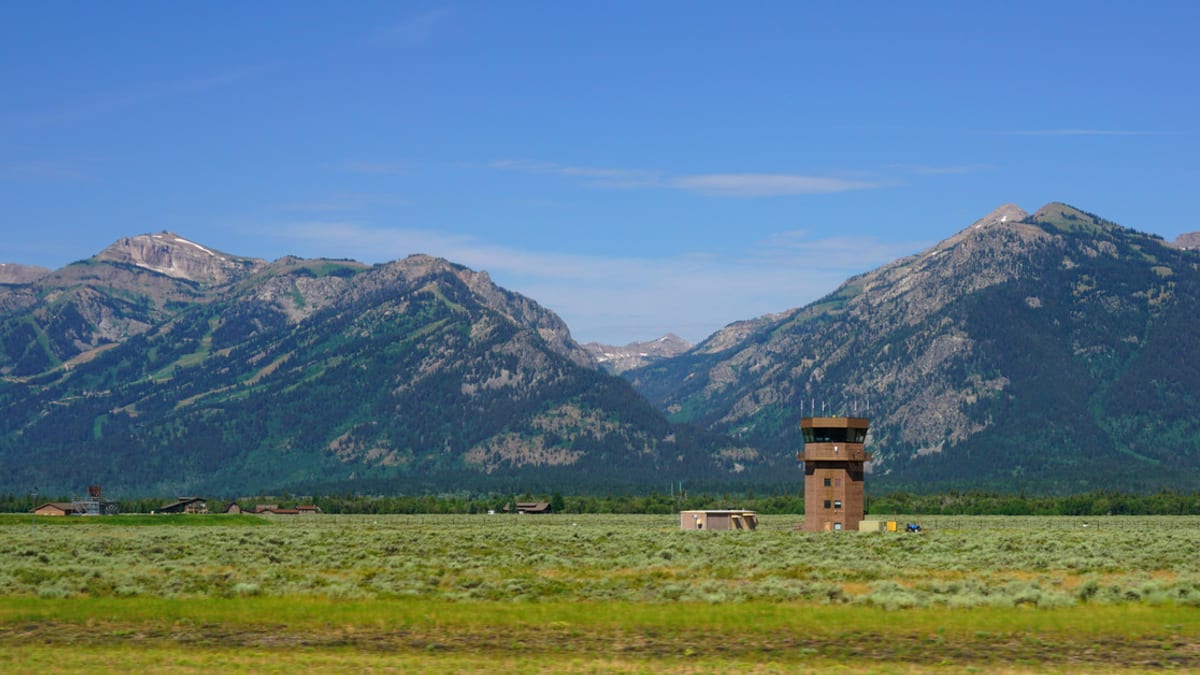
The experiment adds another layer to the already unusual experience of arriving in a commercial jet directly inside a national park, with the Teton Range rising behind the terminal and wildlife often visible from the runway. While the robotic birds are a small piece of a much larger conservation puzzle, they underscore how Grand Teton National Park is experimenting with creative tools to balance visitor access, airport operations and the needs of the native species that call the sagebrush flats home.
As monitoring continues through the breeding season, project partners will be watching camera footage and survey data to determine whether the robo-grouse have persuaded real birds to adopt the restored habitat. The outcome could influence how similar technology is deployed in other national parks where human infrastructure and fragile wildlife populations intersect.