

More news on this day
Greece is accelerating a broad digital transformation of its marinas and yachting services, moving to align with technology drives already underway in Italy, Turkey, Croatia and other key Mediterranean destinations as competition for high-spending nautical tourism intensifies.
Get the latest news straight to your inbox!
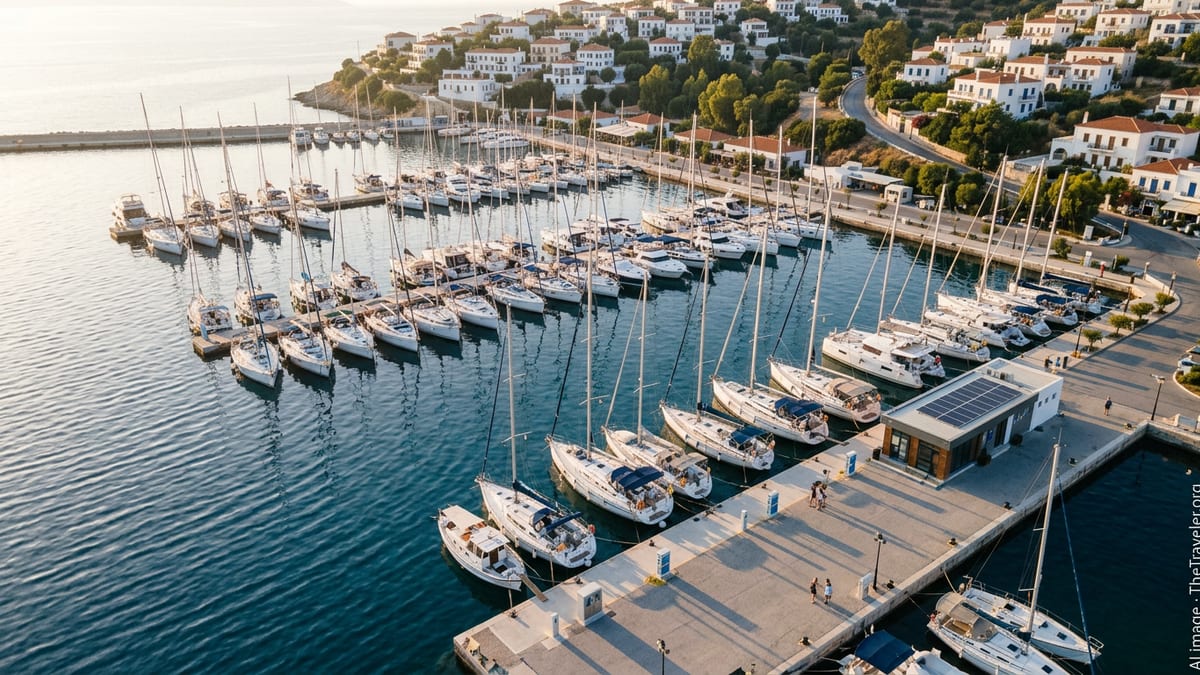
Greece Steps Up Digital Strategy Around Marinas and Yachting
Publicly available policy documents and trade coverage indicate that Greece has made digital transformation of tourism and maritime services a priority for the 2024 to 2026 period, with measures ranging from online permitting to integrated information systems for port and coastal operations. Budget plans describe new web platforms intended to cut paperwork for businesses, expand electronic payments and support data-driven oversight of tourism activity, including sea-based sectors such as yachting and marina concessions.
Specialist yachting publications report that 2025 is the first full season of Greece’s digital charter licensing platform, streamlining how commercial yachts are registered and cleared to operate in Greek waters. The system is designed to replace fragmented, paper-heavy procedures with a unified online process that can be accessed by operators and agents anywhere, reducing delays at the start of the charter season and offering authorities a clearer picture of fleet activity.
Industry events in Greece are also putting digital marina solutions at the center of their agendas. Sea tourism forums and yachting trade fairs scheduled for 2025 and 2026 highlight “smart marinas” and data-led services as growth priorities, reflecting expectations that yacht owners and charter guests will increasingly demand the same level of digital convenience in ports that they are used to in hotels and air travel.
The push comes as Greece records record visitor numbers and renewed interest in island-hopping holidays, putting pressure on long-established marinas as well as smaller regional ports that are now looking to modernize. Analysts suggest that without a step change in how berths are managed and sold, Greece risks losing business to neighboring countries that have invested earlier in digital marina networks.
Italy, Turkey and Croatia Showcase Smart Marina Pioneers
Across the Mediterranean, several countries have already moved further in rolling out digital platforms that link multiple marinas and automate the full customer journey from berth search to payment. Italy is frequently cited in trade coverage as an early adopter, with marinas such as Marina di Varazze near Genoa digitizing almost every step of the client relationship. Berth quotes, contract signatures, crew and vessel documentation, assistance requests and payments can now be handled through a dedicated app, giving operators real-time visibility of occupancy and service demand.
Turkey has been positioning itself as a smart-marina hub through local software providers and integrated marina groups. Marina management systems developed by Turkish firms are marketed with tools for online reservations, automated billing, energy and water metering, and detailed reporting dashboards aimed at larger marinas and mixed-use waterfronts. Operators in Turkey increasingly rely on cloud-based platforms that allow remote control of utilities at each berth and dynamic pricing of services based on usage patterns.
Croatia, which has built a strong reputation in charter yachting over the past two decades, has also leaned heavily into marina digitalization. While approaches vary by operator, common features include online slip maps, berth availability in real time, integrated guest databases and automated check-in and check-out processes. Regional booking portals enable yacht captains and charter companies to compare marinas, reserve berths and manage itineraries across multiple ports along the Adriatic coast through a single interface.
These developments have created a de facto benchmark for what international yacht owners and charterers expect when cruising in the Mediterranean. As Italy, Turkey and Croatia refine their systems with mobile apps, smart pedestals and advanced analytics, the technological baseline for marina competitiveness is steadily rising.
New Platforms, Data and Cloud Tools Reshape Marina Management
The current wave of marina digitalization is increasingly centered on cloud-based management software and Internet of Things technologies that link utilities, security and customer services into a single platform. Providers of smart marina solutions promote real-time monitoring of electricity and water consumption at each pedestal, digital payment options, automated billing and alert systems that flag anomalies or potential losses.
Some European marina chains are investing in their own digital ecosystems that span multiple countries, including Greece, Italy and France. These groups have launched mobile applications that enable berth bookings across their portfolios, provide live information about weather and local conditions, and offer loyalty-style benefits such as complimentary nights for annual contract holders. Reports indicate that these tools are designed to smooth operations for staff while encouraging yacht owners to move between affiliated marinas.
Alongside proprietary systems, a growing number of independent software platforms offer interactive dock maps, calendar-based reservation tools and self-service portals that can be configured by individual marinas without bespoke development. These platforms aim to reduce empty berths during high season by improving capacity planning and simplifying communication with clients. Some also integrate marketing functions, from automated messages to visiting boats to analytics on guest profiles and spending patterns.
Industry analysts note that the move to digital marina management is not only about efficiency but also about data. With accurate information on occupancy, seasonality, utility use and ancillary service sales, operators can make more informed investment decisions, while public authorities gain better insight into nautical tourism flows and environmental pressures on popular coasts and islands.
Tourism, Investment and Competitiveness in the Mediterranean Yachting Market
The Mediterranean remains the most important yachting basin in the world, and Greece is one of its anchor destinations alongside Italy, France, Turkey and Croatia. As nautical tourism rebounds and expands after recent global disruptions, the quality of marina infrastructure and digital services is becoming a key differentiator in attracting both private yacht owners and charter fleets.
Reports from trade bodies and chambers of commerce highlight that marinas and yachting contribute significantly to visitor spending, local employment and demand for services ranging from maintenance to hospitality. Countries that simplify yacht entry formalities, make berth reservations more predictable and reduce queuing and paperwork are increasingly regarded as more attractive by international operators planning their seasonal routes.
Investors are taking note. Recent coverage of marina development around the Mediterranean points to multimillion-euro projects in Greece, Italy and other coastal states that combine physical upgrades with digital layers such as online booking engines, integrated access control and energy-efficient smart infrastructure. In Greece, new concession tenders and private investments in marinas on islands such as Corfu are cited as examples of this twin focus on construction and connectivity.
As neighboring countries continue to refine their digital offerings, Greece’s effort to roll out modern platforms and harmonize procedures is seen as essential to maintaining and growing its share of the yachting market. The sector’s stakeholders are watching closely to see how swiftly new systems are implemented across the country’s diverse network of public and private marinas.
Next Phase: Toward a Seamless, Cross-Border Yachting Experience
Attention is gradually shifting from standalone marina upgrades to the possibility of more connected, cross-border digital ecosystems in the Mediterranean. Industry commentary suggests that yacht captains and charter brokers would benefit from standardized, interoperable platforms that could manage itineraries across multiple countries, handle documentation, fees and taxes, and offer transparent information on availability and pricing.
Greece’s latest digital initiatives around tourism administration, charter licensing and coastal concessions are emerging just as this broader conversation gathers pace. Observers indicate that if national systems are developed with openness and integration in mind, they could more easily connect with private booking platforms and regional marina networks, creating a more unified experience for users.
For now, most innovation remains driven by individual marina operators, technology companies and international groups that see competitive advantage in offering a smoother, data-rich service. However, the fact that Greece is moving into the same digital space as Italy, Turkey, Croatia and others signals that a critical mass of technologically capable marinas is forming around the Eastern and Central Mediterranean.
How quickly these efforts converge into a truly seamless digital journey for yachts remains uncertain, but the strategic intent is increasingly clear. With governments seeking higher-value tourism and the yachting industry prioritizing reliability and ease of access, comprehensive digital overhauls of marinas are likely to become a defining feature of Mediterranean competitiveness in the years ahead.