

Planning a first trip to Greece can feel overwhelming. With thousands of islands, legendary ruins and vivid blue seas competing for your time, it is hard to know where to start. This 7 day Greece itinerary is designed as a realistic, first timer friendly route that combines the essential highlights of Athens with a taste of Cycladic island life in Santorini, plus a flexible day to customize for your own travel style.
How This 7 Day Greece Itinerary Works
This itinerary is built around a classic first timer combination: two full days in Athens, three days on Santorini, and two flexible travel days that account for flights and ferries. It assumes you will fly into and out of Athens, then connect to Santorini either by domestic flight or ferry from Piraeus, the city’s main port. Ferry times between Piraeus and Santorini typically range from about 4.5 to 10 hours depending on vessel type and route, while high speed options are usually around 5 hours, so it is wise to dedicate half a day to this connection each way.
The route is intentionally paced so you are not changing hotels every night. Instead, you stay in just two bases: Athens and Santorini. This cuts down on packing, transfers and check in stress, which can add up quickly on a short trip. You get immersive time in both the capital and the islands, without feeling rushed from one must see sight to the next.
Seasonality matters in Greece. From April to October you can expect more frequent ferries, longer opening hours at archaeological sites and beach friendly weather. In winter, ferry schedules are reduced and seas can be rough, though crowd levels and prices are lower. The itinerary below works in any season, but specific timings for outdoor activities, sunset viewpoints and swims can be adjusted depending on your travel month and forecast.
Think of this plan as a framework rather than a rigid checklist. You can swap the order of days in Athens, add a second island if you extend your stay, or adapt museum time to café time if that suits you better. The goal is to give you a coherent, efficient backbone for your first 7 days in Greece, while leaving enough flexibility for spontaneity.
Day 1: Arrival in Athens and First Taste of the City
Most international travelers arrive in Athens at Eleftherios Venizelos International Airport, often in the late morning or afternoon. After clearing formalities, make your way into the city center and your hotel in areas such as Plaka, Syntagma, Monastiraki or Koukaki. These neighborhoods place you within walking distance of the historic core and many major sights, which is ideal when you are jet lagged and orienting yourself.
Spend your first afternoon getting a feel for Athens rather than racing straight to its headline monuments. A gentle way to start is with a walk around Plaka, the old town district that spreads around the slopes of the Acropolis hill. Its tangle of narrow streets, neoclassical facades and small squares give you an immediate sense of the city’s layers of history, from Ottoman era houses to contemporary cafés. This is also where many first time visitors notice how steep some streets are, so comfortable shoes are important from day one.
As evening approaches, head toward viewpoints such as Areopagus Hill or Filopappou Hill for your first skyline panorama. From these rocky lookouts, you see the Parthenon lit in warm tones above the city and get a preview of the ancient sites you will explore in depth tomorrow. On clear days the light can be especially beautiful around golden hour. Afterward, choose a relaxed dinner at a taverna in Plaka or nearby, aiming for an early night so you can hit the ground running on your first full day.
If your flight arrives late, keep this day even lighter. Focus on reaching your hotel, grabbing a simple meal near your accommodation and taking a short stroll around the block to acclimatize. The key is to rest enough that you can be at the Acropolis soon after opening the next morning, when light is softer and crowds are smaller.
Day 2: The Acropolis, Ancient Athens and Neighborhood Strolls
Dedicate your second day to Athens’ ancient heart. Aim to reach the Acropolis close to opening time, which is typically 8 a.m. year round, with closing times that extend into the evening in summer and are earlier in winter. In the peak summer months a timed entry system and daily visitor caps help manage crowds, so booking a morning slot in advance is a smart move. Visiting early also allows you to avoid some of the heat, which has occasionally forced temporary midday closures during intense heatwaves in recent years.
Once inside the archaeological site, give yourself time to wander slowly among the monuments. The Parthenon, Propylaea, Erechtheion and Temple of Athena Nike are the headline structures, but the views over Athens are equally compelling. You will walk on uneven stone and marble, so take care underfoot. While scaffolding has been part of long running restoration projects, visitors still experience impressive sightlines, and at times work phases have left sections of the Parthenon unusually clear of scaffolding, offering especially open views.
After descending, continue your exploration with a visit to the Acropolis Museum or the National Archaeological Museum, depending on your interests and energy. The Acropolis Museum focuses tightly on finds from the hill and its slopes, connecting what you saw outside with sculptures and artifacts, while the National Archaeological Museum offers a broader survey from across Greece. Both can be absorbing for several hours, so it is worth choosing just one for this day rather than trying to rush through both.
In the afternoon and evening, shift from antiquity to lived in neighborhoods. Explore Monastiraki with its flea market stalls and views back to the Acropolis, then wander into Psyrri or Pangrati for café culture and contemporary bars. If you have the energy, a late afternoon or evening food walk can be a good way to get oriented to local flavors without needing to research every restaurant. Return to your hotel at a reasonable hour, as the next day will involve travel to the islands.
Day 3: Travel from Athens to Santorini
Your third day is devoted to getting from Athens to Santorini, Greece’s most photographed island and an iconic introduction to the Cyclades. You have two main options: a domestic flight or a ferry from Piraeus. Flights are the fastest, often around 45 minutes in the air, but you need to factor in airport transfers and security queues. Ferries take longer but offer a more scenic and relaxed experience, especially on clear days when you can sit outside and watch the Aegean islands slide by.
Direct ferries between Piraeus and Santorini run more frequently from roughly April to October, with a mix of large conventional ships and faster catamarans. Typical crossing times on direct routes are about 4.5 to 6 hours for high speed ferries and 7 to 10 hours for slower conventional vessels, with schedules and operators changing slightly each season. Because this is one of the busiest ferry routes in Greece, advance booking is strongly recommended in peak months, particularly if you want specific departure times or prefer a particular class of seat or cabin.
If you choose the ferry, plan your departure from central Athens to Piraeus carefully. Morning ferries often work best for first time visitors because they reduce the risk of same day connection issues and allow you to arrive in Santorini with daylight to spare. Give yourself a generous buffer for traffic and check in, especially in high summer when port areas can be crowded. Pack a small day bag with essentials such as sunscreen, water, light layers and any valuables you want to keep on you.
On arrival at Santorini’s Athinios port, you will find a busy scene of buses, taxis and transfer vans. Prearranging your hotel transfer can significantly reduce stress, particularly if you are unfamiliar with the island’s roads. For a first visit, basing yourself in Fira, Firostefani, Imerovigli or Oia works well, as these caldera side villages give you the famous clifftop views and easy access to restaurants. Settle into your hotel, take a short orientation walk and then watch your first caldera sunset, either from your village or a nearby viewpoint.
Day 4: Santorini Caldera Views, Villages and Wine
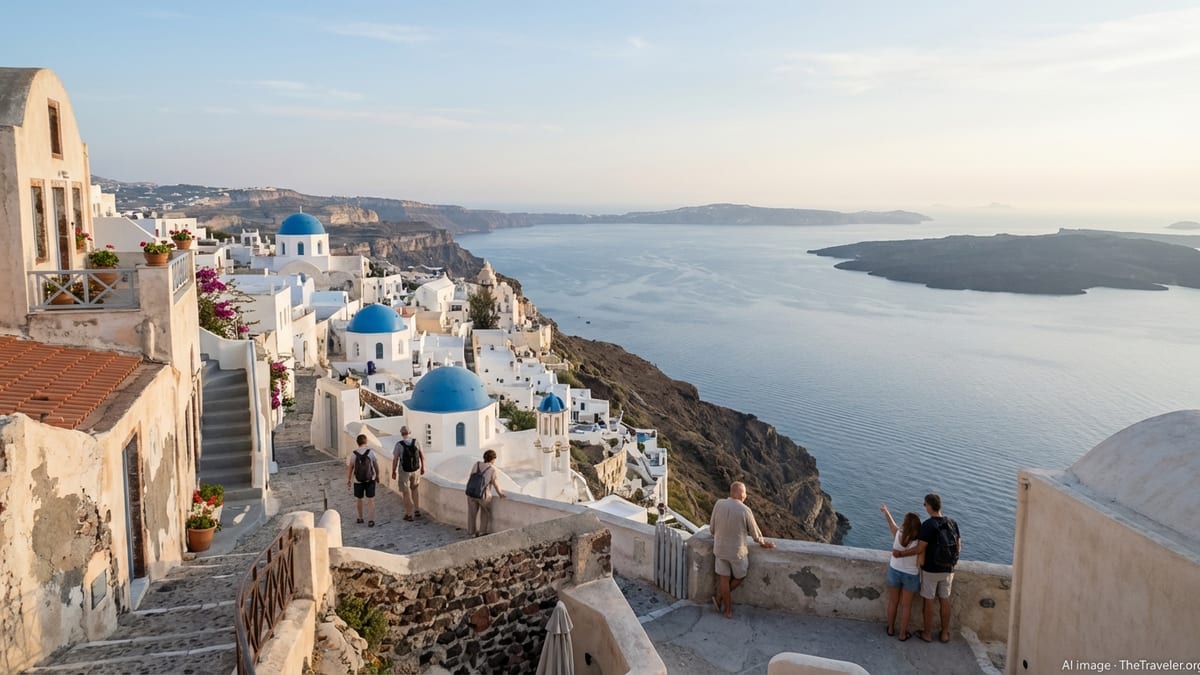
Use your first full day on Santorini to soak up the caldera scenery and explore the island’s cliffside villages. Start the morning with a leisurely breakfast overlooking the sea if your accommodation offers a view, then follow the caldera path between Fira, Firostefani and Imerovigli. This walking route offers shifting perspectives on the volcanic crater, whitewashed houses and blue domed churches that define the island’s visual identity. Sections of the path are paved while others are rougher, so comfortable footwear remains important.
As you walk, take time to detour into small churches, side streets and viewpoints rather than staying strictly on the main route. Even in busy seasons, a few turns away from the most photographed corners often reveal quieter alleys and more local scenes. Look for traditional cave houses built into the rock, details like old wooden doors and volcanic stone walls, and the changing color of the sea as the light moves through the day.
In the afternoon, consider visiting one or two of the island’s wineries. Santorini’s volcanic soil, strong winds and limited rainfall create challenging conditions for viticulture, and local producers have developed distinctive techniques such as basket shaped vines that hug the ground. Many wineries offer tastings with caldera views or gardens, often accompanied by small plates. This can be a relaxed way to learn about the island’s history and agriculture while enjoying the landscape from a different vantage point.
As evening approaches, choose a sunset spot. Oia is the most famous location, and in high season its lanes can become crowded around sunset, so arriving early or seeking out less obvious viewpoints nearby can make the experience more pleasant. Alternatively, staying closer to where you are based and watching the light fade from a quiet terrace or walking path can feel more personal. However you spend it, allow enough time afterward for a slow dinner and an unhurried walk back to your hotel under the night sky.
Day 5: Beaches, Boat Trips and Santorini’s Ancient Past
Your fifth day gives you a chance to experience Santorini from the water and add some beach or archaeological time, depending on the season and your interests. A popular option is a day or half day boat trip that circles the caldera, often including stops at the volcanic islets, swimming spots and viewpoints back toward the cliffs. Some itineraries include hot springs areas where the water temperature is slightly warmer and tinged by volcanic minerals, while others focus more on sailing, snorkeling or sunset views from the water.
If you prefer to stay on land, consider heading to the southern part of the island. The archaeological site of Akrotiri offers a glimpse into a Bronze Age settlement preserved under volcanic ash, sometimes compared to a smaller scale Pompeii. Visiting with a guide or using an audio guide can help bring the ruins to life and provide context about the island’s ancient history and the eruption that shaped its current caldera.
Nearby, beaches such as Red Beach and Perissa showcase the island’s volcanic character with dark sand and dramatic rock formations. Swimming conditions vary with weather and time of year, so it is wise to check local advice on currents, wind and any temporary restrictions. Beach facilities range from simple stretches of sand to organized sections with umbrellas and loungers, and you can choose whichever level of infrastructure matches your preference for the day.
In the evening, return to your base village and enjoy a quieter night. Many visitors find that the second or third night on the island is when they start to relax into the slower rhythm of Greek island evenings, lingering over multi course meals and strolling through lanes after dark. This is also a good time to pick up any small souvenirs such as ceramics or food products, bearing in mind luggage space and customs rules when returning home.
Day 6: Return to Athens and Last Evening in the Capital
On day six, you make your way back to Athens. As with the outbound leg, you can choose between a domestic flight and a ferry. When planning connections back to your international flight home, it is generally safer to return to Athens the day before your long haul departure rather than trying to connect on the same day, especially in summer when high winds or operational issues can cause ferry or flight delays. Building in this buffer night significantly reduces stress and gives you a final evening to enjoy the capital.
If you take a morning ferry or flight, you will likely arrive in Athens by early to mid afternoon. Check into a hotel in the same or a similar central neighborhood as before, then use the remaining hours to explore any areas you missed at the start of your trip. This might mean returning to a favorite café, browsing shops in Kolonaki, walking along the pedestrianized Dionysiou Areopagitou promenade, or simply sitting in a square and watching city life unfold.
For a memorable final evening, consider timing your dinner to coincide with views of the Acropolis lit after dark. Several rooftop bars and restaurants in central Athens offer lines of sight toward the hill, and even a simple drink at sunset can feel special as you reflect on the week. Alternatively, you may prefer a low key taverna in a side street where you can linger without worrying about dress codes or reservations.
Before bed, organize your luggage and travel documents so that your departure tomorrow is smooth. Double check your airport transfer arrangements, boarding passes and any remaining travel requirements. This practical step frees you up to enjoy your final morning without last minute scrambling.
Day 7: Departure and Optional Morning Wanders
Your final morning depends on your flight time. If you are leaving early, you may only have time for breakfast and the journey to the airport. If your departure is later in the day, you can fit in one more short walk, museum visit or coffee stop. Syntagma Square and the nearby National Garden make pleasant areas for a gentle stroll, while the changing of the guard at the Hellenic Parliament can be an interesting stop if you have not yet seen it, keeping in mind the schedule may vary on holidays or special occasions.
For those whose flights are in the late afternoon or evening, a return visit to a favorite viewpoint from earlier in the trip can be a meaningful way to close the loop on your itinerary. Even a simple walk through Plaka or a quiet coffee in Koukaki with a glimpse of the Acropolis in the distance can help you absorb the week and start thinking about what you might like to see on a future visit to Greece.
Allow generous time to reach the airport, especially during peak travel seasons when roads and security lines can be busy. Booking your transfer or knowing which metro or bus line you will use in advance keeps the final hours of your trip calm. Once at the airport, you can browse any last minute gifts such as olive oil products or regional sweets, always within the limits of your luggage allowance and local regulations.
As you depart, remember that this 7 day itinerary has only scratched the surface of Greece’s mainland and islands. Many travelers find that a first visit focused on Athens and one island gives them enough confidence and context to plan a return trip that goes deeper into regions such as the Peloponnese, Crete or lesser known island groups. Leaving some places for next time is part of what makes travel to Greece so compelling.
Practical Tips for First Time Travelers to Greece
Beyond the day by day plan, a handful of practical considerations can make your 7 days in Greece smoother. One of the most important is respecting local conditions and potential heat, especially in summer. Archaeological sites such as the Acropolis are often exposed, with limited shade, and in recent years authorities have occasionally adjusted opening hours or introduced temporary midday closures during intense heatwaves. Checking the forecast and official guidance the day before your visit helps you time your arrival and pack accordingly with water, hats and sunscreen.
When it comes to money, Greece uses the euro and card payments are widely accepted in cities and popular islands. However, it is wise to carry some cash for smaller tavernas, kiosks, local buses and tips, particularly on days when you will be away from major tourist hubs. ATMs are available in both Athens and Santorini, though machines in heavily visited areas can occasionally run low on cash at peak times, so withdrawing earlier in the day can be helpful.
Language is rarely a major barrier in this itinerary, as English is widely spoken in the tourism industry and in many urban settings. Learning a few basic Greek phrases, such as greetings and thanks, is appreciated and can enrich interactions, but you can comfortably navigate hotels, restaurants and transport with English alone. Signage at major archaeological sites and museums typically includes English alongside Greek, making self guided visits manageable.
Packing wise, lightweight layers, good walking shoes and a sun protective hat are more important than dressy outfits. In religious sites, modest clothing that covers shoulders and knees is expected, so having a scarf or light cover up in your day bag is handy. For ferries, consider bringing a light jacket even in summer, as wind on deck can make temperatures feel cooler than on land. Travel insurance that covers medical care, trip delays and lost luggage is an additional precaution that many first time visitors find reassuring.
The Takeaway
A 7 day Greece itinerary that combines Athens and Santorini offers a balanced introduction to the country’s ancient heritage and island landscapes without trying to cover too much. By spending two full days in the capital, three on the island and allocating time for travel days, you gain a sense of place in both destinations while minimizing logistical stress. This structure gives you space to linger among ruins, wander cliffside paths and watch multiple sunsets over the Aegean rather than ticking off a long list of stops.
Equally important is leaving room for flexibility within the framework. Weather, seasonal schedules and your own energy levels may nudge you to swap activities between days or opt for a slow café morning instead of a packed museum visit. Approaching the week as a curated sample rather than a definitive checklist sets realistic expectations and makes the trip feel more like a holiday than a race.
For many travelers, this first taste of Greece becomes a starting point rather than a once in a lifetime experience. After a week that blends the Acropolis with the caldera, you will have a clearer sense of what you love most, whether that is archaeology, food, hiking, beaches or small villages. That clarity is the best souvenir you can bring home, and it will help shape any future journeys through the Greek islands and mainland.
FAQ
Q1. Is 7 days enough for a first trip to Greece?
Seven days is enough for a focused first trip that combines Athens with one island such as Santorini. You will not see everything, but you can experience key highlights without rushing constantly.
Q2. Should I fly or take the ferry from Athens to Santorini?
Flying is faster, with flight times around 45 minutes, while ferries take several hours but provide scenic views and a more relaxed experience. Many first time visitors choose one option each way to experience both.
Q3. What is the best time of year for this 7 day itinerary?
Late spring and early autumn often offer a good balance of pleasant temperatures, longer daylight hours and fewer crowds than peak summer. Winter trips are possible but involve cooler weather and reduced ferry schedules.
Q4. Do I need to book Acropolis tickets in advance?
Advance booking is strongly recommended in busy months, as timed entries and daily visitor limits help manage crowds. Buying ahead also saves time queuing at the ticket office on the day.
Q5. Is this itinerary suitable for children?
This plan can work for families, especially if you build in breaks, choose centrally located hotels and prioritize outdoor time. Some children enjoy the ferries and beaches, while museum visits may need to be shorter and more selective.
Q6. Can I add another island to this 7 day plan?
It is technically possible to add a nearby island, but it often makes the week feel rushed. For a first trip, focusing on Athens and one island usually offers a more relaxed and memorable experience.
Q7. How early should I arrive at Piraeus for my ferry?
Arriving at least an hour before departure is a common guideline, and in peak summer or with checked luggage you may want to allow more time to navigate traffic, ticket checks and boarding.
Q8. Is Santorini very crowded in summer?
Santorini can be extremely busy in high summer, particularly around sunset in popular villages such as Oia. Traveling in shoulder seasons or exploring at off peak times of day can help you find quieter moments.
Q9. Do I need a car on Santorini for this itinerary?
You can complete this 7 day plan without a car by using hotel transfers, local buses, taxis and organized excursions. Renting a car offers more flexibility but introduces parking and driving considerations on narrow, busy roads.
Q10. How much walking should I expect on this trip?
You can expect a fair amount of walking, especially on uneven surfaces around archaeological sites and along Santorini’s caldera paths. Comfortable footwear and pacing yourself with breaks are important for most travelers.