

More news on this day
Greece is surging ahead of regional rivals as a preferred Mediterranean holiday destination, while Cyprus faces a sharp tourism setback amid escalating Middle East tensions, flight disruptions and a sudden collapse in bookings from key markets.
Get the latest news straight to your inbox!
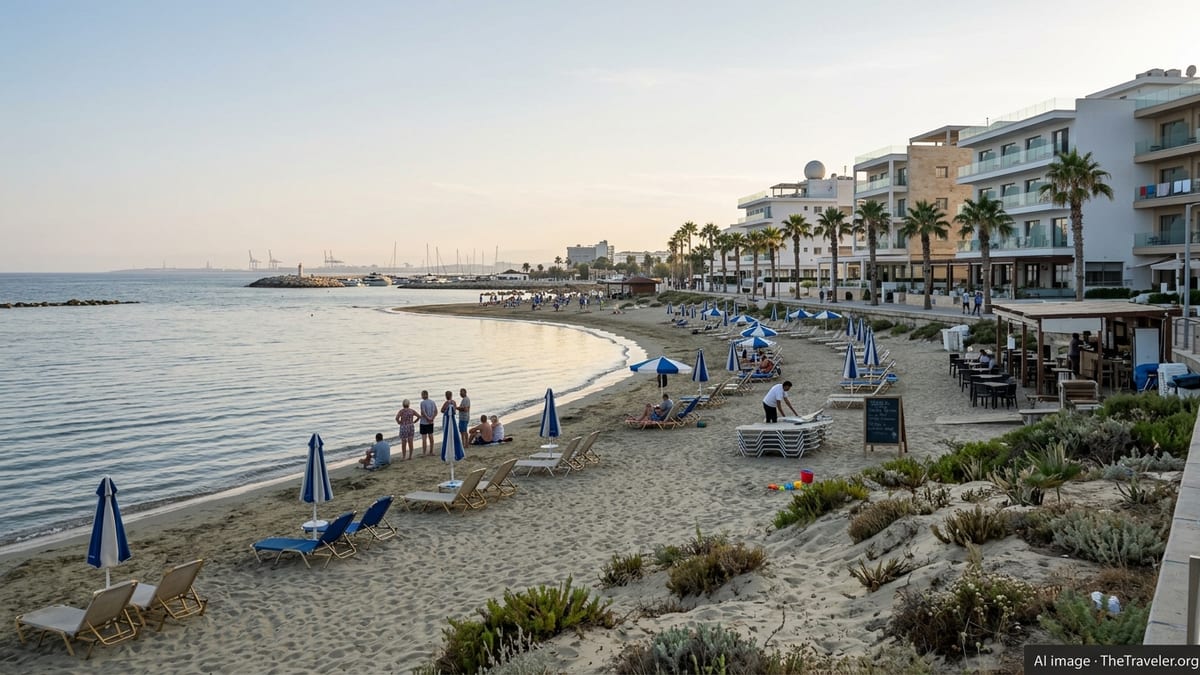
Cyprus Hit by Cancellations as Conflict Moves Closer
Cyprus, long marketed as a safe sun-and-sea hub on the edge of the Middle East, is confronting one of its most challenging seasons in years. The renewed conflict involving Israel, Iran and the United States, combined with the March 2026 drone strike on the British RAF Akrotiri base on the island, has unsettled travelers and triggered a wave of holiday cancellations.
Publicly available data on the incident show that the strike and subsequent security concerns led to an immediate pullback in demand. In Larnaca, one of Cyprus’s main resort and aviation gateways, reports point to cancellations in the range of 15 to 20 percent and hotel occupancy slipping toward 40 percent, versus a typical seasonal norm closer to 60 percent. Market commentary suggests that some coastal areas, including Paphos and Famagusta, are facing even steeper cancellation levels.
These fresh security worries come on top of earlier turbulence. Since the outbreak of the Israel Gaza war in late 2023, Cyprus has been drawn into regional headlines as a logistics hub for humanitarian missions and as a diversion point for flights unable to land in Israel. While incoming diverted passengers briefly boosted overnight stays in 2024 and 2025, tour operators now indicate that the island’s proximity to active conflict zones is becoming a liability for mainstream leisure demand.
The result is a sudden reversal for a country where tourism accounts for a significant share of GDP and employment. Travel agents report that bookings from Israel have frozen or fallen sharply, while some British and European travelers are reassessing summer plans, favouring destinations perceived as further from the line of fire.
From Record Seasons to Rapid Slowdown
Only a short time ago, Cyprus was on a recovery path after the pandemic, with 2023 and early 2024 seen as strong years for arrivals and revenue. Industry surveys highlighted solid forward bookings from the United Kingdom, Israel and northern Europe, and local businesses invested heavily in hotel refurbishments and new hospitality ventures on the assumption of continued growth.
Early signs of strain emerged as the Israel Gaza war dragged on. Published coverage in 2024 described 90 of 200 planned cruise calls to the island being scrapped as operators reassessed itineraries in response to the fighting. Analysts estimated that reduced arrivals and cautious consumer sentiment could cost Cyprus tens of thousands of visitors and tens of millions of euros in lost income, even before the more recent escalation.
By mid 2025, Cypriot tourism bodies were still stressing resilience, pointing to strong overall numbers while acknowledging that bookings from Israel were effectively stalled and individual cancellations were starting to appear for the peak months. The March 2026 base strike shifted the narrative, transforming a gradual slowdown into what tour operators now describe as a sudden, confidence-driven plunge.
Package holiday providers serving the British market, still the island’s largest source of visitors, have begun trimming capacity and redirecting aircraft to alternative Mediterranean destinations. Hoteliers in resort towns report that long-stay bookings are being replaced with shorter, last-minute trips, or not being rebooked at all once cancelled, creating pressure on pricing and local employment.
Greece Becomes the Big Mediterranean Winner
As Cyprus and parts of the eastern Mediterranean struggle with the fallout from the conflict, Greece is emerging as one of the clearest winners from shifting travel patterns. Recent studies of European holiday intentions place Greece among the top choices for Western Europeans over the next 12 months, with particularly strong interest in Germany and the United Kingdom.
Data compiled by tourism research bodies and industry groups indicate that Greece has climbed in preference rankings in both markets, edging closer to or overtaking traditional rivals such as Turkey and the United Kingdom itself for certain types of sun-and-sea holidays. A 2025 European holiday barometer showed Greece among the leading foreign destinations for multiple surveyed countries, consolidating its reputation as a reliable summer mainstay.
Separate analysis of short term rental bookings suggests that Greece is outperforming much of Europe in demand growth, with double digit year on year increases in peak summer reservations. Reports highlight that Greek islands and coastal regions are attracting robust interest not only from core EU markets, but also from long haul travellers from the United States, where airlines have expanded direct services to Athens and popular island gateways.
The overall picture is of a country capitalising on perceived safety, strong air connectivity and a broad mix of islands and mainland resorts. While Greece is not immune to the wider geopolitical climate, it is seen by many travellers as a step removed from the immediate conflict zone affecting the easternmost Mediterranean.
UK, US, Israel and Regional Flows Rerouted
The realignment of tourist flows is especially visible in source markets that have traditionally been crucial for Cyprus. British travellers, who have long favoured the island’s familiar resorts and English speaking environment, are increasingly turning to Greek destinations when weighing perceived risk against value for money. Travel trade reports describe tour firms switching capacity from Cyprus to Greek islands such as Crete, Rhodes and Corfu for the 2026 high season.
For Israeli holidaymakers, Cyprus has historically been one of the closest and most convenient escapes, often reached in under an hour’s flight time. Since the intensification of conflict in 2023 and beyond, booking data from previous seasons showed a steep drop in Israeli arrivals to Cyprus, with some choosing to reroute trips to more distant destinations or postpone leisure travel altogether. Recent protests and tensions around Israeli cruise operations in parts of Greece have added new complications, but scheduled air links and package options to Greece remain abundant.
The United States and United Kingdom have also become more prominent as long haul and mid haul markets for Greece, aided by new routes, favourable currency dynamics and aggressive destination marketing. Industry commentary notes that many American visitors now treat Greece as a primary European entry point for summer, from which they may add side trips elsewhere, amplifying its gains at the expense of other Mediterranean competitors.
Turkey, Egypt and Israel, all facing their own reputational and security challenges, are watching this shift carefully. For now, the combination of geopolitical uncertainty in the eastern Mediterranean and strong brand momentum in Greece appears to be pushing a larger share of discretionary holiday spending toward Greek beaches and islands.
What Travellers and the Industry Need to Watch Next
For prospective visitors, the latest developments underline how quickly regional risk perceptions can reshape holiday patterns. Travel insurers and advisory services continue to monitor the situation in Cyprus and surrounding airspace, with potential implications for cover levels, flight schedules and package holiday terms. Travellers are being encouraged by consumer groups to pay close attention to cancellation policies and to register for updates from national foreign ministries.
For Cyprus, tourism leaders are likely to intensify efforts to reassure core markets, diversify source countries and highlight parts of the island that feel distant from military infrastructure. However, the direct association of Cyprus with recent conflict headlines, including the drone strike on a British base, presents a communications challenge that may take several seasons to overcome.
In contrast, Greece is poised to consolidate recent gains if it can manage capacity, protect its natural environments and maintain service standards amid strong demand. Analysts caution that sustained success will depend on avoiding overtourism flashpoints and ensuring infrastructure keeps pace with rising arrivals on flagship islands and mainland hotspots.
Across the wider region, the coming seasons will reveal whether the current surge toward Greece and away from conflict adjacent destinations like Cyprus is a temporary shock or a longer term reset in Mediterranean travel geography. For now, booking data and airline planning suggest that Greece has decisively overtaken several traditional competitors as holidaymakers look for a balance between sunshine, affordability and a sense of security.