

More news on this day
Greece is experiencing a powerful tourism surge, with record arrivals and revenues increasingly driven by US travellers, while a fast‑expanding pipeline of billion‑euro hotel and resort projects reshapes the country’s tourism landscape.
Get the latest news straight to your inbox!
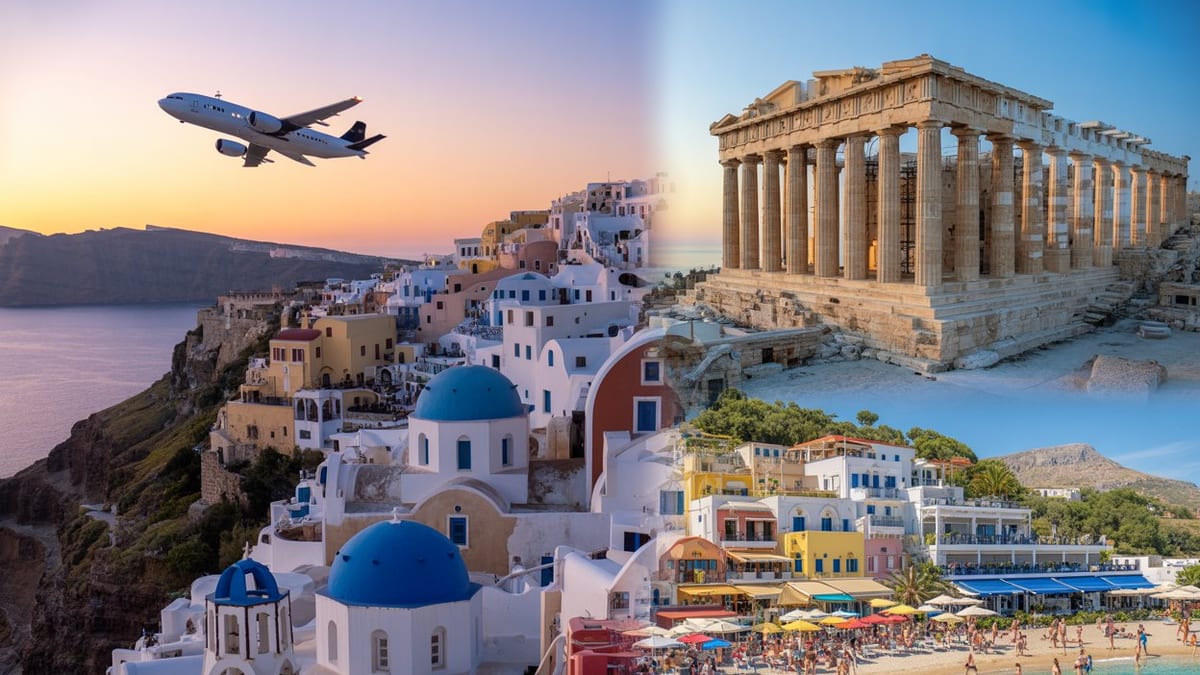
Image by Travel And Tour World
Record Arrivals and Revenues Reshape Greek Tourism
Recent data from Greek and international tourism analyses indicate that the country has moved into a new phase of sustained growth, with inbound arrivals and travel receipts repeatedly surpassing pre‑pandemic benchmarks. Bank of Greece figures for 2023 showed tourism receipts of around 20.5 billion euros, already above 2019 levels, and subsequent estimates for 2024 and 2025 point to further gains as the sector consolidates its role as one of the country’s main economic pillars.
Industry reviews suggest that total international arrivals have climbed into the mid‑30‑million range and beyond, with 2024 and 2025 described as consecutive record years for visitor numbers. Analysts note that the growth is not only a rebound effect following pandemic restrictions but is increasingly being sustained by higher‑spending markets, long‑haul demand and an expanding luxury and resort offering across the islands and mainland.
Hospitality performance reports for 2024 point to robust hotel turnover and rising revenue per available room in key destinations such as the Southern Aegean, Crete, the Ionian Islands and Attica. While there are signs that per‑visitor spending patterns are evolving, total tourism income continues to trend upward, underpinning new waves of investment and large‑scale redevelopment along the country’s coasts and in major urban centers.
US Travellers Emerge as a Strategic Growth Engine
A standout feature of Greece’s tourism boom has been the rapid rise in visitors from the United States. Sector studies show that arrivals from the US climbed from around 1.1 million in 2019 to roughly 1.4 million by 2023, with further gains reported in 2024 and the 2025 season. Aviation and tourism analysts attribute this expansion to a combination of expanded nonstop air links, strong US demand for Mediterranean destinations and Greece’s growing reputation as a safe, high‑value destination.
Airline schedules over recent seasons have included a growing network of direct transatlantic routes from major US gateways to Athens and several regional airports, particularly during the May to October peak. Publicly available route and capacity data indicate that carriers have steadily added seats on US‑Greece services, encouraged by high load factors and resilient premium‑cabin demand. This increased connectivity has lowered travel times and made short‑break and shoulder‑season trips from North America more viable.
Tourism market analyses describe US visitors as among Greece’s highest‑spending segments, with strong interest in luxury resorts, boutique city hotels, cruising and curated cultural itineraries. Spending patterns often extend beyond accommodation and dining to include private tours, yacht charters and experiential travel products. This profile has made the US market particularly influential in shaping investment decisions in high‑end hospitality, wellness complexes and integrated resort developments.
Billion‑Euro Hotel Pipeline Transforms the Destination
The tourism boom is feeding into a rapidly expanding investment cycle, with recent studies by Greek tourism and hospitality research bodies pointing to cumulative investments in the sector running into the tens of billions of euros since 2022. Data released by industry research institutes show that more than 2 billion euros was channelled into new hotels in a single recent year, largely focused on four‑ and five‑star properties, while hotel investments in 2024 alone exceeded 1 billion euros, including extensive renovations and upgrades.
Broader assessments of tourism real estate and hospitality infrastructure suggest that when acquisitions, greenfield developments and large‑scale refurbishments are taken together, annual tourism‑related investment has climbed into the multi‑billion‑euro range. Analyses published in early 2025 estimate that approximately 12 billion euros has flowed into Greek tourism projects from 2022 through to the mid‑2020s, covering more than 60 new or rebranded international hotel projects scheduled to open by 2027.
These projects include both urban and resort assets, from new branded properties in central Athens and Thessaloniki to large coastal complexes on the Athens Riviera, in the Peloponnese and on popular islands such as Crete, Rhodes and Corfu. Many of the new developments incorporate wellness centers, marinas, conference facilities and branded residences, aimed at capturing higher‑yield international demand and extending the tourism season beyond the traditional summer peaks.
Flagship Megaprojects Redraw the Athens Riviera
Among the most visible symbols of Greece’s tourism transformation are the megaprojects reshaping the shoreline of Athens. Publicly available project documentation and corporate announcements describe the redevelopment of the former Ellinikon airport site on the Athens Riviera as one of the largest urban regeneration schemes in Europe, with total investment in the wider complex estimated in the range of 10 billion euros.
The plan for the coastal zone includes extensive parkland, high‑rise residential towers, marinas, shopping and leisure districts and a series of new hotels and resorts. A key element is the Hard Rock Hotel & Casino Athens, an integrated resort currently under construction and expected to open later this decade, which is projected to become a major regional draw for both gaming and conference tourism. Additional branded hotels in central Athens, including new luxury properties under leading international flags, are intended to reposition the capital as a year‑round city‑break and business travel hub.
Investors and hospitality operators view the Athens Riviera projects as a gateway for attracting more high‑spending visitors from long‑haul markets such as the United States, where there is strong interest in combined city‑and‑island itineraries. Industry commentary suggests that as these assets come online, they will boost average daily rates in the Attica region and support further investment in supporting infrastructure, from upgraded marinas to enhanced cultural and entertainment venues.
Shifting Travel Patterns and Sustainability Pressures
While the tourism boom is widely seen as a success story, it is also prompting debate within Greece about capacity, sustainability and the distribution of benefits. Analyses of Bank of Greece and regional tourism data show that a handful of regions, including the Southern Aegean, Attica and Crete, capture the majority of tourism receipts. As arrivals continue to climb, there is growing concern about congestion on smaller islands, pressure on local infrastructure and the environmental cost of intensive seasonal travel.
In response, national and local authorities have begun to introduce new tools intended to manage demand and support more sustainable models of growth. Recent seasons have seen the rollout of higher overnight accommodation levies for top‑category hotels and new environmental charges on cruise passengers, alongside initiatives to promote travel in the shoulder seasons and to lesser‑known destinations on the mainland and in the interior of major islands.
Industry observers note that investors are increasingly incorporating sustainability and resilience considerations into project planning, from energy‑efficient hotel design and water‑management systems to diversification into agro‑tourism and cultural tourism products. For US travellers, who are playing a rising role in Greece’s visitor mix, these changes are likely to translate into a broader range of experiences and higher‑quality infrastructure, even as the country works to balance record growth with the long‑term health of its destinations.