

More news on this day
Departures at Washington Dulles International Airport were severely disrupted on April 9 after an air traffic control issue in the Washington region led to a ground stop and hours of rolling delays for passengers bound for and departing from the busy hub.
Get the latest news straight to your inbox!
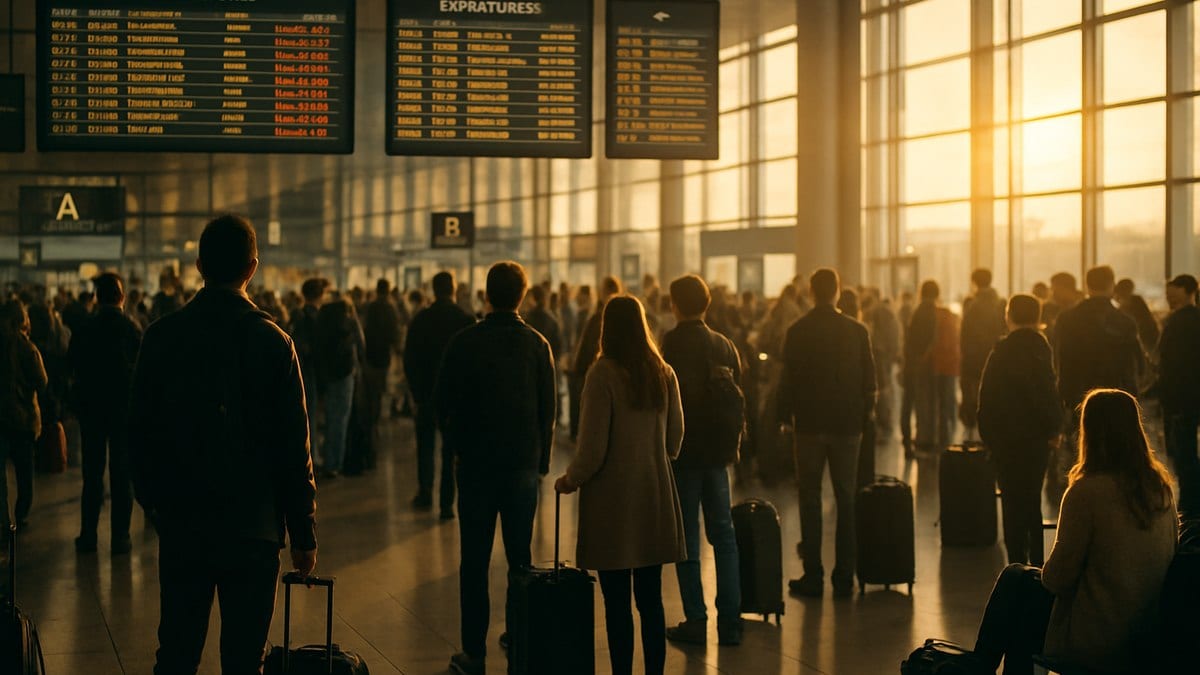
Airspace Constraint Triggers Regional Ground Stop
Publicly available information from federal aviation data and traveler accounts indicates that a temporary air traffic control facility problem in the Washington area sharply reduced the number of flights that could safely arrive and depart on April 9. The constraint affected multiple local airports, including Washington Dulles International Airport, Reagan National and Baltimore/Washington International, creating a bottleneck across the region’s airspace.
Ground stops of this kind effectively pause most departures bound for affected airports, holding flights at their origin until air traffic control capacity recovers. As the restriction took effect on April 9, aircraft already in the system were forced into holding patterns, diversions or extended turnaround times on the ground, quickly backing up operations at Dulles.
Flight tracking data shows that even after the formal ground stop period ended, departure flow remained heavily constrained, with residual ground delay programs in place. Average waits for some Dulles departures extended well beyond two hours, and the disruption continued into the evening as airlines worked through a queue of delayed flights.
The April 9 disruption followed a similar pattern to a mid-March regional equipment outage that also produced hours-long delays at Dulles and neighboring airports. The latest episode underscored how sensitive the capital region’s air network remains to even brief interruptions in air traffic control capability.
Dozens of Departures Delayed, Connections Missed
Airline status boards and tracking services for April 9 point to a significant spike in late departures from Dulles once the ground stop took hold. A broad cross-section of domestic and international flights left well behind schedule, with some late-afternoon and evening departures posting delays in the range of two to three hours.
The heaviest impact appeared to fall on domestic routes into other congested hubs along the East Coast and in the Midwest, where downstream weather and traffic added to the logjam. Several transcontinental and transatlantic services also left late, as aircraft and crews were held in place or rerouted earlier in the day.
Reports from travelers on social platforms described crowded gate areas, rolling departure-time revisions and last-minute aircraft swaps as operations teams sought to reposition planes and crews. Some passengers missed onward connections at other hubs, while others reported diversions or extended taxi times as the evening wore on.
Although widespread cancellations were more limited than in major winter storm events, the combination of protracted delays and missed connections effectively disrupted travel plans for thousands of passengers passing through Dulles on April 9.
Airlines and Airport Strain to Stabilize Operations
As the air traffic control restriction eased, airlines at Dulles moved to compress their schedules, turning aircraft as quickly as possible to recover some lost time. Publicly available schedules and status data show clusters of departures pushed into later evening hours as carriers attempted to clear backed-up flights.
Operationally, carriers faced familiar challenges: aircraft and flight crews were out of position, crew duty-time limits were tightening, and gates were heavily utilized as delayed flights overlapped with later scheduled operations. In some cases, aircraft arrived late from other disrupted airports, only to encounter additional restrictions departing Dulles.
Airport infrastructure also came under pressure. Congested taxiways, busy deicing and tug operations, and crowded ramp areas slowed the pace at which flights could depart once they were released by air traffic control. Publicly available information from airline communications indicates that some flights remained at the gate while awaiting updated departure slots assigned under ground delay programs.
The experience reflected the complex interdependence of Dulles with the broader national network. Disruptions in one part of the system, particularly within the Washington area’s tightly managed airspace, quickly cascade into schedule challenges at a hub where multiple domestic and international flights are tightly banked.
Travelers Confront Long Lines and Limited Information
For many passengers, the most immediate impact on April 9 was felt inside the terminal. Social media posts and traveler forums referenced long lines at check-in and security as departure banks bunched together, along with crowded holding areas at heavily delayed gates.
Some travelers reported limited real-time information at the airport about the cause and expected duration of the disruption, relying instead on airline apps, flight tracking services and media reports to understand the regional ground stop and associated air traffic issues. Rolling, short-notice changes to departure times added to confusion, particularly for those without lounge access or frequent-flier status.
The disruption arrived just days after new tools aimed at improving the passenger experience at Dulles. In early April, United Airlines introduced a security wait-time tracker for its hub customers at the airport, giving travelers a way to gauge screening times before leaving for the terminal. While that feature is designed to ease congestion at checkpoints, the April 9 episode demonstrated that once passengers are through security, irregular operations can still create significant uncertainty.
Online discussions also suggested that some local travelers are reassessing their airport choices in light of repeated delays across the Washington region this year, weighing the tradeoff between shorter travel times to Reagan National and the larger route network available at Dulles.
Ongoing Focus on Resilience in the Washington Air Network
The April 9 ground stop and its ripple effects added to a series of recent operational challenges for the Washington aviation system. Earlier this year, thunderstorms and regional weather systems prompted travel waivers and schedule adjustments at hubs that connect heavily with Dulles, while a March equipment outage in the area produced another round of multi-hour delays for flights to and from the airport.
In parallel, published analyses of flight delay trends have highlighted the vulnerability of major hubs when air traffic control capacity is reduced, even for brief windows. The Washington region’s layered security and airspace restrictions, combined with a dense concentration of commercial, government and general aviation traffic, leave relatively little margin when key facilities encounter technical issues.
Industry observers note that long-term planning efforts for Dulles and neighboring airports are increasingly focused on operational resilience, including technology upgrades, better real-time communication tools for passengers and more flexible scheduling approaches by airlines. Recent initiatives, such as expanded public transit access to Dulles and digital tools for tracking security wait times, are part of a broader push to make travel through the region more predictable.
For travelers, the events of April 9 served as another reminder to build extra time into itineraries involving Dulles and other Washington-area airports, particularly during peak travel periods. While the specific air traffic control issue that sparked the day’s disruption appears to have been temporary, its impact on flights and connections underscored how quickly routine operations can unravel when the region’s airspace is constrained.