

More news on this day
What began as a long‑anticipated family holiday in Dubai has turned into a protracted ordeal for thousands of passengers, as Emirates battles an unprecedented shutdown of flights to and from its home hub, leaving parents, children and elderly relatives stranded in hotels and terminals with little clarity on when they can go home.
Get the latest news straight to your inbox!
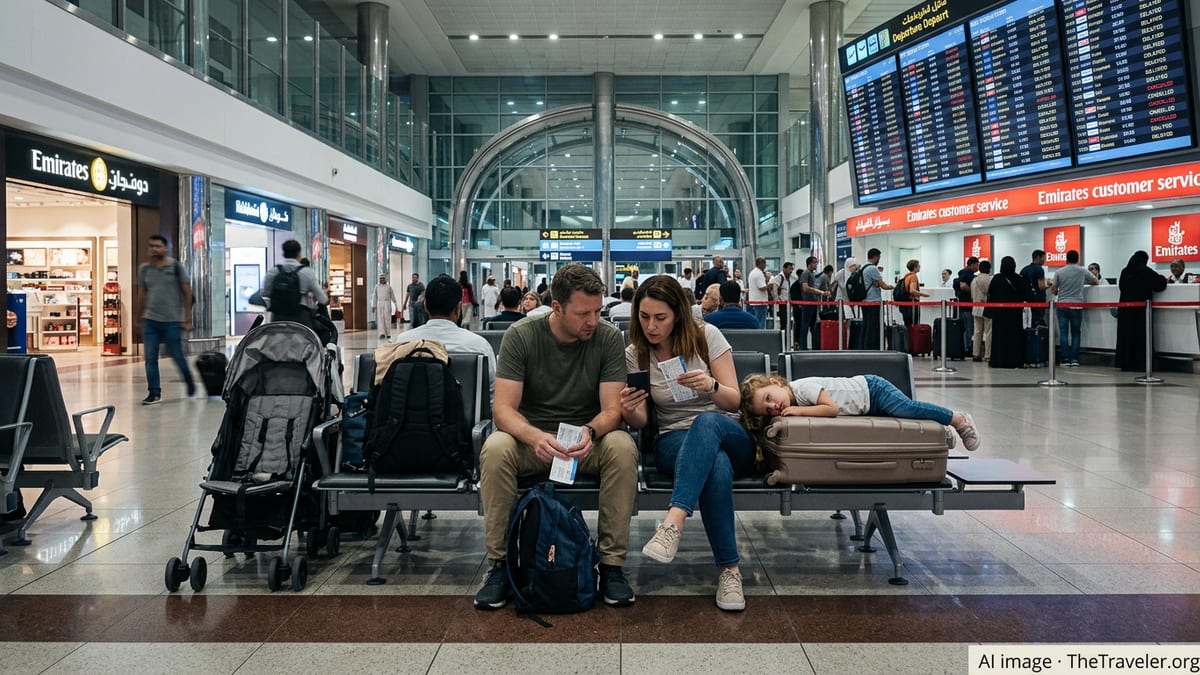
Airspace Closures Turn Dream Holiday into Stranded Ordeal
The family at the centre of this latest travel nightmare arrived in Dubai in late February, expecting a straightforward week in one of the world’s busiest transit hubs before connecting onward to Europe. Instead, regional airspace closures triggered by escalating tensions forced Emirates to suspend almost all operations to and from Dubai, abruptly grounding their homebound flight along with thousands of others.
In a statement on its travel updates page, Emirates confirmed that scheduled flights to and from Dubai were halted until at least early March, advising passengers not to travel to the airport unless they had received direct confirmation of a rebooked itinerary. For the stranded family, who had already checked out of their hotel and were en route to the airport when the suspension was extended, the warning came too late. They found themselves caught in a tide of confused travellers, many learning only at check‑in that their flights no longer existed.
At Dubai International Airport, where Emirates normally operates a tightly choreographed hub, the scenes have been described by passengers as a mixture of “chaos” and “resigned frustration.” With more than 12,000 regional flights cancelled over several days, according to industry data, long queues formed at ticket desks and customer service counters as families juggled school schedules, work commitments and expiring visas.
For parents of young children, the stress has been acute. One mother, stranded with her partner and primary school‑age daughter, summed up the sentiment shared by many: a dream break that swiftly became “the worst nightmare” she had ever experienced, as hotel costs mounted and information dripped out in short, often conflicting bursts.
Emirates Struggles to Rebook and Communicate Under Pressure
As the crisis unfolded, Emirates urged passengers to monitor its website and app for the latest flight information and to wait for direct contact regarding rebooking options. In practice, many stranded families reported that reaching the airline through call centres in the United Arab Emirates, North America or Europe was nearly impossible, with lines either jammed or disconnecting after long holds.
Some travellers bound for North America and Australia said they were told that seats would not be available for days, pushing their return well beyond planned vacation windows. Others described being rebooked multiple times, only to see those new flights also cancelled as the suspension period was extended. Parents of elderly or medically vulnerable relatives expressed particular concern, citing the difficulty of securing guaranteed seating and accessible accommodation on short notice.
The family whose experience has come to symbolise the broader disruption reported receiving automated messages about schedule changes but little personalised guidance. After their original overnight flight was cancelled, they say they were offered a departure several days later, with no clear assurance that it would operate. Attempts to explore rerouting through other hubs reportedly ran up against limited interline options and a system overwhelmed by last‑minute changes.
Behind the scenes, aviation analysts note that Emirates is contending with a complex logistical puzzle. The airline must reposition aircraft and crew, coordinate with regulators across multiple jurisdictions and prioritise travellers based on factors including ticket class, original departure date and destination. Even so, consumer advocates argue that communication has been inconsistent, leaving families to crowdsource advice from social media forums and expatriate networks instead of receiving timely, transparent updates directly from the carrier.
Rules, Rights and the Fine Print on Denied Boarding
The mass grounding has also thrown a spotlight on the fine print that governs what airlines owe passengers when flights are cancelled or when boarding is effectively denied. Emirates’ own rules and notices clarify that customers departing from the European Union or the United Kingdom may be protected by local regulations on denied boarding, long delays and cancellations, including potential cash compensation in some circumstances.
For flights departing from Dubai, however, the framework is different. While Emirates provides meal vouchers, hotel accommodation and rebooking options in many cases of disruption, compensation levels and eligibility are shaped by United Arab Emirates regulations and the carrier’s contract of carriage. Travel law specialists warn that families often do not realise these distinctions until they are already stuck in an airport hotel, trying to calculate how much of their extra spending might be reimbursed.
The stranded family in Dubai says they received hotel and meal support but remained in the dark about their longer‑term rights. They were informed they could submit a complaint through Emirates’ customer affairs channels after travel, a process that can take weeks. In the meantime, they have had to cover incidental costs such as local transport, mobile data and unused bookings back home, from missed childcare to lost workdays.
Consumer advocates argue that the current crisis underscores the need for clearer, more proactive explanation of passengers’ entitlements at the point of disruption. Printed notices at service desks, multilingual announcements and dedicated digital dashboards outlining what support is available, and under which jurisdiction, would help families make informed decisions in real time, rather than piecing together their options from scattered online resources.
Human Toll at Dubai’s Hub as Families Wait to Go Home
Beyond regulations and operational updates, the human impact of the Dubai shutdown has been stark. At Terminal 3, families pushed airport trolleys stacked with suitcases and strollers through packed concourses, children curled up on luggage while parents queued for hours at rebooking counters. Airport hotels quickly filled, pushing some travellers into more distant accommodation on the outskirts of the city.
Local residents and expatriate communities in Dubai have stepped in where they can, offering stranded friends and relatives spare rooms, rides and advice on navigating the disruption. Social media groups dedicated to Emirates passengers have become ad hoc information hubs, with users sharing screenshots of rebooking offers, reports of which routes are operating and practical tips on everything from visa extensions to affordable supermarkets near airport hotels.
The family at the heart of this story ended up relocating to a budget hotel near the airport after their original resort stay expired, swapping beach days and city tours for restless nights and constant monitoring of their phones. Their daughter’s school back home extended remote work allowances for her parents, but mounting fatigue and uncertainty have taken an emotional toll. “We do not blame them for the war,” the mother said of the airline, “but we do expect them to tell us clearly what is happening and what our options are.”
For Emirates, the episode is a stress test of its reputation as a reliable global connector. While aviation analysts expect the airline to restore a normal schedule once regional conditions stabilise, the memories of being grounded in Dubai will linger for many families. How the carrier responds in the coming weeks, both operationally and in terms of customer care and compensation, will shape whether this nightmare is remembered as an unavoidable act of geopolitics or as a preventable failure of communication.
What Travellers Can Learn Before Booking via Dubai
As flights gradually resume, travel experts say there are lessons for families planning future trips through major hubs like Dubai. First among them is to understand the legal framework governing each segment of a journey, including where consumer protection rules are strongest and where airline contracts leave more discretion to the carrier. Booking long‑haul itineraries that originate in jurisdictions with robust passenger rights can offer an extra layer of security if things go wrong.
Equally important is building flexibility into travel plans. That can mean allowing extra time for connections through busy hubs, purchasing travel insurance that specifically covers disruption from geopolitical events, and keeping essential items such as medication, key documents and children’s necessities in carry‑on bags in case checked luggage becomes hard to access during an extended delay.
For now, the family stranded in Dubai continues to wait for a confirmed departure, hoping that each new message from Emirates will finally include a flight number that operates. Their story is being echoed by countless others across terminals and hotel lobbies, a reminder that in an era of highly optimised global aviation, a few days of airspace closures can ripple into weeks of uncertainty for ordinary travellers.
Until the airline fully restores its schedule and clears the backlog of disrupted passengers, Dubai’s glittering reputation as a seamless crossroads of the world is colliding with the more sobering reality playing out in check‑in lines and departure lounges, where families simply want what was promised at booking: a safe, timely journey home.