

More news on this day
Travelers moving through Nashville International Airport on April 9 are facing fresh disruption as a small cluster of grounded flights operated by Delta Air Lines, Frontier Airlines and Southwest Airlines triggers wider delays across Philadelphia, Atlanta, Toronto, Augusta and other connected cities, according to early operational data and published tracking reports.
Get the latest news straight to your inbox!
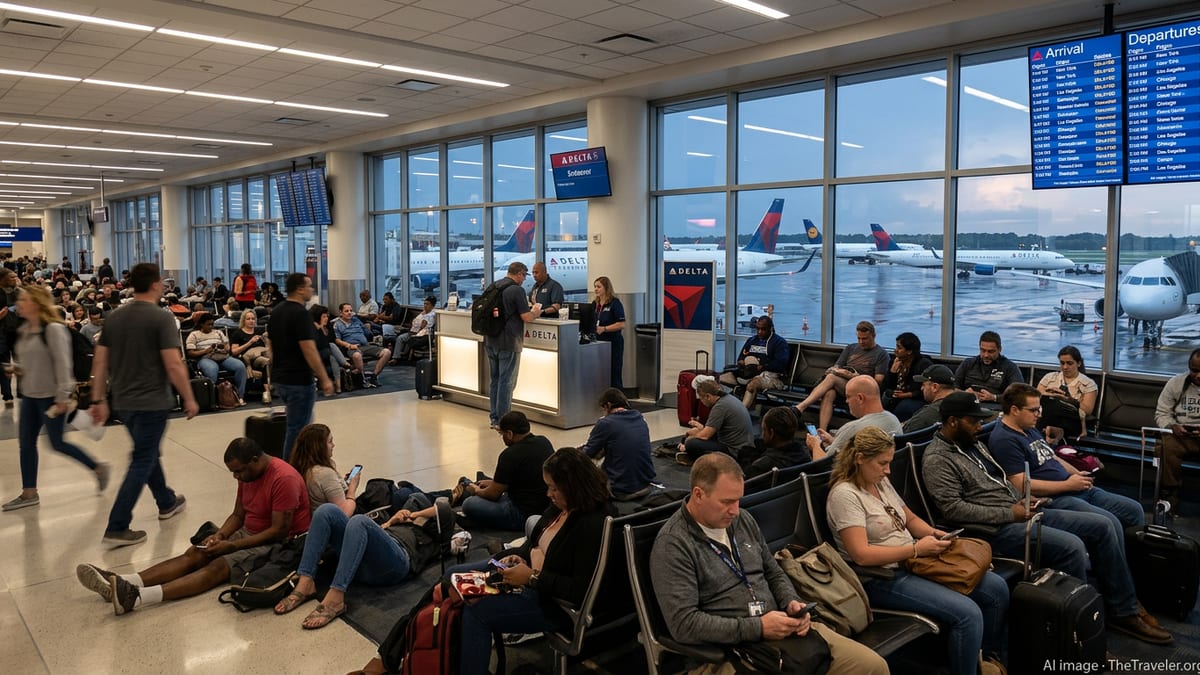
Five Grounded Departures Spark a Wider Web of Delays
Operational data reviewed on April 9 indicates that five departures linked to Nashville International Airport were grounded or significantly delayed, affecting services operated by Delta Air Lines, Frontier Airlines and Southwest Airlines. While the number of canceled or non-operational flights at Nashville is limited, the knock-on impact is being felt across a broader network of connecting routes.
Published disruption tallies for the day show several thousand delayed flights across the United States, with Atlanta and Philadelphia among the hardest-hit hubs. Within that context, Nashville functions as a smaller but strategically important node, feeding traffic into these major airports and onto onward connections across North America.
Publicly available flight-status tools show Nashville connected nonstop to key markets including Atlanta, Philadelphia and Toronto through a mix of mainline and regional services. When multiple departures out of a single airport are grounded, aircraft and crews can quickly fall out of rotation, creating ripple effects that extend well beyond the original origin and destination pair.
Although exact passenger counts on the affected services are not yet clear, the combination of grounded flights and missed onward connections is likely to disrupt the travel plans of hundreds of people, especially those attempting same-day links through major hubs.
Impact on Key Routes to Philadelphia, Atlanta, Toronto and Augusta
The most immediate effects of the Nashville disruption are being reported on routes linking the Tennessee capital with large connecting airports. Delta Air Lines services feeding into Atlanta, as well as itineraries that use Atlanta as a springboard to smaller markets such as Augusta, appear particularly exposed to schedule changes when aircraft or crews originating in Nashville are unavailable.
Frontier Airlines’ network design, which includes point-to-point services from U.S. cities into Philadelphia and other East Coast gateways, means that a grounded aircraft at Nashville can also cascade into delays on later flights operating far from Tennessee. Schedules that rely on quick aircraft turnarounds are especially vulnerable when even a single leg is removed from the rotation.
Toronto is similarly affected through cross-border links that depend on punctual feeder services in the United States. When Nashville-origin flights into connecting hubs run late or fail to depart, some travelers from Canada are left waiting for inbound aircraft or face missed onward connections back through Nashville and other U.S. cities.
Aviation analysts note that this pattern is consistent with broader disruption seen in early April, when spring storms and air traffic management constraints pushed delay totals into the thousands across multiple U.S. hubs. In such circumstances, a handful of grounded flights at a secondary airport can amplify pressures already present in the wider network.
How a Small Number of Cancellations Creates Systemwide Friction
While five grounded flights at a single airport may sound modest compared with nationwide totals, the concentration of those disruptions at a regional connector like Nashville can create far-reaching operational challenges. Modern airline schedules are built around tight aircraft utilization and coordinated banks of departures and arrivals; when one node falters, many subsequent rotations can be affected.
Delta Air Lines, Frontier Airlines and Southwest Airlines each use Nashville to funnel passengers into larger hubs, but their operational models differ. Legacy carriers and their regional partners often rely on complex connection banks with short layovers, while low-cost carriers emphasize rapid aircraft turns on point-to-point routes. In both cases, grounded flights can quickly lead to displaced crews, out-of-position aircraft and mounting delays later in the day.
Published performance data for similar disruption events in recent weeks shows how problems at one airport can spread across a region. Delays in Atlanta, for example, have been linked in previous cases to challenges accommodating arriving aircraft during storms or high-traffic periods, with effects that radiate into nearby markets including Augusta and other Southeastern cities.
For Toronto, Philadelphia and other international or coastal gateways, the risk lies in disrupted connections that depend on on-time arrivals from the U.S. interior. Even when airports themselves remain operational, passengers can still face missed flights and unplanned overnight stays as their inbound legs are delayed or canceled upstream.
Passenger Experience: Missed Connections and Longer Travel Days
For travelers, the operational details translate into longer days, missed events and rising frustration. Passengers starting or connecting through Nashville on April 9 are reporting extended layovers and schedule changes as they attempt to rebook onto later flights or reroute through alternative hubs.
Those connecting through Atlanta are particularly exposed, as schedule disruptions out of Nashville can push travelers into already congested banks of departures at one of the world’s busiest airports. With limited spare seats available during peak periods, some passengers may be moved to flights departing several hours later than planned or shifted onto different routings entirely.
Philadelphia and Toronto passengers are encountering similar issues, especially when itineraries involve tight connection windows or separate tickets across multiple airlines. Publicly available accounts of recent travel disruption highlight how quickly hotel availability and ground transport options can tighten once delays become widespread.
Families and business travelers alike are being advised through travel-industry guidance to maintain flexible plans where possible, including allowing extra time for connections and considering alternative routings when booking trips that rely on multiple hubs.
What Travelers Through Nashville Can Do Today
Travel guidance published in response to recent waves of disruption emphasizes several practical steps for those traveling through Nashville and the wider network on April 9. The first is to monitor flight status closely through official channels, including airline apps and airport information boards, before leaving home or a hotel.
Given the current pattern of delays, passengers with connections in Atlanta, Philadelphia, Toronto or Augusta are being encouraged by travel-advice outlets to build in additional buffer time and to prepare for possible same-day rebooking. Carry-on luggage, when feasible, can make it easier to switch flights quickly without waiting for checked bags to be re-routed.
Travel publications also stress the importance of understanding airline policies during disruption, including options for rebooking onto later services, shifting to alternative airports or obtaining credits when onward travel is no longer practical. These policies can vary between Delta Air Lines, Frontier Airlines and Southwest Airlines, and may depend on the cause of the grounded flights as well as the specific itinerary.
As April progresses, the situation at Nashville International Airport will remain closely watched by travelers and industry observers alike. With storm systems, high seasonal demand and a tightly stretched aviation network all in play, even a short cluster of grounded flights can be enough to tip the balance from a smooth journey into a day of missed connections across multiple cities.