

More news on this day
Passengers transiting through Seeb International Airport in Muscat have faced fresh disruption after at least six Gulf Air and Pegasus Airlines services were cancelled in recent days, stranding travellers and unsettling key routes linking Oman with Bahrain, Dubai, Istanbul and other regional hubs.
Get the latest news straight to your inbox!
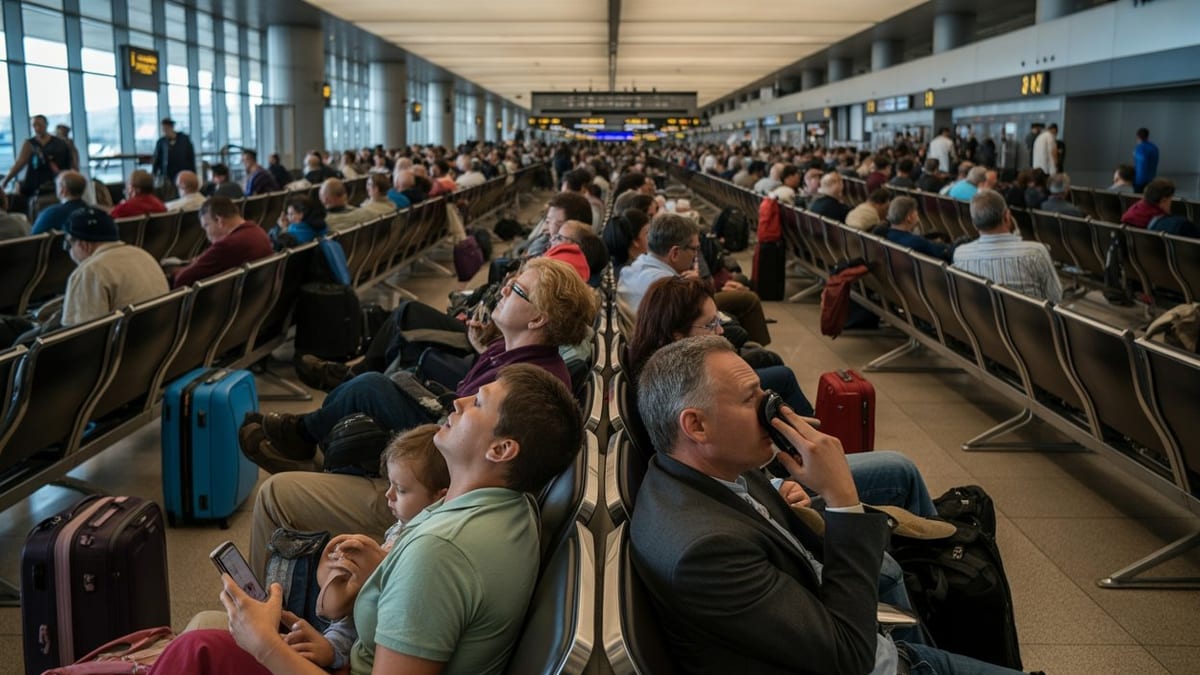
Image by Global Travel Alerts, Advisories, International Travel Alerts
Targeted Cancellations Hit Bahrain, Dubai and Istanbul Links
According to published flight-tracking data and regional travel advisories, the latest wave of disruption at Seeb International Airport has centered on services operated by Bahrain-based Gulf Air and Turkish low-cost carrier Pegasus Airlines. At least six flights involving the two airlines have been cancelled, primarily affecting links from Muscat to Bahrain, Dubai and Istanbul, as well as onward connections across their respective networks.
These cancellations have occurred against a broader backdrop of instability in Gulf airspace, where missile and drone activity has prompted temporary rerouting and capacity cuts on some corridors. Travel industry updates indicate that, on peak disruption days this month, roughly a third of departures from Muscat have been affected in some way, with a disproportionate impact on short-haul services to major Gulf Cooperation Council hubs.
Gulf Air’s Bahrain hub is a critical connecting point for passengers traveling between Oman, the wider Middle East, Europe and South Asia. When Muscat–Bahrain rotations are pulled from the schedule, travellers can lose access to multiple onward legs, magnifying the impact of each single cancellation. Pegasus plays a similar role on the Muscat–Istanbul sector, channeling passengers onto an extensive low-cost network into Europe and Asia via Istanbul’s Sabiha Gokcen Airport.
Publicly available operational data shows that while these airlines continue to operate some services into Oman, the selective cancellations have introduced uncertainty for passengers who rely on tight connections or time-sensitive itineraries. For many, the disruption at Muscat has been compounded by ongoing schedule changes at other Gulf airports, further narrowing alternative options.
Stranded Travellers Face Long Waits and Limited Alternatives
Reports from travel platforms and regional news outlets describe scenes of crowded departure halls and information desks at Seeb International Airport as passengers attempt to rebook or reroute. With Gulf Air and Pegasus both trimming certain rotations, some travellers have been left waiting many hours, and in some cases overnight, for replacement flights or confirmed onward connections.
In several instances, cancelled Gulf Air flights between Muscat and Bahrain have broken multi-leg itineraries, leaving passengers separated from luggage or in need of last-minute transit visas and accommodation. Similar difficulties have been noted for Pegasus customers whose Muscat–Istanbul flights were withdrawn, disrupting subsequent connections to European and South Asian cities.
Travel agents and booking platforms have flagged particular challenges for those holding non-refundable or restricted tickets. While standard airline policies typically permit rebooking or refunds when a carrier cancels a flight, passengers must often navigate call centers or third-party intermediaries before new travel plans are confirmed. With multiple Gulf carriers simultaneously adjusting schedules, wait times for assistance have reportedly increased.
For travellers already in Muscat, the knock-on effect has been a visible concentration of stranded passengers at Seeb International Airport’s terminals. Some have opted to purchase entirely new tickets on other airlines serving Dubai, Doha or Riyadh in order to preserve long-haul connections, while others have chosen to delay travel altogether amid lingering uncertainty around regional airspace conditions.
Regional Security Turbulence Fuels Aviation Instability
The latest disruptions involving Gulf Air and Pegasus in Oman are unfolding in the context of a wider aviation shock across the Gulf and parts of the Middle East. Conflict-related drone and missile incidents have prompted a series of advisories on airspace use, with some neighboring countries imposing temporary closures or restrictions that affect overflight options and routings.
Travel and port advisories circulated this month describe Oman’s airspace and Muscat’s main airport as technically open, but note that airlines are selectively cancelling or rerouting services to manage operational risks and network knock-ons. On certain days, Muscat has seen dozens of delays and cancellations across multiple carriers, including Oman Air, SalamAir and several foreign airlines serving major Gulf and South Asian destinations.
For Gulf Air, disruptions in regional airspace affect not only point-to-point traffic between Muscat and Bahrain but also the viability of onward connections to cities such as Dubai and Jeddah. Pegasus, meanwhile, has had to navigate shifting routings between Turkey and the Gulf, balancing safety considerations with the commercial imperative of maintaining a stable schedule through Istanbul.
Aviation analysts cited in regional coverage suggest that as long as missile and drone risks remain elevated in parts of the Gulf, airlines will continue to exercise caution, potentially resulting in further short-notice cancellations or timetable adjustments. This uncertainty is particularly acute for airports like Muscat, which function as secondary hubs and depend heavily on smooth coordination with larger neighboring gateways.
Airlines Offer Rebooking, But Passengers Urged to Stay Proactive
In response to the current wave of cancellations, publicly posted advisories from Gulf Air and Pegasus emphasize flexible rebooking, refund options and the importance of checking flight status before heading to the airport. Gulf Air has issued guidance outlining conditions for free date changes and refunds when flights are cancelled, including for itineraries touching disrupted Gulf routes during March.
Pegasus has similarly advised affected customers to review email notifications and booking-management tools for updated itineraries, with some passengers reporting offers of revised routings via alternative Turkish or regional gateways. However, because the disruption is evolving quickly, travel intermediaries caution that options available one day may no longer be present the next, especially on heavily used corridors such as Muscat–Dubai and Muscat–Istanbul.
Travel information services recommend that passengers holding tickets on Gulf Air or Pegasus to or from Seeb International Airport monitor airline channels closely and, where possible, confirm their flights at least 24 hours before departure. Those with onward connections through Bahrain, Dubai or Istanbul are being encouraged to build in additional buffer time or consider more flexible fare types that allow same-day changes without penalty.
For travellers already stranded at the airport, consumer advocates advise documenting all communications with airlines and agencies, keeping receipts for any out-of-pocket expenses, and confirming written records of rebooking or refund arrangements. While many passengers are ultimately being accommodated, the process can be time-consuming in a period when call centers and airport counters across the region are under sustained pressure.
What the Disruption Means for Future Travel to and from Oman
The recent Gulf Air and Pegasus cancellations underscore how quickly regional security tensions can disrupt carefully planned travel through Oman, even when local airports remain operational. Muscat’s role as a connective waypoint between Asia, Africa and Europe means that any reduction in frequencies by key partners like Gulf Air and Pegasus has implications well beyond point-to-point traffic.
Travel specialists expect that schedules will continue to evolve in the coming weeks as airlines reassess risk profiles and passenger demand. Some carriers may restore services if airspace conditions stabilize, while others could opt for longer-term adjustments that shift capacity toward less constrained routes. For Muscat, maintaining a broad portfolio of airline partners and destinations will be key to preserving its status as a resilient regional gateway.
In the meantime, would-be visitors to Oman and residents planning trips abroad are being urged to remain flexible, keep abreast of developing advisories and consider contingency plans when traveling via Bahrain, Dubai or Istanbul. The experience of stranded passengers at Seeb International Airport in recent days highlights the importance of up-to-date information, travel insurance and booking channels that can respond quickly when flight plans change without warning.
While the number of cancelled Gulf Air and Pegasus flights at Muscat is modest compared with the wider disruption playing out across the Gulf, the impact on individual travellers has been significant. For many, the latest turmoil serves as a reminder that in a volatile regional environment, even a handful of targeted cancellations can upend journeys across multiple continents.