


More news on this day
Major Gulf aviation hubs are working through another intense wave of disruption after a recent 24 hour period produced 678 delayed flights and 83 cancellations across key airports, complicating connections for travelers already navigating a volatile regional backdrop.
Get the latest news straight to your inbox!
Concentrated Disruptions Across Key Gulf Hubs
Operational data compiled from live disruption trackers and regional coverage indicates that the latest spike in delays and cancellations has been concentrated at the Gulf’s busiest connecting hubs, including Dubai International, Abu Dhabi’s Zayed International, Riyadh’s King Khalid International and Bahrain International. Within a single 24 hour window, 678 flights were recorded as delayed while a further 83 were cancelled, reflecting a tightly packed schedule that left airlines with limited room to absorb new shocks.
Recent analysis of Middle East flight operations shows that these figures align with a broader pattern of rolling disruption that has been building since late August 2026, when more than 1,200 delays and several dozen cancellations were logged in a single day across major regional airports. Publicly available dashboards and industry briefings point to Dubai and Abu Dhabi as recurring pressure points, with Riyadh and Bahrain also recording sharp spikes in out of schedule movements as airlines rebalance aircraft and crews.
Published coverage from aviation-focused services highlights that Gulf hubs have moved from isolated disruption events earlier in the year to more frequent clusters of delays and cancellations. In several recent cases, more than 1,200 flights across the wider Middle East have been affected in a 24 hour period, with a significant share of those movements passing through the same handful of Gulf gateways. The latest tally of 678 delays and 83 cancellations underscores how quickly operational strain at a few airports can ripple through regional and long haul networks.
Security Tensions, Airspace Limits and Weather Combine
Reports from regional news outlets and travel advisories link the current wave of disruption in part to continuing security tensions involving the United States and Iran, which have prompted airspace warnings and routing adjustments across sections of the Gulf. The European Union Aviation Safety Agency has extended its conflict zone information for parts of the region through the end of September, and multiple advisories warn that short notice changes to flight paths remain possible. These measures do not close airports outright, but they compress usable air corridors and can add extra minutes to journeys, amplifying the knock on effect of even minor delays.
Alongside security related airspace constraints, airlines are also managing operational factors such as aircraft rotation challenges, crew duty time limits and localized weather issues. Industry disruption trackers note that heavy rain, crosswinds and sand or dust storms at some Gulf airports in recent weeks have forced temporary runway changes or reduced capacity, which in turn has contributed to departure queues and missed slot times at already busy hubs. In several instances documented by flight data providers, a short period of adverse weather has coincided with peak connecting banks, leading to a surge of late departures that cascaded through the day’s schedule.
Separate reporting from passenger rights organizations indicates that airports in Saudi Arabia and the wider Middle East have faced successive waves of disruption dating back to late August, when aggregated figures showed more than 1,200 delays and around 60 cancellations in one day across the region. The current count of 678 delays and 83 cancellations at Gulf airports is viewed within that context as part of a continuing pattern in which security alerts, operational constraints and intermittent weather combine to produce concentrated but repeated stress on airport capacity.
Impact on Travellers and Regional Connectivity
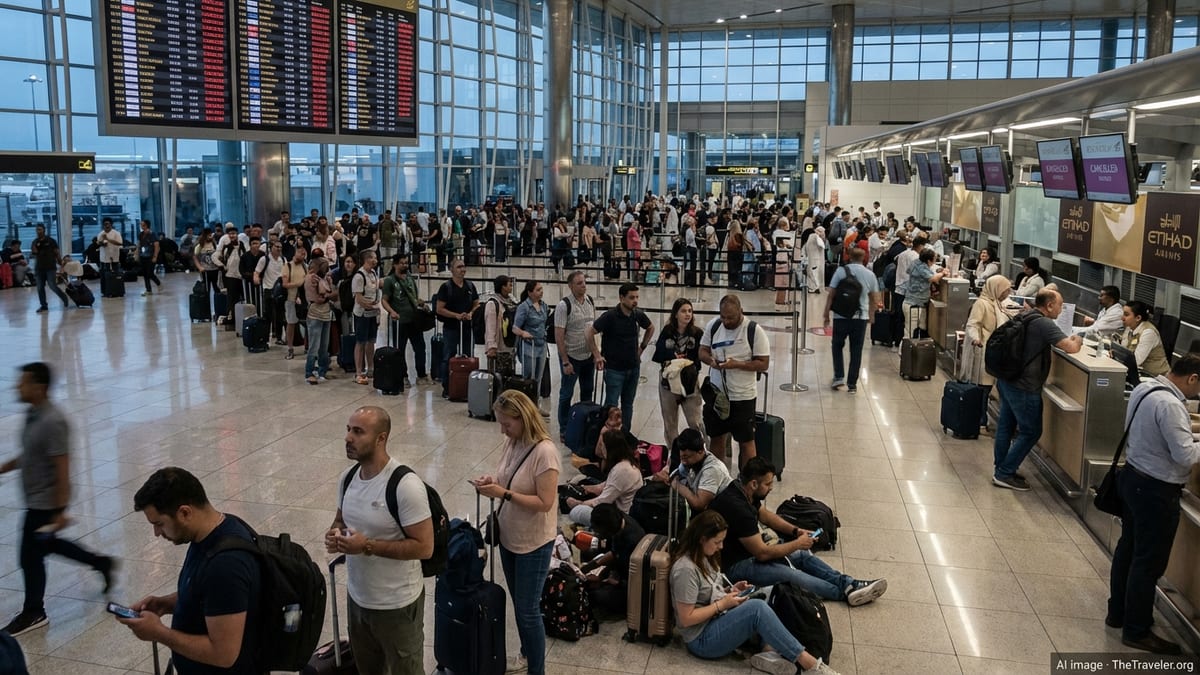
The latest disruption has had a visible impact on passengers transiting through Gulf hubs, which function as key connectors between Europe, Asia, Africa and the Americas. Travel advisories and local media coverage from the United Arab Emirates describe crowded departure halls and long queues at transfer counters as travelers attempt to rebook missed onward flights. Because many Gulf routes operate on a hub and spoke model with tightly timed banked connections, a delay of even 30 to 60 minutes can cause travelers to miss their next departure and wait hours for the following service.
Reports from Bahrain, Kuwait and Jordan during earlier waves of disruption illustrate how issues at one or two major hubs can quickly affect airports across the region. When flights into Gulf megahubs such as Dubai or Abu Dhabi arrive behind schedule, onward legs to secondary cities in the Gulf and Levant often depart late or are consolidated, leading to cancellations on thinner routes. This effect has been observed repeatedly in live arrivals and departures data, which show banks of delayed services on Gulf Air and other regional carriers whenever upstream flights from larger hubs slip out of their scheduled windows.
For travelers, the practical consequences range from missed business meetings and lost hotel nights to difficulties rebooking during peak travel periods when alternative seats are scarce. Travel guidance published in recent days encourages passengers to anticipate longer journey times, travel with flexible plans when possible and stay alert to schedule changes even after online check in is completed. Some advisories also recommend allowing extra time at origin airports for check in and security, as staff manage long lines of passengers seeking assistance with disrupted itineraries.
Passenger Rights and Compensation Options
Consumer rights organizations monitoring the situation note that the volume of delays and cancellations in the Gulf is bringing renewed attention to passenger entitlements. Guidance published by international claim services and regional regulators explains that the level of support or compensation available to affected travelers depends on a combination of factors, including the airline’s home country, the point of departure, the cause of disruption and whether rerouting or care such as meals and accommodation was provided.
Advisory pages focused specifically on Gulf and Middle East disruptions highlight several recent examples in which more than 1,200 flights were delayed in a day and dozens were cancelled, prompting large numbers of travelers to check eligibility for refunds or compensation. Some jurisdictions require airlines to offer standardized assistance during extended delays, such as food vouchers, hotel stays for overnight disruptions and free rebooking on the next available flight. Other cases are considered extraordinary circumstances where statutory cash compensation may not apply, particularly when airspace closures or security directives are involved.
Information from passenger advocacy platforms stresses that travelers affected by the most recent wave of 678 delays and 83 cancellations should keep boarding passes, booking references and any written communication from airlines, as these documents are often required when submitting claims. Many services advise checking both the operating carrier’s own policy and any applicable national or regional regulations, since international itineraries that begin or end in jurisdictions with strong passenger protection frameworks may unlock additional rights even when part of the journey runs through Gulf hubs.
What Airlines and Airports Are Doing Now
Publicly available statements and operational summaries suggest that airlines serving Gulf hubs are taking a range of measures to stabilize schedules after the surge in disruptions. These steps include using spare aircraft where possible, adjusting crew rosters, consolidating lightly booked services and temporarily reducing frequencies on certain routes to rebuild punctuality. In recent days, several carriers operating to and from the UAE have also maintained selective suspensions of specific city pairs, which can ease pressure on overburdened hubs while regional security conditions remain fluid.
Airports across the Gulf are likewise reported to be adapting operations to cope with fluctuating traffic flows. According to recent travel briefings, hubs including Dubai, Abu Dhabi, Riyadh and Bahrain have been calibrating staffing levels, opening additional check in and security lanes during peak periods and reviewing aircraft parking arrangements to accommodate off schedule arrivals. Some airport operators have also issued general advisories urging passengers to arrive earlier than usual and to monitor airline notifications closely, particularly for flights routed near temporarily restricted airspace.
Travel analysis published in early September notes that, despite persistent disruption, Gulf airports remain technically open and continue to process large volumes of passengers each day. The overarching challenge for both airlines and airports is to maintain a workable level of connectivity while responding to dynamic airspace warnings and managing intermittent weather and staffing constraints. As long as these overlapping pressures continue, industry observers expect further episodes of elevated delays and cancellations, even as operators work to keep the impact on travelers as limited as possible.
AirHelp: Gulf hubs delays and cancellations report
AirHelp: Middle East flight disruption overview