

More news on this day
A fresh wave of air connectivity from Saudi Arabia’s Eastern Province is accelerating global travel patterns, as Gulf Air, Qatar Airways, Emirates and Saudia enhance links from Dammam to key hubs such as London, Mumbai and Bangkok, prompting major hotel chains including Accor and Hilton to prepare for a sharp rise in both business and leisure demand.
Get the latest news straight to your inbox!
Dammam’s Long-Haul Network Steps Into the Spotlight
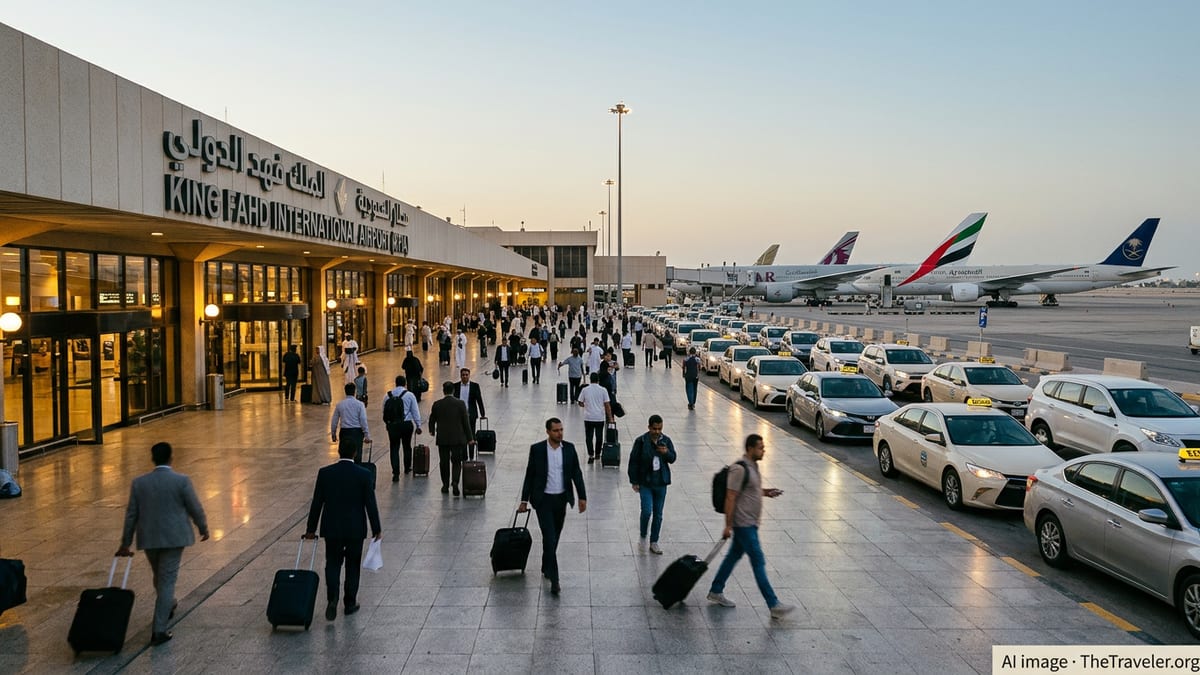
Dammam’s King Fahd International Airport is emerging as one of the Gulf’s most closely watched growth stories, with new and resumed routes strengthening its role as a gateway for Saudi Arabia’s Eastern Province. Saudia has brought back nonstop flights between Dammam and London Heathrow after a long hiatus, initially launching the link in late 2025 and now publishing three weekly frequencies in its Northern Summer 2026 schedule. Publicly available timetables indicate that the route is positioned to capture both corporate and visiting‑friends‑and‑relatives traffic between the UK and the oil and gas heartland of Saudi Arabia.
Industry reports highlight that this renewed Dammam–London connection is part of Saudi Arabia’s broader aviation strategy, which aims to dramatically increase international connectivity by 2030. Saudia’s move adds a direct long‑haul link from the Eastern Province to one of the world’s most competitive premium markets, giving travelers an alternative to routing through Riyadh or Jeddah for transcontinental journeys.
At the same time, Bahrain‑based Gulf Air continues to market London services that are within easy reach of Dammam via the King Fahd Causeway, effectively widening the menu of options for travelers in the Eastern Province. Trade coverage in the Gulf region points to Gulf Air’s focus on London Gatwick alongside Heathrow services, creating an enlarged catchment that includes Saudi residents who are willing to connect via Bahrain but still consider Dammam their primary airport.
These developments collectively underscore how the Dammam metropolitan area is stepping out from the shadow of larger Saudi hubs. With the return of London Heathrow and stronger access to UK airports through neighboring Bahrain, Dammam is moving closer to the front line of long‑haul competition among Gulf and Saudi carriers.
Connectivity to Mumbai and Bangkok Fuels Regional Flows
While London brings headline prestige, the most consistent passenger volumes for Dammam are expected on routes linking the Eastern Province to South and Southeast Asia. Publicly available route and schedule data show that Mumbai is already one of the strongest international markets from Dammam, with a mix of nonstop and one‑stop options operated by Gulf and Indian carriers. This corridor is critical for the large Indian workforce employed across Saudi Arabia’s energy, industrial and service sectors.
Qatar Airways remains a key connector between Dammam, Mumbai and other Indian cities via its Doha hub. Network maps and booking engines show multiple daily links between Doha and Mumbai, which, combined with frequent Dammam–Doha services, create dense one‑stop connectivity for both business travelers and migrant workers. Although not all of these flights are newly launched, the consolidation of schedules in 2025 and 2026 is reinforcing Dammam’s role as a feeder market into Qatar Airways’ broader South Asia network.
Bangkok and other Thai destinations are also benefiting as Emirates and other Gulf carriers restore and expand capacity. Emirates has been steadily rebuilding its Thailand network, with Bangkok served multiple times daily from Dubai and offering onward links into the region. Recent updates from the airline and industry media note that Emirates has boosted frequencies between Dubai and Saudi cities, including additional services to Dammam, enabling smoother one‑stop itineraries from the Eastern Province to Bangkok and leisure destinations such as Phuket.
As capacity returns across the Gulf–Asia corridors, analysts point out that Dammam is increasingly integrated into a multi‑hub ecosystem. Travelers can price and route trips via Dubai, Doha, Bahrain or Riyadh, yet still begin their journeys at King Fahd International. That flexibility is expected to stimulate new demand to Mumbai and Bangkok, especially among price‑sensitive leisure travelers who respond quickly to more frequent flights and competitive fares.
Hotel Giants Position for a Wave of Saudi and Transit Demand
The anticipated uplift in traffic from Dammam to London, Mumbai and Bangkok is already shaping strategies in the hotel sector. Accor and Hilton, two of the largest global hotel groups in the Middle East and Asia, have signaled in recent development updates that Saudi Arabia, India and Thailand remain priority markets for new rooms, brand diversification and conversions of existing properties.
Accor’s regional pipeline includes multiple midscale and upscale brands across Saudi Arabia, with particular emphasis on business‑heavy cities such as Dammam, Al Khobar and Dhahran. Industry presentations and investor materials describe how the group is targeting corporate travelers linked to the Eastern Province’s energy and industrial sectors, a segment likely to grow as direct links to London and improved access to Asian hubs make short‑notice business trips more feasible.
Hilton, meanwhile, has outlined plans to significantly expand its footprint in both Saudi Arabia and India over the coming years, with a mix of flagship Hilton and Waldorf Astoria properties alongside focused‑service brands like Hampton and Hilton Garden Inn. In Thailand, Bangkok remains a centerpiece of Hilton’s portfolio, and additional capacity is being added through new‑build projects and reflagged hotels. This positions the company to capture Saudi leisure and medical tourism to Bangkok as flight options via Dubai and Doha become more abundant.
Hotel analysts suggest that these capacity increases are not simply a response to current demand but a bet on the structural changes underway in Gulf aviation. As Dammam emerges as a stronger point of sale, global chains are seeking to knit together demand at both ends of key routes, from corporate stays in the Eastern Province to long‑weekend getaways and extended stays in Mumbai and Bangkok.
Eastern Province Tourism and Business Travel Stand to Benefit
Beyond pure point‑to‑point traffic, the new and expanded links from Dammam are expected to have a multiplier effect on the wider Eastern Province economy. Travel and tourism specialists note that easier access from London and major Asian cities tends to attract investment, conferences and specialist talent, particularly in sectors such as energy services, petrochemicals, logistics and technology that already have a strong presence in the region.
More convenient long‑haul access can also encourage multinational companies to base regional operations in Dammam or nearby Al Khobar, confident that executives and technical teams can travel efficiently to Europe and Asia. Saudia’s restored London Heathrow service, coupled with robust one‑stop options offered by Gulf Air, Qatar Airways and Emirates, gives corporate travel planners more flexibility to design travel policies centered on King Fahd International rather than defaulting to Riyadh.
On the leisure side, outbound tourism from the Eastern Province is likely to spread beyond traditional summer peaks as families take advantage of better year‑round connectivity. With Bangkok positioned as a gateway to beach destinations and wellness retreats, and Mumbai serving as a hub for domestic Indian tourism, hotel and tour operators in both countries are sharpening their focus on Saudi travelers with Arabic‑speaking staff, halal‑friendly offerings and tailored excursions.
Inbound tourism to the Eastern Province could also see a gradual lift. While Dammam is still primarily a business and expatriate market, its coastal setting and proximity to heritage and desert landscapes offer scope for more short‑break itineraries. As Accor, Hilton and other global brands deepen their presence, the combination of familiar hotel names and simplified air access may help reposition the region in the minds of international travelers.
Competition Intensifies as Networks Rebuild
The shifting route map around Dammam is playing out against a wider backdrop of renewed competition among Gulf and Saudi carriers. Saudia’s expansion is part of a national aviation transformation that also includes the planned launch and growth of new carriers, while established Gulf airlines such as Emirates and Qatar Airways are restoring pre‑disruption capacity and opening fresh routes in Asia and beyond.
For passengers in the Eastern Province, this translates into more choice, but also a more complex marketplace. Airlines are adjusting schedules, deploying different aircraft types and fine‑tuning fares in response to changing demand patterns and evolving regional airspace conditions. Observers note that premium cabins and loyalty programs are becoming key differentiators as carriers vie for high‑yield travelers moving between London, the Gulf and Asian financial centers.
Hotel companies are watching these shifts closely. When airlines add capacity, open new routes or upgauge aircraft, nearby hotels often adjust staffing, inventory management and pricing strategies to absorb spikes in arrivals. Accor and Hilton are among the groups using data from airline schedules and booking trends to calibrate opening timelines for new properties in Dammam, London, Mumbai and Bangkok, as well as to refine their sales efforts toward corporate clients that are increasing travel along these corridors.
As 2026 progresses, the interplay between aviation growth and hotel development around Dammam will remain a key storyline in Gulf travel. With Saudia’s direct London flights now in place and Gulf Air, Qatar Airways and Emirates tightening their regional networks, the stage is set for the Eastern Province to assume a more prominent role in connecting Europe and Asia, supported by an expanding web of international hotel brands at both ends of the journey.