

More news on this day
Hundreds of air passengers were left stranded in Kuwait this week after Gulf Air, Kuwait Airways and Qatar Airways canceled more than a dozen newly scheduled flights, disrupting key connections across Bahrain, New York, Amsterdam, Doha and other major routes at a time when Gulf aviation is already under intense pressure from regional conflict and airspace closures.
Get the latest news straight to your inbox!
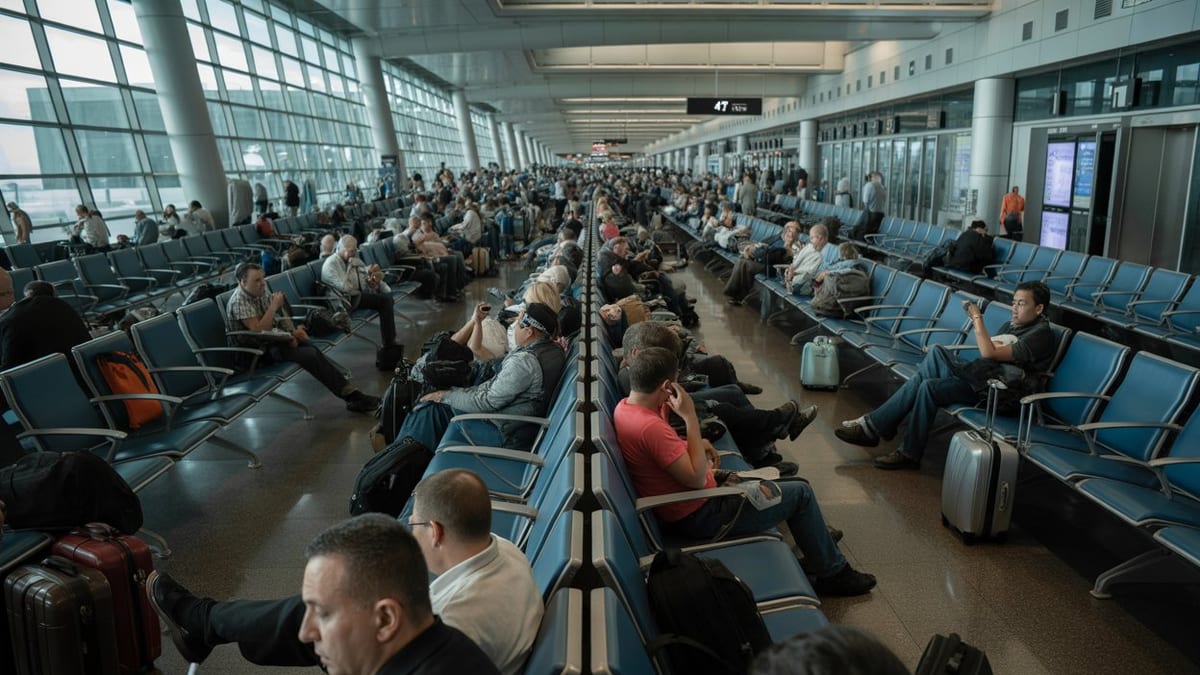
Image by Global Travel Alerts, Advisories, International Travel Alerts
Wave of Cancellations Hits Kuwait Amid Regional Airspace Turmoil
Publicly available flight data and regional media coverage indicate that the latest cancellations in and out of Kuwait follow weeks of severe disruption to Gulf aviation since late February, when escalating conflict involving Iran, Israel and the United States led to widespread airspace restrictions across the region. Airspace over parts of Kuwait, Bahrain, Qatar and neighboring states has been periodically closed or heavily restricted, forcing airlines to ground or reroute services.
Kuwait International Airport has emerged as one of the flashpoints of this crisis, with regular commercial operations repeatedly curtailed as carriers reassess overflight risks and available corridors. Reports from regional outlets describe passengers waiting for hours in departure halls in Kuwait after last-minute notices that flights were withdrawn from the schedule, often with limited alternative options as neighboring hubs also operate on reduced timetables.
Against this backdrop, the decision by Gulf Air, Kuwait Airways and Qatar Airways to cancel more than a dozen newly introduced or recently resumed flights has intensified pressure on the network that normally connects Kuwait to key Gulf, European and North American destinations. Routes touching Bahrain, Doha, Amsterdam and New York are particularly affected, according to airline advisories and airport information boards.
Key Routes Disrupted Between Kuwait, Bahrain, Europe and the United States
The cancellations have had an outsized impact because they strike at heavily used transfer corridors linking the Gulf with Europe and North America. Bahrain, home base for Gulf Air, functions as a crucial stepping stone for travelers from Kuwait heading to cities such as London, Paris and Frankfurt. With new or recently reinstated Bahrain services now pulled from the timetable, travelers are finding that traditional one-stop itineraries require multiple rebookings or overnight detours.
Services touching Amsterdam and New York are among the most disrupted. Amsterdam Schiphol and New York’s major international airports serve as transatlantic gateways for both Gulf and European carriers, already strained by conflict-related detours and slot limitations. When Gulf Air, Kuwait Airways and Qatar Airways remove even a small number of frequencies involving these hubs, the knock-on impact ripples through code-share partners and connecting banks of flights on both sides of the Atlantic.
Published analyses of the broader Middle East aviation situation show that thousands of flights have been canceled or rerouted across the region in March alone, with Qatar Airways and Kuwait Airways operating sharply reduced schedules and Gulf Air trimming services on vulnerable routes. In this environment, passengers originating in Kuwait or attempting to transit through the country are facing some of the steepest challenges in securing timely alternative itineraries.
Stranded Passengers Confront Long Waits, Limited Alternatives
Travelers stranded in Kuwait report, through social media posts and local coverage, prolonged waits for rebooking as airline call centers, airport ticket desks and online platforms struggle to keep up with the pace of schedule changes. Many passengers booked on the newly added flights that were later canceled had already experienced previous disruptions, leaving them with few remaining options that do not involve circuitous routings via secondary hubs in Europe, North Africa or South Asia.
Publicly available information from consumer advisories and travel industry commentary suggests that standard protections remain in place: passengers with canceled flights are generally eligible for refunds or rebooking on later services, subject to seat availability and airline policies. However, the combination of high demand, reduced capacity and continuing uncertainty over airspace access has made it difficult for many to secure near-term departures out of Kuwait.
In some cases, travelers are being advised to accept routings that avoid traditional Gulf hubs altogether, connecting instead through airports in Egypt, Turkey or southern Europe. While these options can restore a path home, they often involve longer journey times and overnight stays, adding cost and complexity for passengers already coping with sudden disruption.
Airlines Balance Safety, Regulation and Commercial Pressures
Industry experts quoted in recent aviation analyses emphasize that the current wave of cancellations is closely linked to safety assessments and regulatory constraints rather than purely commercial decisions. With missile and drone activity documented across parts of the Gulf and wider Middle East, carriers are relying on guidance from national aviation regulators and international risk assessments to determine which corridors remain viable.
Gulf Air, Kuwait Airways and Qatar Airways have all highlighted, in their public statements and published updates over recent weeks, that passenger and crew safety remains the primary consideration when adjusting schedules. Qatar Airways, for example, has been operating a limited number of flights through carefully defined safe corridors around Doha, while Kuwait Airways has periodically suspended regular arrivals and departures at Kuwait International Airport during periods of heightened risk. Gulf Air has likewise scaled back operations on certain regional routes when airspace restrictions tighten.
At the same time, airlines are contending with economic pressures linked to longer routings, higher fuel consumption and weaker demand from risk-averse travelers. Analysts note that extended detours to avoid closed airspace significantly increase operating costs, and some carriers have begun trimming less profitable routes or delaying planned expansions, a trend reflected in the cancellation of newly launched services that were intended to rebuild networks after earlier disruptions.
What Travelers Using Gulf Hubs Should Expect Next
For passengers booked on upcoming flights connecting through Kuwait, Bahrain or Doha, travel specialists and consumer advocates advise close monitoring of booking details, including flight status updates and any schedule change notifications. With airspace conditions shifting frequently, even flights that remain on the board can be retimed, rerouted or consolidated with little notice.
Travel industry guidance encourages passengers to consider flexible tickets, maintain updated contact information with airlines and booking platforms, and review the specific rebooking and refund rules associated with their fare types. Those with urgent travel needs may benefit from proactively exploring alternative routings through less affected hubs, even before an official cancellation is issued, to secure scarce seats.
While there are tentative signs that some carriers are gradually restoring limited operations as risk assessments evolve, the situation for travelers moving through Kuwait and neighboring Gulf hubs remains fluid. For now, passengers on Gulf Air, Kuwait Airways and Qatar Airways routes involving Bahrain, New York, Amsterdam, Doha and other key destinations should be prepared for continued disruption and build extra time and flexibility into any travel plans.