

More news on this day
Flight disruption across the Middle East intensified on April 13, 2026, as airports in Bahrain, Saudi Arabia, Oman and the United Arab Emirates reported fresh cancellations and delays, snarling schedules for Gulf Air, Saudia, Emirates, IndiGo and other major carriers from Dubai to Jeddah, Riyadh, Amsterdam and beyond.
Get the latest news straight to your inbox!
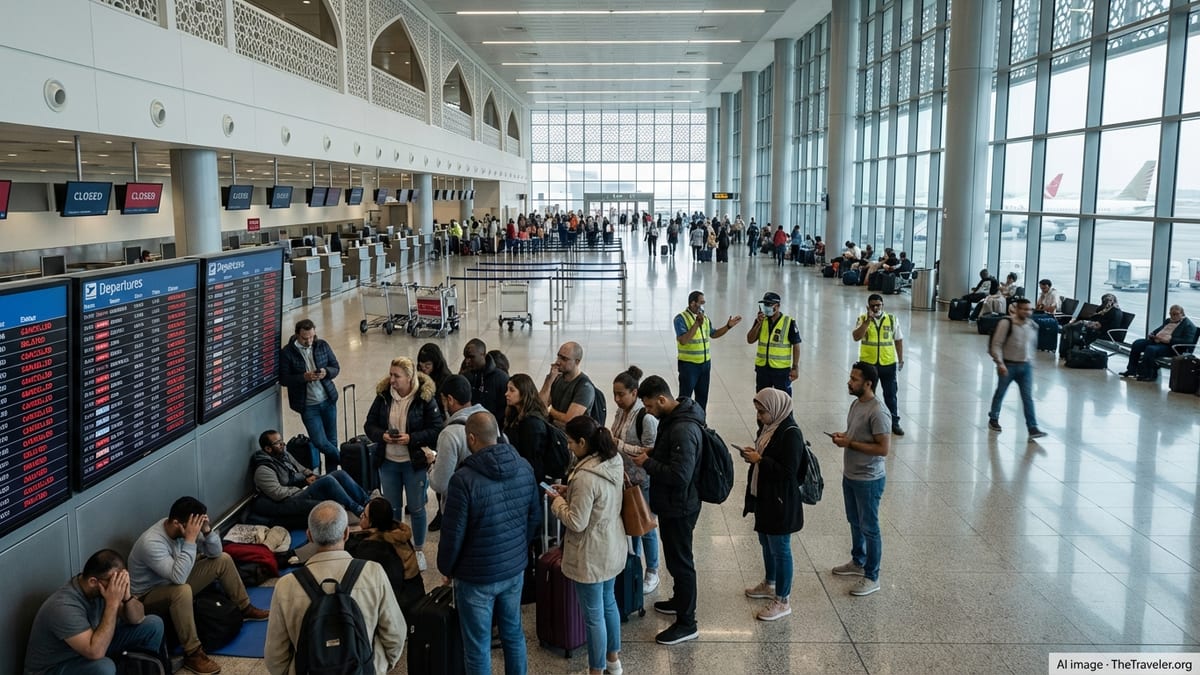
Fresh Wave of Disruptions Across Gulf Hubs
Published coverage on April 13 indicates that at least 15 flights were cancelled and close to 200 delayed across key Middle Eastern gateways, reflecting how fragile regional operations remain after weeks of volatility in Gulf airspace. The latest figures build on patterns seen over the previous 48 hours, when UAE, Saudi Arabia and Oman experienced clusters of cancellations concentrated at their busiest hubs.
Travel and aviation reports highlight Dubai International, Jeddah and Riyadh as among the most affected airports, with ripple effects stretching to European and Asian cities including Amsterdam and other long-haul destinations. While the raw numbers are modest compared with the peak of the crisis in early March, the spread of disruption across multiple countries underlines the continued sensitivity of flight schedules to short-notice operational changes.
Publicly available data shows that some of Sunday’s and Monday’s cancellations were pre-emptive, as airlines sought to avoid last-minute airborne diversions in response to any renewed airspace restrictions. This approach has left passengers facing extended wait times at airports, rolling rebooking attempts and, in some cases, enforced overnight stays as outbound and inbound rotations fall out of sync.
Analysts note that, taken together with sustained delays, the latest wave of disruption effectively removes the equivalent of several full days of flying for certain narrow-body fleets serving regional routes between Gulf capitals and secondary cities.
Key Carriers Hit: Gulf Air, Saudia, Emirates, IndiGo and More
The impact is spread across a mix of full-service and low-cost airlines, with Gulf-flag carriers again at the center. Published flight-monitoring snapshots and media roundups for April 12 and 13 show Gulf Air, Saudia, Emirates and Etihad all experiencing schedule changes, alongside regional operators such as flydubai and Air Arabia and international players including IndiGo.
Gulf Air’s operations remain especially vulnerable, given the continuing constraints associated with Bahrain’s airspace and knock-on effects at Bahrain International Airport. Recent operational updates point to a pattern of selective cancellations and rerouting, including services touching Saudi gateways like Dammam and long-haul connections that typically rely on smooth transit through the Gulf.
Saudia has been rebuilding parts of its network after earlier suspensions of links to the UAE and other regional destinations, yet April 13 timetables still include multiple delayed departures and arrivals through Jeddah and Riyadh. Industry reporting suggests the airline is juggling a complex mix of reinstated flights, rolling disruption from previous days, and shifting overflight permissions.
Emirates and flydubai, operating from Dubai’s primary hub, continue to work off a reduced but gradually expanding schedule compared with early March. Even as more routes restart, publicly visible tracking data shows pockets of delays on trunk services to Europe and South Asia, including flights tied to Amsterdam and several Indian and Pakistani cities. IndiGo, which relies heavily on Gulf routes for its international footprint, has also recorded delays on flights linking Indian metros with Dubai, Jeddah and other Middle Eastern destinations.
From Airspace Closures to Lingering Operational Strain
The backdrop to the current disruption remains the conflict-driven airspace closures and restrictions that swept across much of the region from late February. Information compiled from aviation advisories, flight tracking platforms and major news outlets shows that successive missile and drone strikes prompted temporary shutdowns or severe constraints over the UAE, Bahrain, Qatar, Kuwait and parts of Saudi Arabia and Oman.
Those closures forced airlines to cancel thousands of flights, divert long-haul services around the Gulf, and reposition aircraft and crew at alternative airports. Even as many airspace blocks have eased, airlines are still working through the structural consequences: aircraft out of their usual bases, crew rosters misaligned with legal duty hours, and maintenance checks squeezed into already crowded hangar schedules.
In Bahrain’s case, publicly available information indicates that the national carrier relocated parts of its fleet to neighboring Saudi airports when local operations became untenable. Similar contingency strategies were adopted elsewhere, with carriers using Muscat, Dammam and other regional airports as pressure valves when Dubai and Abu Dhabi were heavily constrained.
Operational planners now face a delicate balancing act. They are under pressure to restore pre-crisis connectivity for both business and leisure travelers, while still allowing enough slack in the system to cope with sudden changes in airspace access or security conditions. The result, as reflected in this week’s 15 cancellations and nearly 200 delays, is a network that functions but remains far from fully stable.
Passenger Experience: Long Queues, Rolling Delays and Rebooking Battles
For passengers in Dubai, Jeddah, Riyadh and other affected cities, the practical experience of this phase of disruption is defined less by sweeping shutdowns and more by persistent friction. Airport images and traveller accounts shared via social and traditional media over the weekend describe long check-in lines, crowded transfer desks and tight connections missed after successive minor delays accumulate along multi-leg itineraries.
Reports indicate that some travelers heading to or from Amsterdam and other European hubs faced last-minute gate changes and departure pushes of one to three hours, especially on services that rely on transiting Gulf hubs from Asia or Africa. Affected passengers often discover that even when their own flight is still operating, the previous sector may have arrived late, compressing turnaround times and reducing the margin for further disruption.
Airlines are publicly emphasizing flexible policies introduced during the peak of the crisis, including free date changes for certain tickets, partial refunds, and waivers on itinerary modifications when flights touch specified Middle Eastern airports. However, the uneven nature of these policies across carriers, and the difficulty of reaching call centers during peak disruption, continues to frustrate many travelers trying to salvage complex long-haul journeys.
Travel advisors note that passengers with non-stop flights into or out of the Gulf often fare better than those relying on multi-stop routings that require precise coordination across partner airlines. When just one leg of a multi-sector itinerary is cancelled or heavily delayed, it can trigger a cascade of missed onward connections that takes days to fully resolve.
Outlook: Gradual Stabilisation, but High Risk of Further Disruption
Forward schedules published by major Middle Eastern carriers suggest a cautious trajectory toward normalisation over the coming weeks, with incremental increases in frequencies on core routes as operational confidence returns. Saudia and Air Arabia, for example, have already announced restarts of several UAE links, even as they warn that services remain subject to late adjustments.
Nevertheless, aviation analysts warn that the system is still highly exposed to renewed shocks. Any fresh escalation in regional tensions or new restrictions in shared air corridors could quickly translate into another spike in cancellations and delays, particularly around multi-runway hubs like Dubai and Jeddah where traffic density is highest.
Travel planners recommend that passengers with imminent trips involving Bahrain, Saudi Arabia, Oman, the UAE or neighboring states build in additional buffer time, avoid tight connections and maintain close contact with their airlines via official status channels. For those yet to book, itineraries that offer multiple daily frequencies on key legs may provide more resilience than routes with only one or two weekly services.
For now, the picture across Gulf aviation is one of partial recovery overshadowed by continued fragility. The 15 cancellations and 195 delays logged around April 13 serve as a reminder that, although runways are open and aircraft are moving again, the Middle East remains one of the most unpredictable regions on the global flight map.