

More news on this day
Emirates is moving in lockstep with Qatar Airways, Etihad Airways, Air Arabia and Flydubai in an unprecedented show of coordination designed to reconnect disrupted markets and safeguard the Gulf’s role as a global aviation crossroads amid ongoing geopolitical upheaval.
Get the latest news straight to your inbox!
Coordinated Recovery After Airspace Shocks
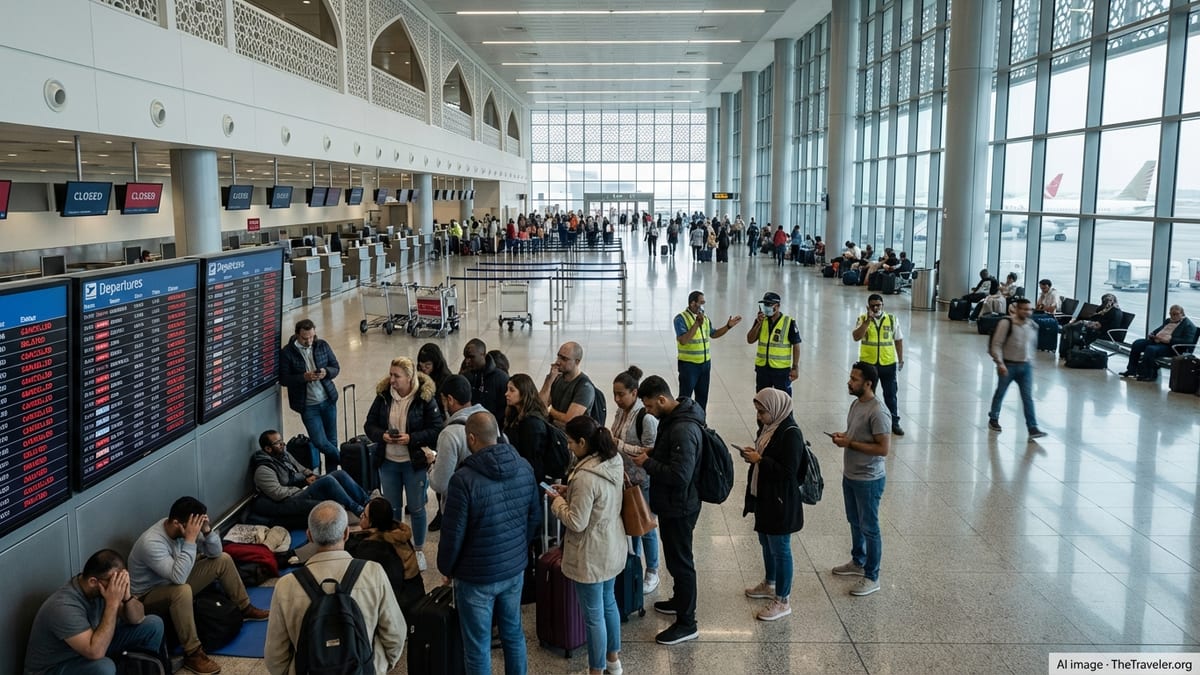
The latest Gulf Airline Recovery Index data suggests that the five leading Gulf carriers are calibrating their route and capacity decisions against a common baseline as they rebuild services following the most recent airspace closures across the region. Publicly available figures cited in industry coverage indicate that by mid March 2026 Emirates had restored close to three fifths of its pre disruption capacity, with Air Arabia and Flydubai operating at roughly half their usual levels and Etihad Airways and Qatar Airways scaling up more cautiously as operational and security assessments evolve.
This emerging pattern points to a form of practical, data driven cooperation. Rather than competing to reopen the same corridors at any cost, the Gulf airlines appear to be phasing their return in a way that preserves essential links between Europe, Asia and Africa while leaving headroom for further adjustments if the security situation deteriorates again. Analysts note that such coordination reduces the risk of fragmented services and stranded passengers, a problem that became acute during earlier rounds of sudden airspace restrictions.
Reports from regional aviation specialists describe this alignment as a notable shift for carriers that have traditionally been fierce rivals. While no formal alliance has been announced, the use of common metrics to track recovery and prioritise routes suggests a shared understanding that the Gulf’s long term hub status depends on maintaining a minimum level of connectivity, even when commercial incentives might push individual airlines in different directions.
At the same time, the carriers are rebuilding with an eye to resilience rather than simply chasing pre crisis volume. Schedules are being restored gradually on trunk routes linking Dubai, Abu Dhabi and Doha with key European and Asian capitals, but some secondary destinations remain on hold until airspace corridors stabilise. This more measured approach reflects lessons learned from previous crises, when aggressive relaunches were sometimes followed by abrupt cancellations as conflict zones shifted.
Managing Geopolitical Risk While Keeping Hubs Open
The coordinated effort is unfolding against a backdrop of renewed conflict across parts of the Middle East, which has triggered sweeping overflight bans and forced airlines to reroute or suspend services at very short notice. International coverage in recent weeks has highlighted how strikes and counterstrikes involving Iran, Israel and Western forces have periodically pushed regional traffic down to a fraction of normal levels, with Gulf hubs scrambling to arrange evacuation flights while cancelling the majority of scheduled services.
Despite these shocks, Dubai, Abu Dhabi, Doha and Sharjah have largely remained operational as transfer points, even when direct links to affected countries were curtailed. Industry reports describe complex rerouting patterns that divert long haul flights away from contested airspace yet still rely on Gulf hubs as refuelling and crew change platforms. Emirates, Qatar Airways and Etihad, supported by Air Arabia and Flydubai on shorter sectors, have been central to this effort, using their wide body fleets and dense regional networks to re stitch global flows.
The geopolitical backdrop remains volatile. Analysts warn that further escalations could bring renewed closures or restrictions that would again test the carriers’ ability to coordinate capacity and share market intelligence in near real time. Yet the latest recovery figures and route maps suggest that the foundations of a common playbook are being put in place, blending commercial competition with an implicit understanding that the Gulf’s collective brand as a safe, reliable bridge between continents is a shared asset.
Observers also point to the diplomatic dimension. The easing of the Qatar diplomatic rift several years ago reopened air corridors and removed some of the political barriers to closer practical cooperation between Doha and its neighbours. While structural rivalries remain, particularly as Saudi Arabia accelerates its own aviation ambitions, the current moment appears to be nudging Gulf carriers toward more pragmatic coordination on safety, routing and contingency planning.
From Rivalry to Pragmatic Collaboration
For much of the past decade, Emirates, Qatar Airways and Etihad symbolised an intense three way race for supremacy on long haul traffic between Europe, Africa, Asia and Australasia. Budget operators Flydubai and Air Arabia, meanwhile, fought for regional dominance with dense short haul networks feeding the big hubs. The latest crisis has not dissolved these rivalries, but it has prompted a visible change in tone as airlines emphasise the need to keep essential corridors open and present a stable front to passengers and regulators.
Reports in regional business media describe shared recovery indicators and similar sequencing of route resumptions across the five airlines. Each carrier is leaning on its own strengths Emirates and Qatar Airways on deep long haul networks, Etihad on niche connections and partnerships, Flydubai and Air Arabia on flexible point to point services but the overall pattern is one of complementary moves rather than direct confrontation on every route.
Industry analysts also highlight earlier signs that the competitive landscape was already softening at the margins. Pre existing commercial arrangements, including interline and codeshare style cooperation between some Gulf carriers and their global partners, provided a template for the kind of behind the scenes coordination emerging now. The shared response to disruptions has effectively accelerated that trend, nudging airlines to view operational resilience as a collective responsibility instead of a zero sum game.
There is a reputational incentive as well. The Gulf aviation model has faced sustained scrutiny over subsidies, labour issues and environmental impact. Demonstrating an ability to manage crises in a way that prioritises safety, predictability and passenger welfare may help counter some of those criticisms and reinforce the argument that the region’s hub strategy delivers global public value by keeping trade and travel channels open when other options narrow.
Securing the Future of the Gulf Aviation Model
Beyond immediate crisis management, the coordinated actions of Emirates, Qatar Airways, Etihad, Air Arabia and Flydubai are being interpreted by some observers as a test case for the long term sustainability of the Gulf hub model. The airlines are under simultaneous pressure from geopolitical shocks, rising fuel costs, climate regulation and emerging rivals in Turkey, India and Saudi Arabia that hope to capture a share of long haul transfer traffic.
Recent industry research into Middle East aviation trends notes that Gulf carriers are responding through a mix of fleet renewal, investment in sustainable aviation fuel and tighter integration between full service and low cost operations. Flydubai’s decision to diversify its single aisle fleet and Air Arabia’s continued expansion into new leisure markets, for example, are framed as part of a broader strategy to widen the base of feeder traffic into Dubai and Sharjah while maintaining cost discipline.
The current wave of disruptions has also underscored the importance of cargo, particularly pharmaceuticals, perishables and high value manufacturing components. Publicly available market updates point to steady growth in dedicated freighter services and multimodal connectivity, with Emirates and its regional peers increasingly positioning their hubs as logistics platforms that can flex between passenger and cargo priorities as conditions demand.
As governments across the Gulf double down on tourism, trade and logistics as pillars of economic diversification, the stakes for aviation could hardly be higher. The apparent alignment between Emirates, Qatar Airways, Etihad, Air Arabia and Flydubai suggests a growing recognition that the survival of the Gulf’s aviation ecosystem in an age of recurring crises depends on cooperation as much as competition. How that balance evolves over the coming months will shape not just the pace of recovery, but the future map of global air travel.