

More news on this day
Europe’s spring travel season is facing a fresh crisis as ongoing airspace closures and heavily reduced operations in the United Arab Emirates, Qatar, Bahrain, and neighboring Gulf states collide with peak April demand, derailing itineraries for thousands of travelers bound to and from Denmark, Germany, the United Kingdom, Italy, France, Ireland, Portugal, Turkey, and other European countries.
Get the latest news straight to your inbox!
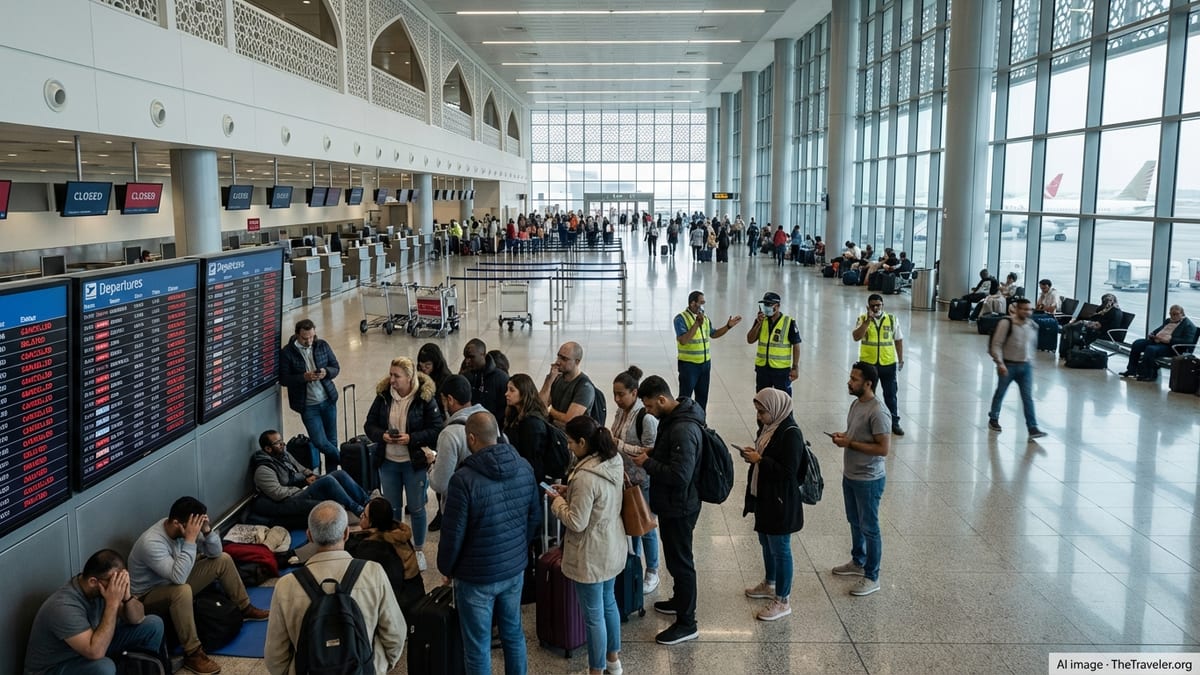
Middle East Conflict Ripples Across Europe’s April Travel Peak
The latest wave of disruption stems from the wider Middle East conflict that escalated on 28 February 2026, triggering Iranian strikes on infrastructure in the UAE, Qatar and other Gulf states, including airports and fuel facilities. In response, regional authorities restricted airspace and curtailed traffic through major hubs such as Dubai International and Hamad International, which are critical transit points for Europe–Asia and Europe–Africa travel.
Published coverage indicates that widespread cancellations and diversions have followed, with some analyses counting more than 14,000 flights scrapped on routes connecting Asia and Europe through Gulf hubs in the first weeks of the crisis alone. Airlines that previously funneled European travelers through Dubai, Doha, Abu Dhabi and Bahrain are now operating skeletal timetables or have halted services outright, shattering the carefully timed connection patterns that underpin many long haul journeys.
This shock comes just as European carriers had largely rebuilt capacity for the 2026 travel year, leaving airports in Denmark, Germany, the UK, Italy, France, Ireland, Portugal and Turkey facing a sudden mismatch between demand and available long haul seats. Travelers who planned spring holidays, family visits and business trips via the Gulf are now scrambling for alternatives or postponing travel altogether.
Industry commentary describes the situation as the most severe routing constraint for Europe bound passengers since the pandemic era, with both direct disruptions at Gulf hubs and knock on effects across European networks as aircraft and crews are redeployed, delayed or left out of position.
Flight Bans, Reduced Schedules and Lost Connections
European and Gulf airlines have responded with a patchwork of suspensions and partial resumptions that shift by the week. Reports from aviation news outlets show that carriers such as Air France, Lufthansa, KLM, British Airways and Wizz Air have all extended bans or sharply reduced services to Dubai and other Middle East destinations into April, while Gulf operators including Emirates, Etihad, Qatar Airways, Flydubai, Gulf Air and others run limited schedules or remain grounded on key routes.
One recent analysis noted that Air France has pushed its suspension of several Middle East routes through part of April 2026, erasing around 170 European connecting options tied to those flights. Other coverage highlights that British Airways has extended its Dubai cancellations well into the mid year period, eliminating a core link between London and the Gulf that many passengers from Ireland, Denmark and regional UK airports use as a springboard toward Asia and Australasia.
From the Gulf side, public updates show that Etihad is operating a restricted network from Abu Dhabi until at least 30 April, while low cost and regional airlines that once connected smaller European cities to Dubai, Doha and Bahrain have cancelled numerous routes or paused operations entirely. Travel advisories compiled by industry risk consultancies describe Dubai and Abu Dhabi as running below normal capacity, with operational bottlenecks driven by overflight restrictions and the need to reroute around sensitive airspace.
This shrinking web of flights breaks the through itineraries that European travelers have come to rely on. A family from Germany booked to visit relatives in Australia via Dubai, or a Danish student connecting through Doha on the way to Southeast Asia, may now face a cascade of cancellations that also affect their return legs into major European gateways such as Frankfurt, Munich, Paris, London, Dublin, Lisbon, Copenhagen and Istanbul.
Denmark and Other European States Grapple With Stranded Travelers
For individual European countries, the fallout is most visible in the rising number of travelers stranded mid journey or unable to depart as planned. Legal and immigration briefings published in recent days highlight how authorities in the UAE, Qatar and Bahrain have implemented temporary measures for foreign visitors whose visas are expiring but who cannot leave because flights are suspended or airspace remains constrained.
According to these summaries, the UAE has announced waivers of overstay fines for people stuck in the country due to the closures, while Qatar has extended a range of entry visas by an extra month and Bahrain has granted automatic three month extensions for certain visit visas. These measures indirectly affect citizens of Denmark, Germany, the UK, Italy, France, Ireland, Portugal and other European states who are caught in transit or on holiday in the region and suddenly unable to travel onward to Europe.
Within Europe, consular services and airlines are working within a fluid environment shaped by security advisories and airline specific policies. Travelers whose Gulf segments are cancelled often find that their entire ticket, including the European leg, must be reissued or refunded, forcing them to seek new options at sharply higher prices. Reports from consumer advocates and travel forums describe cases where rebooked fares bypass the Gulf entirely, routing passengers through Istanbul, central Asia or African hubs instead, and adding many hours to journeys back to European cities such as Copenhagen or Dublin.
Transit focused countries like Denmark, which host growing long haul networks despite relatively small populations, are particularly sensitive to these disruptions. Reduced feed from Gulf hubs into Scandinavian and northern European airports can lead to thinner loads on connecting European flights and may prompt last minute schedule adjustments, frustrating both inbound tourists and residents returning home.
Soaring Fares and Longer Routes for Germany, UK, Italy, France and Ireland
While the most visible impact is flight cancellation, the subtler effect is on routing and fare levels across Europe’s largest outbound markets. With large portions of Gulf hub capacity offline, airlines have shifted Europe to Asia and Europe to Africa connections to longer, more northerly or southerly paths that avoid closed or high risk airspace. Aviation analytics cited in specialist publications report average fare increases of around 25 percent on some affected corridors since the end of February.
For travelers originating in Germany, France, Italy, the UK and Ireland, this means that itineraries that once relied on a single stop in Dubai, Doha or Abu Dhabi now require two or even three connections, often through Istanbul, central or eastern Europe, or via secondary hubs in the Caucasus, North Africa or the Indian Ocean. Additional flight time, refueling stops and crew costs are being passed on through emergency fuel surcharges and dynamic pricing.
The pressure is particularly acute in the run up to late April and early May public holidays, when leisure demand normally surges. Package tour operators in markets such as Germany and the UK are already flagging limited availability and higher prices for long haul trips, while some have reportedly pulled Gulf hub connections from their April offerings in favor of more stable routings that keep customers within Europe or on direct transatlantic services.
Short haul European networks are also feeling the effect. Reduced long haul connectivity into London Heathrow, Paris Charles de Gaulle, Frankfurt, Munich and Milan Malpensa can translate into lower demand on feeder flights from regional airports in Ireland, Portugal, Denmark and elsewhere, which in turn may lead to schedule trimming or equipment changes that inconveniences purely intra European travelers.
Portugal, Turkey and Southern Europe Seek Alternative Gateways
In southern Europe, Portugal, Spain, Greece and Turkey are navigating the disruption from a different position. Istanbul in particular is emerging in traveler reports as a crucial alternative gateway for those who can no longer route through the Gulf. Turkish carriers continue to operate extensive connections between European cities and Asian destinations, with some passengers choosing longer, more northerly routings through Turkish or central Asian airspace to avoid the Gulf entirely.
Portugal and other western European countries with niche links to the Gulf are more exposed on specific city pairs, such as Lisbon to Dubai or Doha, but less so on overall network resilience because their long haul portfolios also lean heavily on North and South Atlantic routes. Nonetheless, published travel advisories recommend that passengers from Portugal and neighboring states who had relied on Gulf carriers for Asia connections consider rebooking via European or Turkish hubs well into April.
Turkey occupies a dual role as both destination and alternative hub. For travelers from Scandinavia, Germany, the UK and Ireland, Istanbul offers a way to bypass the most volatile airspace while still reaching parts of the Middle East, central Asia and South Asia. However, the surge in demand is putting strain on capacity, leading to busier flights into Turkish airports and sporadic reports of higher fares or limited award seat availability during key April dates.
Across southern Europe more broadly, airports are adjusting operations to accommodate rerouted traffic, including additional charter and rescue style flights in some cases. While these measures help clear backlogs, they also underscore how dependent many European travelers have become on the Gulf super hubs, and how disruptive sudden constraints in UAE, Qatar, Bahrain and neighboring states can be for April and summer season plans.