

More news on this day
Stricter entry controls for Makkah and a patchwork of regional airspace restrictions are converging just weeks before Hajj 2026, prompting Nigeria and a growing list of countries including Turkey, Egypt, Indonesia, Malaysia, the United Kingdom, the United States, Pakistan, Mexico, India, Bangladesh and Canada to activate emergency measures to keep pilgrims moving.
Get the latest news straight to your inbox!
Saudi Tightens Makkah Entry and Closes Umrah Window Early
Publicly available information indicates that Saudi Arabia has halted general entry into Makkah without official permits as Hajj preparations intensify, effectively sealing the city to casual visitors and non-accredited travelers. Reports describe checkpoints around the holy city where access is limited to residents, workers with official documentation and pilgrims holding valid Hajj permits.
According to recent coverage, the issuance of new Umrah visas for 2026 stopped in March, with final arrivals required in early April and all Umrah pilgrims instructed to depart by mid to late April to clear the way for Hajj operations. Travelers have shared widely circulated advisories noting that entry for most non-resident visa holders into Makkah will cease around mid-April, in line with the Islamic date of 1 Dhu al-Qi'dah 1447 AH.
These measures build on rules first tightened in recent seasons, when Saudi regulators required hotels in Makkah to refuse bookings to guests without a Hajj or official work permit during the pilgrimage period. For 2026, the combination of permit checks, accommodation controls and strict visa cut-off dates is being enforced earlier, raising the stakes for anyone whose flights are delayed or rerouted close to the deadline.
For independent travelers and those attempting last-minute Umrah trips, the changing rules have translated into confusion at border points, with reports of individuals turned back from approaching Makkah despite holding other categories of valid Saudi visas.
Regional Airspace Closures Add a Second Layer of Risk
Beyond Saudi Arabia's internal restrictions, regional security tensions are reshaping how aircraft reach Jeddah and Madinah. Aviation bulletins and risk advisories issued in recent weeks highlight elevated conflict-related hazards across parts of West Asia, with some agencies recommending that airlines avoid or severely limit use of certain neighboring airspaces.
Conflict-zone guidance referenced in aviation analyses suggests that carriers are being urged to route Hajj and Umrah flights to Saudi Arabia via southern corridors and higher cruising altitudes, bypassing Iranian, Iraqi and other contested skies. This has lengthened flight times, particularly for pilgrims originating in South and Southeast Asia, and has reduced scheduling flexibility for airlines operating into the Jeddah and Madinah hubs.
Industry data compiled by flight-tracking and safety consultancies shows tens of thousands of regional cancellations and schedule changes since the latest escalation began, with continued warnings that airspace status can shift with little notice. Saudi national and foreign carriers have publicly acknowledged suspensions or diversions on select routes, especially to and from Gulf and Levant destinations, even as core Hajj-bound services are prioritized.
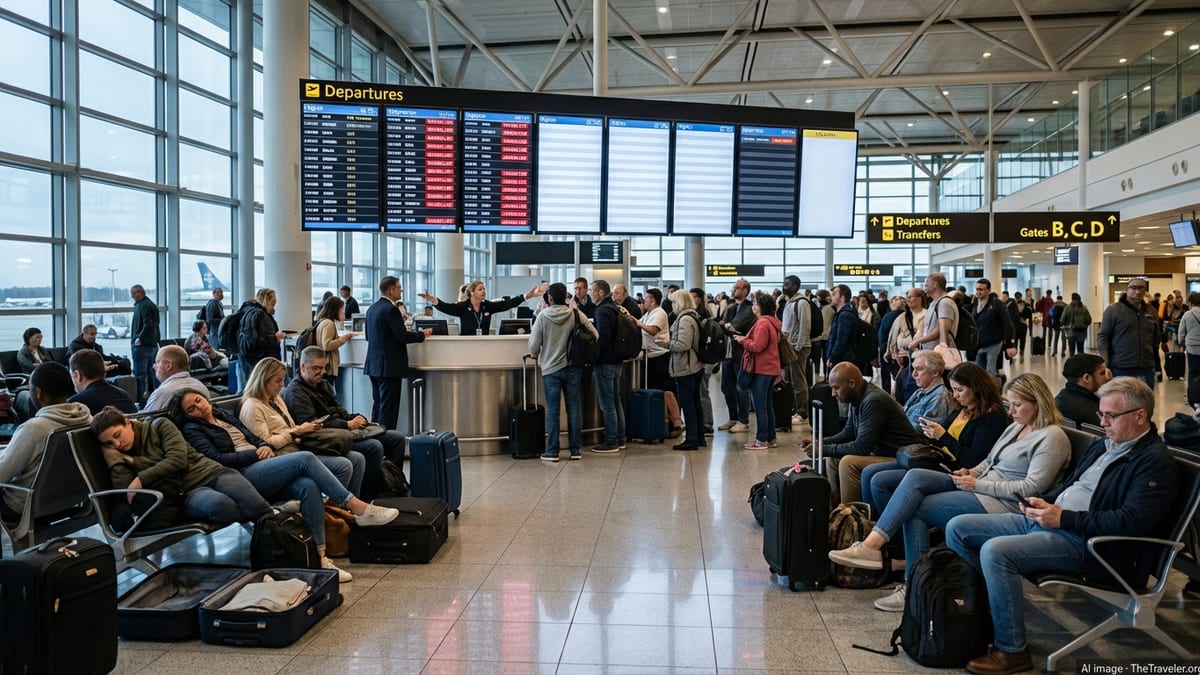
While major Saudi airports remain open, travel advisories emphasize that disruption risk is now structural rather than exceptional. Airlines are operating within narrower routing options and subject to fast-changing safety notices, leaving little margin for delay as Hajj visa entry deadlines approach.
Nigeria Steps Up Hajj Planning as Pilgrim Volumes Grow
Nigeria, home to one of the world’s largest Muslim populations, has been moving to harden its Hajj planning against these pressures. Recent announcements from the National Hajj Commission of Nigeria underscore a focus on early medical screening, stricter eligibility criteria and closer coordination of transport logistics to keep pilgrim groups on schedule.
Domestic coverage notes that Nigerian authorities have been urging state pilgrims’ welfare boards and accredited tour operators to lock in flight slots and accommodation well ahead of Saudi cut-off dates. After earlier seasons saw delays in airlift agreements and return-leg congestion, planners now appear intent on reducing any last-minute dependence on scarce airport capacity in Jeddah and Madinah.
Health protocols have also tightened. Public documents outlining Nigeria’s Hajj 2026 framework emphasize that only medically fit pilgrims will be cleared to travel, aligning with Saudi health regulations that highlight crowd-management, communicable disease controls and heat-related risk mitigation.
For individual Nigerian pilgrims, the impact is tangible: those registered through official channels are being advised to treat schedule notifications as firm, to avoid unauthorized ticket changes and to prepare for potential rerouting or longer flight times as airlines adapt to regional airspace constraints.
Other Major Pilgrim-Sending Countries Launch Emergency Support
Nigeria’s response is part of a broader global pattern. In recent weeks, Turkey, Egypt, Indonesia, Malaysia, Pakistan, India and Bangladesh have all updated Hajj guidance or reiterated advisories highlighting the interplay between Saudi entry controls and regional aviation challenges. These countries collectively send hundreds of thousands of pilgrims each year, making them particularly sensitive to any bottlenecks at Saudi gateways.
Travel notices from Western governments, including the United Kingdom, the United States and Canada, have similarly been revised to flag heightened volatility in Middle East air corridors and to remind citizens performing Hajj or Umrah that flights may be rerouted, delayed or canceled at short notice. Many advisories are encouraging travelers to monitor airline channels closely, purchase flexible fares and ensure comprehensive travel insurance.
For Muslim communities in Mexico and other emerging Hajj markets, smaller pilgrim contingents still face the same structural obstacles. Carriers serving these routes may rely more heavily on code-shares and connecting hubs in the Gulf, meaning that closures or restrictions in neighboring states can cascade quickly into missed connections and tightened capacity on the remaining viable paths into Saudi Arabia.
Published reports suggest that consular teams across these countries are preparing contingency plans, including emergency hotlines and coordination cells to assist stranded nationals should large-scale disruptions materialize during the peak days of Hajj.
What Travelers Should Know Before Setting Out
For anyone planning to travel to Saudi Arabia in the coming weeks, the main message emerging from official notices and industry analyses is to plan early and build in redundancy. Prospective pilgrims are being urged to verify that their Hajj packages or independent itineraries align with Saudi visa issuance and exit deadlines, particularly the dates after which general entry into Makkah is no longer permitted.
Travelers are also advised, through multiple public advisories, to check flight status regularly, keep contact information for airlines and tour operators close at hand, and be prepared for alternative routings that may involve longer travel times or different transit hubs than originally booked. Flexible accommodation and ground-transport plans inside Saudi Arabia are increasingly seen as a necessity rather than a luxury.
Health documentation is another emerging pressure point. With Saudi regulations stressing vaccination and medical fitness, and countries like Nigeria formalizing pre-departure medical screening, pilgrims who delay checkups or fail to complete required certifications risk being denied boarding in their home countries or refused entry on arrival.
Finally, travelers are being reminded that local implementation can be strict. Once the Makkah entry restrictions formally begin, road checkpoints and hotel rules are expected to be enforced closely, leaving little room for negotiation for those without the correct permits or who arrive after official deadlines. For Hajj 2026, navigating the journey now depends as much on understanding airspace maps and regulatory timelines as it does on securing a visa and a plane ticket.