


More news on this day
Jakarta’s Halim Perdanakusuma Airport has resumed flight operations after a prolonged shutdown triggered by volcanic ash from Mount Anak Krakatau, restoring a key secondary hub for Indonesia’s capital while airlines cautiously rebuild disrupted schedules.
Get the latest news straight to your inbox!
Flights restart just after midnight following two days of closures
Publicly available information from Indonesia’s transport authorities and airport operators indicates that Halim Perdanakusuma Airport, on Jakarta’s eastern side, was cleared to reopen to commercial traffic shortly after midnight on Tuesday, 8 September 2026. The decision came after Anak Krakatau’s eruption forced sweeping airspace restrictions across western Java and southern Sumatra, halting thousands of flights over the weekend.
Transportation ministry updates show that Halim was among several airports ordered to suspend operations as volcanic ash drifted across key approach paths into Jakarta. Notices to air missions (NOTAMs) extended Halim’s closure through Monday evening, alongside Soekarno-Hatta International Airport and regional gateways in Lampung and West Java, while aviation authorities monitored ash concentration in the upper airspace.
By early Tuesday, a revised assessment of conditions over Jakarta’s skies allowed both of the capital’s airports to return to active status. Government statements describe Soekarno-Hatta, Halim Perdanakusuma and Bandung’s Husein Sastranegara as operational from 00:01 Western Indonesia Time, with additional smaller airports reopening later in the night as ash levels and visibility improved.
Airport operator InJourney Airports reports that normal movements at Halim and its sister facilities are being restored in stages rather than in a single wave. The company’s social media updates emphasize that runway inspections, airspace checks and coordination with air navigation services were prerequisites before the first departures were cleared.
Gradual ramp-up as airlines rebuild disrupted schedules
Carriers are moving cautiously as Halim comes back online. A media statement from Lion Group, which operates domestic services from both Soekarno-Hatta and Halim, notes that flights to and from Jakarta are being added back progressively, with each rotation subject to reviews of current ash advisories, aircraft readiness and crew availability.
The phased approach reflects the scale of the disruption over the previous two days. Coverage from Indonesian and international outlets indicates that more than 2,000 flights were canceled or diverted across the network, affecting hundreds of thousands of passengers as AirNav Indonesia restricted airspace around the capital and several provincial cities due to detected ash clouds.
At Halim, which handles a mix of scheduled domestic routes, charter operations and state flights, the shutdown stranded travelers bound for key cities such as Surabaya, Medan and Padang. Published airline and airport statements show that carriers are now focusing on re-accommodating disrupted passengers and operating additional or larger-capacity flights where possible, while warning that residual delays may persist during the first day of reopening.
Travel advisories circulating on airline websites and social channels encourage passengers using Halim to reconfirm departure times, as same-day schedule changes remain possible if winds shift ash plumes back toward established flight corridors. Some international operators are also adding relief services into Jakarta, with regular operations concentrated at Soekarno-Hatta but influenced by the broader regional recovery.
Safety protocols drive decision-making as ash risk is reassessed
Volcanic ash in the atmosphere poses particular risks to jet engines and aircraft systems, and the Anak Krakatau eruption prompted Indonesia’s aviation authorities to apply strict precautionary measures. According to publicly available briefings from the Ministry of Transportation and the national disaster management agency, closures at Halim and other airports were initially based on guidance from the Volcanic Ash Advisory Centre in Darwin and ongoing satellite and radar monitoring of ash dispersion.
The same sources indicate that the reopening decision followed confirmation that ash concentrations in airspace used by arrival and departure routes had fallen below operational thresholds. Officials outlined the need for continued vigilance, describing the situation as dynamic and subject to rapid change if the volcano’s activity intensifies or wind patterns shift.
Air navigation notices referenced in media reports highlight temporary restricted airspace zones, or “polygons,” around areas where ash was still present. Airlines operating from Halim are expected to plan flight paths around those zones and adjust cruising altitudes where necessary. Pilots and dispatchers are being briefed to monitor updated advisories through the day.
Ground operations at Halim have also undergone additional inspections following the ash fall. Runway and taxiway checks, engine-ingestion risk assessments, and air-conditioning and filtration system reviews are all cited in operator updates as standard steps before resuming movements after an ash event. These procedures are designed to prevent lingering particulate matter from damaging aircraft or airport infrastructure.
Passengers returning to Halim face busy terminals and lingering backlogs
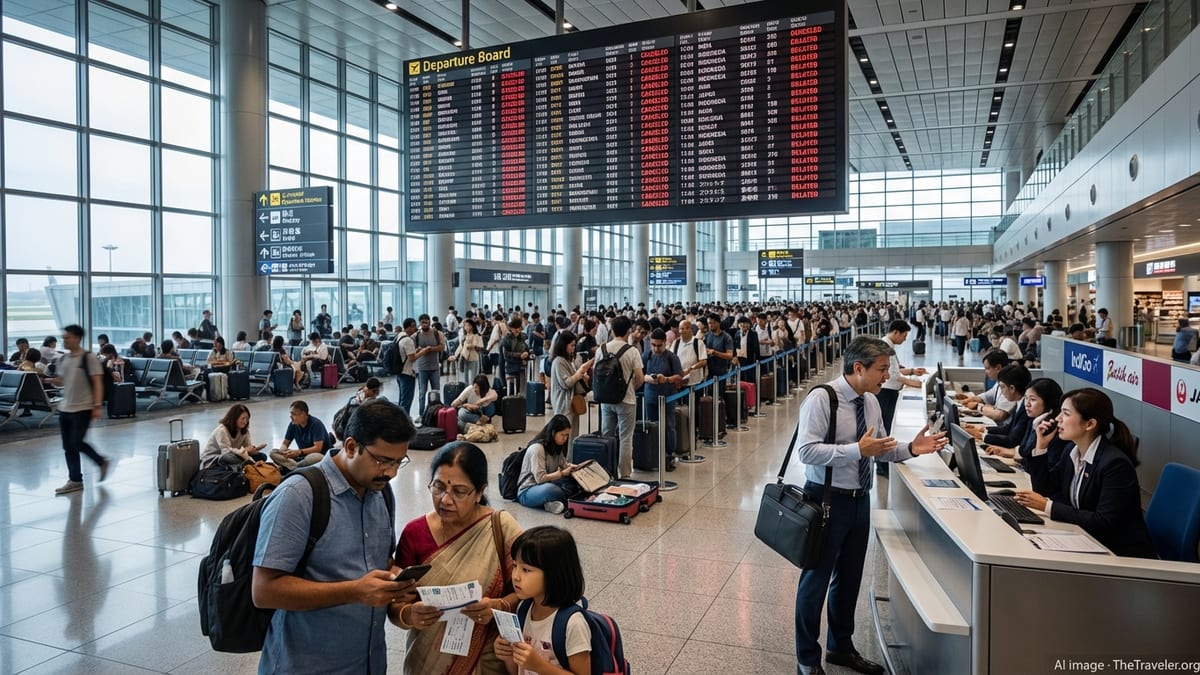
As Halim restarts, passengers are encountering crowded terminals and fuller-than-usual flights. News photos and on-the-ground accounts from Jakarta’s airports over the past two days show long queues at check-in counters, rebooking desks and security checkpoints, particularly at Soekarno-Hatta, with some of that pressure expected to spill over to Halim as it reopens.
Airport operator communications urge travelers to arrive earlier than usual for flights from the capital region, citing the combination of re-timed departures, high demand for limited seats and ongoing weather and airspace monitoring. Some airlines have extended fee waivers for date and route changes, allowing passengers who are flexible to travel later in the week and ease the immediate crunch.
Public transport to and from Halim, including ride-hailing services and airport shuttles, is also resuming normal patterns after days of reduced demand. However, early-morning reports suggest that road congestion around both of Jakarta’s airports is heavier than typical weekday levels, as travelers seek to secure the first available seats out of the city.
Travel industry analysts cited in local coverage note that while the immediate priority is clearing the backlog of stranded passengers, the incident may prompt renewed scrutiny of contingency planning at Jakarta’s airports, particularly given the capital’s proximity to historically active volcanoes in western Java and the Sunda Strait.
Regional aviation braces for continuing volatility from Anak Krakatau
Although Halim’s reopening marks an important step toward normalizing air connectivity in and out of Jakarta, forecasters caution that Anak Krakatau remains active and that further eruptions are possible. The national disaster agency’s recent updates describe ongoing volcanic activity, with ash emissions and tremors still recorded, even as the intensity has eased from peak levels observed late last week.
Regional air travel patterns are likely to remain sensitive to changes in the volcano’s behavior. Airlines serving Halim and other affected airports are maintaining contingency plans for rapid operational adjustments, including diversions, schedule cuts or renewed suspensions if ash clouds once again encroach on busy airways connecting Java, Sumatra and neighboring countries.
For now, publicly available information suggests that Indonesia’s aviation system is shifting from crisis response to recovery mode. With both of Jakarta’s airports back in service and key regional hubs reopening, the focus is turning to restoring confidence among travelers and demonstrating that safety-driven decisions will continue to guide operations as Anak Krakatau’s eruption evolves.
Passengers planning to use Halim in the coming days are advised in airline and airport updates to monitor official channels closely and allow extra time at the airport, as residual disruptions from the volcanic ash episode may continue to ripple through schedules even after runways have reopened.
Indonesia Ministry of Transportation briefing on reopened airports
Bernama: Three Indonesian airports reopen after volcanic ash disruptions
Antara: Indonesia reopens five airports after Krakatau ash disruption