

More news on this day
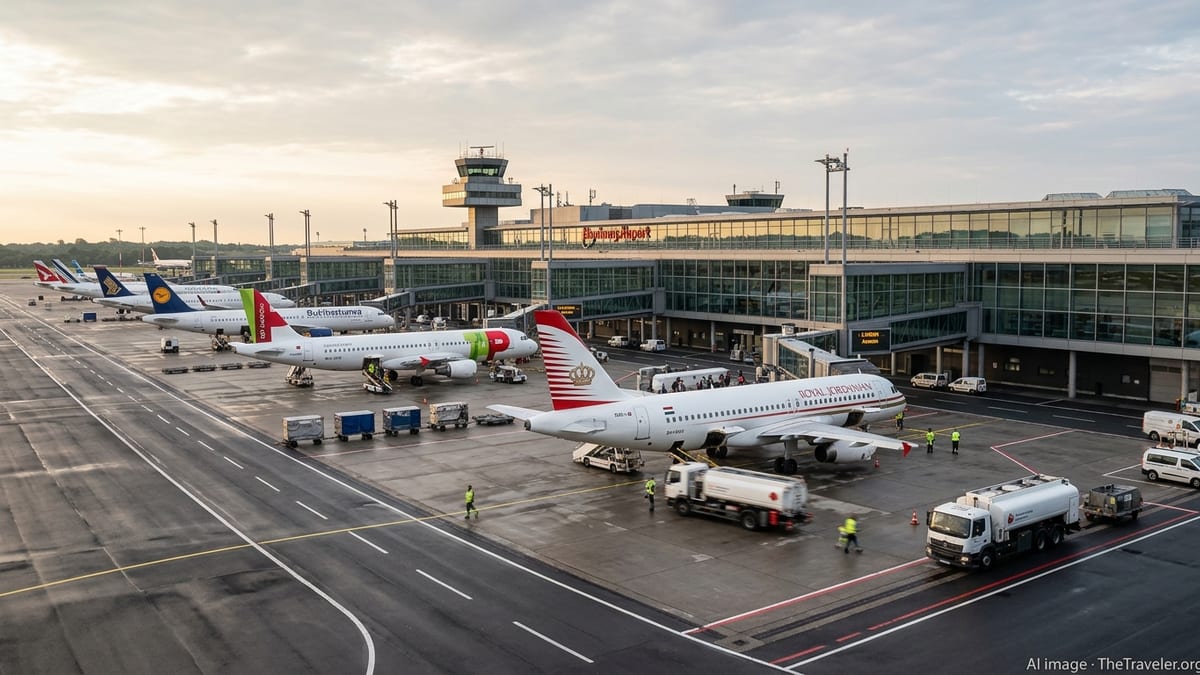
Hamburg Airport is preparing for one of its most ambitious holiday seasons yet, with the summer 2026 schedule set to introduce new routes to Amman, Lisbon and a series of other popular leisure and city destinations across Europe, North Africa and the Middle East.
Get the latest news straight to your inbox!
Summer 2026 schedule builds on recent growth
Publicly available information from Hamburg Airport indicates that the summer 2026 timetable, starting at the end of March 2026, is designed to build on strong growth seen in 2024 and 2025, when the airport re‑established a dense European network and added new airlines. The upcoming season is described in airport communications as a further step in reconnecting Northern Germany with a broad mix of sun, city break and visiting‑friends‑and‑relatives markets.
The airport’s current winter 2025/2026 overview already highlights an “outlook for summer 2026,” pointing to new and expanded connections to Amman, Marrakesh, Kalamata, Hurghada, Lisbon, Stockholm, Oslo and Tallinn. This advance planning gives airlines time to market new services and allows tour operators and independent travelers to lock in itineraries months before the peak season begins.
Hamburg has long promoted itself as Northern Germany’s gateway to Europe and beyond. With 55 airlines serving around 120 destinations in the summer 2025 schedule, the 2026 expansion is positioned as a qualitative shift toward more medium‑haul connectivity and a broader spread of leisure markets rather than a simple return to pre‑pandemic capacity.
Royal Jordanian brings new link from Hamburg to Amman
One of the headline additions for summer 2026 is a new non‑stop route from Hamburg to Amman, operated by Royal Jordanian. According to Hamburg Business development updates and airport schedule previews, the Oneworld member plans to launch twice‑weekly services between Hamburg and the Jordanian capital from 28 March 2026, initially using Airbus A320 aircraft.
The new intercontinental service will give Northern Germany a direct air bridge to Jordan’s capital for the first time, opening easier access to destinations such as Petra, the Dead Sea and Wadi Rum via Amman’s Queen Alia International Airport. Royal Jordanian’s membership in a global alliance also creates onward connection options to the wider Middle East, Gulf region and parts of Asia on a single ticket, which is likely to appeal to both leisure and niche business travel segments.
Industry coverage notes that this route is also strategically important for Royal Jordanian, representing its first scheduled service to Northern Germany and expanding its European footprint beyond existing hubs in Central and Southern Europe. For Hamburg Airport, the link further diversifies a long‑haul and medium‑haul portfolio that already includes connections to destinations such as Dubai and Tel Aviv via other carriers.
Lisbon and classic sun routes headline European additions
Alongside Amman, the summer 2026 schedule highlights Lisbon as another major new destination from Hamburg. Airport communications list the Portuguese capital among the confirmed additions, reflecting strong demand from Northern Germany for both city breaks and coastal holidays along the Atlantic.
Lisbon has seen rapid growth across European networks in recent years, and its inclusion from Hamburg gives travelers direct access to Portugal’s capital, as well as convenient rail and domestic air connections onward to Porto, the Algarve and the Azores. The route also strengthens North‑South flows within the European Union at a time when carriers are actively reallocating capacity from some higher‑cost German airports toward markets with robust leisure demand.
The outlook for summer 2026 additionally points to renewed and expanded links to classic sun destinations. Marrakesh in Morocco and Kalamata in Greece are being highlighted for their appeal to package tourists and independent travelers alike, while Hurghada on Egypt’s Red Sea coast remains a staple in many German holiday programs. These services are expected to be operated primarily by leisure‑focused carriers, with a mix of scheduled and charter offerings catering to the region’s strong outbound tourism market.
Nordic and Baltic cities round out a diversified network
Hamburg Airport’s preview of the 2026 summer timetable also draws attention to an enhanced northern network, with Stockholm, Oslo and Tallinn listed among the seasonal highlights. These additions reinforce Hamburg’s role as a hub for short‑haul travel between Northern Germany and the Nordic‑Baltic region, traditionally popular for both business trips and city tourism.
Direct flights to Stockholm and Oslo complement existing Scandinavian coverage and reduce the need for connections via larger hubs such as Copenhagen or Frankfurt. For Tallinn, improved access reflects the growing tourism and business ties between Germany and the Baltic states, as well as cruise and ferry traffic that feeds into air travel demand during the warmer months.
Industry data and airport reports suggest that such diversified growth helps spread traffic more evenly throughout the week and across different market segments. By mixing Mediterranean beach destinations with northern capitals and emerging city‑break favorites, the airport aims to support year‑round utilization rather than relying solely on peak‑season charter flows to a small number of resorts.
Competitive landscape reshaped by airline strategies
The build‑out of Hamburg’s summer 2026 schedule comes as airline strategies in Germany continue to evolve. Recent announcements indicate that some low‑cost carriers are trimming capacity at what they describe as higher‑cost German airports, including Hamburg, while reallocating aircraft to secondary markets. At the same time, traditional and leisure carriers such as Condor, easyJet and Wizz Air are selectively growing or reshaping their Hamburg operations in response to demand patterns.
Ryanair’s recently published Germany‑wide summer 2026 plan, for example, emphasizes growth at airports where cost conditions are viewed as more favorable, while noting a more cautious stance at larger gateways. In contrast, Hamburg Airport’s own communications stress a collaborative approach with carriers that are prepared to invest in new destinations and frequencies, especially in medium‑haul leisure markets where Northern Germany has shown sustained interest.
Observers of the German aviation market note that the combination of targeted long‑ and medium‑haul growth, plus new intra‑European city routes, suggests Hamburg is positioning itself as a flexible, diversified base rather than a single‑carrier stronghold. The addition of Royal Jordanian and the expansion of connections to Portugal, North Africa, Scandinavia and the Baltics support that narrative and point to a competitive landscape that will be closely watched as bookings for summer 2026 ramp up.