

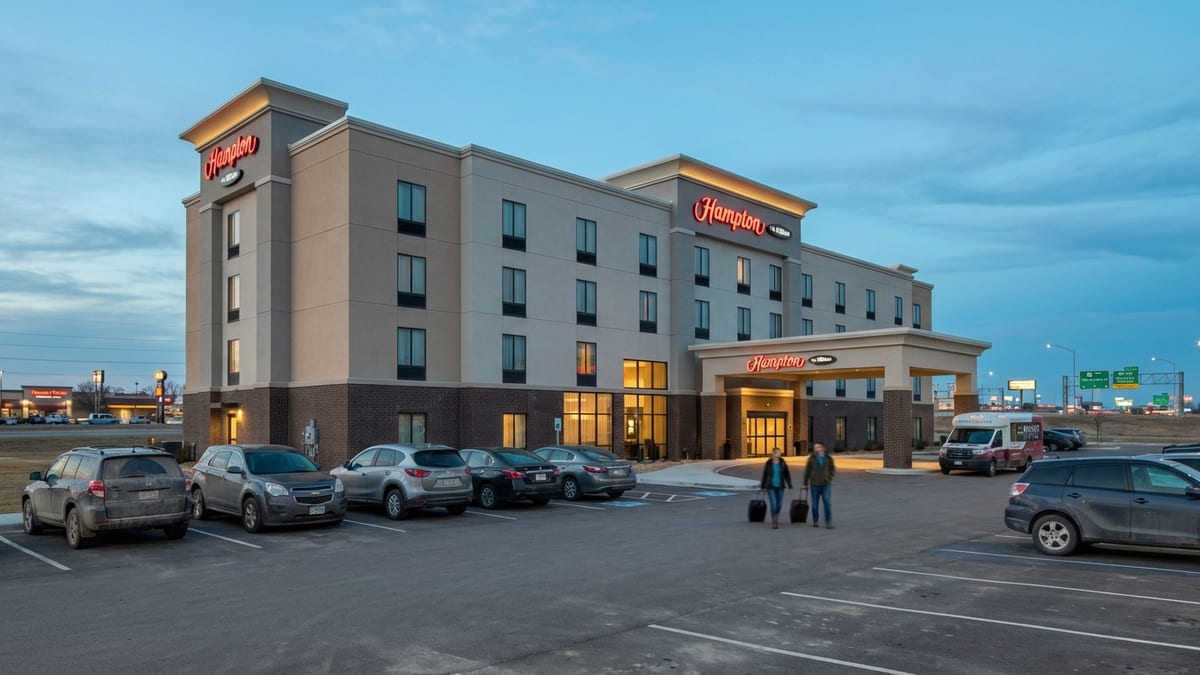
I have stayed in more Hampton by Hilton properties than I can neatly count at this point, from anonymous highway exits in the American Midwest to busy hubs near European airports. Over the past two years in particular, I have used Hampton as a default choice when I wanted something predictable and mid-range, without the inflated pricing of full-service Hiltons.
After a roughly dozen stays, ranging from one-night airport stopovers to four-night city breaks, I feel I have a fairly clear picture of what Hampton really is today: a competent, mostly reliable, sometimes frustrating, and occasionally surprisingly pleasant brand that delivers value only under specific conditions. This is not a love letter. It is my honest, mixed, but ultimately cautiously positive verdict on whether Hampton by Hilton is actually worth booking.
How I Booked And What I Expected
I generally booked my Hampton stays directly through the Hilton website or mobile app. On several occasions, I compared prices with third party booking sites the same day. In most cities, the direct rate with a member discount was similar to or slightly cheaper than the big travel aggregators, and it usually came with the ability to cancel until the day before arrival. For trips where my plans were uncertain or where I was arriving late at night, that flexibility mattered.
Going in, my expectations of Hampton were clear in my mind: a solid mid-scale hotel with clean, functional rooms, complimentary breakfast, decent Wi-Fi, and no resort-style frills. I was not expecting luxury, character, or destination experiences. I was expecting consistency, safety, and simple comfort after a long day of travel or meetings. The brand promises that kind of familiar baseline, wherever you are.
Reality was mostly aligned with that mental picture, but not always in a good way. Hampton is tightly standardized in some areas, like room layouts and bedding, yet oddly inconsistent in others, such as breakfast quality, soundproofing, and housekeeping reliability. In a few properties, particularly in North America, the gap between marketing photos and what I found in the corridors and bathrooms was noticeable. That disconnect has a direct impact on whether the brand feels worth it when you are paying close to what a nicer, full-service hotel might cost.
Location, Access And First Impressions
Hampton properties lean heavily into practical locations: close to airports, near highway exits, in business districts, and on the edge of city centers. In my experience, that practicality can feel either reassuring or vaguely depressing, depending on the purpose of the trip. For a connecting flight with an early morning departure, staying at a Hampton near the airport terminal with a shuttle running every 20 or 30 minutes did exactly what I needed: it minimized stress and commuting time. When I was exploring a city for leisure, however, some Hamptons felt just slightly too far from the interesting parts, which meant factoring in daily transport costs and time.
Access details varied by property. At multiple airport locations, the shuttle service was regular and straightforward, but I did encounter one late-night arrival where the shuttle had moved to a reduced schedule for winter without clear notice in the booking confirmation. I waited nearly 40 minutes at a cold curb before the bus arrived. On another occasion at a suburban Hampton, I relied on rideshare services because local public transport stopped running early. The hotel itself was easy to reach by car, with clear signage and free parking, but not particularly convenient for exploring without a vehicle.
My first impressions at check in were usually positive on a personal level and mixed at an environmental level. Most Hampton lobbies were brightly lit, mildly stylish in a chain-hotel sort of way, and equipped with a front desk, a small seating area, and a pantry corner with snacks and microwave meals. The atmosphere was friendly enough but unmistakably transactional. In a few properties, especially older ones, the carpets near the elevators and corridors showed visible wear, and the decor felt stuck in a previous decade. Those details matter when you factor in what you are paying compared with newer competitors in the same area.
Rooms: Where Consistency Helps And Where It Fails
Hampton rooms are designed for predictability. In most hotels where I stayed, the layout followed the same template: a queen or king bed with white linens, a firm but not rock-hard mattress, a large desk or table, a fabric chair, blackout curtains, a compact wardrobe or rail, and a bathroom with either a walk in shower or a combined tub and shower. On the positive side, I rarely had any doubts about how to operate the lighting, the air conditioning controls, or the TV. After a while, the familiarity became oddly comforting.
Cleanliness was generally acceptable, but not spotless. Fresh linens and clean surfaces were standard, yet I periodically noticed small lapses: dust on higher shelves, fingerprints on mirrors, or a stray long hair in the bathroom. None of these were severe enough to make me want to change rooms, but they chipped away at the sense of well-kept order that a mid-range brand should aim for. In newer or recently renovated Hamptons, the rooms felt crisper, with modern finishes and better lighting. In older properties, fixtures like bathroom grout, carpeting, and desk chairs often showed their age.
Noise was one of my biggest frustrations. At several Hamptons, I could clearly hear hallway conversations, doors slamming, and in one case, the neighbor's television well past midnight. At a busy city property, the windows did a poor job of blocking street noise, including sirens and bar crowds. I started requesting higher floors or rooms away from elevators, which helped but did not always solve the problem. For a brand that positions itself as a restful, reliable sleep option, the variability in soundproofing stood out, especially compared with newer competitors where acoustic insulation seems to have been given higher priority.
On the technology side, Hampton rooms usually offered a flat screen TV with a fair selection of channels, basic charging points near the bed, and stable Wi-Fi that was included in the rate. Speed was adequate for email and streaming, though at peak evening times it sometimes slowed noticeably. I never had major problems working remotely from a Hampton room, but I would not describe the experience as particularly comfortable or ergonomically thought through. Desk chairs ranged from decent office-style seats to tired armchairs that were clearly not designed for hours of laptop use.
Bathrooms, Amenities And The Question Of Value
Bathrooms at Hampton hotels are functional and compact. Most of the ones I used had a walk in shower with a glass partition, though a few older properties still had shower-tub combinations with curtains. Water pressure was almost always adequate, and hot water was never an issue. The in-shower dispensers with branded shampoo and body wash were convenient and reduced waste compared with tiny bottles, but they occasionally felt cheap and heavily scented. Towels varied from pleasantly fluffy to thin and slightly worn.
In terms of toiletries and extras, Hampton is firmly no-frills. Beyond the pump dispensers in the shower and a bar of soap, there is rarely much else laid out. Basic items like toothbrushes, razors, or sewing kits were usually available on request from the front desk, but not guaranteed. I typically travel with my own toiletries, so this was not a major problem, but it is worth knowing if you are used to more generous amenities at other chains. The lack of small touches like cotton pads, conditioner bottles, or bathrobes helps keep costs down, but it does contribute to a somewhat utilitarian feeling.
Most Hampton properties I stayed in offered a small fitness room with a few cardio machines, some free weights, and water. These gyms were often tucked into the basement or a corner near the lobby, and the quality of equipment varied. Newer hotels had well maintained treadmills and bikes, while older ones sometimes had machines that felt close to retirement. A handful of Hamptons also had modest indoor pools. I appreciated having the option of a quick workout or swim, but I would not choose the brand specifically for its leisure facilities.
The real question is whether what you get in terms of rooms and amenities aligns with what you pay. When I booked Hamptons at competitive rates compared with budget or lower mid-scale competitors, I felt the value was reasonable: clean enough, safe, decent breakfast, and included Wi-Fi. When the price approached that of a full-service hotel or stylish independent property in the same area, the lack of extras and the utilitarian atmosphere started to feel harder to justify. In high-demand periods, some Hamptons were clearly trading on the Hilton name and loyalty program more than on intrinsic value.
Breakfast, Lobby Life And Everyday Frustrations
Breakfast is one of the big selling points Hampton pushes: a complimentary hot breakfast included in the room rate. In practice, this perk is both a relief and a recurring source of mild disappointment. On the positive side, I never had to wander outside hunting for food first thing in the morning, and I always found enough to get me started for the day. On the negative side, the quality, variety, and crowding at breakfast were wildly inconsistent between properties.
At some Hamptons, the breakfast felt like a well organized self-service canteen, with scrambled eggs, breakfast meats, pastries, cereal, yogurt, fruit, and make your own waffles. When the buffet was kept replenished and the seating area was relatively calm, those mornings were easy and pleasant. At other locations, I ran into lukewarm eggs, dried out sausages, and a rush of guests competing for the waffle irons. On weekends and at airport hotels, the seating area often felt overwhelmed, with people standing around waiting for tables or trying to eat quickly before catching flights.
The lobby itself was usually a functional, not particularly comfortable space. Some newer Hamptons tried to create a co working style atmosphere with power outlets, longer tables, and bright colors. I occasionally used these spaces for an hour of laptop work or a casual meeting, but the background noise from the breakfast area or front desk conversations made it less ideal. I rarely felt like lingering in Hampton lobbies the way I might in a boutique hotel or a hotel with a decent bar and lounge.
The small pantry shop next to the front desk, present in most Hamptons where I stayed, was convenient but overpriced. Bottled water, snacks, ready meals, and microwaveable dishes were available 24 hours, which helped when arriving late with nowhere else open nearby. The markups were significant, however. When there was a grocery store or convenience shop within walking distance, I usually preferred to stock up there instead. This is one of those minor everyday details that does not show up in marketing but shapes how budget friendly the stay feels in reality.
Service, Housekeeping And How Issues Were Handled
Service at Hampton properties is designed to be friendly and efficient rather than deeply personalized. At check in, staff were generally cheerful, explained the basics, and handed over key cards quickly. On some stays, I appreciated the option of digital key through the app, which allowed me to bypass the front desk altogether. For very late arrivals after long travel days, this was a tangible benefit and one of the areas where Hampton, as part of a large chain, felt ahead of many smaller competitors.
Housekeeping was where my experience became more uneven. During shorter stays of one or two nights, I often declined daily service and found the room refreshed only upon departure, which suited me. On longer stays, however, I encountered confusion and scaled back cleaning routines that were not always clearly communicated. In some properties, housekeeping was now provided only upon request or every few days, a shift that appears to have become more common in the industry after the pandemic. When I was not explicitly told this at check in, I returned to my room in the evening to find beds unmade and trash not collected. Once I understood the new norm, I learned to request service at the front desk, but the change in expectations can catch travelers off guard.
When small problems arose, such as a malfunctioning room key, a noisy neighboring room, or a missing towel set, front desk staff usually tried to fix things reasonably quickly. I had one experience where an air conditioning unit in my room produced an intermittent rattling noise all night. When I mentioned it the next morning, the staff offered a room change, but by then I was already checking out. It would have been helpful if someone had followed up earlier, but to be fair, I had not called down during the night either. In another case, when a room was not quite ready at check in time, I was offered a complimentary drink from the pantry while I waited. These gestures do not erase the issues, but they do signal a willingness to make things right.
Overall, I never encountered rudeness or outright neglect at Hampton, but I also rarely experienced service that felt memorable or particularly warm. It did the job: efficient, competent, and occasionally a bit rushed when the hotel was busy. If you are used to boutique hotels where staff remember your name and proactively suggest local recommendations, Hampton will likely feel more anonymous.
Price, Loyalty Perks And Comparing Alternatives
Assessing whether Hampton by Hilton is worth it inevitably comes back to price, both on an absolute level and relative to alternatives. Across my stays, room rates for standard rooms usually fell into the middle range for whatever city or area I was in. They were rarely the cheapest option but also not at the top end of the market. In locations with several competing mid-range chains, Hampton often priced itself close to similar brands from Marriott or IHG.
As a member of the Hilton loyalty program, I did see extra value in collecting points on these stays, especially when I booked directly. On some nights, I was able to redeem points for a free night or significantly discounted stay at more upscale hotels in the wider Hilton portfolio. That long-term benefit made it easier to justify choosing Hampton over an equally priced independent hotel with no loyalty scheme. At the same time, I noticed that in high-demand periods, Hampton rates could climb quickly, sometimes approaching or even matching full-service Hilton properties in the same city. When that happened, I no longer saw Hampton as a good deal.
Comparing Hampton with other mid-range brands I have used, such as Holiday Inn Express, Courtyard by Marriott, and various national chains, it sits somewhere in the middle. Breakfast being included is a real advantage, especially in the United States where many comparable brands charge extra or offer only minimal continental options. On the other hand, the atmosphere at Hampton is often less polished than at some competing brands that have invested more in lobby design and small lifestyle touches. If you care primarily about comfort, breakfast, and a predictable room, Hampton delivers. If you value design, local character, or hotel amenities beyond a bed, shower, and morning buffet, it may feel bland or overpriced.
For road trips and one night stopovers, Hampton usually hits the sweet spot between cost, convenience and comfort. For longer stays in a city, particularly when I am traveling for leisure rather than work, I now compare Hampton prices more carefully with stylish independents, serviced apartments, and emerging budget boutique brands. More often than before, I find myself choosing alternatives when the price difference is small because they offer more charm or better noise insulation for essentially the same money.
The Takeaway: When Hampton By Hilton Is Still Worth It
Looking back across my stays, I do not regret choosing Hampton as often as I did, but I also no longer treat it as my automatic default. The brand succeeds at the basics: relatively consistent room design, mostly clean spaces, workable Wi-Fi, and a breakfast that, while not exciting, prevents you from starting the day hungry. Staff are generally friendly, and the network of locations is extensive, especially near airports and major roads.
The trade offs are equally clear. Noise insulation can be poor, particularly in older properties. Housekeeping routines are less predictable than they once were, and you may need to request service actively. Breakfast crowds and variable food quality can turn what should be a simple amenity into a rushed, slightly stressful experience. In some locations, visible wear and tear in rooms and corridors make the rate feel out of step with the actual physical condition of the hotel.
For business travelers who value predictability, loyalty points, and early morning flights, Hampton still makes a lot of sense. Booking directly, aiming for newer properties, and checking recent guest photos and reviews can help filter out the more tired hotels in the portfolio. For families on road trips, the combination of included breakfast, free or reasonably priced parking in many locations, and family friendly room layouts remains compelling, provided you are not expecting resort style amenities or silence.
Where I see less value is for leisure travelers staying several nights in interesting city neighborhoods where independent hotels and apartments can offer more character for similar prices. In those cases, I would personally look beyond Hampton unless I was specifically chasing Hilton points or needed a very early airport connection. Hampton by Hilton is worth it when you approach it with realistic expectations and a careful eye on the nightly rate. Treated as a reliable, functional base rather than a destination, it still earns its place in my travel toolkit, albeit as one option among many rather than the default choice it once was.
FAQ
Q1: Is Hampton by Hilton actually good value for money?
In my experience, Hampton offers good value when the nightly rate sits clearly below nearby full service hotels and stylish boutique options. When prices climb close to those competitors, the lack of extra amenities and the fairly basic atmosphere start to feel harder to justify.
Q2: How consistent are Hampton hotels from one location to another?
The core elements are consistent: room layout, bedding style, included breakfast, and free Wi-Fi. What changes a lot is the age of the property, level of maintenance, noise insulation, and breakfast quality. Newer or recently renovated Hamptons tend to feel noticeably better.
Q3: Are Hampton rooms quiet enough for light sleepers?
It depends heavily on the building. I stayed in some Hamptons where I slept very well, and others where hallway noise, slamming doors, or street sounds were a problem. I now request higher floors and rooms away from elevators, but I still would not call the brand a safe bet for extremely light sleepers.
Q4: How reliable is the complimentary breakfast?
Breakfast is almost always available and it will fill you up, but quality and crowding vary. Expect a self service buffet with hot items, pastries, cereal, and drinks, not a made to order restaurant experience. On busy mornings, finding a table and getting fresh items can be a bit of a scramble.
Q5: Do Hampton hotels feel safe for solo travelers?
In my stays, I felt safe at Hampton properties. Entrances were controlled, front desks were staffed, and corridors were well lit. As with any hotel, the exact neighborhood matters, but the internal security setup at Hampton has always felt solid enough for me when traveling alone.
Q6: How good is the Wi-Fi for working remotely?
The Wi-Fi at Hampton has been reliably adequate for emails, video calls, and streaming, though it can slow down during peak evening hours. The workspaces in rooms and lobbies are functional rather than comfortable. I can work there for a few hours, but I would not describe it as an ideal remote office environment.
Q7: What should I know about housekeeping at Hampton now?
In several properties, daily housekeeping is no longer automatic for shorter stays. You may need to request room cleaning or towel changes at the front desk. If that matters to you, it is worth asking about the housekeeping schedule at check in so your expectations match the hotel’s routine.
Q8: Is Hampton a good choice for families?
Yes, for many families it works well, especially on road trips. Included breakfast, free or low cost parking in many locations, and rooms that can accommodate multiple people make it practical. The atmosphere is casual and kid friendly, though you should not expect extensive play areas or family focused amenities.
Q9: How does Hampton compare to similar mid-range brands?
Hampton is roughly on par with other mid-range chains. Its big advantages are included hot breakfast and the ability to earn or redeem points in the Hilton system. Some competitors offer slightly more stylish design or better soundproofing, while Hampton often wins on breakfast and network size.
Q10: When would you personally choose Hampton again?
I would book Hampton again for airport overnights, short business trips, and road trip stopovers when the price is sensible and the property looks reasonably modern in recent photos. For longer city stays or special occasions, I now compare more options and only pick Hampton if it clearly undercuts more interesting alternatives or fits into a wider strategy of earning or using Hilton points.