

More news on this day
A new partnership between UK-based fintech Hands In and global airline payment network UATP is set to reshape how travelers pay for flights, introducing split payment technology designed to boost flexibility for passengers and unlock fresh revenue streams for carriers worldwide.
Strategic Alliance Targets Pain Points in Airline Payments
Announced on March 10 in London and Washington, the agreement embeds Hands In’s split payment technology directly into UATP’s Ceptor payment platform, which underpins payment processing for many of the world’s leading airlines. The move allows carriers to activate split payments via a single, familiar integration rather than stitching together new systems or replacing existing gateways.
Industry executives say the collaboration responds to years of pressure on airlines to modernize the checkout experience without compromising on security, reliability or operational continuity. By building on UATP’s existing rails, the partnership aims to deliver new functionality within an architecture that revenue management, finance and IT teams already trust.
Hands In has grown rapidly as airlines and travel merchants explore more flexible ways to handle high-value and group bookings. Its API technology is focused on enabling multiple cards, payers and methods to be combined into a single transaction while maintaining a clean, reconcilable record for the airline.
UATP, originally established as an airline-owned corporate travel network, has in recent years repositioned itself as a broader payments ecosystem for complex industries. The Hands In deal extends that evolution, reflecting rising expectations among travelers that airline checkouts should mirror the flexibility they see in mainstream ecommerce.
How Split Payments Work for Travelers and Airlines
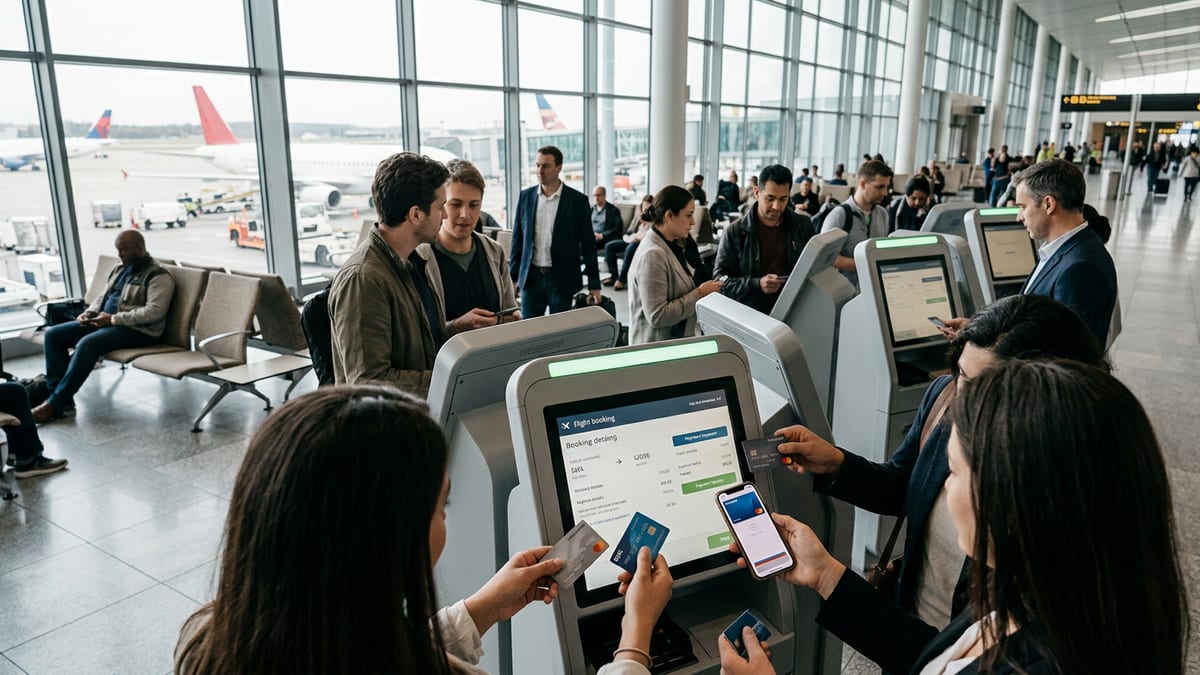
The core innovation lies in allowing passengers to split a single booking across several funding sources in real time at checkout. A family can divide the cost of a long-haul trip between parents’ cards, or friends can each contribute their share to a group itinerary, without resorting to multiple bookings or offline transfers that complicate customer service.
Beyond sharing costs among different people, the system supports mixing cards and other payment methods on one transaction. Travelers can top up a primary card that is close to its limit with a secondary card, or blend a traditional card with an alternative form of payment, reducing the risk that a large purchase fails at the final step.
For airlines, this flexibility is positioned as a powerful tool to salvage transactions that would previously have been lost to insufficient funds, card limits or fraud-related declines. By offering passengers more ways to complete the purchase in a single session, carriers can raise checkout conversion, improve authorization rates and encourage higher-value baskets that include ancillaries such as seats, bags and onboard services.
Equally important is the promise of simplified reconciliation. Traditionally, accepting multiple payments for one trip has meant fragmented records that strain finance teams and complicate refund handling. Hands In’s technology is designed so that, from the airline’s perspective, the split journey reconciles as one coherent transaction, even though it aggregates multiple underlying sources.
Plug-In Innovation: Ceptor as a Global Distribution Rail
The decision to route the solution through Ceptor reflects the growing role of UATP’s platform as a hub for payment innovation across the travel ecosystem. Many airlines already rely on Ceptor to orchestrate card payments, alternative payment methods and connections to third-party providers, making it an obvious launchpad for split payments.
By exposing Hands In’s capabilities via Ceptor, UATP lowers the barrier for adoption, particularly for carriers wary of resource-intensive IT projects. Airlines can pilot split payments in selected markets or channels and scale quickly across their global networks once performance and customer response are validated.
The approach also aligns with UATP’s broader strategy of aggregating alternative forms of payment and installment options into a single, manageable interface for merchants. Recent years have seen the network add partners in buy now, pay later, digital wallets and local payment schemes, positioning split payments as the next logical extension of a diversified payments portfolio.
Payment experts note that this orchestration model is increasingly critical as airlines pursue retailing strategies that rely on dynamic offers, bundled services and personalized pricing. In such an environment, the payment step is no longer a back-office utility, but a lever to influence whether a high-margin offer converts or times out.
Riding the Wave of Flexible Finance in Travel
The Hands In and UATP tie-up lands amid a broader wave of experimentation in aviation payments, as carriers seek to balance operational risk with traveler demand for greater control over how and when they pay. From installment financing and buy now, pay later products to wallet-based solutions and bank-transfer rails, the landscape is shifting rapidly.
For travelers, these innovations blur the line between traditional ticket purchasing and consumer finance. Being able to share a fare across several contributors, or combine multiple cards to overcome hard limits, can make long-haul trips, complex itineraries and last-minute journeys more attainable, particularly for younger or more budget-constrained passengers.
For airlines, the business case stretches beyond pure convenience. Flexible payment options can drive incremental sales, stimulate demand in shoulder seasons, and support ancillary revenue strategies by reducing friction when customers are prompted to add bags, seats or extras at checkout. At the same time, better data from orchestrated solutions can help fraud teams fine-tune risk rules and pinpoint where declines are unnecessarily high.
Industry observers suggest that split payments are likely to become a competitive differentiator, especially on routes and in markets where group and family travel is common. Early adopters may use the feature as a marketing tool to signal that they understand modern purchasing behavior, while laggards risk being perceived as rigid or outdated.
What Comes Next for Global Aviation Payments
With the new partnership now announced, attention turns to how quickly airlines will move from interest to implementation. Because Ceptor is already embedded in the payment stacks of many carriers, the technical pathway is comparatively streamlined, but individual airlines will still need to align commercial, legal and customer experience teams around rollout plans.
Analysts expect initial deployments to focus on online direct channels, where the customer experience can be tightly controlled and measured. Over time, the functionality could extend to mobile apps, call centers and even airport sales desks, as processes for support, refunds and disruption handling mature.
Beyond split payments, the collaboration is likely to catalyze further innovation that combines shared purchasing with other emerging trends such as real-time bank payments, expanded alternative methods and greater personalization of offers. As payment data and orchestration tools become more sophisticated, airlines gain new levers to adjust pricing, manage risk and tailor options to individual customers in real time.
The Hands In and UATP alliance underscores a larger shift in the airline business: payments are no longer treated as a static back-office function, but as a front-line driver of revenue, loyalty and brand perception. In an intensely competitive market, the way passengers are allowed to pay may increasingly determine which carrier wins the booking.