

More news on this day
Widespread flight delays at Las Vegas’s Harry Reid International Airport in early April 2026 are rippling through airline networks at the same time investors are weighing how much operational disruption risk is already priced into major U.S. and Canadian airline stocks.
Get the latest news straight to your inbox!
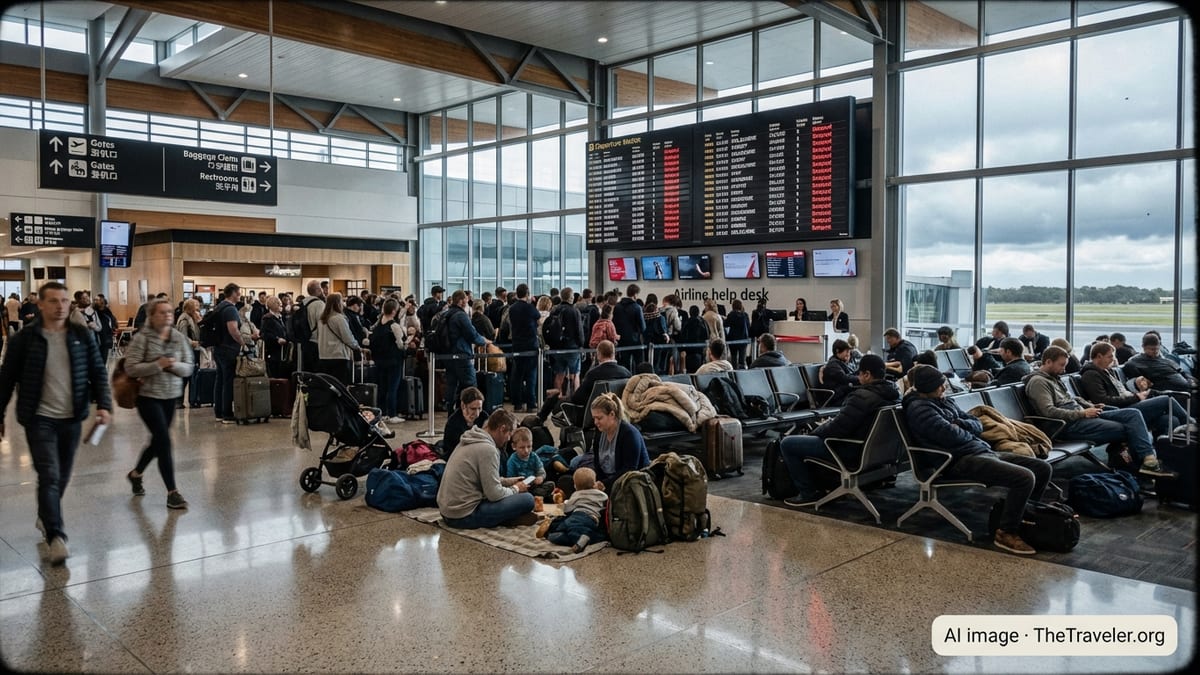
Las Vegas Delays Arrive at a Sensitive Moment for Air Travel
Publicly available flight tracking data and news coverage indicate that Harry Reid International Airport saw an unusually high volume of delays on April 11, with more than 250 flights affected and a small number of cancellations. The disruption followed several days of irregular operations tied to weather, congestion and scheduling challenges across North American networks, affecting services to hubs such as Los Angeles, Denver, Chicago, Toronto and New York.
Reports from travel outlets describe passengers stranded in terminals as departures pushed back throughout the day, with knock-on effects for connections across the United States and selected international routes. While April storms across other regions and a broader spring travel surge contributed to systemic strain, Las Vegas stood out as one of the most affected airports during the mid April window.
The timing is notable. Airlines in North America and Europe are entering the crucial spring and early summer booking period, when demand typically rises and investors watch closely for signs of whether carriers can convert fuller planes into stronger earnings without a repeat of the large scale operational meltdowns of recent years.
Why a Bad Day at Harry Reid Matters to Airline Investors
Standalone disruptions at a single airport do not automatically change an airline’s long term value, but clusters of delays can influence investor sentiment when they reinforce concerns about fragile schedules, tight staffing or aging technology. The Las Vegas disruptions touched multiple carriers, including large U.S. network airlines and Canadian operators, underlining that operational risk is shared across the sector rather than confined to one company.
Market history over the past several years shows that investors often react more strongly when operational problems confirm an existing worry, such as constrained capacity, high fixed costs or regulatory pressure. Events like the 2023 nationwide Federal Aviation Administration system outage, the 2022 Southwest Airlines scheduling crisis and the 2024 global technology failure linked to a third party software update all produced short term volatility in airline shares as traders reassessed cost and reputational damage.
In this context, the latest issues at Harry Reid International arrive when airlines are still working to rebuild balance sheets after the pandemic period and subsequent disruptions. Any hint that networks remain vulnerable during peak travel windows can temper enthusiasm for the sector, particularly among investors focused on near term earnings and cash flow.
From Isolated Disruptions to Systemic Risk
Operational interruptions at Harry Reid International are part of a wider pattern of stress points within global aviation. Over the past three years, airlines and regulators have contended with weather extremes, air traffic control staffing shortages, technology failures and safety related ground stops. Each incident has highlighted how quickly local problems can cascade across national and international networks.
Recent examples include a temporary nationwide halt to U.S. departures after a Federal Aviation Administration safety alert system went offline, significant system outages that forced major carriers to ground flights for hours, and a series of runway incursions and near miss incidents that drew new scrutiny to air traffic management. These events have drawn attention to the interplay between aging infrastructure, complex software and tight scheduling, all of which leave limited room for error during peak periods.
For investors, this history is shaping a view of systemic risk in aviation that goes beyond any single airport or weather event. A day of heavy delays at a key leisure and convention gateway such as Las Vegas can be interpreted as another data point in a longer narrative about whether the industry has built enough redundancy into networks and digital systems to support profitable growth.
How Airline Stocks Tend to Trade Around Disruptions
Trading patterns around past disruption events provide some guidance for interpreting the latest delays in Las Vegas. When problems are brief and clearly linked to external factors such as storms or temporary air traffic control restrictions, airline stocks have often shown a modest, short lived pullback as investors anticipate limited financial impact confined to one reporting quarter.
By contrast, when disruptions reveal deeper structural weaknesses or result in large scale cancellations over many days, share price reactions have been more pronounced. Historical episodes that combined extensive schedule cuts with high levels of media coverage produced measurable hits to revenue, compensation costs and brand perception, with some carriers underperforming broader equity indices for weeks or months afterward.
The current situation at Harry Reid International, as described in public reports, appears closer to the category of acute but contained disruption rather than a system wide collapse. However, investors are watching for signs that repeated strain at key hubs could point to underlying capacity limits, particularly if delays coincide with already tight flight schedules, ongoing fleet constraints or high labor and fuel costs.
Another factor for markets is the growing role of exchange traded funds and quantitative strategies in airline investing. These approaches may respond mechanically to metrics such as cancellation counts, load factors and forward booking data, potentially amplifying short term moves in stocks when disruptions peak.
What to Watch Next for Las Vegas and Airline Valuations
Looking ahead, the key question for both travelers and investors is whether the April delays at Harry Reid International mark the peak of a passing disruption wave or the early stage of a more persistent operational challenge as summer approaches. Industry and government status boards already signal periods of moderate to heavy arrival and departure delays at the airport, and further local construction or roadway access changes could complicate busy travel days.
For airline stocks, analysts are paying particular attention to updated guidance during quarterly earnings calls, where carriers typically outline unit revenue expectations, schedule resilience and contingency planning. Any indication that Las Vegas or other high volume leisure markets are becoming harder to operate reliably could prompt revisions to traffic forecasts, cost assumptions and margin outlooks.
At the same time, some investors may see opportunity if share prices weaken temporarily on delay headlines without evidence of deeper structural problems. Airlines that demonstrate strong recovery times, diversified route networks and flexible scheduling tools may be better positioned to reassure markets that events like the recent Harry Reid delays are manageable setbacks rather than signs of broader instability.
With spring travel ramping up and memories of past meltdowns still fresh, the performance of airlines in and out of Las Vegas over the coming weeks is likely to remain an important signal for how much disruption risk the market is willing to tolerate in exchange for exposure to a potential rebound in global air travel demand.