

More news on this day
Las Vegas’ Harry Reid International Airport, usually a well-oiled spring break gateway, has been pulled into a wider web of U.S. aviation disruption in 2026, with security staffing strains, a federal government shutdown and nationwide weather chaos combining to snarl flights and send tremors through airline stocks at the height of the holiday rush.
Get the latest news straight to your inbox!
Local Strains Erupt During Peak Spring Break Traffic
Harry Reid International Airport entered the March and early April 2026 spring break window facing an unusual mix of pressure points. Publicly available information shows Transportation Security Administration officers in Las Vegas working without pay as a federal government shutdown that began in mid-February stretched into the busy travel period, raising concerns about morale and staffing sustainability just as passenger volumes climbed.
Reports from aviation trackers indicate that Harry Reid saw dozens of delays and cancellations on several key March days, not due to isolated problems within the Las Vegas hub but as part of a broader grid of disruptions moving through the national air system. Weather-related turmoil in other regions and staffing gaps at major connecting airports translated into aircraft and crew arriving late into Las Vegas, compressing already tight schedules and amplifying the risk of missed connections for spring break travelers.
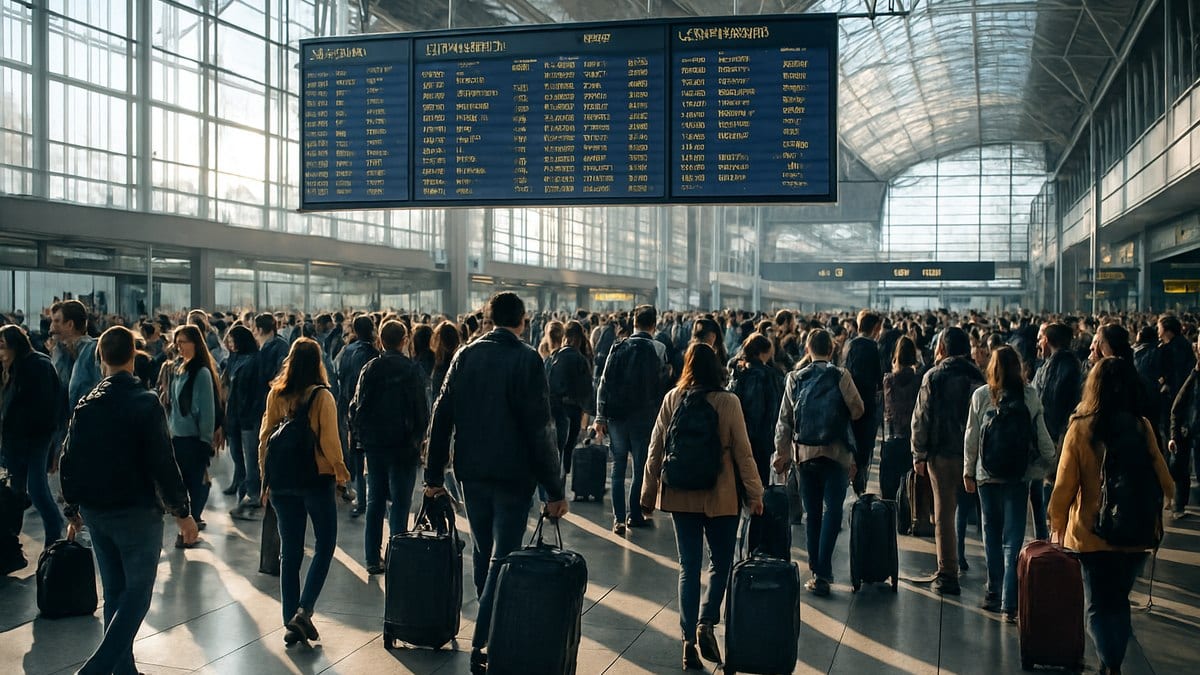
On the ground, conditions inside the terminal fluctuated from relatively smooth flows to intense early-morning bottlenecks. Crowd-sourced accounts from passengers and local residents described checkpoint lines at times stretching toward ticket counters at Terminal 3, particularly before sunrise departure banks when resort guests and convention travelers converged. At other hours, the same checkpoints reportedly cleared passengers within minutes, underscoring how quickly the operational picture could shift.
Airport guidance continued to emphasize standard arrival recommendations of at least two hours for domestic flights and three hours for international departures. However, the combination of unpredictable wait times and high leisure demand encouraged many visitors to build in even more buffer time, effectively shifting congestion earlier into the day and making the overall experience feel more chaotic than raw delay statistics alone might suggest.
National Shutdown and TSA Shortages Feed Perception of Chaos
The situation in Las Vegas cannot be separated from the wider backdrop of a partial federal government shutdown that has pinched airport security staffing across the United States. According to published coverage from national outlets, security screeners at multiple large hubs have called in sick, transferred to other jobs or struggled to cover shifts without pay, especially as the shutdown moved into its second month.
Travel and aviation industry analyses note that the timing could hardly be worse. The same weeks that bring college students and families through Harry Reid for Las Vegas getaways also see heavy flows of fans to college basketball tournaments and other events in cities across the country. This seasonal spike in demand has intersected with thin staffing at some checkpoints and volatile spring weather, producing a cascade of delays that has affected both point-to-point and connecting passengers bound for Las Vegas.
In that environment, even modest holdups in Las Vegas have tended to attract outsized attention. Social media posts documenting long lines or confused crowds have circulated widely, reinforcing a perception of nationwide “airport chaos” even where local operations remained relatively stable. Travel-focused publications have framed the disruptions as part of an escalating pattern of stress on the U.S. aviation system during peak periods, fueled by structural staffing challenges that predate the current shutdown.
Analysts also highlight that Las Vegas’ role as a discretionary leisure destination can magnify the reputational impact. For travelers who booked once-a-year trips for spring break, even short waits or minor flight changes can feel catastrophic, and their experiences often shape broader sentiment about air travel reliability and airport performance long after the holiday season ends.
Weather and Network Disruptions Converge on Las Vegas Flights
Beyond staffing and shutdown politics, Harry Reid’s spring break turbulence has been tied closely to severe weather hitting other parts of the country. National reporting on the 2026 travel season points to blizzards and powerful storm systems that disrupted thousands of flights at major hubs in the Northeast and Midwest, forcing airlines to cancel or reroute services days in advance.
Because Las Vegas is deeply integrated into those networks, especially through large domestic carriers that use the city as a key leisure spoke, storms a continent away can trigger long lines at departure gates on the Strip. Schedules that depend on quick aircraft turnarounds and tight crew rotations have been particularly vulnerable, with early-morning disruptions rippling into missed mid-day departures to and from Nevada.
Travel industry observers note that this kind of network effect is not new, but the concentration of leisure travelers on fixed holiday dates has intensified the visible fallout. Families and student groups bound for Las Vegas resorts are less able to accept multi-day rebookings or complex re-routings than frequent business travelers, leading to crowded rebooking desks and packed standby lists whenever a weather system snarls the national grid.
In 2026, this pattern has combined with heightened public sensitivity to travel problems after years of high-profile airline meltdowns. Even when Harry Reid’s own runways remained clear and local operations comparatively stable, passengers arriving from storm-hit regions frequently landed hours late, compressing hotel check-in queues and adding to a broader sense of disorder in and around the airport during the spring break peak.
Airline Stocks Feel the Impact of Prolonged Uncertainty
The turbulence playing out at Harry Reid and across the national aviation network has been mirrored on Wall Street. Financial news coverage in late March and early April 2026 describes major U.S. airline stocks under pressure, with investors reacting to a combination of weather-driven cancellations, shutdown-related staffing worries and rising operating costs during a crucial revenue window.
Carriers with large leisure footprints in Las Vegas have drawn particular scrutiny. Market commentators point out that spring break and early April travel often deliver some of the highest-margin seats of the year on routes to resort destinations, including Las Vegas. When those flights are delayed, canceled or heavily rebooked, airlines can lose both immediate ticket revenue and ancillary income from baggage fees, seat upgrades and onboard sales.
Publicly available trading data shows periods of intraday volatility for several large U.S. carriers as investors digested headlines about extended security lines, government pay disputes and escalating weather disruptions. Some stocks briefly recovered when reports indicated that TSA operations in Las Vegas were holding relatively steady compared with other hubs, but renewed storms and uncertainty around the duration of the shutdown have kept sentiment fragile.
Equity analysts following the sector have warned that another round of high-profile operational breakdowns at major airports could further depress valuations, particularly if the problems coincide with the start of the summer travel season. In that context, Harry Reid’s role as both a symbol of leisure demand and a bellwether for system-wide resilience has taken on outsized importance in 2026.
Travelers Adjust Strategies as Las Vegas Braces for More Peak Days
Spring break travelers moving through Harry Reid this year have increasingly adapted their strategies to cope with the unsettled environment. Reports from passengers suggest many are arriving at the airport earlier than in previous years, building in additional time for check-in and security and relying more heavily on mobile alerts and airline apps for real-time gate and schedule updates.
Local travel advisers and industry commentators have urged visitors to consider off-peak departure times, avoid the tightest possible connections through weather-prone hubs and maintain flexible itineraries where possible. For Las Vegas-bound travelers, that has often meant selecting mid-day flights with greater buffer against early-morning turbulence elsewhere in the network and being prepared for last-minute aircraft swaps that can affect seating plans and baggage handling.
At the airport level, publicly available information shows continued emphasis on real-time security wait-time displays and messaging that encourages passengers to proceed directly to checkpoints after check-in, rather than lingering in terminal retail areas. The goal, according to operational updates, is to smooth demand across the morning and evening rushes, reducing the sharp surges that can quickly overwhelm staffing if a lane briefly goes offline.
With the federal shutdown unresolved as of mid-April and the prospect of more volatile spring weather ahead, Las Vegas is preparing for additional waves of high passenger volume linked to concerts, sports events and early summer vacations. The performance of Harry Reid International Airport during these next peaks, and the resilience of the airline network that feeds it, are likely to remain closely watched indicators for both travelers and investors assessing the health of U.S. aviation in 2026.