

More news on this day
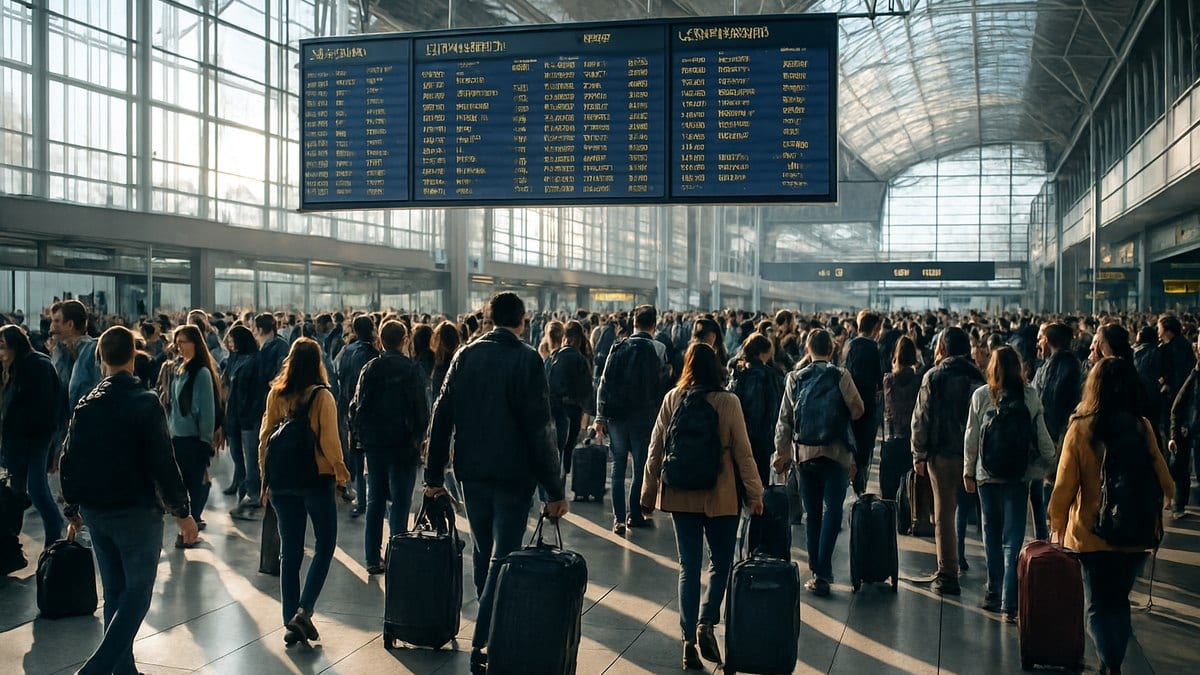
Spring break crowds, a partial federal government shutdown and a bruising U.S. storm season converged at Las Vegas’s Harry Reid International Airport in March 2026, creating rolling delays that spilled into national airline operations and stoked renewed volatility in airline stocks.
Get the latest news straight to your inbox!
Spring Break Demand Meets Systemwide Strain
Harry Reid International Airport, one of the United States’ busiest leisure gateways, entered the 2026 spring break period with a heavy mix of student travelers, convention visitors and sports fans connecting through Las Vegas. Airport and tourism data show that March is consistently among the city’s highest-volume months, with more than 4.8 million passengers passing through Harry Reid in March 2025 and similar levels expected again this year despite a recent softening in traffic.
This seasonal surge collided with an already stretched aviation system. A powerful mid-March storm complex across large portions of the United States disrupted airline schedules, forcing crews and aircraft to reposition and leaving connections vulnerable to further delays. National coverage from outlets such as the Associated Press and the Guardian highlighted thousands of cancellations and delays across major hubs as the storm coincided with peak spring travel.
At the same time, a partial federal government shutdown that began in mid February introduced fresh uncertainty into airport security staffing. Publicly available reporting indicates that Transportation Security Administration screeners nationwide have been working under prolonged budget strain, contributing to uneven checkpoint performance as spring break volumes climbed.
Within this broader backdrop, Harry Reid’s role as a key connecting point for low cost and leisure carriers meant that localized slowdowns in Las Vegas could quickly ripple out to secondary airports that rely heavily on inbound tourist traffic.
TSA Bottlenecks and Mixed On the Ground Experiences
Reports from March describe a patchwork experience for travelers moving through Harry Reid’s security checkpoints. Some passengers shared accounts of early morning crowds stretching toward ticket counters on peak days, particularly around the March 16 to March 20 window when Southern Nevada schools were on break and inbound visitor numbers swelled. Others described comparatively smooth transits on off peak days, with security processing times measured in minutes rather than hours.
In early March, Harry Reid International published spring break travel guidance that urged passengers to arrive at least two hours before domestic flights and three hours before international departures, emphasizing that posted wait times are only rough estimates. The airport also reiterated its reliance on multiple checkpoints and dedicated lanes to move large flows of passengers more efficiently during high demand periods.
Independent travel and aviation outlets reported that, compared with some of the hardest hit hubs such as Atlanta and New York, Las Vegas saw fewer outright cancellations but a notable uptick in departure delays. Data compiled in late March pointed to dozens of delayed operations at Harry Reid on peak days, with average waits extending beyond scheduled departure times even as most flights ultimately operated.
Local accounts from Las Vegas residents and frequent flyers suggest that social media images of extreme lines at other airports may have pushed some travelers to arrive unusually early at Harry Reid, leading to surges at opening hours followed by relatively light volumes later in the day. That pattern contributed to a sense of “chaos” for those caught in the longest queues, even as the airport continued to process large numbers of passengers.
Flight Disruptions Ripple Into Airline Performance
The operational turbulence in March arrived at a delicate moment for U.S. airlines, which were already contending with higher fuel prices, shifting demand patterns and capacity adjustments in key leisure markets. Las Vegas focused coverage in aviation industry outlets has noted that some carriers trimmed their Las Vegas schedules for 2026, while others restructured networks to prioritize more resilient or higher yielding routes.
Spirit Airlines, for example, recently announced a sharp reduction in its Las Vegas footprint, cutting the number of routes from Harry Reid for the April to June quarter as part of a broader capacity pullback. Analysts interpreting data from schedule providers have linked those cuts to sustained financial pressure and the need to improve unit revenue, particularly in highly competitive leisure markets where fares have been under pressure.
As the March storm system and security related bottlenecks compounded the usual spring break crunch, airline investors reacted by selling shares across much of the sector. Financial news outlets reported that the major U.S. network carriers, along with large low cost competitors, experienced intraday share price declines around key disruption dates in mid and late March. The move reflected concerns that another season of irregular operations could lead to higher compensation costs, elevated crew expenses and lost revenue from missed connections.
Carriers with an outsized presence in Las Vegas, including low cost airlines that depend heavily on discretionary leisure demand, appeared particularly sensitive to the headlines around Harry Reid. While most of the delays recorded in Las Vegas were modest compared with the worst disruptions at eastern hubs, the perception of “spring break chaos” in a marquee tourism market added to broader worries about the sector’s resilience.
Las Vegas Tourism and Local Economic Stakes
Las Vegas tourism groups have long viewed reliable air access as a pillar of the regional economy, with visitor spending on lodging, gaming and entertainment closely tied to the health of airline capacity. Passenger statistics released in late March show that Harry Reid’s overall traffic has softened somewhat compared with prior years, with year to date declines in both domestic and international arrivals.
That softening has coincided with the withdrawal or downsizing of certain routes by low cost carriers and with macroeconomic uncertainty that may be weighing on discretionary travel decisions. Industry observers note that repeated episodes of spring and summer travel chaos across the United States in recent years have also influenced traveler behavior, prompting some visitors to shorten trips, avoid tight connections or choose destinations perceived as easier to reach.
For Las Vegas, any sustained perception of airport unreliability during marquee periods such as spring break carries potential risks for convention bookings and high value events. Organizers often commit to the city years in advance, but feedback on attendee experience, including airport arrival and departure, can affect future site selection and the distribution of large shows among competing destinations.
Local travel businesses have responded by advising visitors to build extra time into their itineraries, particularly when departing on Sunday evenings or Monday mornings after major events. Hotel operators and travel advisors have also stepped up messaging about transportation options to the airport, amid separate construction related lane reductions on roadways approaching Harry Reid that began in April and are expected to continue for several weeks.
What Comes Next for Spring and Summer Travel
As spring break draws down and attention shifts to the summer travel season, Harry Reid International and the airlines that rely on it face a familiar challenge: balancing heavy leisure demand with infrastructure and staffing constraints that are not unique to Las Vegas. Airport planning documents and recent public communications emphasize incremental capacity improvements at checkpoints and continued coordination with federal agencies responsible for security screening.
Nationally, airline executives have signaled through earnings guidance and investor updates that they intend to moderate capacity growth in certain crowded leisure markets while targeting more stable business oriented routes. That recalibration could mean somewhat fewer seats into and out of Las Vegas in peak periods, but potentially more reliable operations, if disruptions from weather and federal funding volatility can be contained.
For travelers, the experience of spring break 2026 at Harry Reid underscores the importance of monitoring flight status closely, allowing generous buffer times when connecting through multiple hubs and staying informed about evolving security conditions. Publicly available wait time tools, airport advisories and airline apps provide a more nuanced picture than viral images alone, especially in a fast changing operational environment.
For investors, the latest bout of volatility in airline stocks illustrates how quickly confidence can shift when operational stress coincides with macroeconomic uncertainty. The performance of carriers with a strong Las Vegas footprint in the coming quarters is likely to serve as a bellwether for the broader leisure travel sector as it navigates another year of elevated risk and shifting traveler expectations.