

Hawaii’s major airports are more than transit hubs. They are your first real taste of the islands: open air breezeways, plumeria-scented trade winds, and a slower, more relaxed rhythm than most mainland gateways. At the same time, they are busy facilities handling millions of visitors each year, with their own quirks, peak times, and logistical challenges. Understanding how Honolulu, Maui, Kona, and Kauai airports work before you land can make the difference between a smooth, aloha-filled arrival and a rushed, confusing connection.
Understanding Hawaii’s Airport Network
Four airports handle the vast majority of Hawaii’s leisure arrivals: Daniel K. Inouye International Airport in Honolulu on Oahu, Kahului Airport on Maui, Ellison Onizuka Kona International Airport at Keahole on the Island of Hawaii, and Lihue Airport on Kauai. Together they connect the islands to dozens of mainland U.S. cities as well as to Canada and parts of Asia and Oceania. For most travelers, Honolulu serves as the primary international and interisland hub, while the other three act as regional gateways to their respective islands.
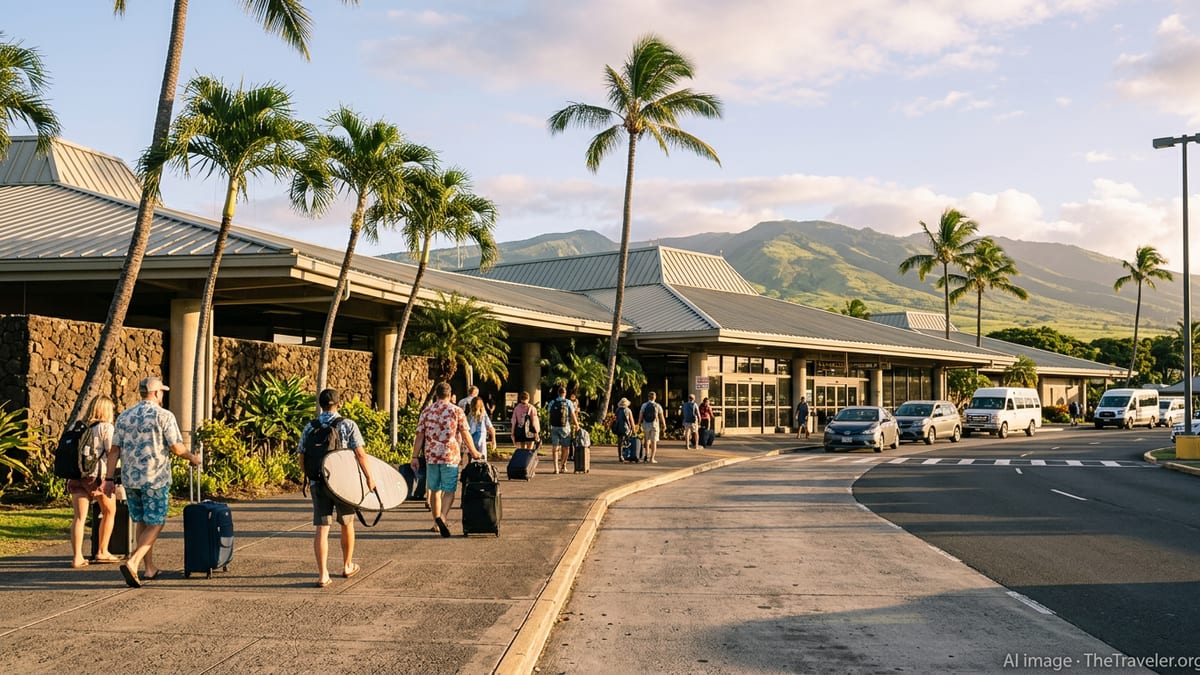
One of the first things visitors notice is how compact and open many Hawaiian terminals feel compared with the sprawling, enclosed concourses common on the mainland. Outdoor walkways, open-air lanais, and minimal use of jet bridges are part of the design, especially in Kona and Kauai. That relaxed design can lull first time visitors into thinking connections will be effortless, but peak travel times, limited security lanes, and weather-related delays can still affect schedules. Allowing realistic connection times and knowing where you need to go in advance is essential.
Another key difference is the importance of interisland flying. Many itineraries involve landing in Honolulu and then continuing to another island on a separate ticket. Although the airports are generally easy to navigate, baggage check-through rules and terminal layouts can affect how long a connection you need. When possible, booking all flights on one itinerary simplifies this process, but even with separate tickets, a bit of planning will keep things manageable.
Hawaii’s airports have modernized in recent years, with expanded rental car centers, refreshed dining options, and better wayfinding. At the same time, they remain relatively modest by global hub standards. Expect fewer lounges and less shopping than at large mainland airports, but also shorter walking distances and more time outdoors. This guide walks through what to expect at each of the four main airports and how to make the most of your time there.
Daniel K. Inouye International Airport, Honolulu (HNL)
Daniel K. Inouye International Airport, commonly called Honolulu International or simply HNL, is Hawaii’s largest and busiest airport. Located several miles west of downtown Honolulu and roughly a fifteen to twenty minute drive from Waikiki in light traffic, it is the primary entry point for most international visitors and a major domestic hub for flights from the U.S. West Coast and beyond. HNL is also the center of the state’s interisland network, with frequent short hops to Maui, Kauai, Kona, Hilo, and several smaller airports.
The airport is organized around multiple terminal areas that are functionally connected: Terminal 1 primarily serves Hawaiian Airlines, including many interisland flights; Terminal 2 handles most other domestic and international carriers; and additional facilities support commuter and cargo operations. Walking between Terminals 1 and 2 is straightforward airside for many connections, with moving walkways and clear signage, though distances can still take ten to fifteen minutes at an unhurried pace. For some international arrivals, especially when clearing immigration and customs, you may exit into a dedicated arrivals hall and then walk to the interisland terminal.
Because HNL serves as both an origin and a connecting hub, timing matters. For connections from an international flight to a domestic or interisland leg, two hours is a sensible minimum, and more is prudent if tickets are on separate reservations. Travelers arriving from the mainland and continuing within Hawaii often stay within the secure area and walk directly to their next gate, but if bags are not checked through or a terminal change requires exiting security, you should allow additional time for recheck and screening. Early morning, mid-morning, and late evening can be particularly busy, coinciding with international bank flights and West Coast arrivals.
Honolulu’s terminal experience blends practical infrastructure with an island atmosphere. Expect a mix of indoor and semi-open concourses, small gardens, and views of the Koʻolau Range or Pearl Harbor as you taxi. Dining and retail options are concentrated in Terminal 2, with a broad range of grab-and-go snacks, fast casual outlets, and a handful of sit-down venues featuring local flavors. Several airline and contract lounges operate here, though they tend to be utilitarian rather than lavish. Free or limited public Wi-Fi is typically available, but speeds can vary with demand, so download key documents and entertainment in advance if possible.
Kahului Airport, Maui (OGG)
Kahului Airport on Maui, identified by the code OGG, is the island’s primary air gateway and one of Hawaii’s busiest tourist airports. Located on the north central shore, a short drive from the town of Kahului and roughly forty-five minutes from resort areas like Kāʻanapali or Wailea depending on traffic, OGG handles nonstop flights from numerous mainland cities plus a steady stream of interisland services. While sizable by island standards, it retains a manageable layout that many travelers find less intimidating than Honolulu.
The airport features a single main terminal with a modest number of gates arranged along concourses that branch from a central hall. Most passengers will pass through one security checkpoint and then walk to their gate along open, airy corridors. This configuration makes navigation intuitive even for first time visitors. Signage points clearly to baggage claim, ground transportation, and rental car facilities. In recent years, a consolidated rental car center just beyond the main terminal has streamlined pick-up and drop-off, often linked to the terminal by a short tram or shuttle, reducing the need to cross busy access roads with luggage.
Inside the terminal, travelers will find a mix of local and familiar chain food options, along with small shops selling island-made snacks, coffee, apparel, and souvenirs. The atmosphere can shift dramatically with the schedule: quiet during slower midweek periods, and quite lively at mid-morning and late afternoon when clusters of mainland departures and arrivals are banked together. A second Hawaiian Airlines Premier Club lounge has been added at Kahului, offering a quieter place for eligible travelers and some Priority Pass members to unwind before boarding, though lounge capacity and amenities remain more limited than at large mainland hubs.
From a planning standpoint, Maui-bound visitors should build in extra time to collect baggage and reach their rental car, especially during busy holiday and peak-season periods when multiple widebody flights may arrive close together. Clearing the airport itself is usually efficient, but the onward drive to major resort areas can add time, particularly along two-lane coastal roads that see a mix of local and visitor traffic. For departures, arriving at the airport about two hours before a mainland flight and around ninety minutes before an interisland departure generally provides a comfortable buffer.
Ellison Onizuka Kona International Airport, Island of Hawaii (KOA)
Ellison Onizuka Kona International Airport at Keahole, or simply KOA, serves the sunny, leeward side of the Island of Hawaii. Situated several miles north of Kailua-Kona, this airport is the main gateway for visitors heading to the Kohala Coast resorts, the town of Kailua-Kona, and the island’s western beaches. KOA is known for its distinctive open-air layout: instead of an enclosed multi-story building, the terminal complex is composed of low-rise pavilions connected by outdoor walkways that create an almost resort-like feel.
This open design makes navigation at Kona straightforward. There is effectively a single terminal complex, and walking between check-in, security, gates, and baggage claim involves moving through shaded outdoor areas rather than long indoor corridors. Travelers often remark on the views of black lava fields surrounding the runways and the immediate sense of being in Hawaii the moment they step off the plane via stairs or limited jet bridges. The compact footprint means that gate-to-gate transfer times are short, but it also means amenities are concentrated in just a few clusters.
Facilities at KOA include essential services such as rental car counters accessed by short shuttle rides to nearby lots, taxi and rideshare pick-up zones, and a modest selection of food and beverage outlets. These are oriented mainly toward quick meals, coffee, and grab-and-go snacks, with a few stands carrying island souvenirs and locally produced goods. Wi-Fi is typically available in the primary terminal areas, though coverage and speeds can vary. A Hawaiian Airlines lounge space serves eligible guests, providing a quieter place to work or relax, but lounge offerings are limited compared with larger airports.
Operationally, KOA has experienced occasional runway repair and improvement projects in recent years, leading to temporary night closures or schedule adjustments at times. While such work is usually planned outside peak daytime hours, it is wise to check your flight status in the days leading up to travel, particularly during fall and winter when repair windows may be more common. For most travelers, arriving ninety minutes before an interisland flight and about two hours before a mainland departure is adequate. Because the airport is relatively small and security lines are often shorter than in Honolulu, the main variable is road traffic between resorts and the airport, especially during rush hours and major events.
Lihue Airport, Kauai (LIH)
Lihue Airport on Kauai, code LIH, is a state-owned public airport on the island’s southeast coast, a short drive from the town of Lihue and roughly thirty to forty minutes from resort areas such as Poipu or Princeville depending on traffic. It is the primary passenger gateway to the Garden Isle, handling nonstop flights from several mainland U.S. cities along with frequent interisland services. LIH operates from a single mid-sized terminal, sometimes called the Kawakami Terminal, that preserves the island’s low-key charm while providing the essentials most visitors need.
The terminal is notable for its open-air, mostly un-walled design. Passengers move between check-in, security, gate areas, and baggage claim along breezy walkways and semi-open halls that let in natural light and fresh air. Check-in counters for all major airlines are located on the ground level, with security screening leading to gate clusters serving both interisland and transpacific flights. Arrivals and ground transportation are located on a lower level or adjacent area where baggage claim, information desks, and rental car and shuttle pick-up points are easy to access on foot.
Amenities at Lihue are modest but improving. Travelers can expect a small collection of cafes, bars, and quick-service outlets, some showcasing local flavors alongside national coffee and snack brands. Retail options include newsstands, convenience-style shops, and small boutiques offering Kauai-themed apparel, gifts, and fresh flower arrangements. More recently, complimentary public Wi-Fi has become available throughout much of the terminal, allowing travelers to check messages or stream light content while waiting to board. Charging points are not as ubiquitous as at large mainland hubs, so carrying a portable battery remains a good idea.
Because Kauai’s airport serves a relatively small population compared with Oahu or Maui, lines are often shorter, but this can change quickly when multiple mainland departures are scheduled close together. Early morning flights back to the mainland can see concentrated crowds at security as visitors line up to depart. As a rule of thumb, arriving around ninety minutes before interisland flights and two to three hours before mainland departures offers a comfortable margin. Public transport via the county bus system reaches the airport, but many travelers rely on rental cars, taxis, shuttles, or prearranged hotel transfers for convenience and flexibility.
Interisland Connections and Transit Tips
For many itineraries, navigating Hawaii’s airport network means making at least one interisland connection. Most such connections pass through Honolulu, though there are also direct flights between some outer islands. Travelers arriving from the mainland on one airline and continuing interisland on another should pay particular attention to baggage rules and minimum connection times. When tickets are on the same itinerary, bags are often checked through to the final island, allowing you to remain within the secure zone and simply walk to your next gate. When tickets are separate, you may need to collect your luggage, exit, re-check with the next airline, and pass through security again.
In Honolulu, walking between Terminal 2, where many mainland carriers arrive, and Terminal 1, where Hawaiian Airlines operates a large interisland operation, is generally manageable, but the route can involve multiple escalators, walkways, and occasional outdoor segments. Plan on at least fifteen to twenty minutes of walking time plus whatever is needed for security if you must exit and re-enter. On the outer islands, interisland connections are typically simpler, as there is usually a single main terminal and a single security checkpoint, but you should still allow extra time during peak morning and evening periods when business and leisure travelers converge.
One constant across the islands is the importance of respecting security and agricultural inspection procedures. All checked bags leaving Hawaii for the mainland and many interisland flights pass through agricultural screening to prevent the spread of invasive species and plant pests. Travelers should pay attention to signage and anticipate an extra step at the check-in area or before certain security lines. Items such as fresh fruits, plants, and soil may be restricted or require inspection; packaging approved items in clean, labeled containers and checking current rules before you travel helps avoid last-minute surprises.
Finally, keep in mind that island weather, especially during winter months, can affect flight schedules. Strong trade winds, heavy rain, and occasional volcanic haze can lead to delays or diversions, particularly on shorter interisland hops. Building a cushion into your itinerary, especially when an onward international or cruise departure depends on a timely arrival, is prudent. Whenever possible, schedule critical connections for earlier in the day and monitor your flights via airline apps or airport information screens to stay ahead of any potential disruptions.
Ground Transportation, Rentals, and Accessibility
Once you clear baggage claim at any of Hawaii’s major airports, the next step is getting to your hotel, resort, or vacation rental. Across Honolulu, Maui, Kona, and Kauai, rental cars remain the most popular choice, especially for visitors planning to explore beaches, hiking trails, and small towns beyond resort areas. Each of the four airports has well-developed rental car facilities, often consolidated in multi-agency centers connected to the terminal by short shuttles, trams, or walkable paths. During peak travel seasons, vehicle availability can tighten, so advance reservations are strongly recommended.
For travelers who prefer not to drive, options vary by island. In Honolulu, taxis, rideshare services, hotel shuttles, and scheduled airport shuttles are readily available and clearly signed outside each terminal. Public buses also serve the airport, offering budget-friendly access to downtown and other parts of Oahu, though luggage rules and route structures may make them less convenient for heavily loaded visitors. Maui, Kona, and Kauai also offer a mix of taxis, rideshares where permitted, and hotel or independent shuttles, but public transit frequencies can be limited, especially at night and on weekends. Confirming your ground transportation plan before arrival can prevent long waits at curbside.
Accessibility has improved across Hawaii’s airports over the past decade, with curbside drop-off zones, ramps, elevators, accessible restrooms, and wheelchair-compatible shuttles more consistently available. Travelers needing special assistance should notify their airline in advance to arrange wheelchair support or boarding help, particularly at open-air airports like Kona where boarding may require use of mobile lifts or accessible stairs. On arrival, signage for accessible pathways is generally clear, but if in doubt, airport staff at information desks or airline counters are accustomed to helping visitors navigate.
Parking options are offered at all four airports, typically including short-term lots close to the terminal and longer-term parking slightly farther away but within walking or shuttle distance. Rates and payment methods can change over time, so it is wise to check conditions shortly before travel if you plan to leave a vehicle for several days. For local residents island-hopping for short trips, interisland parking can be particularly convenient, though spaces can fill quickly during major holiday periods or special events.
The Takeaway
Hawaii’s four primary airports each offer a distinct first impression of the islands they serve. Honolulu is the state’s gateway and busiest hub, with a complex but navigable terminal layout that rewards a bit of advance planning. Maui’s Kahului Airport, though busy in peak season, remains relatively compact and straightforward, while Kona’s open-air pavilions and lava-field views feel uniquely Hawaiian. Lihue on Kauai delivers a laid-back, small-island atmosphere that often makes arrivals and departures feel unhurried, even when multiple flights are on the board.
Across all four airports, the keys to a smooth experience are realistic timing, clarity on baggage and connection rules, and a plan for ground transportation the moment you land. Arriving early for departures, especially morning mainland flights and tight interisland connections, allows you to move at an island pace rather than rushing through unfamiliar terminals. Checking current conditions and any scheduled runway or terminal work a few days before you fly can also reduce surprises.
Perhaps most importantly, embracing the character of Hawaii’s airports can set the tone for your trip. The open-air lobbies, trade winds moving through the walkways, and glimpses of mountains or ocean from departure gates are reminders that you are already in the islands, even before you reach your hotel. With a bit of preparation and a flexible mindset, Honolulu, Maui, Kona, and Kauai airports become welcoming gateways rather than stressful obstacles on the way to paradise.
FAQ
Q1. How early should I arrive at Hawaii airports before my flight?
For interisland flights, arriving about 90 minutes before departure is usually sufficient. For mainland or international flights, plan on at least 2 to 3 hours, especially in Honolulu or during peak travel seasons.
Q2. Is it easy to connect from a mainland flight to an interisland flight in Honolulu?
Yes, but you should allow adequate time. If your bags are checked through and you stay airside, 90 minutes can be enough. If you must collect luggage, change terminals, and re-clear security, plan on 2 hours or more.
Q3. Do all Hawaii airports have rental car facilities on site?
All four major airports offer rental car services, typically in consolidated centers near the terminal. Access is via short shuttles, trams, or walkable paths, and advance reservations are strongly recommended.
Q4. Are the Hawaii airports fully air conditioned?
Not entirely. Terminals in Honolulu and Maui have more enclosed, air-conditioned spaces, while Kona and Lihue feature open-air designs where some areas are naturally ventilated and only select gate areas or shops are air conditioned.
Q5. Is public transportation available from the airports to resort areas?
Public buses serve Honolulu and, to a more limited extent, Maui and Kauai, but routes and luggage rules can make them less convenient for visitors. Most travelers rely on rental cars, shuttles, taxis, or rideshares to reach resort zones.
Q6. What should I know about agricultural inspections at Hawaii airports?
Checked baggage often goes through agricultural screening before departure to the mainland or between islands. Certain fresh fruits, plants, and soil may be restricted, so review current regulations and keep eligible items clean and properly packaged.
Q7. Are there airport lounges at Honolulu, Maui, Kona, and Kauai?
Yes, but they are fewer and generally smaller than at major mainland hubs. Honolulu has the widest selection, while Maui, Kona, and Kauai offer limited airline and contract lounges mainly for eligible frequent flyers and premium passengers.
Q8. Can I walk between terminals at Honolulu’s airport?
In many cases, you can walk between Terminal 1 and Terminal 2 using connected concourses and walkways, sometimes remaining inside security. Distances are moderate, so allow at least 10 to 20 minutes depending on your gate locations.
Q9. How weather dependent are flights between the Hawaiian Islands?
Interisland flights can be affected by strong winds, heavy rain, or occasional volcanic haze, especially in winter. Most disruptions are short, but it is wise to build a time cushion into tight same-day connections.
Q10. Are Hawaii’s airports accessible for travelers with reduced mobility?
Yes. All four major airports provide ramps, elevators, accessible restrooms, and wheelchair assistance. Contact your airline before travel to arrange any necessary support, especially at airports with open-air boarding areas like Kona.