

More news on this day
A fatal incident in a closed section of Hawaiʻi Volcanoes National Park has intensified scrutiny of visitor behavior and enforcement practices across the U.S. national park system, after a 33-year-old Hawaiʻi resident died following an overnight rescue from hazardous terrain near the rim of Kīlauea caldera.
Rescue in Hazardous Terrain Ends in Tragedy
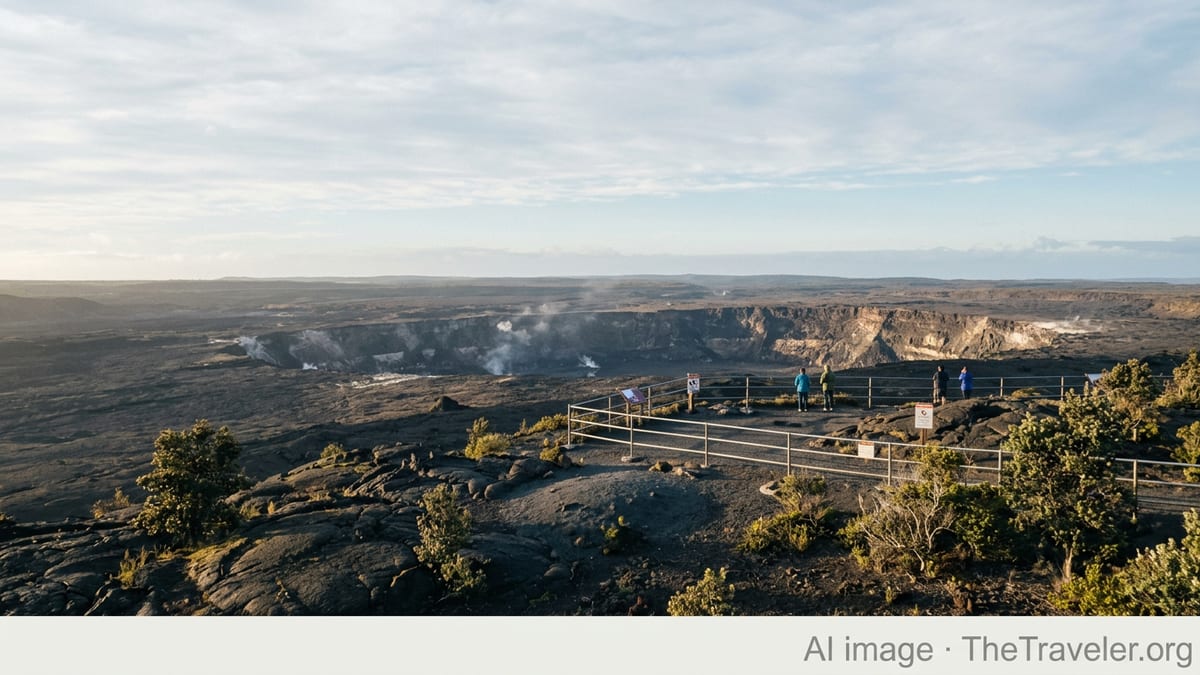
According to the National Park Service, rangers and search-and-rescue personnel responded on February 26 to reports of an individual in distress within a closed area on the east side of Kīlauea caldera, one of the most dangerous sections of Hawaiʻi Volcanoes National Park. The volcano was not erupting at the time, but the caldera rim is riddled with unstable cliffs, loose ash and hidden fissures.
Rescuers operated through the night in steep, treacherous terrain before locating the man on February 27. He was hoisted out by helicopter and flown to Hilo Benioff Medical Center, where he was pronounced dead. Authorities have identified him only as a 33-year-old Hawaiʻi resident, saying his name is being withheld to respect the privacy of his family.
The National Park Service has not released details about how or why the man entered the closed zone, and the incident remains under investigation. Officials have confirmed that no eruption or sudden geologic event coincided with the emergency, underscoring that the terrain itself, even in seemingly calm conditions, can be lethal.
News outlets across Hawaiʻi and the U.S. mainland have highlighted the stark contrast between the park’s spectacular scenery and the invisible risks that line the edges of Kīlauea’s summit, where a misstep can mean a fall into crumbling rock or exposure to toxic gases.
Closed Areas and a Longstanding Safety Challenge
The section of the caldera where the incident occurred has been off limits for years, part of a patchwork of permanent and temporary closures the park uses to shield the public from rockfalls, unstable ground and ongoing volcanic activity. While most visitors remain on marked roads and trails and obey barriers, rangers say a small but persistent number cross into restricted zones seeking closer views or quieter vantage points.
Hawaiʻi Volcanoes National Park, which protects Kīlauea and Mauna Loa volcanoes, routinely adjusts access as conditions change, closing overlooks, trails and road segments when eruptions, earthquakes or ashfall increase risk. Even when the volcano is not actively erupting, steam vents, brittle lava crusts and sudden cliff failures can turn a short detour into a life-threatening situation.
Recent eruptions have drawn large crowds to the park, raising pressure on rangers to balance public demand for dramatic views with the need to keep people away from the most unstable areas. Officials say warning signs, printed maps, online alerts and ranger briefings all stress that closures are based on scientific assessments of danger, not on convenience.
In statements following the latest fatality, park managers reiterated that Kīlauea’s caldera rim is inherently hazardous and that designated viewpoints already offer the safest possible perspectives of an active volcanic landscape. They urged visitors to treat closed gates and rope lines as hard boundaries, not as suggestions.
Renewed Calls for Stronger Enforcement
The death has prompted renewed calls from safety advocates and some former park employees for tougher enforcement of closure rules, not only at Hawaiʻi Volcanoes but across the national park system. They argue that growing visitation, the pull of social media and a perception that rules are lightly enforced have made it more likely that people will test boundaries.
While rangers can issue citations and fines for entering restricted areas, enforcement often hinges on limited staffing and the difficulty of patrolling vast backcountry landscapes. In volcanic terrain like Kīlauea’s summit, simply reaching violators can put rescuers at risk, forcing difficult decisions about when to intervene and when to monitor from a distance.
Some safety experts say higher fines, more frequent patrols at popular overlooks and a more visible law-enforcement presence at trailheads could help deter people from stepping beyond barriers. Others caution that relying on punishment alone may not be effective without a parallel effort to change visitor expectations and deepen understanding of volcanic hazards.
National park officials have signaled that they are reviewing the circumstances of the incident to determine whether closure lines, signage or staffing patterns near the caldera rim need to be adjusted. Any changes are likely to be closely watched by other parks that juggle similar tensions between access and safety in canyons, deserts and alpine environments.
Visitor Education Under the Spotlight
The tragedy has also sharpened focus on how parks communicate risk to visitors, many of whom may be experiencing an active volcano for the first time. At Hawaiʻi Volcanoes, interpretive programs, trailhead notices and digital alerts all emphasize that conditions can shift quickly and that what looks like solid ground can, in fact, be thin crust over voids or unstable slopes.
Travel advisers and tour operators on the island have begun reminding clients more explicitly that posted closures are nonnegotiable and that views from sanctioned overlooks are both spectacular and sufficient. Some are urging visitors to sign up for official park and volcano observatory updates rather than relying on informal online tips, which can be outdated or misleading about where it is safe to walk.
Advocates for stronger education point to other high-profile accidents in U.S. parks as evidence that even repeated warnings can be drowned out by vacation excitement and the desire for unique photos. They argue that messaging around closures needs to be as prominent as information about hiking routes and scenic drives, especially during periods of heightened volcanic unrest.
Local officials on Hawaiʻi Island have echoed those concerns, noting that rescues in closed areas often draw resources from other emergencies. They say reinforcing a culture of respect for closures is essential not just for tourists, but for residents who may feel familiar with the landscape and underestimate subtle changes over time.
Balancing Access With Risk in a Changing Landscape
For Hawaiʻi Volcanoes National Park, the incident comes at a time when Kīlauea’s activity remains closely monitored and visitor numbers continue to rebound. Each eruption episode reshapes the crater floor, alters gas emissions and changes which overlooks are safe to open, leaving managers to constantly recalibrate the line between experience and exposure.
Park planners say long term, they may need to invest in more robust viewing infrastructure, such as hardened overlooks set back from the most fragile rims, to offer compelling perspectives while reducing temptation to edge closer. That approach has been adopted at some other volcano destinations around the world, where fenced platforms and defined viewing windows help keep people away from newly unstable slopes.
In the near term, visitors arriving in the wake of the fatality will likely see a heightened emphasis on safety briefings, more visible closure markers and a renewed insistence from rangers that stepping off designated routes is not an option. Officials stress that the vast majority of the park remains open and awe inspiring, from ancient lava fields to rainforest trails, without requiring anyone to push into restricted terrain.
As investigators continue to examine what led to the 33-year-old’s death, the incident is already shaping the broader conversation about how America’s national parks manage risk at their wildest edges. For Hawaiʻi Volcanoes, where beauty and danger are separated by only a few steps of crumbling rock, that debate now carries an especially urgent weight.