

Two names dominate tropical daydreams: Hawaii and the Maldives. Both promise palm trees, warm seas and postcard sunsets, yet the experience on the ground could not be more different. One is a volcanic archipelago in the middle of the Pacific, layered with Polynesian culture and diverse landscapes. The other is a string of coral atolls in the Indian Ocean, famous for overwater villas and castaway-luxury seclusion. Choosing between them comes down to the style of beach, budget, distance and the kind of trip you want to remember years from now.
Geography and First Impressions
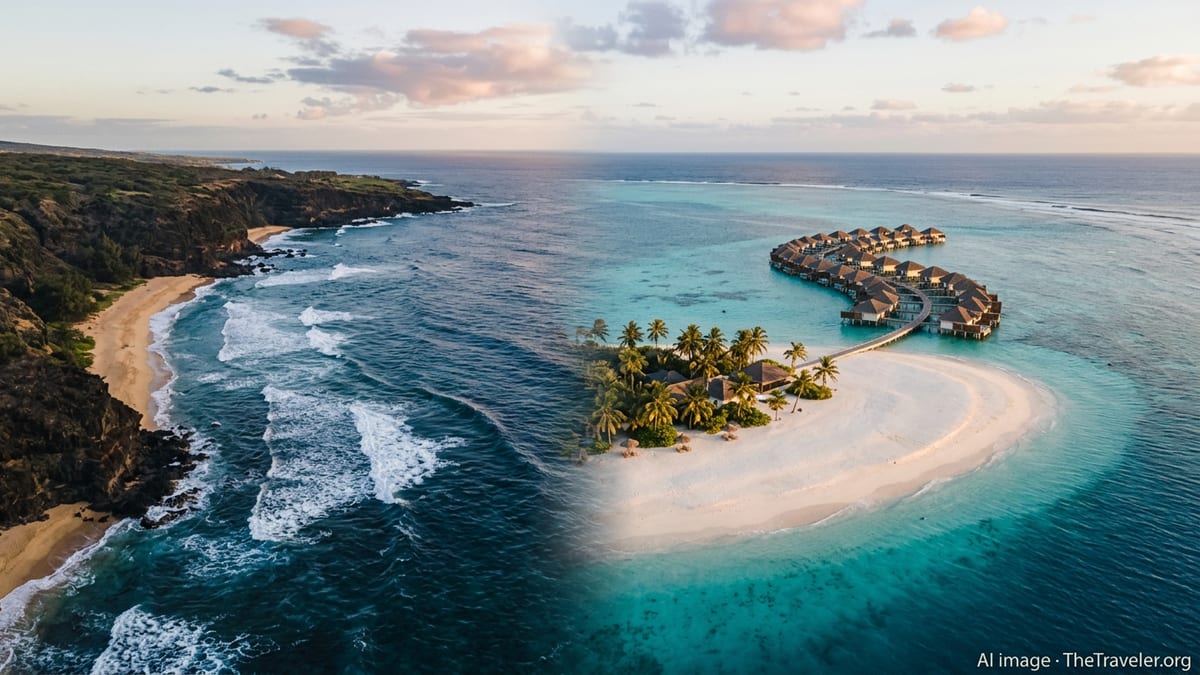
Hawaii and the Maldives are both island chains, but they feel remarkably different from the moment you arrive. Hawaii rises dramatically from the Pacific, with high volcanic peaks, lush valleys and surf-battered shorelines. Most visitors base themselves on the main islands of Oahu, Maui, Kauai or Hawaii Island, each with its own personality and mix of towns, beaches and rural areas. You are firmly in a place where people live, work and go to school, and tourism fits around that everyday life.
The Maldives, by contrast, is low-lying and horizontal. Hundreds of tiny islands are scattered across atolls, many ringed by white sand and shallow turquoise lagoons. Most resort guests stay on private islands reached by speedboat or seaplane from the capital, Malé. Step off the jetty and you may find that the resort is the entire island, with accommodation, restaurants and activities arranged around a walkable ring of sand.
That contrast shapes the whole experience. In Hawaii, you are likely to rent a car, explore multiple beaches and drive through communities, rainforests and upland ranch country. In the Maldives, you tend to slow down and stay put, experiencing a single island in depth rather than hopping between many.
Scale also matters. Hawaii’s main islands have substantial populations and extensive infrastructure, so it is easier to combine beach time with road trips, shopping and dining out in local neighborhoods. The Maldives feels smaller and more intimate, especially on a resort island where you quickly learn the paths, the viewpoints and even the resident herons and reef fish.
Beaches and Water: What You Actually See and Feel
For many travelers, the choice comes down to beaches and water color. On this front, the Maldives has a clear edge in the classic “screen-saver” sense. Because the islands sit on coral atolls, the beaches tend to be powdery white, shelving into lagoons that glow with bright turquoise and pale blues. The sea is usually calm inside the protecting reef, with gentle waves ideal for floating, paddleboarding and beginner snorkeling right from shore.
Hawaii’s beaches are more varied and often more dramatic than perfectly placid. You will find golden crescents, black volcanic sands and even patches of green-tinged beach where olivine crystals collect. On leeward coasts, the water can be very clear and inviting, but ocean swells are often stronger than in a sheltered Maldivian lagoon. For confident swimmers and surfers, that power feels exhilarating. Families with small children may prefer specific coves or lifeguarded beaches where conditions are calmer.
Underwater, both destinations reward anyone who packs or rents a mask. Many Maldivian resorts have house reefs reached from the beach or via short boat rides, with coral gardens, reef sharks, rays and intense fish life in relatively warm, shallow water. Visibility is often excellent, especially in the drier months, and the lack of strong surf makes it accessible to nervous snorkelers. Hawaii offers unforgettable wildlife too, including sea turtles, reef fish and, in season, humpback whales visible from shore. However, snorkeling is more weather-dependent, and some of the best sites are in protected bays or reached by tour boat.
One more distinction is sound and feel. The Maldives is often marked by the hush of small waves lapping the shore and the quiet whir of a distant seaplane. Hawaii’s beaches mix the crash of surf with the sounds of local life: kids playing, music from beach parks, food trucks and evening hula shows. This difference between serene seclusion and a more animated shoreline is central to the choice.
Travel Time, Accessibility and Entry Practicalities
Where you live plays a major role in whether Hawaii or the Maldives makes more sense. For travelers from North America, Hawaii is usually far easier and faster to reach. Nonstop flights connect major mainland cities to Honolulu, Maui, Kauai and Kona, often in six to nine hours from the U.S. West Coast and longer from the East Coast with one connection. Once you land, you move around by interisland flights or short drives, using the same electrical standards and currency as the mainland United States.
Reaching the Maldives generally requires at least one long-haul flight to a hub such as Doha, Dubai, Singapore or Istanbul, then a connection to Malé. Total travel time from North America commonly runs well past 20 hours including layovers, which can make it more suitable for longer trips and special occasions. From Europe, the equation reverses somewhat: the Maldives is reachable on overnight flights via hubs in the Middle East or directly from some European cities, while Hawaii typically involves a much longer journey across multiple time zones.
On arrival, Hawaii functions like any other U.S. state in terms of entry for American citizens, who do not pass through international immigration. Visitors from abroad follow standard U.S. entry procedures and may need visas or electronic travel authorizations depending on their nationality. The Maldives operates its own immigration system but is known for relatively straightforward tourist entry for many nationalities, typically with visas granted on arrival for short stays, although travelers should always check current rules before booking.
Transfers are another difference. In Hawaii, you can rent a car or use shuttles and taxis directly from the airport. In the Maldives, most resort stays begin with a prearranged speedboat or domestic flight and seaplane transfer, which can add several hundred dollars per person to the trip cost but also supply spectacular aerial views of the atolls.
Weather, Seasons and Best Times to Visit
Both Hawaii and the Maldives are warm year-round, but their weather patterns and peak seasons differ enough to influence your decision. Hawaii has a relatively stable tropical climate with two broad seasons: a slightly cooler, wetter winter from roughly November to March and a warmer, drier summer from about April to October. Even in winter, daytime temperatures along the coasts are comfortable, and rain usually arrives in showers rather than all-day downpours, particularly on drier leeward shores.
Visitor demand in Hawaii typically spikes in mid-December through March as travelers escape colder climates, as well as around major holidays and school breaks. Those periods bring higher accommodation prices and busier beaches. Shoulder months such as late April, May, September and early November often balance lower prices, manageable crowds and pleasant weather, especially on islands and coasts known for being sunnier.
The Maldives follows a different rhythm shaped by the monsoon, with a drier, sunnier period often described from around November to April and a wetter season from roughly May to October. Even during the so-called rainy months, showers often come in bursts with sunny spells in between, but seas can be choppier and skies more changeable. Visibility for diving and snorkeling is typically clearest in the drier months, while certain times in the wetter period can bring more plankton, attracting manta rays and whale sharks.
Because almost all Maldivian beach holidays revolve around outdoor activities, seasonality has a direct impact on value. High season rates are common over the drier months and around Christmas and New Year. Traveling in the shoulder season can bring noticeably lower prices on flights and rooms, with some trade-off in weather predictability. For Hawaii, extreme weather events are less frequent but still possible, including occasional Pacific storms, so checking recent conditions before travel is always prudent.
Costs, Accommodation Styles and Value for Money
Price is one of the most significant differences between Hawaii and the Maldives. While both destinations can be expensive, the Maldives is widely regarded as the pricier choice for classic resort stays, particularly if you are dreaming of an overwater villa. Recent resort rate guides and travel-industry overviews suggest that many five-star Maldivian properties price their overwater villas in the high hundreds to well over one thousand U.S. dollars per night in peak season, with top-end resorts charging considerably more. More moderately priced resorts and local-island guesthouses do exist, bringing nightly costs down to the low hundreds or below, but seaplane transfers and resort extras still add up.
In Hawaii, nightly rates vary greatly by island, season and style of lodging, but the range is broader in the midscale bracket. You can find simple hotels, vacation rentals and condos that, while not cheap, are often less costly than a comparable beach resort in the Maldives. High-end Hawaiian resorts, particularly in prime beachfront locations on Maui, Kauai or Oahu, certainly command premium rates, yet they are part of a competitive domestic market that includes everything from chain hotels to boutique properties and rental homes.
The structure of costs also differs. A Maldivian resort island is usually a self-contained environment where nearly everything is purchased on-site, often in U.S. dollars and usually subject to service charges and taxes. Half-board or all-inclusive plans help with predictability but may still leave extras such as premium drinks, spa treatments and motorized watersports outside the package. In Hawaii, you typically pay for accommodation separately and then mix restaurant meals, grocery runs, food trucks and activities from multiple providers, which can make it easier to fine-tune spending day by day.
For travelers weighing value, this means that a carefully planned Hawaii itinerary can be more forgiving to the budget, especially for families or longer trips where self-catering, reward points or off-season deals help. The Maldives often makes most sense when you are prepared for a concentrated burst of higher spending in exchange for a singularly luxurious or romantic stay, or when you intentionally choose local-island guesthouses and off-peak dates to keep costs in check.
Cultural Experience, Food and Things To Do Beyond the Beach
Another crucial distinction between Hawaii and the Maldives lies in how much local culture you encounter during an ordinary trip. Hawaii has a rich Native Hawaiian heritage layered with influences from Asia, North America and the wider Pacific. Even in well-known resort areas, you are never far from signs in Hawaiian language, historic sites, community hula events, surf competitions and small-town farmers’ markets. Visitors can attend cultural shows, visit museums, explore temples and churches, or join guided walks focused on history and ecology.
The Maldives certainly has its own distinctive culture, shaped by centuries of seafaring, Islam and life on small islands, but the amount you experience depends heavily on whether you visit local islands as well as a resort. On a private resort island, life is often oriented more toward international luxury standards: spa pavilions, fusion restaurants, wine cellars and barefoot-chic bars. Visits to nearby inhabited islands can be arranged to learn about local life, but they are usually separate excursions rather than a constant backdrop to your stay.
When it comes to activities, Hawaii arguably offers a broader menu. Within a single Hawaiian trip you might hike to waterfalls, drive across volcanic landscapes, watch surfers ride winter swells, sample food trucks along a coastal road and stargaze at high elevations. Island-hopping allows you to combine very different environments, from rain-soaked canyons to lava fields and ranchlands. The Maldives focuses more tightly on water-based pursuits: snorkeling, diving, stand-up paddleboarding, sunset cruises and perhaps a sandbank picnic or dolphin-watching trip. Some larger resorts add tennis courts, cooking classes, yoga decks and kids’ clubs, but the emphasis remains firmly on the sea.
Food reflects this divide. Hawaii’s dining scene stretches from plate-lunch cafés and poke counters to high-end restaurants drawing on local seafood and farm produce. You can eat in hotel venues or seek out local favorites, with the freedom to choose different places each night. In the Maldives, meals are largely on-site. Resort buffets and a la carte restaurants usually lean heavily on fresh fish, international dishes and polished presentation. Local-island stays offer simpler, more home-style Maldivian cuisine, which can be a highlight for travelers keen on authenticity.
Romance, Family Travel and Overall Atmosphere
Both Hawaii and the Maldives are strong contenders for honeymoons and special trips, but they express romance differently. The Maldives has built its global image around secluded villas, private pools and candlelit dinners on the sand. Many resorts cater specifically to couples, with adults-only areas, in-villa breakfasts and spa rituals for two. The feeling is one of retreat, where you may go long stretches seeing only a few other guests along the beach.
Hawaii’s romance is less isolated and more woven into lived-in landscapes. Sunsets over the Pacific, coastal drives with scenic pullouts, and dinners overlooking surf breaks provide no shortage of cinematic moments, but they happen in spaces shared with local residents and other visitors. For some couples, that blend of intimacy and energy is more appealing than complete seclusion. Hawaii also fits more naturally into milestone trips where different generations travel together, combining romance with family time.
From a family perspective, Hawaii tends to be more straightforward. Shorter flight times from North America, familiar infrastructure, and a wide range of kid-friendly activities make it an easier choice for many parents. Beaches with lifeguards, manageable day trips and the option to rent larger condos or houses all add to its appeal. The Maldives can be magical for families who value nature and are willing to spend more, particularly at resorts with kids’ clubs and shallow lagoons, but long flights and higher all-in costs can be challenging. Some Maldivian properties also focus more on adults, so families need to choose carefully.
Atmosphere is the thread running through all of this. The Maldives is tranquil, curated and often quiet after dark, with star-filled skies and the sound of the sea. Hawaii, while it certainly has peaceful corners, offers more nightlife in areas such as Waikiki and resort zones on Maui and Oahu, along with live music, beach bars and community events. Deciding what pace of life you want on vacation is just as important as judging whose beaches are softer.
The Takeaway
Choosing between Hawaii and the Maldives is less about declaring a winner and more about matching a destination to your priorities. If you dream of effortless barefoot luxury, overwater villas, and lagoons in improbable shades of blue, and you are prepared for higher, more concentrated spending in a self-contained resort setting, the Maldives delivers on that fantasy with remarkable consistency. It excels as a honeymoon or anniversary choice, and as a once-in-a-while escape focused on rest, snorkeling and diving.
If you value variety, cultural depth, easier access from North America and more control over your budget, Hawaii may be the better fit. Its beaches can be wilder and the surf stronger, yet that drama comes with rich local traditions, road-trip possibilities and the chance to shape each day with a different mix of hikes, markets, viewpoints and seaside meals. For many travelers, especially families or those who like to explore beyond the resort, Hawaii feels more flexible and grounded.
In practical terms, you might frame the decision this way: choose the Maldives when you want to spend most of your time in or above the water, enveloped in a cocoon of resort comfort and natural beauty. Choose Hawaii when you want the beach to be one highlight among many, set within a living culture and landscape that invite you to venture beyond the shoreline. Either way, planning carefully around seasons, costs and your own travel style will turn that initial daydream into a trip that genuinely suits you.
FAQ
Q1. Which is better for a first-time tropical trip, Hawaii or the Maldives?
For a first-time tropical getaway, Hawaii often suits more travelers because it combines beaches with easy logistics, varied activities and familiar infrastructure, especially for visitors from North America.
Q2. Are beaches in the Maldives really nicer than in Hawaii?
The Maldives usually offers calmer, whiter-sand beaches with bright turquoise lagoons, while Hawaii’s beaches are more varied and dramatic, sometimes with stronger surf and darker volcanic sand.
Q3. Is the Maldives always more expensive than Hawaii?
The Maldives is generally pricier for classic resort stays, especially overwater villas, but careful timing and local-island guesthouses can bring some trips closer to high-end Hawaii budgets.
Q4. How long should I stay in Hawaii vs the Maldives?
Hawaii works well for trips of one to two weeks, particularly if you plan to visit more than one island. The Maldives is often ideal for about five to ten nights, given longer travel times and higher nightly costs.
Q5. Which destination is better for families with young children?
Hawaii usually edges ahead for families thanks to shorter flights from North America, more flexible lodging options, lifeguarded beaches and a wide range of family-friendly outings.
Q6. Do I need an all-inclusive package for the Maldives?
Many travelers find meal plans or all-inclusive options in the Maldives helpful because most spending happens on the resort island, but they are not strictly required if you prefer pay-as-you-go.
Q7. Can I experience local culture easily in both places?
In Hawaii, local culture is part of daily life and easy to encounter in towns, markets and events. In the Maldives, you usually need to add local-island excursions to move beyond the resort environment.
Q8. Which has better snorkeling and diving, Hawaii or the Maldives?
Both offer memorable underwater experiences, but the Maldives is often favored for warm, calm lagoons, abundant reefs and the chance to see reef sharks, rays and rich coral life close to many resorts.
Q9. When is the best time of year to visit Hawaii versus the Maldives?
Hawaii’s shoulder seasons, such as late spring and early autumn, often balance good weather and lower crowds. The Maldives generally has its driest, sunniest conditions from about November to April.
Q10. If I want nightlife, which destination should I choose?
Hawaii offers more nightlife in areas like Waikiki and major resort zones, with bars, live music and evening events, while the Maldives is typically quieter and more focused on relaxed, low-key evenings.