

More news on this day
As Heathrow Airport marks its 80th birthday in 2026, Britain’s busiest aviation hub is highlighting how a once modest airfield on the fringes of London evolved into a national stage for royal milestones, pop culture breakthroughs and the arrival of the jet age.
Get the latest news straight to your inbox!
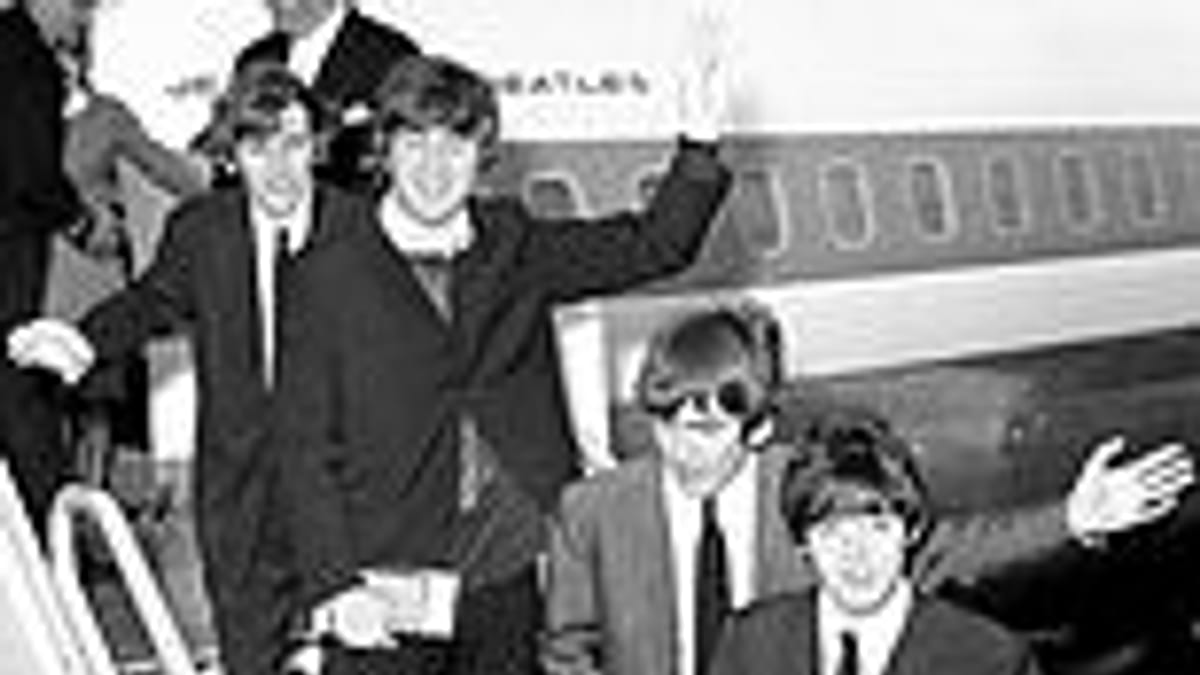
Image by Travel News | Top Europe Destinations & Holiday Ideas | Mail Online
From tented terminals to national gateway
Heathrow’s story began during the Second World War, when the government requisitioned the former Great West Aerodrome near the hamlet of Heath Row to create a new airfield west of London. Commercial flights started in 1946 from temporary tents and military-style structures, but the site quickly began to supplant Croydon as London’s principal airport as long-haul air travel expanded.
Early photographs show passengers crossing open tarmac and boarding propeller aircraft in an era when flying was still a rare experience. The opening of permanent facilities in the 1950s, including the Europa Building that later became Terminal 2 and the Queens Building with its rooftop viewing terraces, turned Heathrow into both a transport hub and a day-out attraction for Londoners who came simply to watch aircraft movements.
By the 1960s Heathrow was firmly established as the United Kingdom’s global gateway, serving new jet types and growing volumes of traffic. Each new terminal expansion reflected a wider shift in British life, from postwar austerity to the consumer age, and helped to anchor the airport in the national imagination as the place where foreign travel began and ended.
Royal journeys that defined an era
Few locations outside Buckingham Palace have been as closely associated with the modern monarchy as Heathrow. In February 1952, the airport became the sombre setting for Princess Elizabeth’s return from Kenya as Queen Elizabeth II following the death of King George VI. Newsreel footage turned a windswept apron into a defining image of Britain’s postwar transition.
Publicly available timelines show that the new Queen was closely linked with the airport’s development in the decades that followed. She laid a ceremonial slab for a new runway in the early 1950s, opened the first permanent passenger terminal and the Queens Building shortly afterwards, and later returned to inaugurate major additions such as Terminal 4 in the 1980s and Terminal 5 in 2008.
Heathrow has also featured in royal celebrations. During the Diamond Jubilee in 2012, a giant Union Flag bearing the Queen’s image was painted beside the northern runway, turning aircraft approaches into a flying tribute visible from the air. The airport’s role as the main arrival and departure point for state visits and overseas tours has further cemented its status as a backdrop to diplomatic pageantry.
Beatlemania, films and the age of celebrity
As mass travel took off, Heathrow became a focal point for British pop culture. In February 1964, thousands of fans crowded the airport to see The Beatles depart for their first tour of the United States. Contemporary coverage describes packed viewing galleries and roadways as the band boarded a flight to New York, an episode often cited as one of the airport’s most iconic departures.
Through the late 20th century, television cameras increasingly turned to Heathrow to capture scenes of arrivals and farewells that resonated with a wider audience. The airport featured in news coverage of sports teams returning from international tournaments, including victorious Olympians posing with medals in arrivals halls, and became a familiar backdrop for celebrity comings and goings.
Heathrow’s emotional pull was later woven into cinema. The opening and closing sequences of the 2003 romantic comedy “Love Actually,” filmed among real passengers, used scenes of reunions at the airport to underscore its reputation as a place where personal stories intersect with global journeys. The portrayal reinforced the idea of Heathrow not only as infrastructure but as a stage for everyday drama.
Concorde, jumbo jets and the jet-age spotlight
Technological milestones elevated Heathrow’s profile as the showcase for a new era of aviation. In the 1960s and 1970s, the airport was at the centre of test and demonstration flights for supersonic travel, hosting high-profile visits by Concorde prototypes that drew public attention and debate over noise and progress.
Regular Concorde services from Heathrow began in 1976, linking London with Bahrain and later New York in less than three hours, and turning departures of the slender white aircraft into a spectacle for onlookers on surrounding roads. British Airways’ Concorde fleet was closely associated with the airport until commercial supersonic services ceased in 2003, when the type’s final landings at Heathrow attracted large crowds along the perimeter.
Alongside Concorde, the arrival of widebody airliners such as the Boeing 747 helped transform Heathrow into one of the world’s key long-haul hubs. Archive material from museum and university collections highlights how the airport was used to illustrate the rise of mass tourism, with images of packed departure lounges and newly built piers featured in travel and business publications.
Modernisation, expansion and environmental scrutiny
Across its 80-year history, Heathrow’s role as a national symbol has also made it a focal point for debate. Successive expansion proposals, including the long-running plan for a third runway, have kept the airport in the headlines and generated sustained scrutiny from residents, environmental groups and business organisations.
Public documents show that the government set out formal support for a new runway in the mid-2010s, while subsequent legal challenges and policy shifts delayed the project. More recent statements from the airport indicate renewed work on planning applications following political backing in 2025, positioning expansion as a cornerstone of future growth and connectivity.
At the same time, Heathrow has sought to present itself as a test bed for greener aviation, highlighting investments in public transport links, more efficient airspace management and low-carbon ground operations. The tension between its status as a global hub and the need to cut emissions has become part of its contemporary narrative, adding a new dimension to the way it is discussed in national and international media.
An airport woven into Britain’s memory
Today, Heathrow serves more than 80 countries and supports tens of thousands of jobs, according to publicly available company figures. For many travellers, however, its significance lies less in statistics than in the images that have accumulated over eight decades of use, from grainy newsreels of royal arrivals to colour footage of pop stars waving from aircraft steps.
The airport’s 80th anniversary reflections emphasise that Britain’s flagship hub has evolved from a collection of tents in a field to a complex of modern terminals handling some of the world’s busiest international skies. In the process, it has become a place where national milestones, global events and personal journeys continually intersect, ensuring that future anniversaries are likely to bring fresh chapters to an already crowded archive of iconic moments.