

More news on this day
London Heathrow is again grappling with large-scale flight cancellations and knock-on delays, leaving passengers stranded across networks as airlines race to rebalance schedules after the latest wave of disruption.
Get the latest news straight to your inbox!
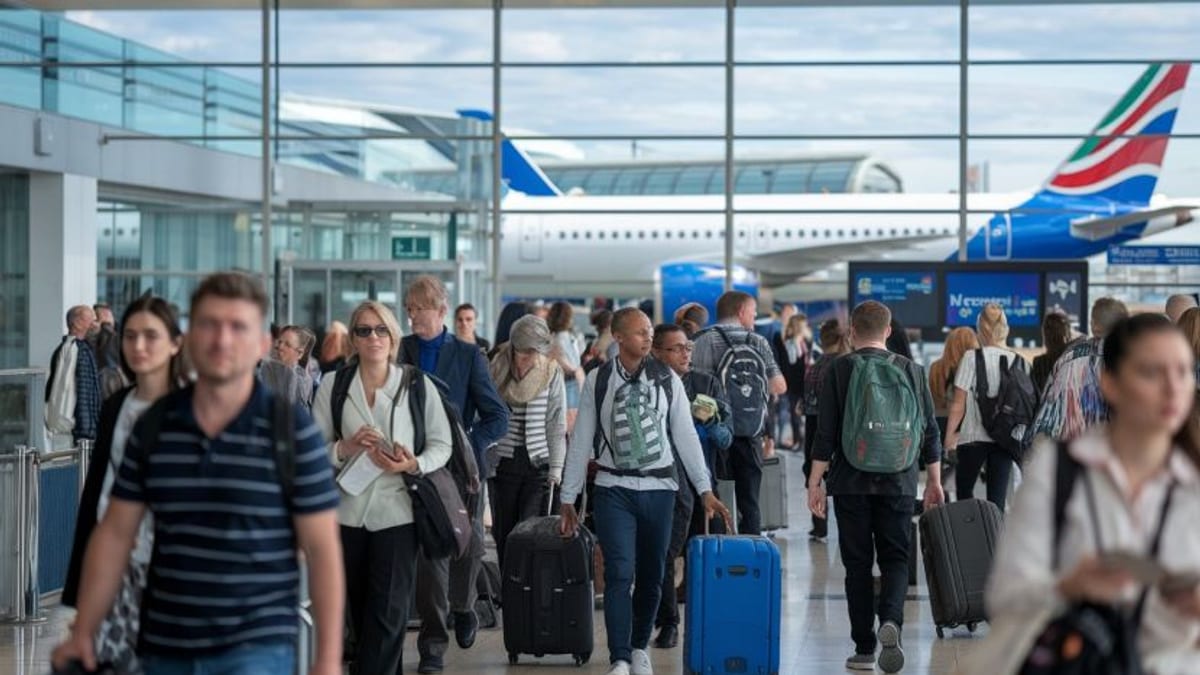
Image by Travel and Tour World – Tourism, Airline, Destination, MICE, Gobal Travel Market, Hotel news that you will find only over here.
Fresh Chaos Built on a Recent History of Shutdowns
The latest cancellations at Heathrow come against the backdrop of a difficult period for the UK’s busiest hub, which has already seen several major disruption events over the past year. A fire at an electrical substation in Hayes in March 2025 forced an airport-wide shutdown that halted operations for around 16 hours and led to more than a thousand flights being scrapped, affecting hundreds of thousands of travelers. Subsequent reviews highlighted how quickly problems at a key infrastructure point can cascade into widespread operational chaos.
Although Heathrow has since restored normal infrastructure operations, the airport and its airline partners are still contending with tight schedules, high load factors and reduced slack in the system. When services are disrupted, even for a short period, aircraft and crew rapidly become out of position, and connecting passengers find themselves stranded in transit hubs or diverted to other European airports. Recent reports and travel advisories describe passengers being re-routed via Paris, Frankfurt and other cities when Heathrow’s schedule has been thrown off course.
Compounding the challenge, airlines continue to adjust networks in response to broader geopolitical and weather-related pressures. Conflict in the Middle East has already led carriers to suspend or reroute services, including some that normally feed into or out of Heathrow, while an active European storm season has periodically disrupted air and rail links. Each of these shocks adds extra strain to an airport that already operates close to capacity in normal conditions.
Travel industry coverage indicates that this environment makes Heathrow particularly vulnerable to episodes of sudden congestion, extended queues at border control, and rolling cancellations when something goes wrong. The airport has repeatedly urged travelers in recent disruptions not to come to the terminals unless their flight is confirmed as operating, a message that reflects how swiftly crowding and bottlenecks can escalate.
Passengers Stranded as Airlines Struggle to Restore Schedules
The immediate impact of the newest cancellations is being felt most acutely by passengers stranded mid-journey. Reports from recent disruption days describe travelers onboard long-haul flights learning shortly before landing that they would no longer be touching down at Heathrow and would divert instead to alternative airports such as Paris or Frankfurt. Others have landed in London only to discover that their onward connections were cancelled, leaving them to queue for rebooking and overnight accommodation.
Social media posts and user accounts on travel forums point to a familiar pattern: long lines at airline service desks, limited hotel availability near the airport, and uncertainty over when seats will open up on replacement flights. Some passengers have reported being rebooked several days later due to high demand, especially on transatlantic and long-haul routes that are already operating near full capacity as airlines try to maximize revenue during peak travel periods.
Airlines serving Heathrow have issued general statements in previous disruption events apologizing for the upheaval and highlighting efforts to put on larger aircraft, add extra services where possible, or re-route passengers via other hubs. However, recent coverage also notes that spare aircraft and crew are in short supply industry-wide, limiting how quickly carriers can clear backlogs once an event has forced mass cancellations.
Travel insurers and consumer advocates have urged passengers affected by Heathrow disruptions to keep detailed records of delays, cancellations and expenses, including hotel stays and meals, to support potential claims. With multiple recent events illustrating how long it can take to restore normal operations, there is growing pressure on airlines and the airport to streamline communication and make it easier for customers to understand their options when they become stranded.
What Travelers Need to Know About Rights and Remedies
The latest Heathrow cancellations have renewed attention on the protections available to passengers whose journeys are disrupted. Under UK261, the post-Brexit version of the European Union’s Regulation 261, travelers departing from UK airports or flying into the UK on UK or EU carriers may be entitled to refunds, re-routing and, in some cases, fixed-sum compensation when flights are cancelled or heavily delayed.
Publicly available guidance explains that passengers whose flights are cancelled are generally entitled either to a refund of the unused ticket or to re-routing at the earliest opportunity, including on a later date if that suits them better. If a traveler is stranded away from home due to cancellations, airlines are typically expected to provide care in the form of meals, refreshments and hotel accommodation for necessary overnight stays while waiting for a replacement flight.
However, compensation is more complex. Industry explainers note that travelers are usually not owed monetary compensation if the disruption is caused by “extraordinary circumstances,” such as severe weather, airport infrastructure failures or airspace closures for security reasons. By contrast, problems that are within an airline’s control, such as crew rostering issues or most technical faults, are more likely to trigger compensation obligations.
Consumer organizations advise passengers affected by Heathrow disruption to first check the reason for cancellation communicated by the airline, then to submit a written claim citing UK261 if they believe compensation applies. Those who used credit cards or comprehensive travel insurance may have additional avenues to recover costs not fully covered by the airline’s obligations, such as prepaid hotel bookings or missed tours linked to the disrupted trip.
How to Navigate Heathrow During Ongoing Uncertainty
With Heathrow operating in an environment of elevated disruption risk, travel specialists recommend that passengers adopt a more cautious approach when planning itineraries through the airport. Many guides now suggest allowing extra buffer time for connections, particularly when combining separate tickets on different airlines, which offer less protection if one leg is cancelled or delayed.
Travel advisories encourage passengers to monitor flight status closely in the 24 to 48 hours before departure, using airline apps and airport information feeds, and to sign up for alerts where available. Flexibility is also becoming more important: fares that allow free date changes or low-cost rebooking can provide valuable peace of mind when operational conditions are volatile, even if they cost more upfront than the most restrictive tickets.
For those already en route during a disruption, experts recommend prioritizing contact with the airline through official digital channels rather than relying solely on airport service desks, which quickly become overwhelmed. Some travelers have reported faster rebooking outcomes by using airline apps or calling overseas contact centers, especially when alternative routings through partner hubs are available.
Given the complicated mix of storm-related issues, geopolitical tensions and infrastructure vulnerabilities that have affected Heathrow in the past year, many in the travel industry expect further episodes of disruption, even if not on the same scale as a full airport closure. As a result, passengers connecting through London’s main hub in the months ahead may benefit from planning with the assumption that schedules can change at short notice and building in the flexibility and protections needed to cope with that reality.