

More news on this day
Barcelona and Girona are under an extreme weather warning on March 31, 2026, as powerful winds and rough seas continue to affect parts of Catalonia, raising safety concerns for residents and visiting tourists.
Get the latest news straight to your inbox!
Storm System Extends High Wind Episode Across Catalonia
Publicly available meteorological data indicate that the current episode of strong winds over Catalonia began over the weekend and is persisting into Tuesday, March 31, with particular intensity in the Girona regions and exposed areas along the Costa Brava. Forecasts from Spain’s state meteorological service show active alerts for high winds in Girona and Barcelona provinces through the evening, with some warnings in place until around 20:00 local time.
Reports from regional news outlets describe gusts widely exceeding 90 to 100 kilometers per hour in several inland and coastal locations, with isolated peaks approaching 160 to 170 kilometers per hour in parts of Alt Empordà north of Girona. These conditions follow a series of vigorous Atlantic and Mediterranean storm systems that have affected northeastern Spain throughout the winter and early spring, contributing to repeated wind and coastal alerts.
The current warning coincides with a broader pattern of unsettled weather across the western Mediterranean, but the combination of strong gusts and complex local topography in Catalonia is amplifying the impact on transport, urban areas and coastal tourism zones. Barcelona, though somewhat sheltered compared with the most exposed headlands, is still seeing brisk, at times severe, gusts that can affect pedestrian safety and outdoor activities.
Travel Disruptions and Localized Damage in Barcelona and Girona
Published coverage from Catalan outlets indicates that the ongoing wind episode has already led to hundreds of calls to emergency services in recent days, particularly concentrated in Girona province. Incidents described include fallen trees, damaged street furniture, and objects dislodged from balconies and building façades, all of which pose risks in busy tourist districts and residential neighborhoods.
Rail services north of Barcelona have experienced temporary suspensions or timetable adjustments on certain days of the storm period, notably on lines linking Barcelona with Girona and coastal towns near the French border, where gusts and debris have affected infrastructure. Earlier in the episode, services between Figueres and Portbou and sections of the Vic to Ripoll corridor were reported as disrupted due to adverse conditions and precautionary measures.
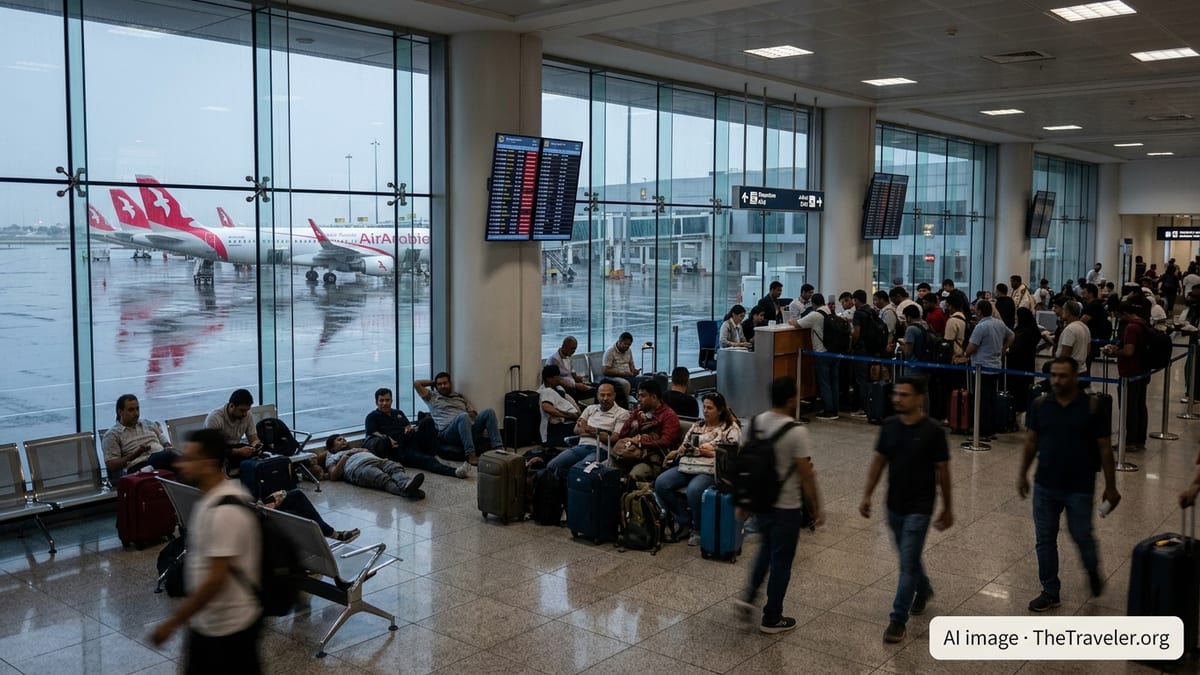
Air travel into and out of Barcelona–El Prat remains largely operational, according to airport operations summaries, but strong crosswinds can cause occasional delays, diversions or changes to runway use. Travelers connecting through Girona–Costa Brava Airport or planning domestic flights within Spain are being advised by airlines, via public channels, to monitor schedules closely in case of short-notice changes.
Along the coast, rough seas are compounding the impact of the wind, especially on the northern Costa Brava. Maritime bulletins describe hazardous waves exceeding 2.5 meters in some exposed areas, which can affect small craft, ferry operations and water-based excursions popular with visitors.
Official Alerts and Public Safety Messaging
Regional civil protection services in Catalonia have kept the Ventcat emergency plan active in alert phase, according to official documentation and recent public briefings. The plan is specifically designed to coordinate preparedness and response to high wind events and is activated when forecast thresholds for gust strength and duration are exceeded across significant portions of the territory.
On Saturday, March 28, the civil protection service issued an Es-Alert emergency notification to mobile phones in several Girona and Barcelona counties, warning residents and visitors of the anticipated strong gusts and potential coastal storm conditions. Follow-up communications shared through regional media on March 30 and March 31 stress that wind and wave hazards remain a concern, particularly in the Pyrenees, Pre-Pyrenees and Empordà area, with residual risks extending into Wednesday.
Meteorological updates emphasize that, while the most extreme gusts have been recorded in elevated or highly exposed locations, urban centers and coastal promenades can still experience sudden squalls capable of toppling unstable structures, trees or outdoor installations. Local authorities have therefore reinforced general guidance on staying away from seafront breakwaters, limiting time spent in wooded parks during peak gust periods and securing any loose objects on terraces and balconies.
Practical Safety Advice for Visitors and Tourists
Tourists currently in Barcelona and Girona, or planning to arrive in the coming 24 to 48 hours, are being encouraged via tourism and media channels to adapt their plans to the weather conditions. Public information campaigns recommend prioritizing indoor cultural visits, museums and restaurants during the windiest hours, and postponing activities that involve exposed viewpoints, rooftop terraces or coastal hiking paths.
Travel guidance distributed by civil protection and traffic services highlights basic precautions for those moving around the region by car. Drivers are advised to reduce speed, maintain greater distance from high-sided vehicles, and exercise particular caution when crossing viaducts, open stretches of motorway and areas known for strong crosswinds. Parking away from large trees, scaffolding and older façades is also recommended during active alerts.
Pedestrians are encouraged to avoid walking close to building edges where objects such as plant pots, signage or loose roofing material might be dislodged by gusts. In neighborhoods with narrow streets, sudden wind tunnels can increase the force of individual gusts, making it important to keep a firm footing, hold onto handrails when available and avoid carrying large unsecured items such as open umbrellas, which can invert or pull users off balance.
Visitors intending to undertake coastal excursions, boat trips or water sports are urged to verify conditions with their operator on the day of travel and to respect any cancellations or partial closures linked to the rough seas. Even when skies appear clear, strong offshore or alongshore winds and residual swell can create dangerous currents and waves near rocks and harbor entrances.
What Travelers Should Monitor in the Coming Days
Forecasts available on March 31 suggest that the wind episode affecting Catalonia is likely to ease gradually from late Tuesday into Wednesday, although elevated and coastal areas, especially in Girona province, may continue to see strong gusts for longer. Visitors planning onward journeys by train, bus or air on April 1 should therefore continue to monitor the latest traffic and transport bulletins.
Accommodation providers in Barcelona and Girona are using public channels and in-house notices to remind guests to keep windows properly latched, retract awnings where possible and secure balcony furniture. In some coastal hotels and campsites, management has temporarily restricted access to certain outdoor areas, promenades or elevated terraces when gusts increase.
For tourists still considering travel to the region later in the week, the main implication of the current alert is short-term disruption rather than long-term closure. Cultural institutions, restaurants and most urban attractions remain open, though some may adjust opening hours or suspend outdoor programming when winds peak. By tracking updated forecasts from national and regional meteorological agencies and staying informed through local media, visitors can typically continue with their plans while taking sensible precautions.
The recent sequence of winter and early spring storms has highlighted the importance of factoring in weather resilience when visiting Mediterranean destinations that are traditionally associated with calmer conditions. For Barcelona and Girona, this latest high wind alert underscores the need for flexible itineraries and heightened situational awareness, particularly in exposed coastal and mountain environments that attract large numbers of international travelers.