

More news on this day
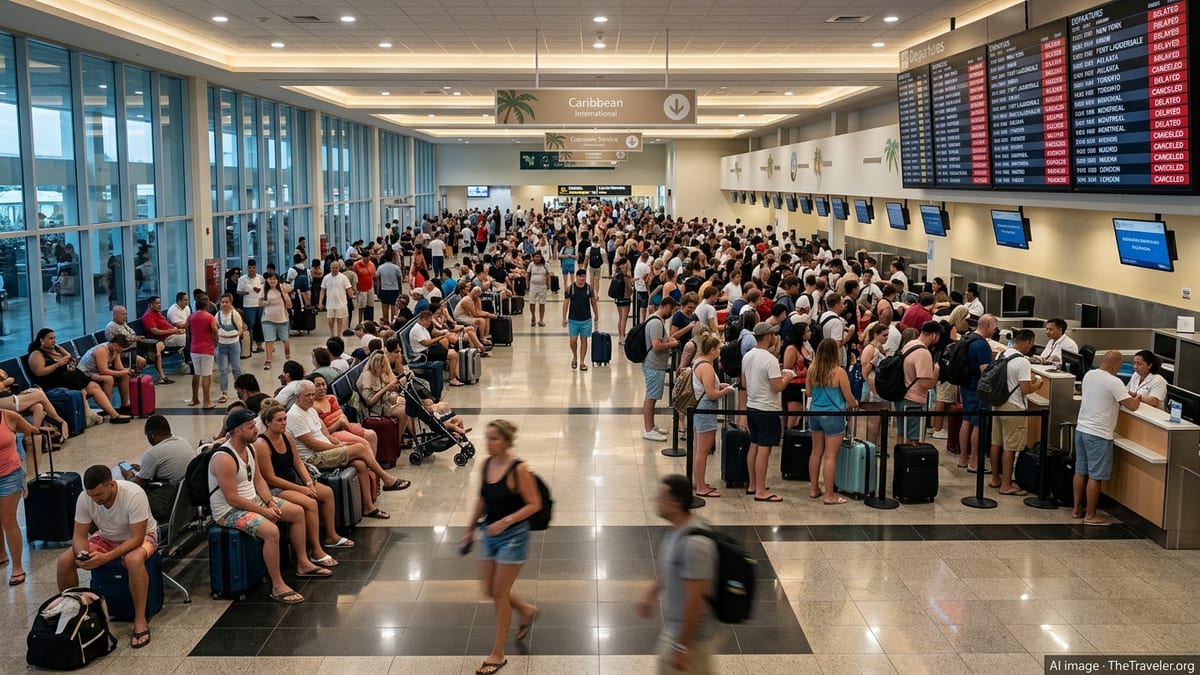
Hundreds of holidaymakers were left stranded at Punta Cana International Airport in the Dominican Republic after widespread disruption led to 101 delayed flights and four cancellations, snarling traffic on major routes linking the Caribbean resort hub with cities across North America and Europe.
Get the latest news straight to your inbox!
Major Carriers Hit as Punta Cana Becomes Choke Point
Publicly available flight-tracking data and local media reports indicate that the disruption affected services operated by major airlines including American Airlines, Delta Air Lines, United Airlines, JetBlue and Spirit Airlines, along with several international carriers serving the busy resort gateway. The concentration of delays at Punta Cana turned the airport into a choke point for regional travel just as holiday demand peaked.
Services to and from key cities such as New York, Miami, Fort Lauderdale, Atlanta, Toronto, Montreal, Madrid and London experienced rolling delays, missed connections and, in some cases, full cancellations. For many travelers, Punta Cana is the primary international link between their resort and home airports, meaning relatively few alternative routings when flights are disrupted.
Punta Cana International Airport is one of the Caribbean’s leading leisure hubs and normally handles several million passengers each year, with strong links to major North American and European markets. The high volume of point-to-point holiday traffic means that irregular operations can quickly strand large numbers of passengers whose itineraries are built around fixed package stays and limited flight frequencies.
Operational data for the airport show that New York, Miami, Atlanta and Montreal are among its busiest international city pairs, served by multiple large carriers on peak travel days. When delays build across that network, the disruption radiates outward to connecting hubs, hotel bookings and onward ground transportation throughout the region.
Knock-On Effects Across North American and European Hubs
The impact of the disruption extended far beyond the Dominican Republic. Delayed and canceled departures from Punta Cana translated into late arrivals and missed onward connections at major hubs including New York, Miami, Fort Lauderdale and Atlanta in the United States, as well as Toronto and Montreal in Canada. Long-haul services linking Punta Cana with Madrid and London also faced schedule pressure as aircraft and crews arrived off-slot.
According to published coverage that drew on airline and flight-tracking data, some aircraft scheduled to operate early-morning departures from Punta Cana arrived significantly behind schedule from their previous legs, compressing already tight turnaround windows. Once departure banks began to slip, subsequent rotations throughout the day were increasingly affected, particularly for airlines operating high-utilization leisure fleets.
Travelers connecting through large hubs reported extended waits in terminals and, in some cases, the loss of same-day onward options as evening and overnight flights filled up or closed to additional rebookings. In markets where Punta Cana flights feed into dense transcontinental or transatlantic networks, even a small number of cancellations can cascade into substantial itinerary changes for passengers.
North American and European airports have already been contending in recent seasons with weather-related disruptions, air traffic control constraints and tight staffing levels. The Punta Cana irregular operations episode added another layer of complexity, contributing to crowded rebooking desks and longer hold times for travelers seeking assistance from airline customer service channels.
Stranded Tourists Face Hotel Scramble and Rising Costs
Reports from travelers on social media platforms and in local coverage describe crowded departure halls, long queues at airline counters and uncertainty over when replacement flights would depart. With four flights canceled outright and more than 100 delayed, many passengers said they were forced to extend hotel stays or seek last-minute accommodation near the airport.
Holiday destinations such as Punta Cana often operate near full occupancy during peak periods, limiting the availability of spare hotel rooms when large numbers of guests suddenly need to stay beyond their planned departure dates. Travelers reported paying higher nightly rates than their original packages, while others described searching further from the airport for more affordable options.
Ancillary costs also mounted for affected tourists, including additional meals, transportation to and from hotels and the expense of rearranging ground transfers and excursions at home. Some passengers reported concerns over expiring vacation days and the risk of missing work or school upon their return, adding to the stress of an already tense situation.
Travel insurance terms vary widely, and many policies include specific conditions for flight delays and cancellations. Consumer advocates typically advise travelers in similar circumstances to keep detailed records of expenses, booking confirmations and written notifications from airlines to support any potential claims or refund requests.
Airlines Adjust Schedules and Rebooking Options
According to airline operations dashboards and publicly available updates, carriers serving Punta Cana responded by adjusting schedules, swapping aircraft, and attempting to consolidate passengers onto available flights. For some routes, this involved upgauging aircraft types to accommodate more travelers on a single departure, while in other cases airlines added late-night or next-day sections to clear backlogs.
Rebooking options varied depending on the airline, fare type and destination. Passengers on heavily traveled routes such as New York, Miami and Toronto reported having more alternatives, including routing through intermediate hubs, while those bound for smaller cities or on limited-frequency services had fewer immediate choices.
In previous disruption events involving large carriers, publicly reported policies have included waivers of change fees, limited refunds and, in some cases, vouchers for future travel or reimbursement for basic necessities. Travelers affected in Punta Cana have been urged by consumer information outlets to review the specific conditions published by their airline and to monitor their reservations through official digital channels rather than relying solely on airport departure boards.
Operational recoveries after a day of severe delays typically take multiple rotations to stabilize, particularly in leisure-heavy markets where aircraft are tightly scheduled between resort destinations and major hubs. Industry analysts frequently note that when airlines face both high load factors and constrained spare capacity, getting all displaced passengers home can take several days.
What Travelers Can Learn for Upcoming Holiday Trips
The large-scale disruption at Punta Cana International Airport highlights several recurring vulnerabilities in peak-season air travel. High demand, dense scheduling and limited alternative routing options mean that any operational stress can quickly lead to large numbers of stranded passengers at resort-focused airports.
Travel experts often emphasize the benefits of building buffer time into itineraries, particularly for long-haul or multi-leg trips during holidays. Recommendations commonly include booking earlier flights in the day, allowing additional connection windows at major hubs and avoiding tight same-day links to cruises or time-critical events when possible.
Published guidance from consumer travel organizations also encourages travelers to keep essential items such as medication, important documents and a change of clothes in carry-on bags in case of unexpected overnight stays. Having access to airline apps and up-to-date contact details can help passengers respond more quickly to rebooking opportunities when seats become available.
For Punta Cana and similar high-volume leisure airports, the latest round of delays and cancellations serves as another reminder of how quickly holiday plans can be disrupted when operations falter. As demand for Caribbean getaways continues to grow, travelers are likely to place an even greater premium on flexible trip planning and clear communication from airlines when schedules go awry.