

Hong Kong’s cultural calendar is as dense and vertical as its skyline. From lantern-lit harbours and dragon boat races to blue-chip art fairs and waterfront music festivals, the city now uses events as a key way to welcome visitors back and showcase its creative energy. While exact dates and line-ups change each year, a few anchor festivals, art weeks and concert seasons reliably shape the rhythm of the city. This guide walks you through the major events and how to plan a trip around them, using the latest information available as of early 2026.
Lunar New Year, Spring Festivals and Cultural Traditions
The year in Hong Kong usually begins with the build-up to Lunar New Year in late January or February, when flower markets, temple fairs and lion dances take over districts from Victoria Park to Mong Kok. In recent years a multi-day Chinese New Year celebration program has included a night parade or street-based performances, harbourfront fireworks when conditions allow, and themed happenings at major attractions. Exact formats vary, but visitors can expect decorative installations in shopping districts, extended opening hours in many temples and a generally festive atmosphere for at least a week.
Sport has increasingly become part of the New Year lineup. The long-running Lunar New Year Cup football tournament brings local and invited teams to Hong Kong Stadium or other major grounds around the holiday period, blending a match-day buzz with seasonal rituals. For travellers it is an unusual way to experience local fandom alongside firecrackers and family banquets, though tickets and fixtures can change with relatively short notice, so it is wise to check closer to departure.
Spring also sees traditional observances such as the Ching Ming Festival, when families sweep ancestral graves, and the Tin Hau and Cheung Chau Bun festivals, both rooted in the city’s maritime heritage. While the scale of associated parades and village celebrations can fluctuate year to year, island communities and old fishing neighbourhoods still stage processions, dragon dances and food stalls. These events are less formalised than headline art fairs, but for culturally curious visitors they provide some of the most atmospheric experiences of the season.
Overlaying these traditions are contemporary programmes under banners such as “Arts Month” or “Art March,” in which government agencies, museums and galleries coordinate openings, public art along the harbourfront and extended hours. The precise branding and partners evolve, yet the city’s strategy is consistent: to make late winter and early spring a peak period for cultural travel that connects heritage rituals with global contemporary art.
Art March and the Rise of Hong Kong as an Art Hub
By late March Hong Kong’s reputation as a regional art capital comes into sharp focus. Art Basel Hong Kong, held at the Hong Kong Convention and Exhibition Centre, is the flagship fair and typically runs for several days in late March. Recent editions have brought in around two hundred or more galleries from Asia, Europe and the Americas, with curated sectors for emerging artists, large-scale installations and film or moving image works. Public days are busy, but careful planning around time slots and ticket categories can make the experience manageable.
Around the main fair, the city mounts what many now call “Art Week” or “Art Month.” Commercial galleries in Central, Wong Chuk Hang and the newly energised West Kowloon district schedule major exhibitions to coincide with the influx of collectors, curators and media. Museums such as M+ and the Hong Kong Palace Museum often time blockbuster shows or façade projections for this period, while smaller spaces host performance programmes, artist talks and residencies. Even if you are not a dedicated art buyer, these parallel events create a citywide festival feel.
Street art and public murals have also claimed a place on the calendar. Initiatives like HKwalls have in the past focused on transforming building façades and alleyways in districts such as Sham Shui Po, bringing international and local muralists together. Dates can shift and formats can change from year to year, but the project has helped position Hong Kong as a canvas in its own right during art season, complementing the white cubes of the fair with colour-splashed backstreets and guided neighbourhood walks.
For travellers, March is one of the most exciting times to visit if you enjoy contemporary culture. Hotel rates rise and restaurants fill up with art crowds, yet you gain the chance to see Hong Kong’s creative ecosystems layered together: global galleries, independent spaces, major museums and grassroots street projects all operating at full tilt within a compact urban area.
Summer Festivals, Concert Seasons and Cultural Showcases
As temperatures climb from late May into the humid summer, Hong Kong’s events calendar shifts towards indoor performances, themed cultural festivals and select waterfront happenings. The French May Arts Festival, established in the early 1990s, has developed into one of the largest cultural celebrations of French and francophone arts in Asia. Running roughly from May into early summer, it spans classical music, contemporary dance, theatre, visual arts and culinary collaborations, with programmes staged in major venues and heritage buildings alike. The exact lineup evolves each year, but visitors can expect a substantial mix of ticketed performances and accessible public installations.
The Dragon Boat Festival, usually in June, is one of the most photogenic and spectator-friendly traditions. Competitive races on Victoria Harbour and outlying bays see elaborately painted boats, percussion-heavy crews and corporate teams competing in closely fought heats. Beyond the racing pits, neighbourhoods sell rice dumplings and host informal gatherings along the water. While race organisers and sponsors change, the festival remains a highlight of the early summer period and offers excellent opportunities for photography and people-watching.
Summer is also when large-scale concerts and touring shows tend to cluster, particularly as new venues like Kai Tak Sports Park ramp up their schedules. Stadium dates by major K-pop acts, Cantopop stars and international bands are increasingly announced for late spring and summer weekends, taking advantage of school holidays and regional travel patterns. Exact tours and set lists vary, and announcements can be relatively close to performance dates, so travellers who prioritise live music should build flexibility into itineraries and monitor news from promoters and venues.
Between headline acts and long-running festivals, the city’s resident arts organisations maintain their own seasons. Orchestras, Chinese music ensembles and theatre companies typically programme series of concerts and productions across the year, with some seasons or special festivals pegged to anniversaries. These can be rewarding alternatives or supplements to mega-events, particularly for visitors seeking a deeper sense of Hong Kong’s evolving performing arts scene beyond a single blockbuster night.
Autumn: Wine, Dine and Open-Air Music
When the air cools and skies clear in October and November, conditions become ideal for outdoor festivals. The Hong Kong Wine and Dine Festival, usually scheduled for late October, is one of the most prominent. Set against the harbour skyline, it gathers wineries, breweries and food vendors for several days of tastings, paired menus and live entertainment. Organisers tweak the layout and theme each year, sometimes adding sustainable gastronomy elements, regional spotlights or chef-led masterclasses. For travellers it is a convivial way to sample regional flavours with minimal logistics; the main challenge is pacing yourself among the stalls.
Art fans should not overlook the parallel food and craft markets that often spring up in the same season, some of which focus on local designers, ceramics, illustration and independent fashion. While smaller than the global art fairs, these events hint at how a new generation of makers and chefs are shaping Hong Kong’s creative identity. They can be particularly enjoyable in the milder autumn weather, where lingering outdoors into the evening is comfortable and views of the skyline are at their crispest.
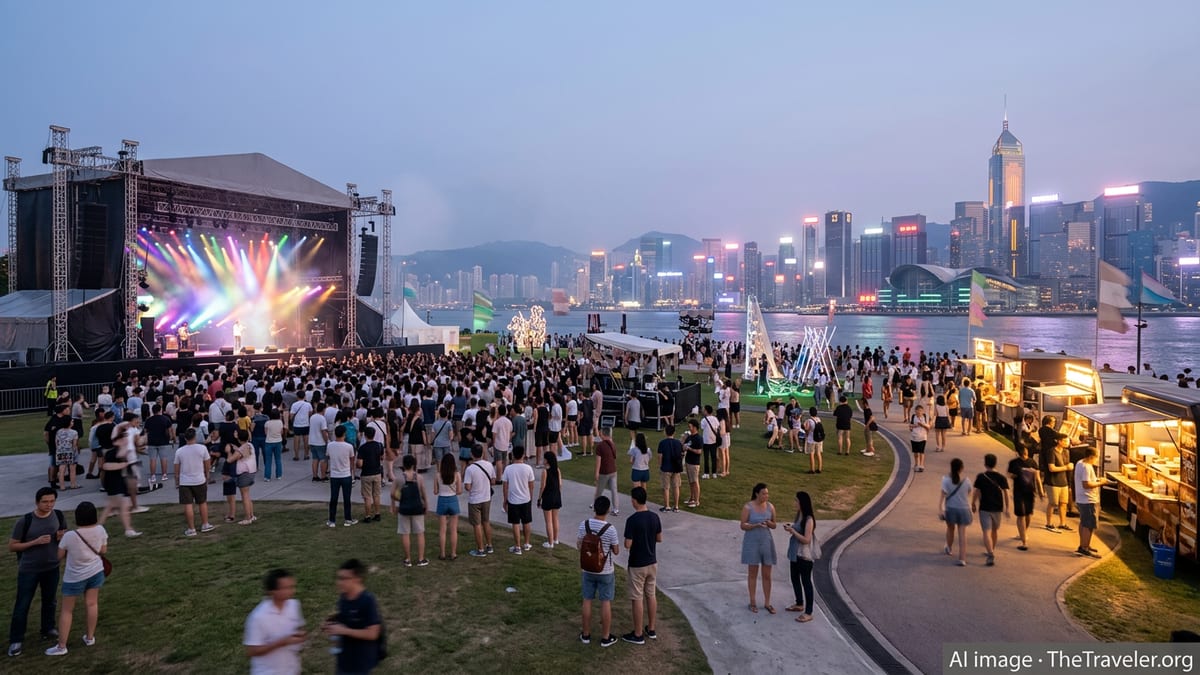
On the music front, autumn has become synonymous with large-scale open-air events. Clockenflap, widely regarded as Hong Kong’s signature international music and arts festival, has re-emerged on the Central Harbourfront with multi-day programmes. Recent editions have spanned rock, electronic, hip hop and regional indie acts across several stages, complemented by large-scale art installations, family zones, film screenings and extensive food offerings. Although specific line-ups are only confirmed closer to the dates, early-bird tickets often sell quickly, reflecting pent-up regional demand for destination festivals.
Beyond the marquee names, other promoters have experimented with multi-day music and lifestyle festivals on outlying islands and rural sites. Events combining live bands, DJ sets, wellness sessions, outdoor cinema and camping have taken advantage of Hong Kong’s beaches and hillsides. Schedules can be fluid and some projects come and go, but the overarching trajectory is clear: autumn is the prime window for experiencing the city’s music culture in open-air settings that frame both its skyline and natural landscapes.
WinterFest, Christmas and Year-End Cultural Highlights
The lead-up to Christmas and the turn of the year brings another wave of large-scale programming under banners such as Hong Kong WinterFest. Typically starting in late November and running through early January, these campaigns bundle together light installations, Christmas trees and decorations at key public squares, extended shopping hours, themed tram and harbour tours, and occasional seasonal performances. Exact concepts and sponsor partners evolve, yet the overall approach remains focused on making the city centre feel celebratory and photogenic for both residents and visitors.
Alongside the citywide promotions, individual precincts and attractions mount their own winter programmes. The West Kowloon Cultural District, with its sweeping harbourfront promenade and vista of the skyline, has become a favoured setting for outdoor light works, sound installations and special concerts. In Central and Tsim Sha Tsui, luxury hotels and malls compete with elaborate decorations and lobby displays, while heritage sites sometimes offer carol services or festive markets. Although these are not always consolidated under a single brand, taken together they create a dense patchwork of experiences within walking distance or a short ride on public transport.
The year-end period is also a time when concert calendars peak. Arena shows, New Year’s Eve galas, and seasonal programmes by orchestras and choirs attract local and regional audiences. Some years feature major international pop tours routing through Asia in December, while others are more focused on home-grown talent and crossover collaborations between Chinese traditional and Western classical ensembles. Because line-ups are fluid and sensitive to touring cycles, travellers interested in specific artists should avoid relying on historical patterns alone and instead treat past years as a general guide.
For visitors less focused on shopping or nightlife, this season still offers compelling cultural draws. Clearer winter air can make outdoor art along the harbour particularly striking, and museums often schedule significant exhibitions or year-end retrospectives. Combined with the layered décor and occasional pyrotechnic displays, the result is a city that feels both festive and intensely urban, closing its cultural year with a flourish before the cycle begins again with Lunar New Year preparations.
Navigating Hong Kong’s Event Scene as a Visitor
While Hong Kong’s marquee events provide anchor points for planning, the city’s event landscape is dynamic. Organisers have launched ambitious new festivals and fairs in recent years, but a number have also been postponed, scaled back or cancelled due to funding shifts, logistical challenges or changing regulations. For travellers this means a degree of flexibility is essential. Rather than building an itinerary around a single newly announced event, it is safer to combine one or two key highlights with a broader menu of museums, neighbourhoods and dining experiences that are not date-dependent.
In practical terms, it helps to think in seasons rather than in fixed dates. March will likely remain fertile ground for art fairs and gallery openings even if specific brands or partners rotate. Early summer should continue to offer dragon boat races and indoor cultural festivals, while autumn stays strong for wine-and-dine events and waterfront concerts. Winter, meanwhile, is almost certain to be framed by citywide festive campaigns. Approaching your plans at this level allows you to capture the underlying energy of the city even if schedules shift.
Ticketing strategies also matter. For high-demand events such as Art Basel Hong Kong public days, international stadium tours or Clockenflap, early purchase is advisable once dates are confirmed, as some categories sell out quickly. Conversely, smaller gallery shows, community festivals and many classical concerts allow for more spontaneous attendance. Keeping a mix of pre-booked anchor experiences and flexible evenings gives you room to respond to last-minute discoveries or recommendations on the ground.
Finally, consider how events intersect with the city’s transport and hospitality infrastructure. Major festivals can put pressure on popular hotel districts and certain MTR lines at peak entry and exit times. Staying within walking distance of a key venue or along multiple transport corridors can reduce travel stress. At the same time, festivals often animate neighbourhoods slightly away from the traditional tourist triangle, providing incentives to stay in emerging areas and explore under-the-radar corners of the city between headline shows.
The Takeaway
Hong Kong’s events calendar is no longer a handful of isolated highlights but a near-continuous series of festivals, fairs and performances that collectively define the city’s identity. From the firecracker energy of Lunar New Year and the intense concentration of Art March to the laid-back conviviality of autumn wine and music festivals, each season offers its own mood and reasons to visit. While specific dates, sponsors and line-ups change, the underlying pattern of cultural investment points to a city determined to use live events as a calling card.
For travellers, the most rewarding approach is to anchor your trip to a season that suits your interests, then refine your plans as line-ups and schedules become clearer closer to departure. Treat headline events as part of a larger tapestry that includes neighbourhood markets, independent galleries and the everyday theatricality of Hong Kong’s streets and harbour. With a bit of flexibility and attention to current listings, you can experience a version of the city where something interesting is almost always happening just around the corner.
FAQ
Q1. When is the best time of year to visit Hong Kong for festivals and events?
March and autumn are particularly strong, with major art fairs clustered around late March and outdoor wine, food and music festivals common from October to November.
Q2. How far in advance are major Hong Kong events usually announced?
Anchor events such as art fairs and large music festivals typically confirm dates several months ahead, but detailed line-ups and satellite programmes are often finalised closer to the event.
Q3. Can I experience Hong Kong’s cultural scene without attending ticketed mega-events?
Yes. Street parades, neighbourhood festivals, public art along the harbour, free gallery openings and temple celebrations offer rich experiences with little or no ticket cost.
Q4. Are event dates in Hong Kong stable, or do cancellations happen often?
Most long-established events proceed as planned, but newer or heavily sponsored festivals can change format or be postponed. It is wise to double-check status before booking travel around a single event.
Q5. How early should I book tickets for major concerts or festivals?
For high-demand concerts, stadium shows and festivals like Clockenflap or Art Basel public days, booking as soon as sales open is recommended, as popular categories can sell out quickly.
Q6. Which areas are most convenient to stay in for events and nightlife?
Central, Sheung Wan, Tsim Sha Tsui and the West Kowloon Cultural District area all offer good access to venues, harbourfront promenades, restaurants and late-night transport options.
Q7. Is English widely used at Hong Kong festivals and cultural events?
Yes. Bilingual signage and announcements are common at major events, and many staff and volunteers at larger venues can assist in English, especially in tourist areas.
Q8. How can I keep track of what is happening during my stay?
Local listings platforms, venue calendars, tourism board announcements and social media feeds of major festivals and institutions provide up-to-date information on dates and line-ups.
Q9. Are Hong Kong’s festivals suitable for families with children?
Many events, including dragon boat races, some outdoor music festivals and citywide winter campaigns, build in family zones, early-evening programmes and kid-friendly activities.
Q10. What should I consider when photographing festivals and events in Hong Kong?
Be mindful of crowd flow, follow staff instructions, and avoid obstructing performers or worshippers at traditional celebrations. In most public spaces casual photography is welcomed, but professional shoots may require permission.