

Hong Kong is a dense, vertical city of glass towers, neon alleys and lush green hills, where double decker trams roll past dim sum parlors and Michelin starred counters share the same streets as tiny noodle joints. After several years of flux, the city has settled into a new rhythm, with visitor numbers rising again and prices edging higher. For travelers, that means planning matters more than ever. This guide brings together current information on entry rules, transport, neighborhoods and typical costs so you can shape a realistic, rewarding itinerary.
Planning Your Trip to Hong Kong Now
Hong Kong has fully reopened to tourism, with most travelers once again entering visa free for short stays, depending on nationality. Entry requirements can shift, so it is wise to check official government sources before you fly, but as of early 2026 visitors from many Western and Asian countries typically receive stays ranging from about one week to three months on arrival. Health related restrictions that once complicated arrivals have largely been lifted, and the airport is operating at a busy, pre pandemic style pace.
Seasonality is a bigger factor than ever in trip planning because hotel rates climb quickly on peak dates. The most pleasant months are often from roughly late October to December and again from March to early May, when humidity is lower and skies are clearer. Summer from June to September is hot, very humid and prone to tropical downpours and occasional typhoons, which can bring temporary shutdowns of ferries and some public transport. Chinese New Year, Golden Week holidays and major trade fairs push occupancy and prices up across the city.
Travelers should also think about trip length. With efficient transport, you can see headline sights in three full days, but five to seven days allows time to explore outlying islands, hiking trails and less central neighborhoods. Because daily costs run higher than in many regional cities, building a rough budget in advance helps you avoid surprises. You will pay a premium for space and views but can still find good value at local eateries and on public transit.
It is also useful to adjust expectations about crowd levels and service. Visitor numbers have rebounded but are not yet evenly spread across markets, so some attractions feel less crowded than they did a decade ago, while popular shopping districts and theme parks can still be intense on weekends. Staff at hotels, restaurants and shops are accustomed to international guests, and English is widely used in tourism facing businesses, especially on Hong Kong Island and in Tsim Sha Tsui.
Understanding Hong Kong’s Neighborhoods
For many visitors the core decision is whether to stay on Hong Kong Island or in Kowloon. Central, Sheung Wan and Wan Chai on the island side form the historic business and nightlife spine. Central and Admiralty are dominated by offices, luxury hotels and high end malls, but also hide steep lanes lined with small bars, galleries and cafes. Sheung Wan has gentrified into a creative quarter that still preserves dried seafood shops and traditional temples alongside stylish boutique hotels and serviced apartments.
Further east on the island, Causeway Bay is one of the city’s most intense shopping districts, packed with department stores and mid range hotels sitting above MTR exits and tram stops. Wan Chai mixes old and new, with market streets, a growing cluster of coffee shops and a nightlife strip of bars a few blocks inland. These island neighborhoods suit travelers who value quick access to business districts, bars, dining and the Peak Tram, and who do not mind smaller room sizes in exchange for connectivity.
Across Victoria Harbour, Tsim Sha Tsui in southern Kowloon is another major base. Here you find a dense blend of mid range and upscale hotels with sweeping harbor views, the waterfront promenade and easy ferry and MTR links to Hong Kong Island. Just north, Jordan and Yau Ma Tei feel more local, with markets, family run eateries and guesthouses that can be slightly more affordable than those directly on the waterfront, though room sizes tend to be compact. Mong Kok further north is known for neon streets, sneaker shops and night markets, and offers good value mid range hotels and hostels in exchange for a little extra travel time to the harbor.
Beyond the traditional tourist belt, the New Territories and outlying islands appeal to travelers seeking more space and a slower pace. Areas like Sha Tin, Tsuen Wan and Tseung Kwan O offer modern hotels often used by business travelers and families, typically with lower nightly rates than city center equivalents but longer commutes to core attractions. On Lantau Island, Tung Chung provides quick access to the airport and outlet shopping, while smaller islands such as Lamma and Cheung Chau have simple guesthouses and holiday flats suitable for travelers who prioritize hiking and seaside quiet over nightlife.
Getting Around: Airport Transfers and City Transport
Hong Kong International Airport sits on Lantau Island and is linked to the city by rail, road and bus. The Airport Express train is the fastest connection to Central and Kowloon, running in well under 30 minutes with luggage racks and in town check in for some airlines at Hong Kong and Kowloon stations. Fares were raised for the first time in several years in mid 2025, with a standard adult single between the airport and Hong Kong station now a little above 110 Hong Kong dollars when paid by stored value card, and slightly more when bought as a one off ticket. Group tickets and periodic promotions can reduce these fares, especially if two or more people travel together.
Airbus style city buses provide a slower but much cheaper alternative, with routes serving major hotel districts such as Tsim Sha Tsui, Mong Kok and Causeway Bay. Journeys typically take 45 to 70 minutes depending on traffic. Metered taxis line up outside the terminal and are convenient for late night arrivals or travelers with heavy luggage, though they cost significantly more than public transport. A taxi from the airport to Central or Tsim Sha Tsui can easily reach several hundred Hong Kong dollars including tolls and surcharges, especially during busy periods.
Within the city, the MTR rapid transit network is the backbone of urban travel. Trains are frequent, clean and cover most neighborhoods visitors are likely to explore, including the border to mainland China. Since 2024 passengers can tap certain international credit and debit cards directly at many MTR gates, although visitors still find the Octopus stored value card useful because it works on almost all public transport, including trams, ferries and many buses, and in small shops and casual eateries. As of 2025 some routes, such as the Airport Express, still rely on Octopus, tickets or QR codes rather than bank cards alone.
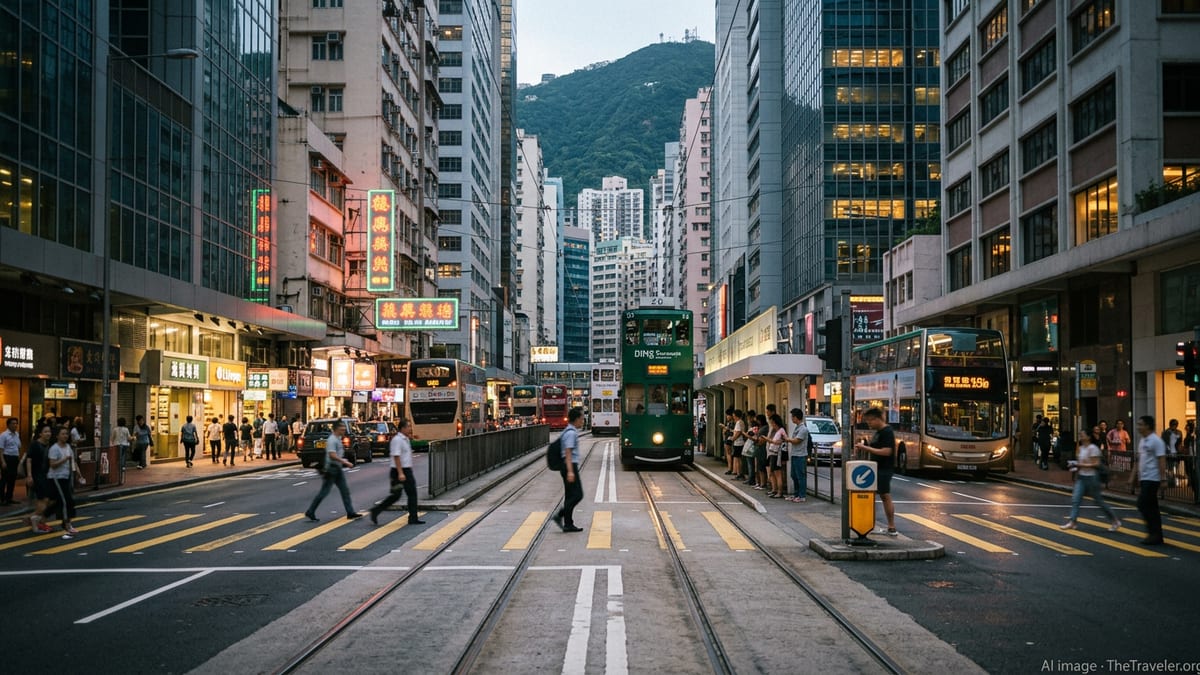
Complementing the MTR are the iconic double decker trams along the north shore of Hong Kong Island and the Star Ferry crossings between Tsim Sha Tsui and Central or Wan Chai. Tram fares remain low by international standards, with a flat adult fare that slightly exceeded three Hong Kong dollars in 2025. Ferries are similarly inexpensive and provide some of the best harbor views in the city. Red urban taxis are plentiful and relatively good value for short hops, though drivers may prefer cash or local payment apps. Ride hailing services operate but may rely on licensed taxis rather than private cars. Walking is often the best way to experience street life, but be prepared for hills, stairs and humid heat.
Accommodation Choices and Typical Prices
Hotel prices in Hong Kong have climbed again as demand has returned, and a hotel accommodation tax that was suspended during the pandemic has been reinstated, adding a small percentage to nightly bills at traditional hotels. Survey data and booking platforms through 2024 and 2025 suggest that an average hotel room across all categories often sits around 90 to 130 US dollars per night, with four star properties clustering somewhat higher and five star options frequently going well beyond 200 US dollars, especially on busy dates and in prime harborfront locations.
In practical terms, travelers now commonly report paying the equivalent of roughly 100 to 150 US dollars per night for a standard, well located three or four star hotel room in areas such as Tsim Sha Tsui, Mong Kok, Sheung Wan or Wan Chai, with space often limited to about 15 to 22 square meters. Boutique hotels and international chains with larger rooms, harbor views or club lounges can easily rise into the 200 to 400 US dollar range per night in Central, Admiralty or on the Tsim Sha Tsui waterfront. On peak holidays and major event weeks, these rates can jump sharply, and availability tightens quickly.
For travelers watching their budget, guesthouses and hostels offer more modest nightly costs but usually at the expense of space and privacy. Bed spaces in dormitories or compact guest rooms in older buildings in Tsim Sha Tsui and Mong Kok may start somewhere around the equivalent of 30 to 60 US dollars per night, though facilities vary widely and reviews should be checked carefully. In outlying areas and on some islands, small family run hotels and holiday flats can provide slightly better value and more space, balanced against longer daily commutes.
One quirk of Hong Kong is that even basic hotels often feature high quality bedding, good air conditioning and strong water pressure, yet have very small floor areas. Travelers used to more spacious rooms in other destinations may want to adjust expectations or budget for a step up in category. Booking early, avoiding major trade fairs and watching for midweek promotions can all help secure more reasonable rates. Consider staying slightly away from the most famous waterfront blocks, for example a few MTR stops north in Jordan or east in North Point, to gain better value while remaining well connected.
Daily Costs: What You Can Expect to Spend
Day to day expenses in Hong Kong span a wide range and are highly sensitive to where and how you choose to eat, drink and shop. Public transport is comparatively affordable, with typical MTR rides in the urban core costing the equivalent of well under one US dollar when paid by stored value card, and trams and buses often cheaper still. A visitor using public transport for a handful of journeys per day might spend roughly 40 to 80 Hong Kong dollars daily on getting around, more if regularly crossing the harbor or heading to outlying islands by ferry.
Food costs vary more dramatically. At the budget end, local cha chaan teng style cafes and simple noodle shops can serve filling breakfasts or lunches for about 40 to 70 Hong Kong dollars, including a drink. Dim sum at neighborhood tea houses or chain restaurants might run 80 to 150 Hong Kong dollars per person at lunchtime if you avoid premium seafood and specialty dishes. Mid range dinners in casual restaurants, including non Chinese options, frequently fall in the 150 to 300 Hong Kong dollar range per person without alcohol. High end tasting menus and fine dining can, of course, reach many times that amount.
Attractions and entertainment present another layer of cost. Many of the city’s best experiences remain low priced or free, such as hiking the Dragon’s Back trail, exploring temple complexes, wandering markets in Sham Shui Po or admiring skyline views from the Kowloon waterfront. Paid attractions, including observation decks, theme parks and certain museums or heritage sites, tend to charge entry fees that are moderate by global standards but noticeable in a daily budget. A visit to a major theme park or observation deck can quickly become one of the more expensive line items of a short trip.
Overall, independent travelers commonly estimate that a comfortable mid range daily budget, excluding flights and accommodation but including local transport, meals and a few paid attractions, might fall somewhere in the region of 600 to 1,200 Hong Kong dollars per person. Shoestring travelers who mainly eat at small local places, use only public transport and focus on free or low cost activities can spend less, while those favoring cocktails, shopping and fine dining should plan for more. Because Hong Kong uses a stable currency pegged closely to the US dollar, exchange rate swings are less dramatic than in some destinations.
Money, Payments and Practical Essentials
Hong Kong operates with its own currency, the Hong Kong dollar, issued by several commercial banks under government authority. Cash remains useful for small purchases, market stalls and some taxis, but electronic payments have spread quickly. Most mid range and upscale hotels, restaurants and shops accept major international credit cards, and contactless payment is common in chains and malls. At the same time, some smaller eateries still prefer cash or local systems, so carrying a mix of options is prudent.
The Octopus stored value card remains one of the most convenient tools for visitors. You can load it with cash at MTR stations and many convenience stores, then tap to pay not only for the metro, trams, buses and ferries, but also in many supermarkets, fast food outlets and vending machines. Refunds for any remaining balance are generally available at the end of your trip, subject to small service charges depending on card type and timing. In parallel, mobile wallet options tied to local systems such as AlipayHK are increasingly used by residents, though setting them up may be more involved for short term visitors.
Practicalities beyond money are straightforward. Tap water in urban Hong Kong is treated and generally considered safe at the point of distribution, but many hotels still provide bottled water or filtered dispensers, and some travelers prefer to drink filtered or boiled water as a precaution. Healthcare facilities are of high standard, with both public hospitals and numerous private clinics, though non residents can face significant fees, making travel insurance with medical coverage advisable. Power outlets use the British style three prong plug with 220 to 240 volts, so travelers from other regions may need adapters.
Safety is another consideration where Hong Kong tends to score well. Street crime rates are relatively low for a major city, and it is common to see people out late at night in busy areas. Standard urban precautions still apply, such as watching for pickpockets in crowded markets and securing valuables in hotels. When large events, demonstrations or weather disruptions occur, local media and transport operator announcements provide timely guidance, and visitors should follow any instructions provided by authorities and service staff.
Itineraries and Experiences Across the City
A classic first visit combines city skylines, harbor views, temples and a taste of the surrounding hills and islands. Many travelers start with a ride on the Star Ferry from Tsim Sha Tsui to Central, then wander through the elevated walkways of the Central business district before taking the Peak Tram or bus up to Victoria Peak for sweeping views. Evening visits allow you to see neon and office lights shimmer across the harbor, while daytime trips highlight the surrounding mountains and sea. On the Kowloon side, the Tsim Sha Tsui promenade and nearby cultural venues offer prime vantage points for sunset and night photography.
To experience older streetscapes, head to Sheung Wan, Sai Ying Pun and Kennedy Town on the western side of Hong Kong Island, or to Sham Shui Po and Yau Ma Tei in Kowloon. These areas mix walk up tenement buildings with creative studios, street markets and low key eateries. You can browse fabric, electronics and second hand goods, then duck into simple shops for congee, wonton noodles or egg tarts. In contrast, Causeway Bay and Mong Kok showcase the hyper modern side of retail with vast malls, flagship stores and crowds flowing past glowing billboards until late at night.
Nature is closer than many first time visitors expect. Popular hikes include the Dragon’s Back trail on the eastern side of Hong Kong Island, sections of the MacLehose and Wilson Trails in the New Territories, and shorter strolls around Victoria Peak or the coastal paths of Lamma and Cheung Chau. Ferries to outlying islands depart regularly from Central, offering access to beaches, fishing villages and quieter lanes. On Lantau Island, visitors can combine the cable car ride to Ngong Ping with a visit to the Big Buddha and Po Lin Monastery, returning via bus routes that wind along the coast.
Food remains one of Hong Kong’s main draws, and you can build entire itineraries around eating. Morning dim sum, afternoon milk tea and pineapple buns, and late night bowls of wonton noodles or claypot rice all reveal different aspects of local culture. In recent years, specialty coffee shops, craft beer bars and contemporary bistros have spread through neighborhoods like Sheung Wan, Wan Chai and Tai Hang, adding new layers to the dining scene. Reservations are recommended for popular spots, especially on weekends and public holidays, while many casual places operate on a first come basis with short waits.
The Takeaway
Hong Kong in 2026 is a city that rewards planning, flexibility and curiosity. Costs are undeniably high compared with many neighboring destinations, particularly for accommodation and space, yet public transport remains efficient and affordable, and some of the most memorable experiences, from harbor ferries to hillside hikes and temple visits, cost little or nothing. Understanding how neighborhoods differ, what daily expenses look like and how to navigate from airport to hotel helps you make better choices and avoid unnecessary stress.
By choosing your travel season thoughtfully, staying a step or two back from the priciest waterfront blocks, using stored value cards on public transport and mixing high profile attractions with quieter local corners, you can craft a trip that balances Hong Kong’s famous skyline and shopping with its markets, alleyway eateries and coastal trails. The city continues to evolve, but its blend of energy, food and scenery remains distinctive. With realistic expectations and a rough budget in hand, you will be well placed to enjoy Hong Kong’s layers without losing control of your costs.
FAQ
Q1. When is the best time of year to visit Hong Kong?
The most comfortable periods are usually from late October to December and from March to early May, when temperatures are milder and humidity is lower than in summer.
Q2. How many days do I need for a first trip to Hong Kong?
A three day stay lets you see major highlights, but five to seven days gives enough time for outlying islands, hiking and exploring less central neighborhoods at a more relaxed pace.
Q3. Is Hong Kong very expensive for travelers?
Accommodation and space are costly, but public transport is affordable and meals can be inexpensive at local eateries. A mid range daily budget excluding hotel often falls in the hundreds of Hong Kong dollars.
Q4. Should I stay on Hong Kong Island or in Kowloon?
Hong Kong Island suits travelers focused on business districts, nightlife and quick access to the Peak, while Kowloon, especially Tsim Sha Tsui and Mong Kok, offers strong transport links, markets and many mid range hotels.
Q5. Do I still need an Octopus card if contactless bank cards work on the MTR?
Many MTR gates accept contactless bank cards, but an Octopus card remains very useful because it also works on trams, most buses, ferries and in many small shops and casual eateries.
Q6. What is the cheapest way to get from the airport into the city?
City buses are usually the cheapest option, though slower. The Airport Express train is faster but costs more, while taxis are the most convenient and generally the most expensive for solo travelers.
Q7. How much should I expect to pay for a decent hotel room?
Many visitors now pay roughly the equivalent of 100 to 150 US dollars per night for a standard, well located three or four star hotel, with higher prices in peak seasons and for harborfront properties.
Q8. Is Hong Kong safe for solo travelers and at night?
Hong Kong has relatively low rates of street crime for a major city, and busy areas remain active late into the evening. Normal big city precautions such as guarding valuables still apply.
Q9. Can I drink the tap water in Hong Kong?
Tap water in urban Hong Kong is treated, but many hotels offer bottled or filtered water and some visitors prefer to drink filtered or boiled water as an extra precaution.
Q10. Do I need to tip in Hong Kong restaurants and taxis?
Service charges are often included in hotel and higher end restaurant bills. In casual places and taxis, it is common to round up the bill slightly rather than leave a large separate tip.