

More news on this day
Travelers flying between Honolulu and the US mainland are facing mounting disruption as storms, airport construction and airline scheduling strains converge to upend trans-Pacific routes and connections nationwide.
Get the latest news straight to your inbox!
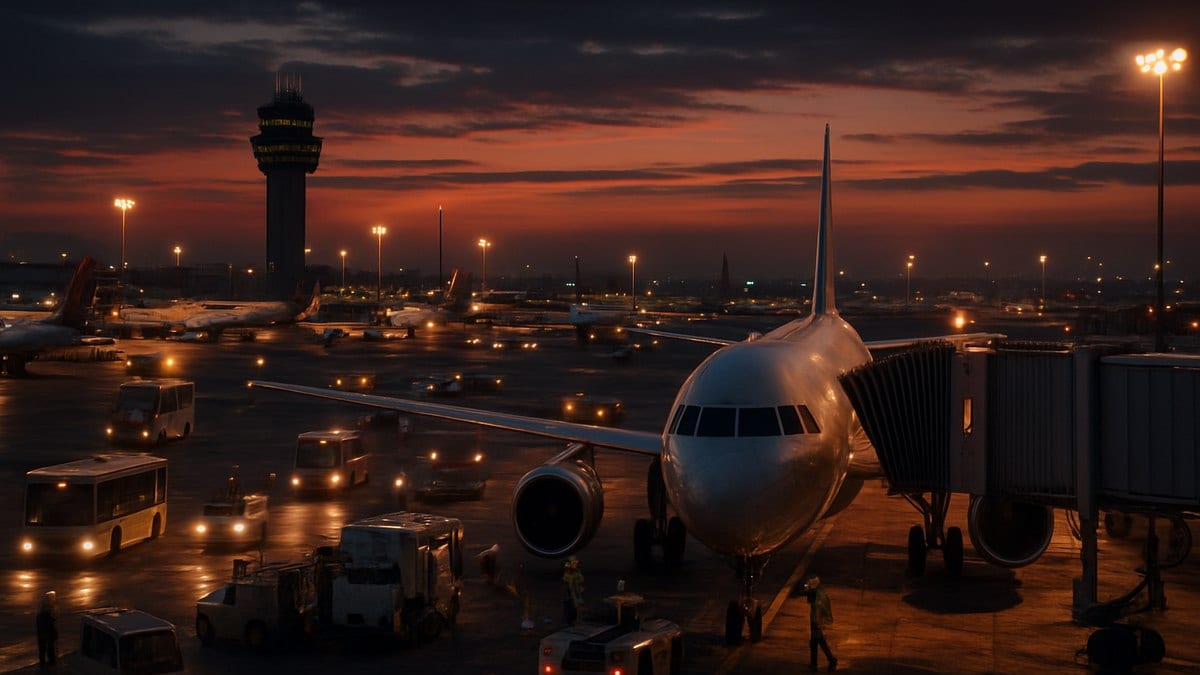
Stormy spring adds fresh strain to island-mainland routes
Recent severe weather across the Hawaiian Islands has compounded pressure on already busy air corridors linking Honolulu to major cities on the US mainland. Publicly available information from state emergency agencies and local media in March and early April 2026 describes a series of heavy rain and wind events that triggered power interruptions, hazardous road conditions and operational challenges around Oahu, including in the Honolulu metropolitan area.
These storms arrived as spring break demand kept trans-Pacific flights heavily booked, leaving airlines with limited flexibility to re-accommodate disrupted passengers. Travel waivers circulated by major US carriers for Honolulu and other Hawaiian airports in March allowed some itinerary changes without fees, but tight capacity meant many travelers still encountered long waits for open seats back to West Coast and Mountain West hubs.
Reports from aviation trackers and passenger accounts indicate that even when long-haul departures to and from Honolulu ultimately operated, earlier weather-related ground delays and aircraft repositioning issues frequently cascaded into missed mainland connections. Late arrivals into cities such as Los Angeles, San Francisco and Seattle created knock-on delays for onward flights across the continental United States.
While current forecasts show periods of calmer weather, state emergency planners continue to warn that additional unstable systems are possible through April, keeping the potential for renewed airport and surface transport disruption on the table for visitors and residents alike.
Runway and taxiway works tighten margins at Honolulu airport
Operational pressures at Honolulu Daniel K. Inouye International Airport have also been heightened by ongoing airfield construction. A recent update from the Hawaii Department of Transportation outlines daily repaving work on Taxiway G in April 2026, affecting a key stretch between multiple gates in one of the airport’s busiest concourses.
While the project is designed to improve safety and reliability for the long term, short-term impacts include adjusted taxi routes, altered gate assignments and tighter spacing between arriving and departing aircraft. Industry briefings indicate that airlines are adjusting schedules and allowing additional ground time at Honolulu to accommodate the works, but any unplanned disruption such as thunderstorms, equipment issues or crew timing limits can more quickly translate into departure delays when airfield capacity is constrained.
For mainland-bound travelers, this means that even modest slowdowns at Honolulu can have amplified effects across airline networks. Late departures from the islands can push long trans-Pacific legs into overnight or early morning arrival banks at mainland hubs, where gate availability and connection windows are already compressed by high seasonal demand.
Airport modernization documents emphasize that infrastructure upgrades are intended to position Honolulu to handle future growth in a more resilient way. In the near term, however, visitors are being advised by airlines and travel platforms to allow extra time at the airport and to expect gate changes and schedule adjustments while construction continues.
Mainland aviation system already stretched by wider disruptions
The turbulence emanating from Honolulu is landing in a continental aviation system that has been experiencing its own strains. Recent national coverage highlights a mix of factors including staffing challenges, weather-related shutdowns at key hubs and a partial federal government funding lapse that temporarily affected aviation agencies and security operations at several large airports.
In the weeks leading into April, mainland airports from Boston to Denver reported waves of cancellations and delays linked to winter and early spring storms. At the same time, Transportation Security Administration checkpoints in some major hubs saw fluctuating wait times as staffing levels lagged behind surging passenger volumes, prompting airlines to roll out new digital tools for monitoring security lines and rebooking disrupted travelers.
When Honolulu-originating flights feed into this environment, even small schedule deviations can cause disproportionate disruption. Passengers arriving late into already congested hubs may find limited options for same-day rebooking, especially on popular routes to secondary or regional airports. This dynamic has been visible in traveler reports describing missed red-eye connections, overnight airport stays and last-minute hotel searches in unfamiliar mainland cities.
Data from recent flight disruption analyses suggest that Honolulu generally performs relatively well on on-time departures compared with many mainland airports. Even so, the current combination of island weather, construction and mainland system stress is testing that record and narrowing the margin for error on many long-haul services.
Airline integration and network changes reshape Honolulu links
Network changes involving carriers that dominate the Hawaii market are adding another layer of complexity. Hawaiian Airlines is in the midst of a multi-stage integration with Alaska Airlines, with publicly available corporate information describing a transition to a single operating certificate and a unified passenger service system in April 2026.
As flight numbers, booking systems and operational control gradually align, airlines are adjusting schedules, reallocating aircraft and reassigning crews on routes linking Honolulu with mainland cities such as Seattle, Portland, Los Angeles and San Diego. These adjustments are designed to streamline operations, but during the transition period they can also produce schedule tweaks, aircraft swaps and occasional misalignments between reservation systems and day-of-operation realities.
Travel forums and consumer advocacy publications have documented recent examples of long delays, aircraft changes and missed connections on Hawaii-mainland routes, particularly when technical or crew-related issues occur on one leg of a complex multi-city itinerary. In some cases, travelers reported receiving rebookings on partner carriers or being routed through alternate hubs when their original Honolulu connection fell apart.
Industry observers note that once the integration is fully implemented, consolidated fleets and coordinated schedules could improve reliability on Honolulu-mainland routes. For now, however, the transition period is unfolding against a backdrop of weather exposure and infrastructure constraints, creating a volatile mix for time-sensitive itineraries.
Travelers adjust plans as uncertainty lingers
For passengers planning trips between Honolulu and the mainland, the evolving situation has prompted a more cautious approach to itineraries. Online travel communities are filled with recent advice urging visitors to build longer layovers at mainland hubs, avoid tight same-day connections after evening departures from Hawaii and monitor flight status closely in the 24 hours before travel.
Many travelers are also opting for earlier-in-the-day departures from Honolulu when possible, reducing the risk that cascading delays will push arrivals into the most congested late-night and early-morning banks on the mainland. Some are choosing nonstop routes to primary hubs even when it means backtracking slightly, prioritizing predictability over the shortest theoretical routing.
Publicly accessible guidance from state tourism and emergency management agencies continues to emphasize basic preparedness for visitors, including flexible travel plans during severe weather alerts, readiness for longer waits at airports and attention to airline notifications. Travel insurers and consumer advocates, meanwhile, are reminding passengers to review policy language around weather and operational disruptions, as well as their rights to refunds or rebooking in cases of significant delays.
With peak summer travel season approaching, industry analysts indicate that Honolulu’s performance in the coming weeks will be closely watched as a barometer of how well US aviation networks can absorb concurrent shocks from weather, construction and structural change while keeping island-mainland travel moving.