

More news on this day
From new development forecasts to shifting performance metrics and evolving brand strategies, the global hotel industry on March 27, 2026 reflects a market balancing modest growth with selective investment and intense competition for both business and leisure travelers.
Get the latest news straight to your inbox!
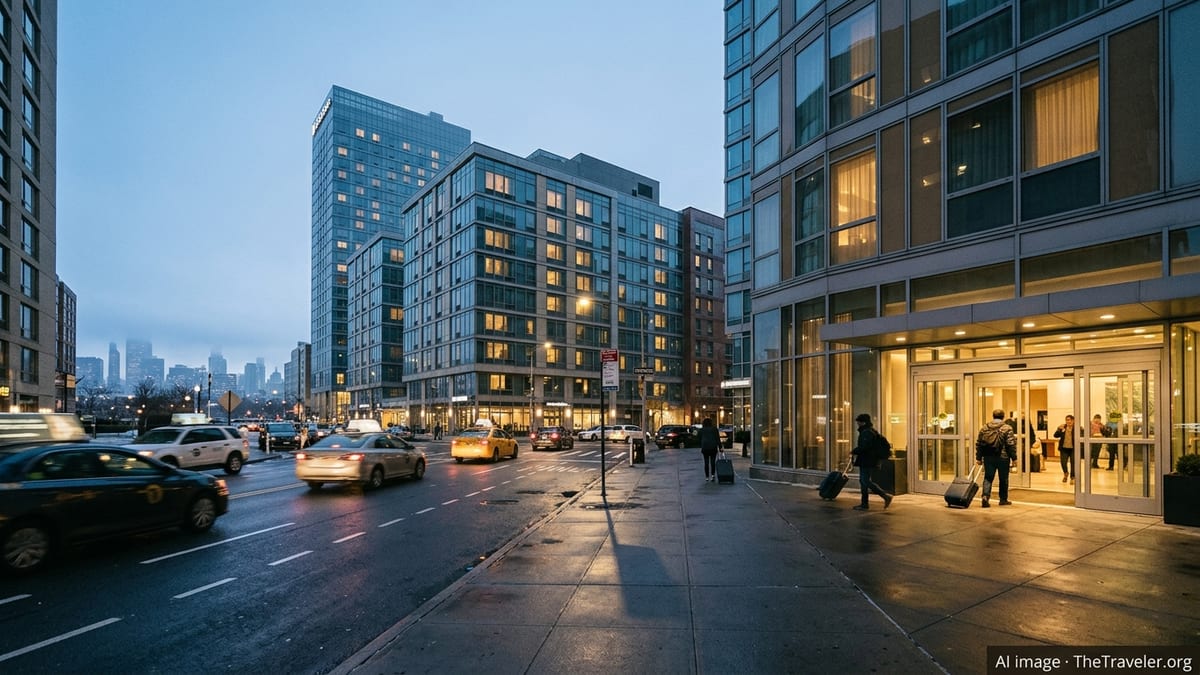
U.S. Hotel Performance Shows Modest Growth and Mixed Weekly Trends
Recent performance indicators for the U.S. hotel sector point to a market growing, but only gradually, as operators navigate slowing economic tailwinds and normalizing post‑pandemic demand. A forecast released in early 2026 by a major real estate and travel analytics partnership projects national occupancy at just over 62 percent for 2026, slightly below 2025 levels, while average daily rate is expected to rise by about 1 percent. The combination results in a projected revenue per available room increase of less than 1 percent, underscoring a landscape where rate growth rather than occupancy gains is expected to do most of the heavy lifting.
Weekly tracking data through early March indicates that hotel metrics have been volatile from week to week. Reports summarizing the final week of February describe a mixed picture in which occupancy held up or improved slightly while rate and revenue metrics softened, including declines in average daily rate and revenue per available room compared with the prior week. By the week ending March 7, however, the tone shifted, with data showing both week‑over‑week and year‑over‑year gains across key performance indicators, led by strong results in major leisure and meetings destinations such as Las Vegas.
Market‑level results continue to diverge sharply. Some large urban centers have reported notable drops in occupancy compared with last year as business travel, group demand and convention calendars recalibrate. Publicly available summaries of CoStar data describe a sizable occupancy decline in New York City for a recent late‑February week, with levels in the mid‑60 percent range and double‑digit percentage decreases year over year. Other cities, including several in the Midwest, have instead benefited from steady event calendars and returning convention business, allowing them to outperform national averages on both occupancy and revenue growth.
Segment performance also remains uneven. Extended‑stay hotels, which outperformed many traditional select‑service and full‑service properties in the early recovery period, saw a pullback in 2025 as new supply accelerated. Industry research covering the 100 largest U.S. metropolitan areas shows national extended‑stay revenue per available room declining by a little more than 2 percent last year, driven mainly by lower occupancy as new rooms entered the market and rate growth slowed. Operators in this segment are now focused on length‑of‑stay optimization and ancillary revenue opportunities to protect margins in 2026.
Development Pipeline Builds for 2026 as Brands Chase Midscale and Extended Stay
On the development front, the U.S. and wider North American hotel pipeline continues to expand, with a visible acceleration projected for 2026. Market outlooks from project‑tracking firms indicate that more than 900 new hotels, representing roughly 97,000 rooms, are slated to open in the United States in 2026, compared with approximately 730 hotels and about 82,000 rooms expected to open in 2025. This implies a supply increase of around 1.7 percent in 2026, up from about 1.5 percent in 2025, signaling that developers and lenders remain confident in long‑term demand even as near‑term performance moderates.
Upscale and extended‑stay concepts are expected to dominate these new openings. Reports on the current construction and conversion pipeline show that such properties account for a majority share of projects, reflecting investor appetite for relatively efficient operating models and consistent demand from both business and leisure travelers. Key metro areas including New York, Atlanta and Dallas are cited as leaders in near‑term openings, while Dallas and Phoenix are projected to be among the most active markets for new supply in 2026. Renovation and conversion work also remains elevated, with thousands of projects and hundreds of thousands of rooms in play, particularly in major business and government centers such as Washington, D.C., and Chicago.
Real estate investment trusts and major ownership groups continue to highlight renovation as a primary lever for market share growth. An investor presentation from a U.S. hotel owner released in March outlines how comprehensive property upgrades have historically delivered measurable gains in performance compared with competitive sets. The company reports that, on average, hotels in its portfolio achieved a roughly four‑percentage‑point improvement in market share over the 12 months following renovation, with the uplift expanding further over a three‑year period. This type of performance narrative is reinforcing capital expenditure plans even as interest rates and construction costs weigh on returns.
Beyond 2026, long‑range development commentary points to urban and leisure markets as the focal points for new projects, with technology integration and sustainability standards shaping design and brand positioning. Mixed‑use developments anchored by major sports and entertainment venues are also expected to support future hotel construction, as billions of dollars in stadium and arena investment funnel new event demand toward nearby lodging options. For travelers, the near‑term implication is a growing array of midscale and extended‑stay choices in both primary and secondary markets, though increased competition could pressure legacy properties that delay refurbishment.
Global Brands Refine Portfolios and Expand Lifestyle Footprints
Global brand groups are using early 2026 to refine their portfolios and emphasize high‑growth segments such as lifestyle, luxury and all‑inclusive. Hyatt, for example, has reorganized its brand architecture into five broad portfolios, grouping its flags into Luxury, Lifestyle, Inclusive, Classics and Essentials. Company information published in 2025 and updated through early 2026 describes this realignment as a way to simplify the offering for both guests and owners while highlighting categories where the pipeline is most active. The portfolio shuffle coincides with a record development pipeline of roughly 138,000 rooms worldwide, suggesting that owner interest remains strong across Hyatt’s upper‑upscale and lifestyle brands.
Recent acquisitions are also reshaping the competitive field in lifestyle and boutique lodging. Hyatt’s purchase of Standard International in 2024 brought The Standard and Bunkhouse properties into the company’s lifestyle portfolio, expanding its reach in design‑led urban hotels and smaller experiential resorts. This follows a broader industry trend in which large, global systems acquire or create niche brands to capture demand from younger, experience‑focused travelers who prioritize distinctive design, dining and neighborhood integration over traditional full‑service formats.
Other major global companies are highlighting newer brands as a disproportionate driver of both openings and signings. InterContinental Hotels Group, in a March 2026 investor pack, reports rapid growth among its newer flags, which now account for a sizable minority of its system size and pipeline. Figures disclosed for full‑year 2025 show that these brands delivered significantly faster growth rates in both openings and signings compared with more established banners. The group also cites its partnership with the Ruby brand in Europe as an example of how conversion‑friendly concepts can accelerate scale.
For owners and developers, the message is that large global platforms are competing vigorously for new‑build and conversion opportunities, particularly in the upscale limited‑service and lifestyle spaces. For travelers, the outcome is a proliferation of logos and sub‑brands that promise differentiated experiences while still offering the loyalty benefits and distribution reach of major systems. As 2026 progresses, the challenge for each group will be to maintain clear positioning and avoid brand dilution in a crowded marketplace.
Regional Demand Patterns Highlight Events, Pricing Power and Consumer Sensitivity
Regional snapshots illustrate how local events and traveler behavior are influencing hotel performance in early 2026. Major leisure and event destinations such as Las Vegas have led national performance tables in several recent weeks, with reports attributing gains to a combination of large‑scale conventions, sports events and entertainment programming. These markets have leveraged strong calendars to sustain both occupancy and higher average rates, even as more price‑sensitive travelers look for alternatives.
Other cities have relied heavily on recurring conventions, sports tournaments and cultural events to drive hotel demand. Publicly available data and local coverage of downtown St. Louis, for instance, show that the city enjoyed some of the strongest occupancy gains in the country through late 2025 and into early 2026, helped by collegiate sports, volleyball tournaments and a busy events lineup at major venues. This pattern appears to be continuing into the spring travel season, where regional events can significantly lift weekend occupancies and revenue metrics.
At the same time, there are growing signs of traveler price sensitivity in certain international leisure markets. Social media and forum discussions centered on coastal resort destinations in Southeast Asia in late March describe noticeable drops in nightly rates at mid‑ and upper‑midscale hotels compared with typical pre‑holiday pricing. Commenters attribute some of the discounting to softening long‑haul demand and disruptions in air travel from key feeder markets, which have left hotels with more unsold inventory than usual ahead of major local festivals. While such anecdotal reports do not represent formal data, they align with a broader narrative of selective rate competition where demand has become less predictable.
Conversely, properties in cities hosting major festivals and music events continue to command premium rates. Travelers booking hotels around large urban music festivals in March have widely reported elevated prices and tighter availability, with many suggesting that local operators have become more adept at forecasting peak‑weekend demand and adjusting dynamic pricing accordingly. For hoteliers, this underscores the value of granular revenue management and event‑based forecasting. For guests, it highlights the importance of booking early or considering secondary neighborhoods to secure more affordable rates.
Investors Watch Margins as Costs, Renovations and Labor Shape 2026 Outlook
Behind the scenes, hotel investors and operators are focused on balancing modest revenue growth with cost pressures that remain elevated relative to pre‑pandemic norms. Wage growth, property insurance, utilities and interest expenses all continue to weigh on margins, even as topline revenue gradually improves. Industry presentations and market‑conditions reports note that while revenue per available room is expected to rise in 2025 and 2026, profit growth may not keep pace because operating costs and required capital expenditures are consuming a larger share of income.
Renovation cycles are a central factor in that equation. Owners that deferred upgrades during the peak of the pandemic recovery are now facing brand‑mandated renovation schedules, aging guestrooms and evolving guest expectations around technology, sustainability and wellness. Investor communications from hotel real estate trusts emphasize that comprehensive renovations can recapture market share and justify higher rates, but also require substantial upfront investment. One publicly traded owner highlighted having deployed roughly a quarter of a billion dollars in capital expenditures over the past three years, prioritizing markets where renovations are most likely to deliver outsized gains in revenue and guest satisfaction scores.
Labor remains another pressure point. While acute staffing shortages have eased in many markets compared with 2021 and 2022, operators still report challenges in recruiting and retaining workers for housekeeping, food and beverage and engineering roles. This has encouraged further adoption of technology solutions such as mobile check‑in, digital keys and housekeeping on request, as well as experimentation with more flexible scheduling. However, many brands and owners remain cautious about automation that could undermine service standards or guest perception during a period when experiences and reviews heavily influence booking decisions.
Looking ahead through the rest of 2026, the hotel sector appears to be entering a phase of slower but more sustainable growth. Supply additions are picking up, brand proliferation continues and investors are leaning on renovations and revenue management sophistication to protect returns. For travelers, this translates into a wider range of choices across price points and styles, along with increasingly dynamic pricing that closely tracks local events, booking windows and shifting patterns of demand.