

More news on this day
Travelers across the United States faced another day of disruption on April 6 as Houston’s George Bush Intercontinental Airport logged 287 delayed flights and 20 cancellations, snarling schedules for United Airlines and regional partners on some of the country’s busiest routes.
Get the latest news straight to your inbox!
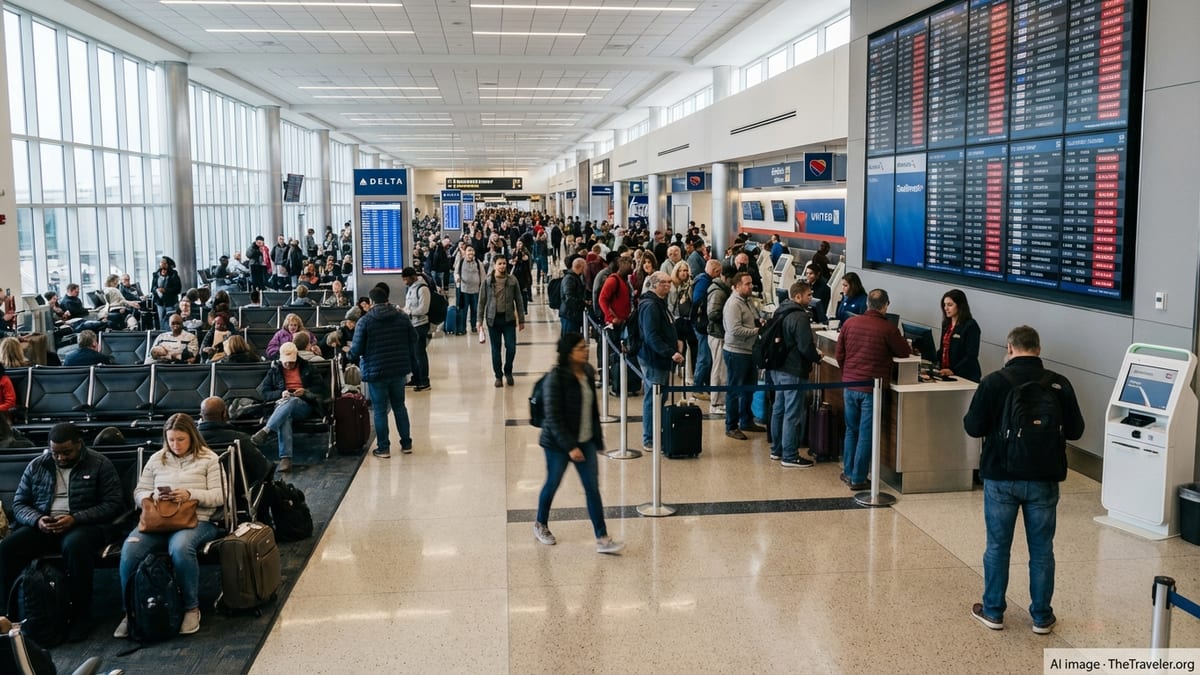
Weather, Backlogs and Holiday Crowds Converge at IAH
Publicly available tracking data and aviation reports indicate that operations at Houston Bush Intercontinental remained under strain following a turbulent early April weekend, with delays on April 6 building on earlier weather-related slowdowns. A ground delay program connected to strong thunderstorms over the Houston area on April 4 led to a temporary halt in some operations and a cascade of late arrivals and missed connections through the rest of the weekend.
Industry coverage notes that the April 6 totals at Bush Intercontinental stood at 287 delayed flights and 20 cancellations, placing the airport among the more affected hubs in the country during a busy post-holiday travel period. The figures reflect both mainline and regional operations, with schedules still absorbing the impact of earlier storms, crew repositioning challenges and high passenger volumes.
Separate analyses of Texas aviation disruption this month show that Houston’s main international airport has repeatedly appeared on lists of the state’s most affected facilities, alongside Dallas Fort Worth and San Antonio. Weather patterns over North and Central Texas, including slow-moving storm systems and gusty winds, have reduced the rate at which aircraft can land and depart, stretching airport capacity even during periods when skies above the terminals appear largely overcast but calm.
In addition to weather constraints, a series of recent construction and infrastructure initiatives at major US hubs, including Houston, has added complexity to ramp and taxi operations. Federal performance documents describe ongoing and recently completed taxiway projects at Bush Intercontinental that can require more intricate routing on the ground, which can lengthen the time aircraft spend between gate and runway and compound any weather-related slowdowns.
United and Regional Partners Bear the Brunt
The latest disruption figures underscore the central role Houston plays in United Airlines’ domestic and international network. Bush Intercontinental is one of the carrier’s largest hubs, and a high proportion of its daily schedule there is operated by regional affiliates flying under the United Express banner, including CommuteAir, Mesa Airlines and SkyWest Airlines.
When weather and air traffic programs constrain arrivals and departures at Houston, these regional operators typically feel the effects quickly. Publicly accessible flight histories for early April already show multiple United and United Express services from the airport operating with extended delays or schedule adjustments around the storm period, as aircraft and crews rotated through the network out of sequence.
Regional jets linking Houston to smaller communities across Texas and neighboring states are particularly sensitive to such disruptions because many operate on tight turnarounds and are often used to position aircraft for later long-haul departures. A late arrival from a nearby city can cause an outbound flight from Houston to miss its departure slot, which in turn can delay a transcontinental or international service that relies on the same gate or crew.
Industry observers also point to the cumulative effect of multiple travel waivers issued for Houston in recent weeks, including flexibility policies that allowed United customers booked through Bush Intercontinental to rebook without change fees during windows of forecast storms. While such waivers help passengers avoid the worst of the disruption, they also concentrate demand into certain time bands on surrounding days, intensifying pressure on already busy departure banks.
Ripple Effects on New York, Atlanta, San Francisco and Beyond
The tangle of delays at Bush Intercontinental on April 6 did not stay confined to Texas. Because Houston sits at the center of many north south and east west itineraries, schedule disruptions there quickly radiated along trunk routes connecting to New York, Atlanta, San Francisco and other major markets.
Monitoring of national delay statistics for the same weekend shows elevated disruption levels at several large US hubs, including Atlanta’s Hartsfield Jackson, Chicago O’Hare, Dallas Fort Worth and Houston. Many of these airports share dense reciprocal schedules with Bush Intercontinental, meaning even a modest ground delay program in Texas can create conflicts with gate availability and crew duty limits on the other end of the route.
Passengers traveling between Houston and the New York area faced rolling knock on effects as delayed inbound aircraft missed their planned departure times from both ends of the corridor. Similar patterns emerged on flights linking Houston with West Coast gateways such as San Francisco, where aircraft arriving late from Texas narrowed already tight connection windows for onward international services.
For travelers using Houston as a connecting point rather than an origin or destination, the disruptions were particularly acute. Missed connections forced many to be rebooked over alternative hubs, further loading itineraries through airports like Denver, Chicago and Los Angeles that were already experiencing high seasonal traffic.
Passengers Navigate Long Lines and Tight Connections
For individual travelers, the operational statistics translated into long queues, anxious waits at the gate and improvised route changes. Recent local reporting from Houston has highlighted extended security screening times at Bush Intercontinental, with some passengers earlier in the season encountering multi hour waits during peak morning periods. Although not all of these queues were directly tied to the April 6 disruption, the combination of heavy crowds and schedule upheaval added to a perception of strain at the airport.
Travel advocacy groups and compensation services tracking early April flight performance across Texas report that several hundred flights statewide have seen significant delays, while tens of thousands of passengers have been affected since the start of the month. Analysts note that many of these incidents are classified as weather related, which often limits the scope of financial redress available to travelers, but they still recommend that passengers keep detailed records of their itineraries and out of pocket expenses.
Airlines, meanwhile, have encouraged passengers in public updates to use mobile applications and text alerts to track changing departure times from Houston and connecting hubs. Experience from recent storm systems suggests that even when an airport clears a ground stop or delay program, it can take many hours for gate assignments, crew schedules and baggage handling operations to fully recover, particularly at complex hubs handling large volumes of connecting traffic.
Travel commentators suggest that passengers flying through Houston over the coming days should allow additional time for security, monitor the forecast for the Gulf Coast region and, where possible, build longer layovers into itineraries that rely on tight connections between regional and long haul flights. With springtime weather patterns still unsettled and airline networks running close to full utilization, even modest disturbances at a key hub like Bush Intercontinental can continue to have outsized effects across the wider US air travel system.