

More news on this day
Travelers moving through Houston’s main airport faced a fresh wave of disruption today, as six flight cancellations and 59 delays hit carriers including Air Canada, United Airlines and All Nippon Airways, tangling connections to major hubs such as New York, Chicago and Vancouver and rippling across already busy US air corridors.
Operational Snags Ripple Through Houston Hub
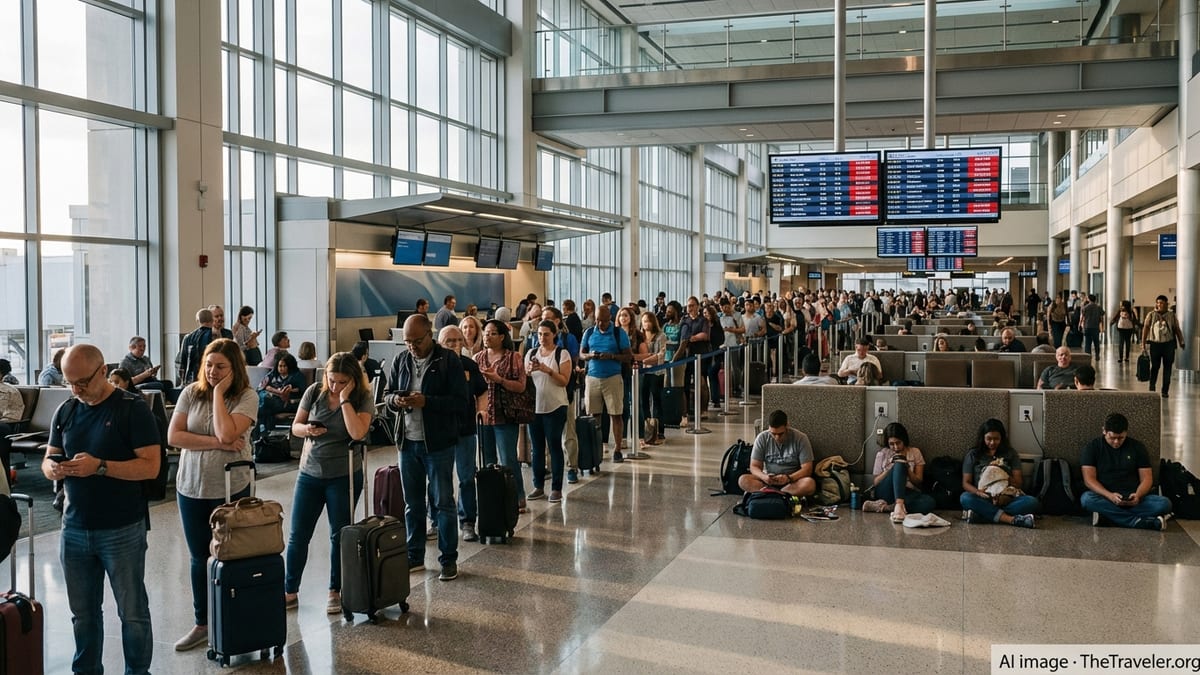
The latest disruption at Houston’s primary international gateway underscored how even a relatively modest number of cancellations and delays can quickly cascade across airline networks. With six flights cancelled outright and 59 running late, passengers reported missed connections, extended time on tarmacs and hours spent queuing at rebooking counters.
United Airlines, which maintains a major hub at the airport, bore a significant share of the schedule pressure as delays stacked up on high-frequency business routes to cities like New York and Chicago. Air Canada’s services linking Houston with Canadian gateways, including Vancouver, also saw knock-on effects, while Japan’s All Nippon Airways experienced schedule challenges on its long-haul operations.
Airport operations staff worked to reposition aircraft, reset departure banks and ease congestion at gates, but the slow creep of delays through the day left many travelers scrambling for alternatives. Even flights that eventually departed were often out of sequence, leading to crowded departure halls as peak-time traffic bled into later waves.
While authorities did not immediately cite a single root cause, the pattern matched a broader trend seen across North American airports: tight schedules, constrained airspace and limited slack in airline operations amplifying even minor disruptions.
Key Routes to New York, Chicago and Vancouver Hit
The worst of the inconvenience was felt on trunk routes linking Houston to major North American hubs. Morning and early afternoon departures to New York–area airports and Chicago O’Hare saw rolling delays that rippled through the day’s later flights, with some passengers facing missed onward connections to the US Northeast, Midwest and transatlantic gateways.
Vancouver-bound travelers on Air Canada were particularly exposed, as any delay on the southbound or northbound legs can disrupt carefully timed connections onto Pacific Northwest, Asia and domestic Canadian networks. Some passengers reported being rebooked through alternative hubs such as Denver, Toronto or San Francisco when direct options from Houston became unworkable.
In the case of All Nippon Airways, even a single delayed departure can create far-reaching consequences, given the tightly coordinated schedules that connect Houston with Tokyo and beyond. Long-haul operations must balance crew-duty limits, aircraft rotation and slot times at busy Asian gateways, making recovery from a delay more complex than on short domestic hops.
For many travelers, the timing of Tuesday’s disruptions proved especially frustrating, coming during a period of robust demand for both business and leisure travel. With load factors already high, spare seats on alternative flights were limited, and same-day rerouting often meant accepting significant schedule compromises.
Passengers Face Missed Connections and Overnight Stays
Inside the terminal, information boards showing clusters of delayed flights quickly translated into long lines at customer service desks. Some Houston-bound passengers who had expected tight but manageable connections to New York, Chicago or other major cities found themselves instead discussing hotel vouchers and meal credits with airline agents.
Families returning from vacations, frequent business travelers and international passengers alike described a familiar pattern: initial short delays announced at the gate, followed by incremental schedule pushes as ground crews and flight crews waited for aircraft or slots. In some cases, travelers remained hopeful they would still make their onward flights, only to learn upon landing that their connections had already departed.
For those whose trips originated in Houston, the uncertainty was no less draining. Passengers debating whether to leave secure areas for food or remain close to their gates spoke of the stress of incomplete information and rapidly changing departure estimates. Airline apps and text alerts helped some stay ahead of the curve, but conflicting updates between mobile notifications and airport displays added to the confusion.
Hotels around the airport saw a modest bump in last-minute check-ins as airlines arranged overnight stays for travelers unable to depart until the following day. Others chose to adjust their plans altogether, postponing meetings, shortening trips or switching to rail or road travel on shorter domestic segments where feasible.
Carriers Work to Restore Schedules and Minimize Knock-On Effects
United Airlines, Air Canada and All Nippon Airways moved to contain the disruption, focusing on preserving key long-haul departures and first-wave morning flights for the following day. That often meant consolidating some lightly booked services, swapping aircraft types or selectively canceling lower-demand flights to free up crews and planes.
Operational planners prioritized routes with dense onward connections, such as Houston to New York, Chicago and major West Coast cities, in order to limit the number of passengers facing extended delays. Where possible, travelers were shifted to partner airlines under existing alliance agreements, particularly on transborder routes between Houston and Canadian hubs.
Industry analysts note that Houston’s role as a central node in US and international aviation can both help and hinder recovery. Its extensive web of connections provides options for rerouting, but also means even small schedule shocks can spread quickly throughout domestic and overseas networks.
Although airlines have invested in more sophisticated forecasting tools and flexible crew scheduling to cope with irregular operations, the combination of high travel demand and crowded skies leaves little margin for error. Events like the latest Houston disruption highlight how swiftly conditions at a single airport can influence travel plans across the continent.
Advice for Travelers Navigating Houston and Other Busy Hubs
For travelers with upcoming itineraries through Houston and similar large hubs, industry experts reiterate a few practical steps. Building longer connection times, especially when traveling internationally or during peak seasons, remains one of the most effective ways to reduce the risk of missed flights.
Passengers are also encouraged to monitor flight status closely in the 24 hours before departure, using both airline apps and airport information feeds, and to enroll in real-time alerts. When disruptions arise, early awareness can make the difference between securing a seat on the next available departure and facing a lengthy wait.
Those departing from Houston are advised to arrive at the airport earlier than usual when headlines flag any pattern of cancellations or delays, as security queues and customer service lines tend to lengthen quickly. Travelers connecting through Houston onward to New York, Chicago, Vancouver or other major cities should be prepared with backup options, such as alternative routings or flexible accommodations, in case schedules shift.
For now, airlines serving Houston are working to absorb the impact of the six cancellations and 59 delays and to restore normal operations. Yet the episode serves as another reminder that in today’s tightly choreographed aviation system, even a handful of disrupted flights can send shockwaves across routes and borders.