

More news on this day
As airlines refine long term fleet plans in 2026, two advanced single aisle jets sit at the center of many discussions: Airbus’ in service A321XLR and Boeing’s yet to be certified 737 MAX 10. Both promise lower operating costs and new route possibilities, but they take markedly different approaches to range, capacity and certification timing.
Get the latest news straight to your inbox!
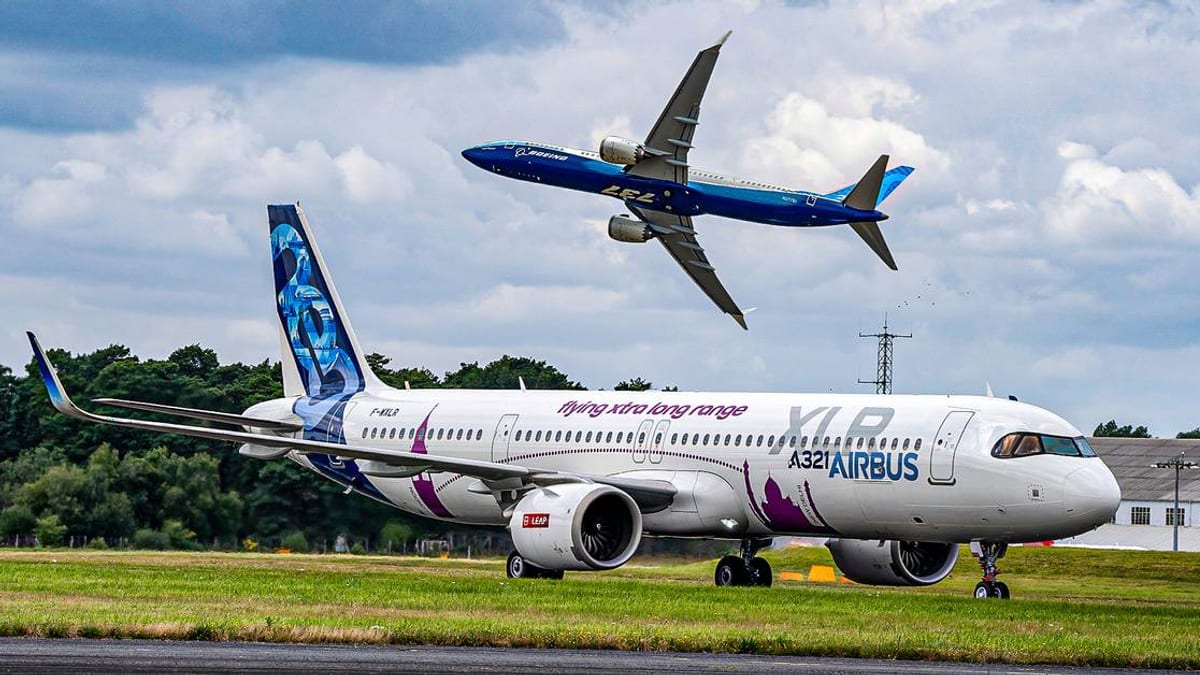
Image by simpleflying.com
Certification Timelines Create an Uneven Playing Field
The most immediate difference between the A321XLR and 737 MAX 10 is not visible on the ramp but in regulatory paperwork. The A321XLR received type certification from the European Union Aviation Safety Agency for its CFM powered variant in July 2024, followed by certification for Pratt & Whitney powered aircraft in early 2025. Publicly available company reports indicate that Airbus began deliveries later in 2025, with Iberia among the early operators bringing the extra long range jet into commercial service.
The 737 MAX 10, by contrast, remains in the final stages of a much longer certification path. Open reporting on the MAX program shows that design changes required after earlier MAX accidents and subsequent regulatory reforms have pushed formal approval for the MAX 7 and MAX 10 into 2026. Industry coverage notes that Boeing continues to conduct test and compliance work while airlines adjust fleet plans and delivery timelines around that revised schedule.
This timing gap has real consequences. With the A321XLR already flying passengers, Airbus is able to demonstrate real world performance and cabin flexibility on long narrowbody routes. Boeing, meanwhile, is still selling the MAX 10 largely on projected economics and commonality with existing MAX fleets. Airlines weighing near term capacity growth or replacement decisions are factoring in those different levels of maturity.
Range Versus Capacity: Two Very Different Design Priorities
The A321XLR and 737 MAX 10 share a basic mission as single aisle workhorses, but their design priorities diverge sharply. Airbus has optimized the A321XLR for range, adding a permanent rear center fuel tank, strengthened landing gear and other structural changes that lift quoted maximum range to around 4,700 nautical miles. Company materials and independent analyses describe the aircraft as capable of flying transatlantic and deep regional routes that were traditionally reserved for widebodies or larger twin aisles.
Boeing’s 737 MAX 10 focuses more on maximizing capacity on shorter and medium haul sectors. By stretching the MAX 9’s fuselage and revising landing gear geometry, Boeing targets up to about 230 seats in a single class configuration, or around 188 to 204 seats in a typical two class layout, depending on the airline. Publicly available specifications indicate range closer to that of other MAX variants, suitable for domestic U.S. networks, intra European flying and high density regional routes in Asia rather than new long haul city pairs.
These design choices position the aircraft differently in airline planning. The A321XLR is being marketed as a “long thin route” specialist, able to link secondary cities across oceans or connect hubs with smaller markets nonstop, while offering fuel burn reductions compared with older widebodies. The MAX 10 is pitched as a high capacity narrowbody tailored to busy trunk routes, with the added advantage of common pilot type rating and systems with existing 737 MAX 8 and MAX 9 fleets.
Cabin Experience and Payload Flexibility
Cabin experience is another key differentiator. The A321XLR shares the Airbus A320 family’s wider cross section, which allows for slightly wider seats or aisles compared with the 737. Operators that have revealed interior layouts, such as Qantas in earlier briefings, highlight configurations that emphasize long haul comfort, including lie flat business class suites and premium economy style seating, made possible by the aircraft’s extended range and mission profile.
Because the A321XLR is intended for flights of up to nine or ten hours, Airbus and airlines are investing in enhanced galleys, additional lavatories and advanced cabin lighting. The removable additional center fuel tank concept used on the earlier A321LR has been replaced by a more integrated fuel system on the XLR, which preserves cargo volume for baggage and freight even on longer missions. That flexibility supports both passenger comfort and ancillary revenue from belly cargo.
The 737 MAX 10, while likely to feature modern cabins with larger pivot bins, LED lighting and updated in flight entertainment where installed, is largely optimized around high density seating. The slightly narrower fuselage generally results in marginally narrower seats when airlines choose a standard six abreast layout. For flights typically under five hours, many carriers see that as an acceptable trade off in favor of seat count and cost per seat mile.
Operational Economics and Network Strategy
From an economic standpoint, both aircraft promise significantly lower fuel burn per seat than the previous generation of narrowbodies they are replacing. Airbus points to reductions of around 30 percent per seat compared with older models on long missions for the A321XLR, helped by aerodynamic refinements, new generation engines and the efficiency of operating a single aisle aircraft on routes once flown by widebodies.
Boeing positions the MAX 10 as a cost effective upgauge for airlines already operating the MAX 8 and MAX 9. Publicly available comparisons show that by adding seats without a proportional increase in fuel burn, the MAX 10 can deliver very competitive unit costs on dense routes. Maintenance and training commonality across the MAX family are central to that value proposition, especially for large operators that prioritize simplified pilot pools and spare parts inventories.
Network strategy, however, remains where the A321XLR has a distinct niche. With real aircraft now in service, airlines are beginning to deploy the XLR on new city pairs that bypass traditional hubs and on seasonal long haul routes where filling a widebody consistently would be challenging. The MAX 10, by contrast, is expected to be most visible on high demand domestic and regional routes once certified, supporting frequency and capacity increases rather than opening entirely new long range markets.
Market Response and Competitive Outlook
Order books suggest solid demand for both designs, but with different geographic and strategic emphases. Airbus has secured hundreds of A321XLR commitments from carriers across Europe, North America, the Middle East and Asia Pacific, many of whom are planning to use the aircraft to replace aging mid size widebodies or to expand point to point long haul networks. Early deliveries in 2025 and 2026 give those airlines a head start in experimenting with new route structures.
Boeing has also attracted substantial interest in the 737 MAX 10 from large MAX operators in North America and elsewhere, but the ongoing certification process has led some airlines to reshuffle or delay fleet plans. Public company filings and airline statements over the past two years show instances of carriers converting MAX 10 orders to smaller MAX variants or pushing expected delivery dates into the late 2020s while waiting for more clarity on timing.
As of early 2026, that dynamic leaves Airbus with a tangible product already in passengers’ hands and Boeing promoting a forthcoming variant that aims to shore up its position at the top end of the narrowbody market. For airlines and travelers, the contrast underscores how regulatory timelines, design philosophy and cabin strategy can create two very different answers to the same fundamental question about the future of single aisle flying.