

More news on this day
Australians are returning to the skies in large numbers, but new research suggests many remain frustrated with the reliability, cost and comfort of air travel, even as demand continues to climb.
Get the latest news straight to your inbox!
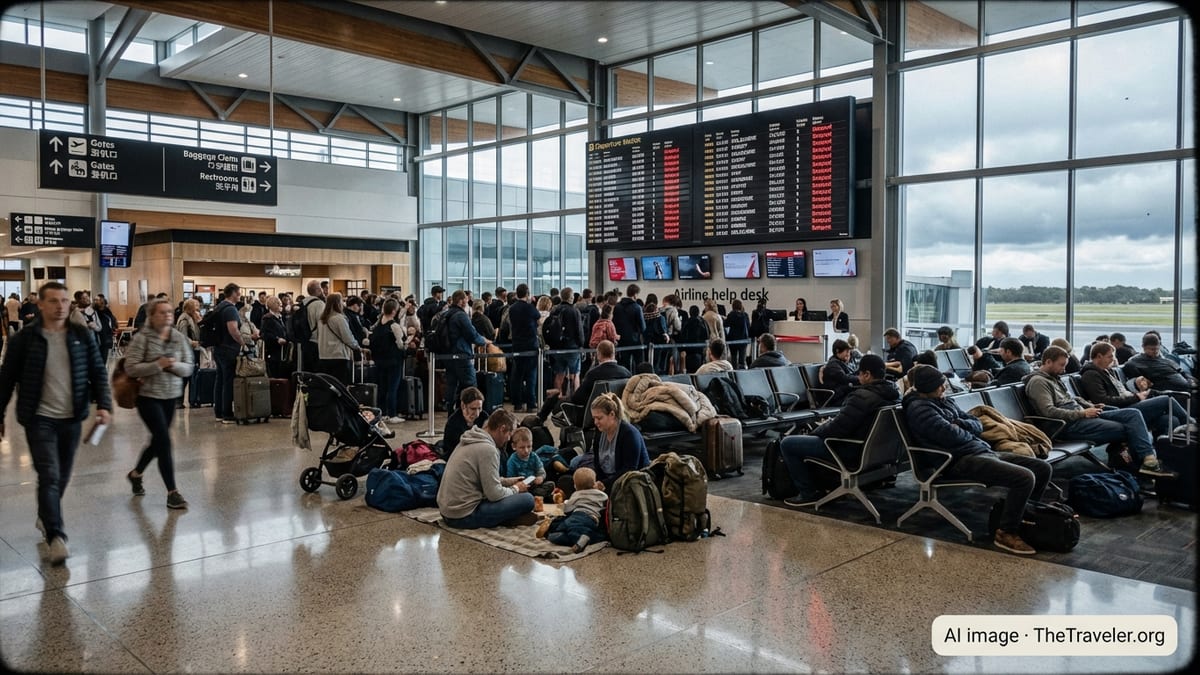
New government survey maps the passenger journey
Fresh analysis from the Australian government’s Behavioural Economics Team, released this week, provides one of the clearest recent pictures of how Australians feel about flying. The study, carried out with a nationally representative sample of more than 4,000 adults, tracks attitudes from the moment a ticket is booked through to arrival at the destination airport. It forms part of the policy work surrounding the national Aviation White Paper, which is intended to guide the sector towards 2050.
Publicly available information from the survey indicates that most Australians still regard flying as an essential part of life in a geographically isolated country, but many see it as more stressful and less predictable than before the pandemic. Respondents reported relatively high satisfaction with the basic act of getting from A to B, yet significantly lower satisfaction scores for value for money, disruption handling and clear communication when things go wrong.
The research highlights that experiences can vary widely between different stages of the trip. Elements like online booking and digital check in tend to rate better, while airport security queues, boarding processes and baggage collection attract more criticism. Together, these findings are informing ongoing policy debates about consumer protections, competition and investment in airport infrastructure.
Delays, cancellations and confidence in the system
Punctuality and reliability stand out as central concerns. Consumer surveys and performance data show that a sizeable share of Australian passengers have faced delays or cancellations over the past two years, and on time performance for major local carriers remains weaker than in several comparable markets. Monitoring by competition regulators has pointed to persistent reliability issues, even as airlines worked to rebuild schedules and capacity after the pandemic.
Reports drawing on 2023 consumer polling found that around two in five Australian travellers experienced a cancelled or significantly delayed flight within a twelve month period. While reliability has improved from the worst of the rebound phase, publicly reported statistics for 2024 show that more than one in four domestic services still arrived late, underscoring why schedule confidence remains fragile for many flyers.
These experiences are feeding directly into attitudes captured in the new behavioural survey. Many respondents indicate they now allow extra buffer time at either end of a flight, particularly when connecting to onward travel or important events. Some leisure travellers report avoiding complex itineraries or late night arrivals because of concerns about being stranded without adequate support if services are disrupted.
Price sensitivity and shifting booking behaviour
Cost remains another powerful factor shaping how Australians feel about getting on a plane. International fares surged after borders reopened and, although there has been some easing, many long haul routes remain noticeably more expensive than they were before 2020. Domestic ticket prices also spiked in 2022 and 2023, with competition authorities attributing the jump to high demand, constrained capacity and elevated input costs such as fuel.
Recent industry surveys show these price pressures are altering booking patterns. Research cited by the Tourism and Transport Forum in late 2024 found almost two thirds of Australians would now consider booking a holiday less than a month before departure, either to chase last minute deals or delay committing funds. Separate polling commissioned by travel insurers reported that more than 80 per cent of respondents planned to avoid at least one peak school holiday period in 2025 to sidestep higher airfares, congestion and the risk of disruption.
Despite tighter household budgets and a weaker consumer confidence backdrop, demand for both domestic and overseas trips continues to grow. That apparent contradiction is reflected in the latest attitudes survey, where many Australians express frustration at prices but also a strong desire to maintain regular travel to visit family, pursue work opportunities or make up for trips missed during the pandemic years.
Service standards, passenger rights and trust
Service quality and perceived fairness are another recurring theme in Australians’ accounts of air travel. Complaints data released over the past two years point to ongoing dissatisfaction with how airlines handle lost baggage, sudden schedule changes and refund processes. Consumer advocates argue that policy settings have historically offered limited direct recourse for passengers when flights are severely disrupted, compared with compensation schemes operating in regions such as the European Union.
These concerns are reflected in the government’s latest work on aviation reform, which includes a proposed charter of rights for airline passengers. Public consultation material published as part of the Aviation White Paper process highlights priorities such as clearer information about delays, faster complaint handling and stronger obligations on carriers to rebook or refund customers when disruptions are within the airline’s control.
Surveyed travellers also raise questions of trust and transparency, particularly around information shared during disruption events. Many indicate that timely, straightforward updates about the cause and likely duration of a delay can significantly improve their perception of an airline, even when the underlying problem cannot be fixed quickly. This aligns with broader behavioural research showing that perceived honesty and effort can strongly influence satisfaction in high stress situations such as missed connections.
Sustainability and the future of Australians’ flying habits
Environmental impact is an increasingly important part of how Australians think about air travel, although it competes with practical concerns such as price and reliability. International polling undertaken for major online travel platforms in 2024 reported that a substantial share of Australian respondents expressed interest in more sustainable flying options, including lower emission fuels, carbon offset programs and the ability to bundle public transport connections with air tickets.
The government’s aviation policy framework, including the long term white paper and associated strategies, foregrounds decarbonisation of the sector and regional connectivity as key challenges out to 2050. This puts Australians’ evolving attitudes at the centre of planning for investments in cleaner aircraft technology, sustainable aviation fuels and improved ground transport links to major airports.
For now, the latest research suggests that most Australians expect to keep flying, but with more careful consideration of when and how they travel. Many appear willing to accept modest changes, such as choosing direct routes to reduce total emissions or supporting airlines that make visible environmental commitments, provided these options remain affordable and fit within already complex travel calculus shaped by cost, reliability and service expectations.