

More news on this day
Gulf tourism powerhouses Dubai and Abu Dhabi began 2026 on the back of record visitor numbers and ambitious cultural openings, only to be hit by a sudden wave of geopolitical turmoil and transport disruption that is reshaping travel flows across the Middle East.
Get the latest news straight to your inbox!
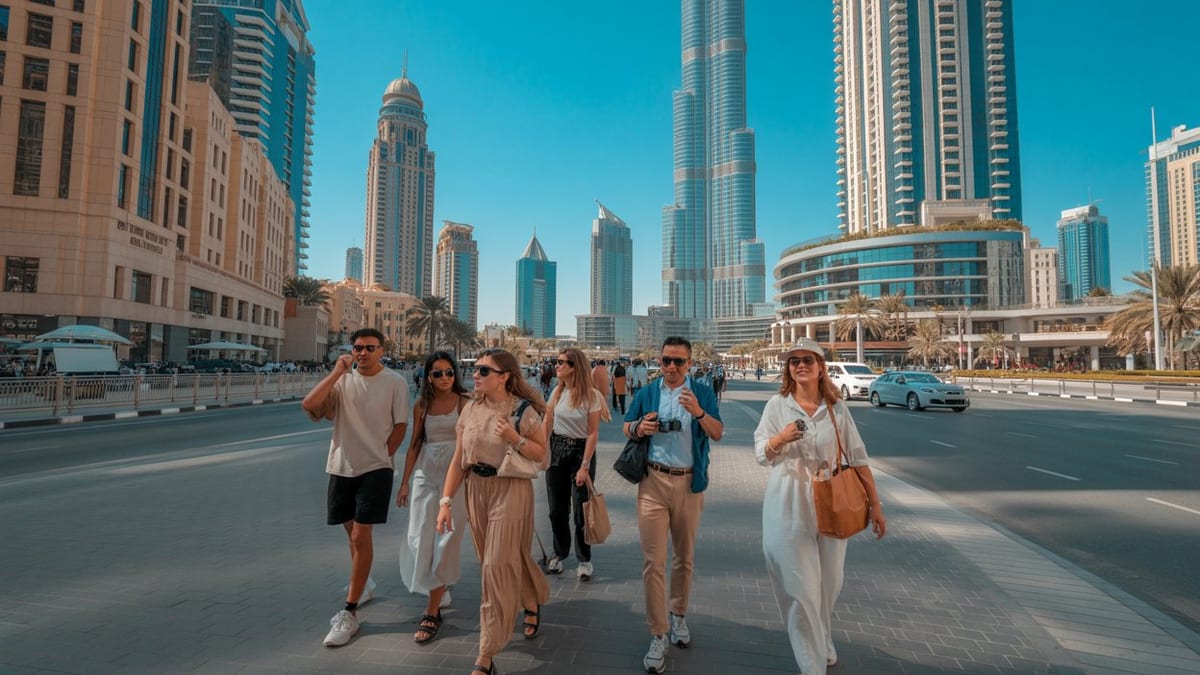
Image by Travel And Tour World
Record highs collide with a harsher 2026 reality
Dubai closed 2025 with its third consecutive record year for tourism, welcoming about 19.6 million international overnight visitors and edging closer to pre-pandemic growth trajectories. Publicly available data highlights a steady climb throughout 2023 and 2024, supported by major events, expanded air connectivity and a growing portfolio of hotels and attractions.
Abu Dhabi, which has been positioning itself as a cultural and lifestyle destination, entered 2026 with fresh momentum from the opening of new institutions on Saadiyat Island, including the Zayed National Museum and the Natural History Museum Abu Dhabi. Industry reports describe rising demand for high-end stays, supported by branded residences and fresh family-focused attractions.
This strong base is being tested by an abrupt deterioration in regional conditions. Conflict involving Iran, renewed attacks on Red Sea shipping and the temporary blockage of the Strait of Hormuz have combined to unsettle trade routes, force airlines to redraw networks and inject fresh uncertainty into Middle East visitor demand.
Tourism analysts now describe a two-track picture for the Gulf. On one side, cities like Dubai and Abu Dhabi retain world-class infrastructure, airlines and attractions. On the other, they face a 2026 environment in which travelers are more cautious and itineraries are increasingly rerouted away from traditional Gulf hubs.
Airspace closures and rerouted passengers hit Gulf hub status
The sharpest immediate blow to tourism has come from disruptions in the skies. Published coverage of the regional conflict indicates that more than half of scheduled flights to and from the wider Middle East have been cancelled since hostilities escalated, with Gulf-based carriers experiencing what some analysts describe as their toughest operating environment since the pandemic.
For Dubai and Abu Dhabi, whose tourism models are closely tied to their role as global aviation connectors, these cancellations ripple quickly into hotel occupancy and visitor spending. Travel industry briefings suggest that hundreds of thousands of passengers who would typically transit via Gulf hubs are now being redirected onto nonstop routes between Europe, Asia and Australasia, or are postponing trips altogether.
Estimates from travel and tourism groups point to regional losses running into hundreds of millions of euros per day in foregone visitor spending, with the Middle East projected to lose tens of millions of arrivals in 2026 depending on how long airspace restrictions persist. While some of these travelers may still reach Dubai or Abu Dhabi via alternative routings, the loss of seamless one-stop connections erodes a competitive advantage the hubs have refined over decades.
At the same time, local tourism boards and hotel groups are pivoting more aggressively toward origin markets that remain relatively unimpacted by airspace closures, including regional drive markets and short-haul flights in the Gulf and wider Middle East. Industry commentary indicates that this mix shift may soften the decline but is unlikely to fully compensate for fewer long-haul visitors from high-spending markets.
Shipping gridlock and the Hormuz shock cloud the wider outlook
Beyond aviation, port disruption is deepening the challenge. Since early March, the resumption of attacks on Red Sea shipping and the declared control of the Strait of Hormuz have created a rare dual chokepoint, affecting both the Suez route and the primary gateway for Gulf exports and imports.
Logistics and supply chain reports describe carriers diverting ships around the Cape of Good Hope, reconfiguring schedules and, in some cases, suspending calls to Gulf ports while they assess security and insurance costs. For Dubai, whose Jebel Ali port underpins a regional sea-air logistics model, the knock-on effects include longer lead times for inbound goods, higher operating costs for hospitality businesses and uncertainty over future cruise and maritime tourism itineraries.
Economic research cited by international institutions now projects that Gulf economies could see lower growth in 2026 as a result of these disruptions, with the United Arab Emirates facing a forecast drag on gross domestic product compared with earlier expectations. Although oil and gas dynamics dominate those projections, weaker trade flows and dampened business confidence can spill over into corporate travel budgets, events and discretionary leisure trips.
Abu Dhabi, which has been cultivating conference, exhibition and cultural tourism, is particularly exposed to any sustained downturn in corporate travel and international events. Organizers weighing costs and perceived risk may shift some meetings to alternative hubs, at least in the short term, if flight networks remain constrained or insurance premiums stay elevated.
Domestic demand and regional visitors cushion the blow
Despite the headwinds, Dubai and Abu Dhabi are not seeing a uniform collapse in tourism. Public data and sector commentary underscore that domestic and regional travel are playing a stabilizing role, echoing patterns seen during the pandemic years.
In Dubai, hotel operators report that staycations and visits from neighboring Gulf Cooperation Council countries continue to support occupancy, particularly in beach resorts and family-oriented properties. Shopping festivals, sports events and entertainment programming have been maintained to encourage residents and nearby visitors to keep spending, even as long-haul arrivals soften.
Abu Dhabi’s emphasis on cultural institutions, theme parks and new waterfront districts is similarly geared toward tapping demand from within the UAE and short-haul regional markets. The growth of branded residences linked to hospitality operators indicates confidence among investors that affluent regional buyers will continue to treat the capital as a secondary home and leisure destination through 2026 and beyond.
Travel advisors note that some international tourists are also adopting a more selective approach rather than canceling Gulf trips outright. High-frequency business travelers may trim the number of journeys, while leisure visitors combine shorter Gulf stays with longer holidays elsewhere, balancing perceived risks with the draw of established attractions and high service standards.
Strategic shifts: culture, diversification and resilience building
The current turbulence is reinforcing policy choices that Gulf destinations have been pursuing for several years. Economic diversification plans in the United Arab Emirates place tourism, culture and entertainment at the heart of long-term strategies, with Dubai and Abu Dhabi seeking to evolve from transit-dependent hubs into destinations with their own intrinsic pull.
Recent openings on Abu Dhabi’s Saadiyat Island, together with a pipeline of museums, creative districts and nature-focused experiences across the Emirates, are aimed at deepening the cultural offer and encouraging longer stays. Analysts focusing on heritage tourism in the Gulf argue that such investments can help cushion short-term volatility by attracting visitors motivated less by shopping or stopovers and more by experiences that are harder to substitute elsewhere.
In Dubai, continued expansion of event calendars, from airshows and major sports to business conferences, reflects a similar logic. By tying tourism more closely to knowledge industries, trade and innovation, the city aims to embed itself in global networks in ways that extend beyond pure transit traffic.
However, 2026 is revealing the limits of even the most advanced tourism strategy when confronted with simultaneous shocks to airspace, shipping lanes and regional security perceptions. The coming months are likely to test how quickly Gulf destinations can recalibrate marketing, pricing and capacity, while keeping longer-term diversification goals in sight as they navigate a more volatile era for global travel.