


More news on this day
On the busy rivers that link Dutch ports with the rest of Europe, a quiet revolution is under way as the Netherlands turns its inland waterways into a proving ground for all-electric vessels, smart batteries and autonomous survey craft that promise to make river travel cleaner and more efficient than ever before.
Get the latest news straight to your inbox!
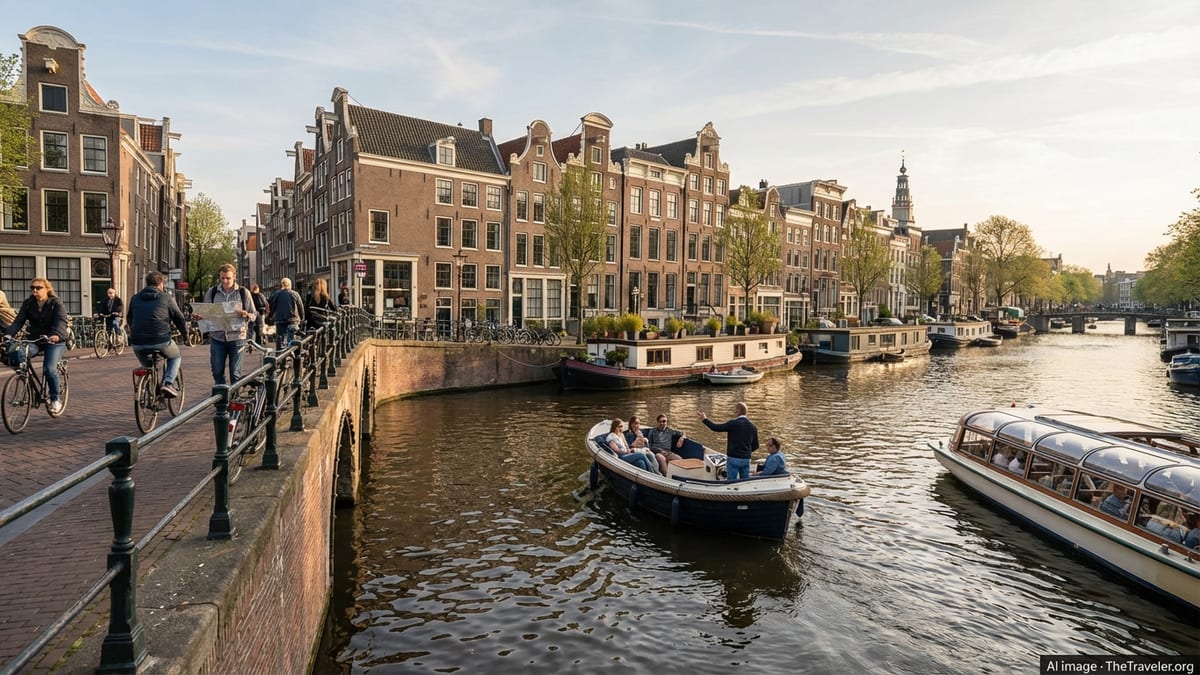
A New Generation of Fully Electric River Vessels
Across the Netherlands, shipyards and operators are rapidly shifting from diesel-driven boats to fully electric vessels designed specifically for rivers and urban waterways. Recent launches include compact ferries, houseboats and waterbuses built around large battery packs and efficient hull designs, allowing them to operate for a full working day on electricity before taking fast charges during brief stops. Publicly available information shows that Dutch-built ferries such as the award-winning Gorinchem XII have become reference points in this transition, demonstrating that zero-emission river crossings can be scaled beyond pilot projects.
Industry coverage indicates that Dutch yards are now designing vessels as electric-first rather than retrofitting old hulls. Batteries are integrated deep into the structure for stability, and propulsion is delivered through azimuthing pods that can rotate for precise maneuvering in tight canals and busy river junctions. This approach reduces noise and vibration for passengers while eliminating local air pollution, a key benefit in densely populated delta cities.
For river travelers, the shift is beginning to change the onboard experience. Operators describe quieter journeys with less exhaust smell and smoother acceleration, which is particularly noticeable on short commuter crossings and sightseeing trips through historic canal districts. As more routes adopt electric ferries, passengers are likely to see emissions fall without having to change their travel habits, reinforcing rivers as a low-impact alternative to road congestion.
These developments position the Netherlands as a leading testbed for electric inland shipping technology, with solutions that can be exported to other river systems across Europe. The combination of active shipyards, strong policy support and dense networks of short routes creates ideal conditions for fast experimentation and deployment.
Swappable Battery Containers Could Redefine Long-Distance River Shipping
While electric ferries solve short urban legs, longer river and sea-river routes pose a tougher challenge because of the energy required to move heavy cargo over hundreds of kilometers. A Dutch-led project backed by European funding is addressing this by treating energy as modular cargo. According to recent industry reports, the eSeaRiverBarge concept developed by Tharsis Ship Management will use standardized ISO battery containers that can be craned on and off a vessel just like regular freight.
These barges are being designed as zero-emission container ships for the busy corridor between the Netherlands and the United Kingdom, with dedicated slots in the bow and stern for up to 16 energy containers. At dedicated terminals, depleted batteries can be swapped for fully charged units within a port call, allowing the ship to continue its voyage without long charging delays. The model is described as Energy and Charging as a Service, shifting investment in batteries and charging infrastructure away from individual shipowners and into specialized providers.
If successful, this modular approach could change how energy is planned along European rivers. Instead of relying on high-capacity charging points at every inland port, a relatively small network of charging hubs could supply mobile energy blocks that follow trade flows. For operators, this promises predictable schedules and the ability to run zero-emission services on routes that previously seemed too long for batteries alone.
For travelers, the impact may be less visible but equally important. Many river cruise ships share waterways with container barges and coastal feeders; reducing emissions from freight traffic improves air quality and reduces noise along riverbanks where people live, cycle and stroll. In the longer term, a standardized battery container ecosystem could also support passenger vessels, enabling emission-free itineraries that stretch far beyond a single day’s battery range.
Electric Waterbuses and Taxis Turn Rivers Into Urban Transit Corridors
In Dutch cities, rivers and estuaries are increasingly treated as extensions of the public transport network. New all-electric waterbuses and water taxis are being introduced on routes where diesel engines once dominated, providing zero-emission alternatives for commuters and visitors. Recent announcements from Damen Shipyards highlight a fully electric Waterbus 2907 model optimized for urban operations, developed with Dutch research partners to deliver low wake and high efficiency on busy routes.
Publicly available information shows that this new waterbus platform is supported by a national sustainable shipbuilding subsidy, reflecting a broader push from the Netherlands to decarbonize daily mobility on the water. The vessel’s hull has been refined in collaboration with hydrodynamics institutes to cut energy use, while large battery packs allow frequent trips without the fumes or vibration associated with conventional engines.
Rotterdam, with its extensive network of fast water taxis, is moving in a similar direction. Technical documentation from propulsion suppliers describes new electric air-supported hull designs and integrated powertrains intended for the city’s taxi fleet, which aims to operate with a fully zero-emission lineup by 2030. These boats combine high speed with lower energy consumption, opening the door to fast yet climate-friendly crossings that compete with car journeys in travel time.
For visitors, these innovations turn the river into a clean, efficient travel option rather than just a scenic backdrop. As electric waterbuses connect neighborhoods and park-and-ride hubs, and as zero-emission taxis become more common, it becomes easier to plan a city break that relies on trains, trams and boats without needing a car at all.
Autonomous Survey Craft and Smart Infrastructure Make Rivers More Efficient
Behind the scenes, the Netherlands is also modernizing the digital infrastructure that keeps its complex river network running. Rijkswaterstaat, the national water authority, has introduced a new fully electric uncrewed surface vessel known as REMO 1 to survey rivers and canals. According to official project descriptions, the craft can be remotely operated or run autonomously, using advanced sensors to measure current speeds, water levels and flow volumes with high precision.
The data collected by this vessel supports safer navigation and more efficient use of waterway capacity. By continuously mapping how water moves through channels and around bottlenecks, planners can optimize traffic management for both freight and passenger ships, potentially reducing delays and avoiding congestion. Because REMO 1 is fully electric, these essential measurements can be carried out without adding emissions to sensitive aquatic environments.
The move toward intelligent, low-impact support vessels fits into a wider European effort to make inland waterways smarter. Research projects are exploring risk-aware navigation algorithms for autonomous craft and digital tools to help captains choose energy-efficient routes based on currents and expected traffic. As these systems mature, river travel could become not only cleaner but also faster and more predictable, an important consideration for operators planning timetabled passenger services.
For travelers, the benefits may manifest as more reliable departure times, fewer disruptions during high water or drought periods and better integration between river services and trains or buses. A more data-driven river network also makes it easier to schedule charging windows for electric vessels, ensuring that green technology can scale without sacrificing punctuality.
Why the Dutch Model Matters for River Travel Worldwide
The Netherlands has long relied on rivers and canals as economic lifelines, and that history is shaping its approach to decarbonization. By combining fully electric ferries, modular battery barges, smart waterbuses and autonomous support vessels, the country is testing a complete ecosystem rather than isolated prototypes. This integrated strategy may explain why Dutch projects are attracting attention from shipowners, technology firms and policymakers across Europe.
Reports from industry associations emphasize that inland waterway transport is expected to absorb a growing share of freight and passenger demand as countries seek to cut road emissions. The Dutch experience shows how targeted subsidies, open collaboration between shipyards and research institutes, and a willingness to experiment on real routes can accelerate change. Instead of waiting for a single miracle fuel, the sector is advancing through a series of complementary innovations that are ready for deployment today.
For global river destinations, from the Danube to the Mississippi, the Dutch model offers a blueprint: start with short electric routes where batteries already work, add modular power solutions for longer distances, invest in digital tools that maximize efficiency and treat waterways as central components of sustainable mobility. As more of these ideas move from Dutch rivers to international fleets, travelers may find that the clean, quiet journeys now emerging in the Low Countries become the new normal on rivers worldwide.