

More news on this day
Flight delays are often described as a simple inconvenience, but new analyses of on-time performance and passenger rights in 2024 and 2025 suggest the real price for travelers increasingly includes sizable out-of-pocket costs as well as lost time.
Get the latest news straight to your inbox!
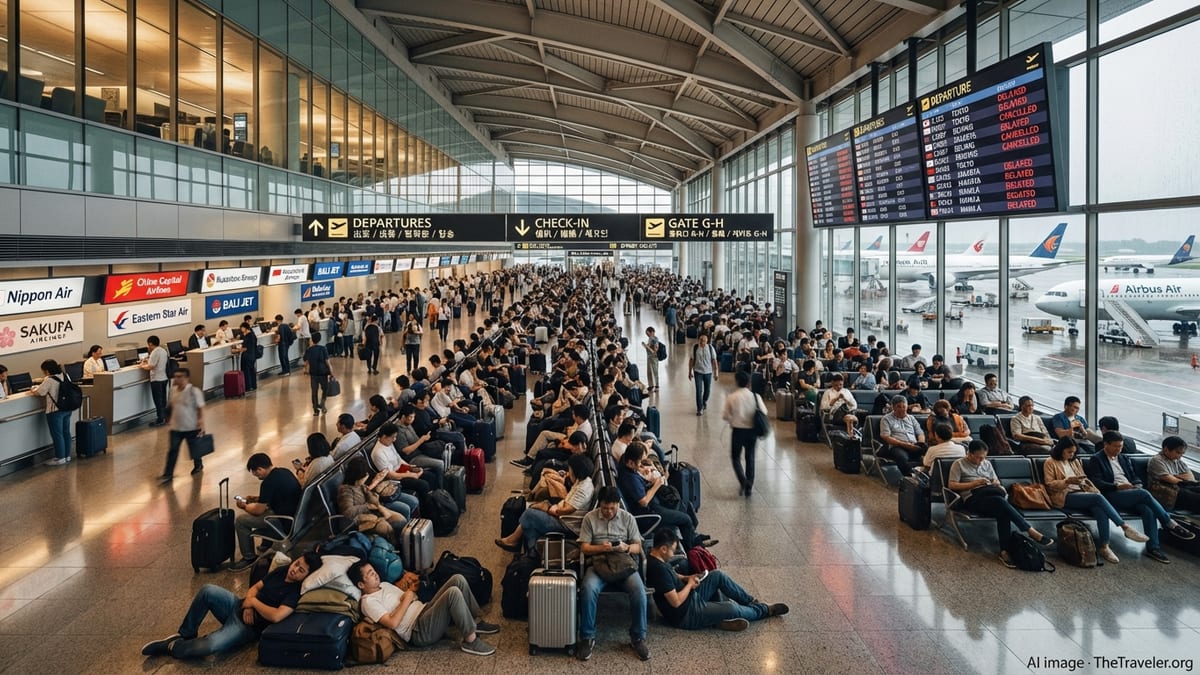
Delays Are Common, And The Minutes Add Up To Real Money
Recent industry data indicates that in the United States, roughly one in five domestic flights arrives more than 15 minutes late, with delayed flights typically running close to an hour behind schedule when a disruption occurs. Reports summarizing federal on-time performance data show average arrival delays of around 50 to 55 minutes on late flights in 2023 and 2024, and some of the busiest routes, such as New York to Los Angeles, have seen more than a third of services arrive late with delays approaching 70 minutes on average.
Those minutes carry a measurable economic value. Earlier research prepared for the Federal Aviation Administration estimated that flight delays cost passengers well over 10 billion dollars annually in lost time alone, based on the value of travelers’ hours and the disruption to work and personal plans. Subsequent industry studies that factored in missed connections, overnight stays and abandoned trips concluded that total economic losses to passengers and the wider economy ran into several tens of billions of dollars per year.
Travelers are now feeling those costs more directly. With air travel demand back at or above pre-pandemic levels on many routes and airport congestion still common, even a modest schedule disruption can mean lost prepaid hotel nights, forfeited event tickets or additional childcare and transport expenses at home. For a family or small business traveler paying out of pocket, a single severely delayed or canceled flight can turn a reasonably priced trip into a far more expensive undertaking.
From Airport Snacks To Lost Nights: Out-Of-Pocket Costs Climb Quickly
For individual travelers, the immediate financial hit from a long delay usually begins at the terminal. A disruption of three hours or more often means extra meals and drinks at airport prices, along with parking overages and rebooking ground transport at the other end. Consumer advice materials from airlines and insurers commonly estimate that meal and incidental expenses during a severe delay can reach 40 to 80 dollars per person over the course of a day, even before accommodation is involved.
If a missed connection or late-night delay forces an overnight stay, the bill increases sharply. Standard airport hotels in major hubs frequently run 150 dollars a night or more, and that does not include ride-hailing or taxi fares, which can easily add another 30 to 60 dollars each way depending on distance and surge pricing. Unless the airline agrees to cover those costs, a traveler can spend 200 to 300 dollars or more simply to wait for the next available flight.
The financial impact compounds when a delay causes knock-on losses. For leisure trips, late arrival can wipe out nonrefundable hotel nights or prebooked excursions, with many popular attractions and tour operators enforcing strict cancellation windows. For business travelers and independent professionals, missing a client meeting or event can mean lost revenue that far exceeds the price of the ticket. Studies examining the wider economic burden of flight disruptions have suggested that these indirect costs, including lost productivity and foregone trips, can rival or exceed the direct outlays on hotels and meals.
Passenger Rights: Why Geography Determines Your Payout
How much of that cost travelers can recover depends heavily on where they are flying and why the delay occurred. In Europe, a long-standing regulation commonly known as EU261 sets fixed cash compensation for significant delays and cancellations on many flights departing from or arriving in the European Union, in addition to requiring airlines to provide meals and hotel accommodation in certain circumstances. Consumer advocates point out that, when enforced, this framework can shift hundreds of euros per passenger back to travelers during major disruptions.
By contrast, consumer protections in the United States rely more on each airline’s individual policies than on statutory cash compensation. A Department of Transportation initiative launched during the first half of the 2020s led carriers to publish detailed customer service commitments, and recent federal documents note that the ten largest U.S. airlines now generally promise meal vouchers, free rebooking and, in many cases, hotel rooms and ground transportation when delays are within the airline’s control. However, these commitments are voluntary, differ by carrier and do not usually apply when disruptions stem from weather, air traffic control restrictions or aircraft manufacturer recalls.
Regulatory debates have underscored how much money is at stake. Analyses prepared for proposed rules on mandatory compensation in the United States estimated that new requirements to reimburse passenger expenses and pay set amounts for long delays could cost airlines several billion dollars annually. Industry submissions argued that such policies might lead to higher fares or more preemptive cancellations, while consumer groups contended that predictable payouts would better reflect the true cost travelers already bear when flights fail to operate as scheduled.
Government Disruptions And System Failures Magnify The Financial Toll
Large-scale disruptions highlight how quickly costs escalate when thousands of flights run late at once. During the extended federal government shutdown in 2025, for example, published analyses from economic researchers and aviation data firms linked reduced air traffic control capacity to widespread delays and cancellations across major U.S. hubs. Estimates using passenger time values suggested that the additional hours spent in airports and on tarmacs translated into hundreds of millions of dollars in lost time and related expenses over the course of the shutdown.
System outages and airline-specific failures also have sizeable financial implications. When a major U.S. carrier experienced a prolonged operations meltdown in 2024, public financial disclosures indicated that the event cost the airline hundreds of millions of dollars in lost revenue and compensation payments. Consumer organizations noted that these headline numbers did not fully capture what passengers themselves spent on alternative flights, hotels and basic necessities while stranded, especially when disruption stretched over several days and affected multiple legs of a journey.
These episodes have prompted renewed attention from regulators and policymakers. Research from institutions such as the Federal Reserve has used shutdown-related disruptions to estimate the value travelers place on reliable aviation services, concluding that the welfare loss from flight delays extends beyond immediate ticket refunds. For individual travelers, the lesson is that the financial risk associated with even infrequent but severe disruptions may justify additional planning or protection, particularly for complex itineraries or trips linked to important events.
How Travelers Can Reduce The Money They Lose To Delays
While passengers cannot control weather systems or air traffic bottlenecks, they can take steps to limit how much a delay costs them financially. Consumer advocates recommend building in buffer time for connections, especially when traveling through airports known for congestion or on routes with historically high delay rates. Publicly available statistics ranking airports and airlines by on-time performance show significant variation, suggesting that choosing carriers and itineraries with stronger track records can reduce the likelihood of costly disruptions.
Travel insurance products and credit card protections are another key line of defense. Policy documents from major insurers describe trip delay coverage that reimburses reasonable expenses for meals, hotels and transport once a delay exceeds a specified threshold, sometimes as low as three or six hours, up to a daily or per-trip limit. Some premium credit cards automatically include similar benefits for tickets purchased with the card, effectively shifting part of the financial risk of delays away from the traveler.
Finally, knowing and asserting existing rights can make a substantial difference. Guidance on passenger rights published by regulators, consumer groups and airports outlines when travelers may be entitled to meal vouchers, hotel accommodation or cash compensation, particularly on flights covered by European-style regulations. Even in jurisdictions where protections are weaker, asking airlines to apply their written customer service commitments and keeping detailed records of receipts and communications improves the chances of reimbursement.