

Delaware may be one of the smallest states in the United States, but getting around it is not always as simple as it looks on the map. Public transit is decent in the north, driving is essential in many coastal areas, and there are a few useful rail and ferry links that can reshape how you plan a trip. Whether you are visiting for the beaches, tax-free shopping, or a business stop in Wilmington, understanding how transportation works in Delaware will help you make the most of your time.
Understanding Delaware’s Geography and Travel Patterns
For a state you can cross north to south in about two hours by car, Delaware still has distinct travel patterns that matter when you are planning how to get around. The northern third of the state, focused on Wilmington and Newark, is densely populated, closely tied to Philadelphia, and has the best mix of train, bus, and walkable neighborhoods. Central Delaware, around Dover, is less transit dense and largely car oriented, with a few regional bus routes connecting towns and military facilities. Farther south in Sussex County, you will find beach towns, farmland, and resort communities where seasonal traffic can be intense and driving or using local shuttles is often the only practical option.
Because Delaware’s economy and commuting patterns are intertwined with neighboring states, you will constantly encounter out-of-state options when you plan travel. Amtrak and SEPTA regional rail tie Wilmington and Newark to Philadelphia, New York, Baltimore, and Washington. The Cape May Lewes Ferry provides a scenic link from the beaches to southern New Jersey, while highways funnel through travelers heading elsewhere on the East Coast. As a visitor, you will often mix local options like DART First State buses with regional providers such as Amtrak, SEPTA, or the ferry for a complete itinerary.
Travel behavior also shifts by season. Summer brings heavy car traffic to the beaches and more frequent resort shuttle services. Off season, schedules can thin out and some routes operate fewer trips, particularly on weekends and holidays. When you are planning, it is wise to think in terms of corridors rather than just city names: the I 95 corridor near Wilmington behaves like a big city commute zone, while the Route 1 coastal highway from Milford to Fenwick Island is built around recreation and seasonal demand.
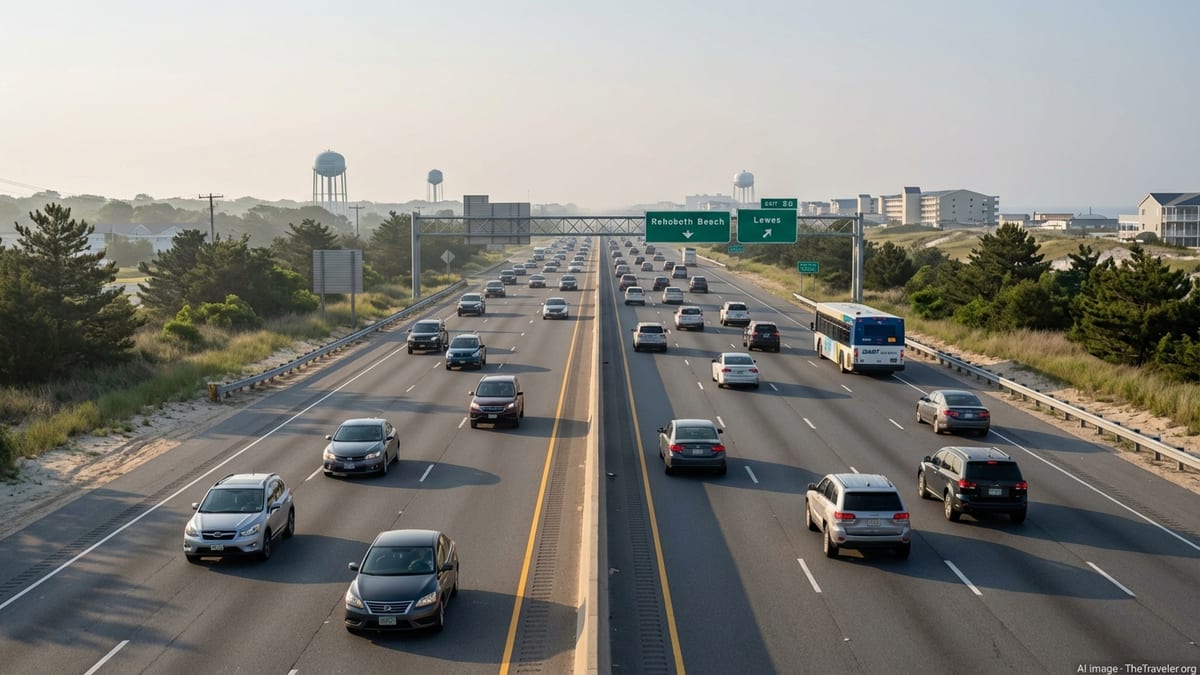
Finally, distances between key destinations are short but can be deceptive once congestion appears. Driving from Wilmington to Rehoboth Beach may look quick on paper, but summer weekends can transform the last stretch of Route 1 into a slow crawl. Building flexibility into your schedule, and having a backup option such as a different departure time or a park and ride shuttle, will make your Delaware trip much smoother.
Driving in Delaware: Highways, Parking, and Practical Tips
Driving is the most common way to get around Delaware, especially outside the Wilmington area and at the beaches. Two main north south arteries shape most road travel. Interstate 95 crosses only the northern tip of the state, connecting Wilmington with Baltimore and Philadelphia. South of the I 95 corridor, Delaware Route 1 and U.S. Route 13 carry traffic through Dover and down to the beach region. Route 1 operates partly as a limited access toll road in northern and central Delaware before becoming a busy commercial coastal highway farther south.
Road conditions are generally good, and distances between major points are short, but traffic can spike. Commuter congestion is common near Wilmington on I 95 during weekday rush hours. In summer, weekend backups on Route 1 toward Rehoboth Beach and Dewey Beach are routine, particularly on Friday evenings and Sunday afternoons. When possible, time your departures outside peak hours or travel midweek if you are heading to the shore. Navigation apps can help you reroute via parallel highways like U.S. 13 or local roads, though those alternatives may pass directly through towns with lower speed limits and traffic signals.
Parking varies widely by area. In Wilmington and Newark, you will find municipal garages, on street metered parking, and private lots near office districts, train stations, and college campuses. At the beaches, public parking is tightly regulated, especially in the core of Rehoboth Beach and Lewes, and seasonal permits, meters, or paid lots are the norm. Many hotels and vacation rentals include a limited number of parking spaces, so it is worth confirming details in advance. Rural attractions, state parks, and outlet centers typically have large surface lots that are free or low cost, though lots can still fill up at popular times.
Delaware’s driving rules will feel familiar if you have driven elsewhere in the United States. Seat belts are required, and state and local police actively enforce speeding, impaired driving, and handheld cellphone bans while driving. Winter weather can occasionally affect roads in the north, but snow and ice disruptions are usually brief compared with more northern states. In summer, heavy rain and coastal storms can reduce visibility or cause localized flooding on low lying roads; checking conditions before setting out is a sensible precaution. Renting a car is straightforward at major airports in nearby Philadelphia and Baltimore or at regional locations around Wilmington and Dover.
Using DART First State Buses and Local Transit
DART First State is Delaware’s statewide bus and paratransit system, and it is the backbone of public transportation within the state. Routes radiate from hubs in Wilmington, Newark, Dover, and the beach region, connecting neighborhoods, park and ride lots, shopping centers, and major employers. Riders pay a zone based fare structure that is broadly aligned with the state’s three counties, with a base adult cash fare per zone and reduced pricing for seniors, riders with disabilities, and qualifying students. Passes can be purchased via a dedicated mobile app, on board, and through sales outlets across the state.
In New Castle County, which includes Wilmington and Newark, DART offers the most frequent service, including urban routes, commuter lines to park and ride lots, and connections to regional rail at Wilmington and Newark stations. This is the part of Delaware where you can realistically plan to travel without a car, especially if you are staying near the urban core or along major bus corridors. Timetables typically feature peak period service tailored to commuters, with somewhat lighter off peak and weekend operations, so checking current schedules before you rely on a specific route is important.
Central and southern Delaware have more limited but still useful DART coverage. Dover routes connect the downtown area, Dover Air Force Base, state government offices, and key commercial districts. In Sussex County, DART operates a network of routes serving Georgetown, Seaford, Milford, and the coastal towns. During the summer, resort oriented services, sometimes branded as beach bus or similar seasonal routes, run frequently along the Route 1 corridor and between park and ride lots and the shorefront. These seasonal routes are particularly valuable for avoiding beach traffic and the challenge of finding and paying for parking near the water.
For visitors with mobility impairments, DART offers paratransit services that provide door to door or curb to curb transportation for eligible riders within a defined distance of fixed routes. Reservations are required and trip availability varies by area and time of day. If you expect to make frequent use of buses, buying a day pass or multi day pass can be more economical than paying individual fares for each ride. Schedules, route maps, and mobile tools continue to evolve, so it is worth reviewing the latest information shortly before your trip, rather than relying on older printed guides.
Rail and Intercity Connections: Amtrak, SEPTA, and Beyond
Despite its small size, Delaware benefits from excellent long distance and regional rail access along the Northeast Corridor. Wilmington Station is a key stop for multiple Amtrak services running between Boston, New York, Philadelphia, Baltimore, and Washington. Many visitors will arrive here from larger cities, then transfer to local DART buses, taxis, or rideshares to reach final destinations in Wilmington or the surrounding suburbs. Trains can be an efficient way to avoid driving into dense urban traffic and to bypass tolls and parking expenses along I 95.
SEPTA, the regional transit agency centered in Philadelphia, extends its Wilmington Newark Line into northern Delaware. Commuter trains stop in Claymont, Wilmington, Churchmans Crossing, and Newark, offering a practical option for day trips between Delaware and Philadelphia. Travel times from central Philadelphia to Wilmington are typically under an hour, and many trains accept regional passes or fare products that integrate with local buses on the Pennsylvania side. This line also provides a backup option if highway traffic between the two cities becomes unpredictable, particularly during rush hour or bad weather.
Future expansions of regional rail into Delaware are under active discussion, including proposals from Maryland to extend MARC commuter trains north to Wilmington. These projects are multi year efforts and subject to funding and negotiation, so visitors should treat them as long term improvements rather than guaranteed options in the near term. For now, Amtrak and SEPTA remain the main rail providers, and their schedules and fares can change periodically, especially as agencies respond to ridership trends, infrastructure projects, and budget needs.
Beyond rail, intercity bus companies link Delaware to nearby metros, though most services operate only from select points such as Wilmington or Newark. Riders may find through services to cities like New York or Washington on private carriers that use highway rest stops or modest curbside locations, so it is important to verify exact pick up and drop off points before traveling. As with trains, booking ahead usually offers the best combination of price and seat availability.
Coastal Travel and the Cape May Lewes Ferry
Delaware’s coastline is a major draw, and the way you move along and beyond it can shape your entire trip. The central coastal hub is the Lewes Rehoboth area, where Route 1, local streets, and resort shuttles come together. In peak summer, car congestion, limited parking, and slow moving traffic are common. Many visitors choose to park at inland park and ride lots and then use bus or shuttle services to reach the boardwalks and beaches. This approach reduces the stress of driving through crowded resort districts and can save money on hourly parking fees.
One of the most distinctive pieces of Delaware’s coastal transportation network is the Cape May Lewes Ferry, which offers regular vehicle and passenger crossings across the mouth of Delaware Bay between Lewes and Cape May in New Jersey. The ferry operates year round, with more frequent sailings in the spring and summer and a reduced schedule in winter. Passengers can board on foot, with bikes, or with vehicles ranging from standard cars to recreational vehicles, with pricing that varies by vehicle size, season, and passenger type. Reservations are strongly recommended for vehicles, especially during holidays, weekends, and peak vacation periods.
The ferry experience itself can double as a scenic mini cruise, turning what would be a long highway loop through the Delaware Memorial Bridge and southern New Jersey into a more relaxing crossing. The terminals offer amenities such as indoor seating, dining options, and outdoor spaces to watch ships and wildlife. Boarding procedures are more like a small ship than a typical transit service, with recommended arrival times well before departure and security screening for both vehicles and foot passengers. Construction or maintenance projects at terminals, particularly on the New Jersey side, can occasionally affect access routes or parking layouts, so checking current advisories before you travel is prudent.
Within the beach region, local transportation shifts seasonally. In summer, expect more frequent shuttles linking outlying parking areas, shopping centers, and beaches, often operated in partnership with DART or local municipalities. Some towns are very walkable once you are parked, but sidewalks may be crowded and crossing multilane highways like Route 1 requires care. Outside peak season, traffic is lighter and parking easier, but some shuttle services scale back or pause entirely, which means you may rely more heavily on your own vehicle or on regional buses that run less frequently.
Walking, Cycling, and Micro Mobility in Delaware
Delaware can be surprisingly friendly to pedestrians and cyclists in certain areas, but the quality of infrastructure varies widely from neighborhood to neighborhood. Downtown Wilmington, the Riverfront district, and parts of Newark and Dover have walkable cores where you can comfortably explore on foot. Sidewalks are common, crossings are marked, and attractions cluster close together. In smaller towns such as Lewes and historic districts like New Castle, compact street grids and traffic calming measures make walking especially pleasant, though you still need to be cautious around busy state routes and intersections.
For cyclists, the state has invested in a mix of multi use trails, signed bike routes, and on street bike lanes. Popular paths include greenways along watercourses, converted rail corridors, and coastal routes that cater to recreational riders and commuters. In the beach region, bikes are an excellent way to avoid traffic and parking hassles, particularly early in the day or outside of the hottest hours. Many hotels and vacation rentals offer bike racks or even rentals on site, and stand alone rental shops are common in resort towns. Helmets are strongly recommended for all riders, and riders should use front and rear lights in low light conditions.
Bike share services are limited compared with larger cities, but small scale programs may operate in select communities or university campuses. E bikes and scooters appear in some areas, though regulations differ by locality and are evolving as officials balance convenience with safety and sidewalk access concerns. Before counting on an app based rental for daily transportation, check whether services are currently active in the area you plan to visit, and understand where riding and parking are permitted to avoid fines or impoundment of equipment.
Walking and cycling also play a role in connecting other modes. At Wilmington Station and other transit hubs, you will often arrive by train or bus and finish the last stretch on foot. At the beaches, visitors may drive or take a shuttle to a central parking area, then continue by bike or on foot along trails and boardwalks. When planning, consider realistic distances and weather. Summer heat and humidity can make long walks uncomfortable, while winter winds along the coast can be biting. Dressing for the conditions and carrying water, sunscreen, and reflective gear when needed will help keep active travel safe and enjoyable.
Taxis, Rideshares, and Accessible Transportation
Delaware does not have the dense taxi ranks found in major world cities, but you will still find traditional cabs at key nodes such as Wilmington Station, major hotels, and airports in neighboring states. For many visitors, app based rideshare services are the most convenient on demand option. Services such as Uber and Lyft generally operate across the state, with the strongest coverage in and around Wilmington, Newark, Dover, and the more popular coastal towns. In rural areas, wait times can be longer and availability spottier, particularly late at night or early in the morning.
Using rideshares is particularly practical when you are combining modes. For example, you may take an Amtrak or SEPTA train into Wilmington, then hail a rideshare to a suburb or corporate campus not directly served by frequent buses. At the beaches, a short rideshare trip might bridge the gap between a park and ride lot served by DART and a rental home on a residential side street. When using rideshare services, it is wise to check approximate fares and travel times in advance, especially if you are traveling during large events, summer weekends, or severe weather, when surge pricing and delays may occur.
Accessible transportation is an important consideration for many travelers. DART’s paratransit service provides eligible riders with scheduled, door to door trips using accessible vehicles. Reservations, advance registration, and eligibility screening are typically required, so visitors who rely on such services should plan well ahead of their trip. Some taxi and rideshare vehicles are equipped to handle wheelchairs or other mobility devices, though availability is limited and may require specific requests through apps or dispatch lines. Major train stations such as Wilmington provide accessible platforms, elevators, and assistance services, and the Cape May Lewes Ferry terminals and vessels are designed to accommodate passengers with mobility challenges.
Communication can be as important as infrastructure. Calling ahead to confirm that vehicles, hotel shuttles, or tour buses can accommodate your particular needs will reduce surprises on the day of travel. Additionally, riders who are deaf, hard of hearing, or visually impaired may find that app based trip planning and real time arrival tools improve independence, particularly when navigating unfamiliar bus networks or complex stations.
Planning, Budgeting, and Staying Flexible
Because Delaware’s transportation network combines local, regional, and interstate services, advance planning will save both time and money. Start by mapping your primary destinations, then decide which legs are best handled by train, bus, car, or ferry. For instance, you might ride Amtrak to Wilmington, rent a car there for a few days at the beach, then return via the Cape May Lewes Ferry and continue by road through New Jersey. Or you could rely on SEPTA and DART to move between Philadelphia, Wilmington, and Newark without ever renting a vehicle.
Budgeting for transportation in Delaware requires balancing fixed costs and flexible savings. Renting a car comes with fuel, insurance, parking, and tolls, while buses and trains involve individual fares or passes. DART’s passes can significantly reduce per trip costs if you are riding multiple times per day, and regional rail passes on SEPTA may likewise be economical for repeated trips into Philadelphia. The ferry typically costs more than simply driving the long way by highway, but many travelers value the time on board as part of the vacation experience and consider the premium worth paying. When in doubt, compare approximate totals, not just individual tickets.
Staying flexible is critical, particularly in summer coastal season and during major events such as festivals, sports games, or holiday weekends. Traffic incidents on I 95, construction near terminals, or weather related delays on ferries can disrupt carefully timed plans. Having a backup idea such as a later departure, an alternate route, or a different mode can turn a potential travel headache into a minor inconvenience. Checking official service alerts from transit agencies, as well as weather forecasts, shortly before you depart will help you stay ahead of disruptions.
Finally, keep expectations realistic. Delaware is not a large metropolis with trains every few minutes, nor is it an isolated rural state without options. It sits somewhere in between, with solid transit in the north, car centric travel in many suburbs and resort areas, and a few unique links such as the ferry that can enrich your itinerary. Treat transportation not just as a way to get from point A to point B, but as part of the experience of exploring the First State.
The Takeaway
Navigating Delaware successfully starts with recognizing how varied the state is in such a compact footprint. Wilmington and Newark feel like extensions of the broader Northeast Corridor, where trains, buses, and walkable neighborhoods make car free travel realistic. Dover and the rural interior lean more heavily on driving, while the beach communities along Route 1 operate on a seasonal rhythm shaped by traffic, parking rules, and resort shuttles. Layered on top of this is the Cape May Lewes Ferry, which offers a distinctive alternative to highway driving and a memorable experience in its own right.
For most visitors, the smartest strategy is a hybrid one. Use rail or intercity buses to reach Wilmington from major cities, switch to DART or rideshares for local trips, rent a car if you are spending serious time in central or southern Delaware, and consider the ferry when it fits your route and budget. Walking, cycling, and occasional micro mobility rentals can fill in the gaps, particularly in historic towns and resort areas. By planning ahead, keeping an eye on seasonal schedules, and staying flexible when conditions change, you can move around Delaware efficiently and enjoy the journey as much as the destination.
FAQ
Q1. Do I need a car to visit Delaware?
It depends on where you are going. In Wilmington and Newark, you can rely on trains, buses, and walking. For Dover, small towns, and many beach areas, having a car or using seasonal shuttles is much more practical.
Q2. How can I travel between Philadelphia and Wilmington without driving?
You can use Amtrak or SEPTA regional rail on the Wilmington Newark Line, which connects central Philadelphia with Wilmington and Newark, then transfer to local buses, taxis, or rideshares.
Q3. Is public transportation good at Delaware’s beaches?
Public transportation at the beaches is strongest in summer, when DART and local partners run frequent resort routes along Route 1 and between park and ride lots and the shore. Off season service is more limited but still covers key towns.
Q4. How far in advance should I book the Cape May Lewes Ferry?
For vehicles, it is wise to reserve at least several days ahead for weekends and holidays in peak season, and earlier for especially busy dates. Foot passengers and cyclists often have more flexibility but should still check availability.
Q5. Are DART First State buses tourist friendly?
Yes. Routes are designed primarily for residents and commuters, but they also serve many visitor destinations like downtown Wilmington, Dover attractions, and coastal towns. Route maps, apps, and driver assistance make them approachable for newcomers.
Q6. Is it easy to get around Wilmington without a car?
Central Wilmington is walkable, and you can supplement walking with DART buses, SEPTA regional rail, Amtrak, taxis, and rideshares. If you are staying near the Riverfront or downtown, many attractions are a short walk or quick ride away.
Q7. What is the best way to reach Rehoboth Beach from Wilmington?
The most common option is to drive via Route 1, allowing around two hours in light traffic and more during peak summer weekends. Seasonal DART routes may also provide a bus connection via park and ride lots for those who prefer not to drive the whole way.
Q8. Are there good bike routes in Delaware?
Yes, particularly in and around Wilmington, Newark, and the coastal region. Multi use trails, signed bike routes, and local streets in historic towns and resorts make cycling a pleasant option for short to moderate trips.
Q9. How accessible is Delaware’s transportation for travelers with disabilities?
DART offers paratransit services, major train stations and ferries are designed with accessibility in mind, and some taxis and rideshares can handle mobility devices. However, availability varies, so advance planning and confirmation are important.
Q10. When is traffic in Delaware at its worst?
The heaviest traffic usually occurs on I 95 near Wilmington during weekday rush hours and on Route 1 to and from the beaches on summer weekends and holidays. Traveling at off peak times can significantly reduce delays.