

Japan’s public transportation network is one of the most extensive and efficient in the world, but for first time visitors it can also feel overwhelming. With multiple rail companies, dense subway maps, highway buses, and a maze of tickets and passes, it is easy to wonder where to start. This guide breaks down the essentials of trains, metro, and buses in clear language, using the latest information, so you can move confidently from arrival lounge to remote onsen town.
Understanding Japan’s Rail Network
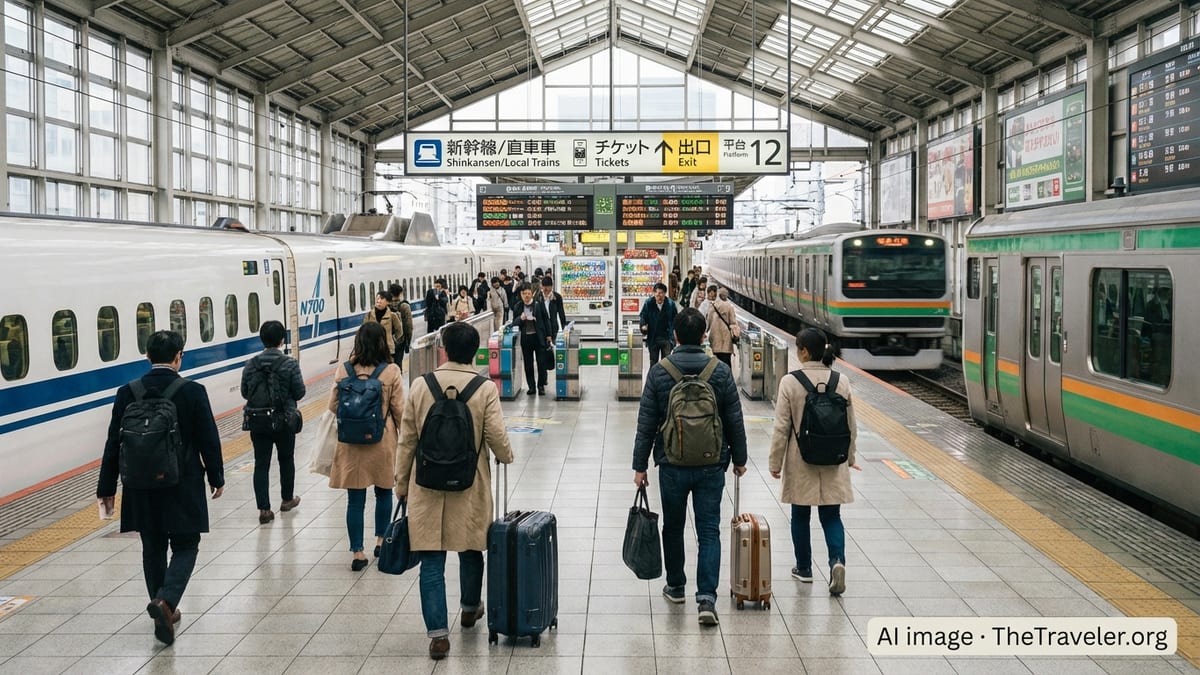
Japan’s passenger rail network is a patchwork of national, regional, and private operators that function together more smoothly than they look on paper. The Japan Railways Group, often shortened to JR, covers most long distance and many local routes, including the Shinkansen high speed lines and key urban loops such as Tokyo’s Yamanote Line and Osaka’s Osaka Loop Line. Alongside JR, a dense web of private railway companies operates in major metropolitan areas and connects cities with suburbs and regional destinations, especially around Tokyo, Osaka, and Nagoya.
For travelers, the most visible difference between JR and private railways is where your ticket or pass is valid. A JR ticket will not automatically cover you once you pass into the gates of a private line such as Tokyu, Keio, Hankyu, or Kintetsu, and vice versa. Station names can be similar or even identical across operators, so paying attention to the company logo on signs and platforms matters as much as the name of the station itself. Large urban hubs like Shinjuku, Ueno, or Osaka often host multiple companies inside one sprawling complex, which can be confusing on first encounter but makes transfers very efficient once you understand the layout.
Despite the array of operators, Japanese trains are known for punctuality, clear signage, and frequent departures. In Tokyo and Osaka, it is common for local and rapid services to run every few minutes during the day, with detailed electronic displays on platforms showing the type of train, destination, and stopping pattern. Rural lines can be infrequent, sometimes just one train per hour, so checking schedules in advance becomes more important as you move away from big cities.
Timetables and route planning are made easier by multilingual journey planning apps, which incorporate JR, private rail, subways, and buses into a single search. These tools have largely replaced printed timetables for visitors, and they reflect recent fare adjustments and timetable changes, including upcoming JR East fare increases approved for March 2026. Using an app while you travel helps you react to delays, make smooth transfers, and select routes that balance speed, cost, and simplicity.
Riding the Shinkansen and Long Distance Trains
The Shinkansen, Japan’s bullet train network, is the backbone of long distance travel between major regions such as Tokyo, Osaka, Hiroshima, Fukuoka, and Hokkaido. Trains run at high speed on dedicated tracks, with a reputation for punctuality measured in seconds and a safety record that is often cited as among the best in the world. For most visitors the Shinkansen is the fastest and most comfortable way to cross long distances, with reserved and non reserved seating, clean toilets, luggage racks, and food trolleys or vending machines on board.
There are several Shinkansen service types on each line, ranging from all stop trains to limited stop express services. On the Tokaido Shinkansen between Tokyo and Osaka, for example, Kodama is the slower all stop train, while Hikari and Nozomi stop at fewer stations and complete the journey more quickly. Some premium services, such as Nozomi and Mizuho, are not fully covered by nationwide rail passes, or require supplements, so it is important to check the conditions of your ticket. Recent fare revisions on some regional Shinkansen lines and selected passes, including increases introduced from 2023 onward and incremental adjustments announced for 2025, mean that advance research is essential if you are traveling on a tight budget.
Seat reservations are highly recommended during holiday periods, peak commuting hours, and when you are traveling with luggage or a group. You can reserve seats at ticket counters, at multilingual ticket machines, or via online booking systems tied to specific operators. Green Car, the first class equivalent, offers wider seats and quieter cars for a higher fare. For most travelers an ordinary reserved seat offers a good balance between comfort and cost, but on heavily booked routes during festivals or cherry blossom season, securing any seat can justify booking as early as reservation windows allow.
Beyond the Shinkansen, limited express trains and rapid services connect secondary cities and tourist regions without requiring high speed lines. These trains are especially important in areas such as Hokkaido, Tohoku, the Japan Alps, Shikoku, and Kyushu. They usually offer reserved and unreserved cars, luggage space, and onboard facilities, though they may be less frequent than Shinkansen services. With the cost of nationwide rail passes now substantially higher than a few years ago, many travelers are choosing a mix of regular tickets, regional passes, and occasional highway buses instead of a single all inclusive pass.
City Subways and Metros: Navigating Tokyo, Osaka, and Beyond
Japan’s major cities are crisscrossed by extensive subway and metro systems that handle a large share of daily commuting and sightseeing traffic. Tokyo’s network is divided mainly between Tokyo Metro and the Toei Subway, together covering much of the central 23 wards and interlining with JR and private rail lines at key hubs. Osaka, Kyoto, Nagoya, Fukuoka, Sapporo, and several other cities have their own subway systems, each with distinctive line names and colors but broadly similar rules of use.
Subway fares are typically distance based, with starting fares slightly higher than some local surface trains but still affordable for short hops within city centers. Tokyo Metro, for example, sells a popular 24 hour ticket that provides unlimited rides on all its lines; this ticket increased in price to around 700 yen in March 2025 but remains good value if you plan several rides in a single day. Combined passes that cover both Tokyo Metro and Toei Subway, sometimes sold under the name Tokyo Subway Ticket, offer 24, 48, or 72 hour unlimited travel and are particularly useful for intensive city sightseeing.
Stations are well signposted with bilingual signage, numbered exits, and color coded line diagrams. Train announcements are typically given in Japanese and English in major metropolitan areas, and platform screens display the next trains with their destinations and whether they are local, rapid, or express. When planning routes, it is worth comparing a subway heavy itinerary with an option that uses JR urban lines such as the Yamanote Line in Tokyo or the Osaka Loop Line, as these can sometimes be quicker or cheaper depending on your origin and destination.
During peak rush hours, especially weekday mornings between roughly 7:30 and 9:30, subway trains in Tokyo and Osaka can become extremely crowded. Visitors who can avoid these times will generally enjoy a more comfortable ride. Some lines have women only cars during rush hours, indicated by signage on platforms and car doors. Air conditioning, automatic platform doors at busier stations, and clear safety markings are now standard across most metro systems, reflecting ongoing investment in accessibility and passenger comfort.
Local Trains and Rural Lines
While big city subways and bullet trains attract most attention, local trains and rural lines are often where visitors encounter some of Japan’s most memorable scenery and everyday life. These trains serve smaller towns, agricultural regions, and coastal areas, operating on schedules that may be sparse compared with urban lines. In some rural prefectures it is common to see trains only once or twice per hour outside peak periods, and a missed connection can mean a significant delay, so checking departure times in advance is vital.
Many rural lines are JR operated, but private and third sector railways also play a key role, especially in regions where passenger numbers are modest but the line remains important for local communities and tourism. Trains may be shorter, sometimes only one or two cars, and some stations can be unstaffed. In these cases, ticket purchase might involve using basic machines, buying a ticket in advance, or paying on board. Where IC card coverage is limited, paper tickets and simple fare adjustment machines remain the norm.
Scenic lines, such as those running along coastlines, through mountain valleys, or past famous temples and shrines, are increasingly promoted as attractions in their own right. Seasonal trains with panoramic windows or special liveries sometimes operate on weekends or during holiday periods. While these services can add charm to a journey, they may require seat reservations or special tickets, and their operation period can vary year by year, so travelers should confirm details close to their travel dates.
In regions where rail networks are less dense, local buses and community minibus services typically extend coverage to villages and attractions beyond the tracks. Coordinated timetables allow for reasonably smooth transfers between train and bus in many rural hubs, though waiting times can be longer than in the cities. For visitors who want to explore countryside areas without renting a car, combining rural trains with these bus links is usually the most practical strategy.
Highway Buses and City Buses
Buses play two distinct roles in Japan’s transport system: long distance highway buses that compete with trains, and local city buses that fill gaps in urban and rural coverage. Highway buses run on expressways between major cities and tourist areas, sometimes overnight, offering a lower cost alternative to the Shinkansen and limited express trains. They are particularly popular with budget travelers, students, and those making non urgent journeys where sleeping on the bus effectively saves the cost of a hotel night.
Modern highway buses often feature reclining seats, footrests, reading lights, toilets, and sometimes privacy curtains or three across seating instead of four across. Multiple companies operate competing services on busy corridors such as Tokyo to Osaka, Tokyo to Nagoya, or Osaka to Fukuoka, and advance booking is advisable during peak seasons like Golden Week, summer holidays, and New Year. While buses cannot match the speed of high speed rail, they can reach some areas where train access is limited or requires multiple transfers, such as mountain resorts or regional theme parks.
Within cities, buses complement rail and subway networks, especially in areas where trains are scarce or where attractions sit a short distance from the nearest station. Kyoto is a classic example, with city buses serving famous temples and gardens that lie beyond quick walking distance from the rail network. Urban buses can be slower than metros due to traffic, but they are often the most direct route for cross town journeys that do not align well with rail lines.
Bus fare systems vary by city. Some charge a flat fare within a defined zone, while others use distance based fares where you take a numbered ticket on boarding and pay according to the number on the fare display when you step off. Increasingly, IC cards are accepted at the front door reader, simplifying payments and transfers. English route maps are common in major tourist centers, but can be limited in smaller cities, so having a route planning app and knowing the name of your destination stop makes bus travel much less stressful.
Tickets, IC Cards, and Rail Passes
Japan offers three broad ways to pay for everyday public transport: single tickets, rechargeable IC cards, and time limited passes. Single tickets are purchased from vending machines or ticket counters for a specific journey, calculated by distance. This method is straightforward for occasional trips but quickly becomes inconvenient if you are making frequent transfers or are unsure of the exact fare to your destination, as it can require using fare adjustment machines when you arrive.
Rechargeable IC cards have become the default choice for most residents and a growing share of visitors. Brands such as Suica, Pasmo, Icoca, Toica, and others are regionally issued but interoperable across most major urban areas, allowing you to tap in and out on trains, subways, and many buses regardless of the logo on the card. After a shortage of IC chips led to temporary sales suspensions in 2023 and restricted availability into 2024, operators such as JR East announced the full return of unregistered Suica and Pasmo cards from March 1, 2025, restoring the ability for travelers to buy hassle free anonymous cards from station machines. This shift significantly simplifies travel for new arrivals who may not wish to register personal details just to ride trains.
IC cards can be topped up at machines or convenience stores, and any unused balance can often be refunded, minus a handling fee, when you leave Japan or the card’s service area. Many cards can also be loaded into mobile wallets, allowing you to tap with your smartphone instead of a physical card, though compatibility depends on your device and region. In addition to transport, IC cards are widely accepted for small purchases at vending machines, station kiosks, and chain stores, making them a useful cash management tool in a largely cash friendly country.
Rail passes sit alongside IC cards as a key option for visitors planning intensive train travel. The nationwide Japan Rail Pass, once considered a bargain, experienced substantial price increases from late 2023, with further adjustments to some regional passes noted in 2024 and 2025. As of 2025, a seven day ordinary pass costs around 50,000 yen, with prices scaling up for 14 and 21 day versions. At these levels, the pass is most cost effective for travelers who will make multiple long distance Shinkansen and limited express journeys within a short period, such as Tokyo to Hiroshima and back plus side trips.
Regional JR passes and city specific subway passes have grown more attractive in comparison, especially after targeted price increases for some national products and separate fare revisions in certain JR East and regional networks planned through 2026. These regional passes typically cover smaller geographic areas for shorter durations, such as five or seven days, but at much lower prices. They can be an excellent fit if your itinerary concentrates on one island or region, such as Hokkaido, Kansai, Kyushu, or the Japan Alps rather than crossing the entire country in a single trip.
Planning Routes and Using Technology
Modern route planning apps have transformed the experience of getting around Japan, turning what once required paper timetables and detailed fare charts into a mostly tap and search process. These apps aggregate data from JR, private railways, subways, and many bus operators, allowing you to search by departure time, arrival time, number of transfers, and in some cases accessibility features. They reflect recent timetable updates and major fare changes, including those tied to JR East’s approved average fare rise of just over 7 percent scheduled for March 2026 on many lines.
When using apps, it is useful to familiarize yourself with a few key Japanese transport terms such as local, rapid, express, and limited express, as well as the abbreviations used for Shinkansen service types. Many apps allow you to filter out or include premium services that carry extra charges or are only partly covered by passes, helping you avoid surprise costs. For longer journeys, you can compare train, highway bus, and in some cases low cost airline options to balance travel time, price, and departure locations that suit your accommodation.
Digital tools also help with platform navigation and transfers. In large stations, apps and in station displays often indicate the car number nearest to escalators, elevators, and transfer corridors at your destination, shaving minutes off tight connections. Real time delay information, alternative route suggestions, and crowding indicators are increasingly common on operator apps, especially in big cities. This level of detail allows you to reroute quickly if a line experiences disruption, which is valuable during typhoon season or when infrastructure maintenance schedules temporarily reduce capacity.
For visitors who are less comfortable with technology, or for backup when batteries run low, printed system maps and bilingual signage remain very usable. Tourist information offices at major stations can provide paper maps and guidance, and many sell passes and IC cards directly. Combining basic digital planning with on the ground support tends to deliver the smoothest experience, especially for first timers navigating complex hubs like Tokyo Station or Shinjuku.
Etiquette, Accessibility, and Safety
Japan’s public transport etiquette is grounded in consideration for others and quiet efficiency. Talking loudly on phones is discouraged, and many trains request that devices be set to silent mode. Priority seats near doors are reserved for elderly passengers, pregnant people, those with disabilities, and passengers with young children, and it is expected that you offer your seat when someone in need boards. Eating on local trains and subways is generally frowned upon, though small snacks or drinks are tolerated on longer distance services and buses; on Shinkansen and limited express trains, full meals such as bento boxes are not only accepted but part of the culture of rail travel.
Luggage management is another key element of comfort and etiquette. Overhead racks on local trains and dedicated luggage spaces on Shinkansen and some limited express services are designed for reasonably sized suitcases and backpacks. Extremely large or multiple suitcases can be difficult to maneuver in crowded stations, and some Shinkansen routes now require reservations for oversize luggage spaces. Planning to travel with one medium suitcase and a small day pack per person will make boarding, alighting, and transfers far easier, especially during peak seasons when trains are busy with both commuters and tourists.
Accessibility has improved significantly over the past decade, with more elevators, ramps, tactile paving, and audible announcements across major networks. Barrier free routes are increasingly marked on station maps, and newer trains incorporate wider doors, level boarding, and wheelchair spaces. Still, older stations and rural lines may present challenges such as stair only access or narrow platforms. Travelers with mobility needs should consult station accessibility information in advance where possible, and allow extra time for transfers.
Safety on Japanese public transport is generally very high, with low rates of violent crime and strong norms against disruptive behavior. That said, incidents such as groping on crowded trains have led to the introduction of women only cars on many urban lines during specified hours. Keeping valuables secure, avoiding blocking doors, and standing behind safety lines on platforms are common sense precautions that help maintain Japan’s strong safety record. During severe weather events or earthquakes, train services may be suspended or reduced; in these situations, staff announcements and official apps are the best source of guidance on when services will resume.
The Takeaway
Getting around Japan by train, metro, and bus is both a practical necessity and one of the country’s most memorable experiences. The combination of dense urban networks, swift long distance trains, and far reaching rural lines means that most destinations of interest can be reached comfortably without a car. Understanding the distinctions between JR and private rail, between Shinkansen and limited express, and between subway systems and city buses will help you choose routes that match your budget and appetite for transfers.
Recent developments, from the return of unregistered Suica and Pasmo IC cards in March 2025 to fare adjustments on selected JR lines planned through 2026, underline how dynamic Japan’s transport landscape remains. Travelers who stay informed about these changes, make use of route planning apps, and choose passes that truly match their itineraries will usually find that the system works in their favor. By combining a basic grasp of tickets and etiquette with a willingness to ask station staff for help when needed, you can navigate Japan’s trains, metros, and buses with confidence, and focus on the landscapes, neighborhoods, and cultural encounters that unfold outside the windows.
FAQ
Q1. Do I still need to buy a Japan Rail Pass now that prices have increased?
The Japan Rail Pass can still be good value if you plan several long distance Shinkansen or limited express trips within a short period, but many itineraries are now cheaper with a mix of regular tickets and regional passes. Compare the total cost of your planned journeys against the current pass price before deciding.
Q2. Are Suica and Pasmo cards easily available again for tourists?
Yes. After a semiconductor related shortage that began in 2023, JR East and partner operators confirmed that unregistered Suica and Pasmo IC cards resumed general sales from March 1, 2025, so visitors can once again buy anonymous cards at ticket machines in most stations.
Q3. Can I use one IC card everywhere in Japan?
Most major IC cards are interoperable, meaning a Suica or Pasmo issued in the Tokyo area will work on many trains, subways, and buses in other big regions such as Kansai and Kyushu. However, coverage is not literally nationwide and some rural or very local lines still accept only paper tickets or their own payment methods.
Q4. How far in advance should I book Shinkansen seats?
Seat reservations open several weeks in advance, with exact windows depending on the operator, and you can usually find seats even a few days before travel outside peak holidays. For busy periods such as Golden Week, Obon, New Year, or major festivals, booking as soon as reservations open is wise, especially if you need multiple adjacent seats.
Q5. Is it better to use the subway or JR lines in Tokyo?
The best choice depends on your specific journey. The JR Yamanote Line and other JR urban routes are excellent for circling central Tokyo and connecting major hubs, while Tokyo Metro and Toei Subway lines reach many neighborhoods beyond JR’s tracks. Route planning apps will usually suggest options that balance walking distance, fare, and travel time.
Q6. How do I pay on city buses if I do not have an IC card?
If you lack an IC card, you can pay with cash. In flat fare systems you insert coins or small notes into the fare box near the driver when you board or alight, depending on local practice. On distance based buses you typically take a numbered ticket on boarding and pay the fare displayed for that number when you exit.
Q7. Are night buses safe and comfortable for tourists?
Reputable highway bus companies maintain high safety standards, and overnight buses are widely used by both locals and visitors. Seats vary from basic four across layouts to more spacious three across or premium services with extra legroom, so comfort depends on the class you book. Light sleepers may find buses less restful than hotels, but they are a practical option for saving on accommodation.
Q8. What should I do if I get on the wrong train or miss my stop?
Staying calm is the most important step. Get off at the next station, check signs and route planning apps, and simply board a train heading back in the opposite direction if needed. Station staff are accustomed to helping lost travelers and can point you to the correct platform or issue guidance on any fare adjustments.
Q9. How crowded do trains get during rush hour?
In major cities like Tokyo and Osaka, weekday morning and evening rush hours can be extremely crowded, with passengers standing closely packed for several stops. If your schedule allows, traveling outside roughly 7:30 to 9:30 in the morning and 5:00 to 7:00 in the evening will usually provide a much more comfortable experience.
Q10. Can people with mobility needs use Japan’s trains and metros easily?
Accessibility has improved greatly, especially at large stations, where elevators, ramps, tactile paving, and barrier free routes are increasingly standard. However, some older or rural stations still rely on stairs and have narrow platforms. Planning routes in advance, allowing extra time for transfers, and asking staff for assistance where needed can make journeys significantly smoother.