

Relocating to Germany is only sustainable if the move is structured around lawful entry, residence and registration. The German migration framework is rules driven, document intensive and closely linked to labor market needs. Understanding the main legal pathways and compliance obligations is essential for any foreigner evaluating whether a move to Germany is feasible in practice.
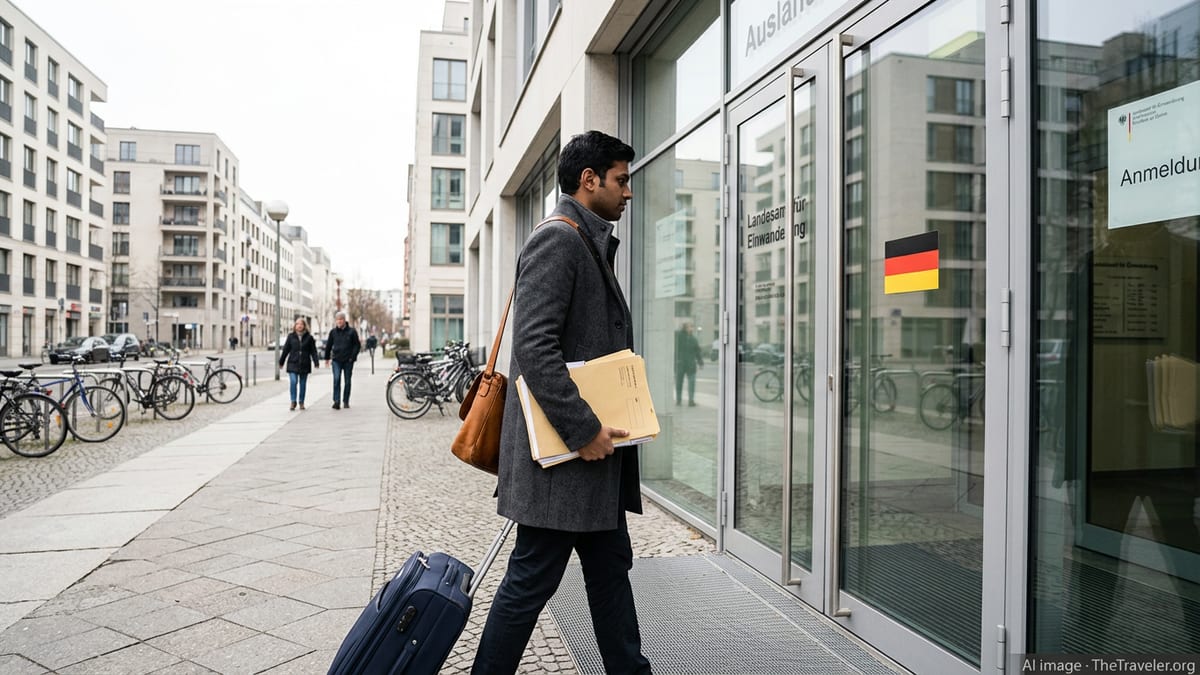
Core Legal Concepts: Entry, Stay and Residence Status
Moving to Germany legally requires separating three linked but distinct concepts: lawful entry to the Schengen Area, lawful short term stay, and lawful long term residence. Entry and short term stay are typically governed by Schengen rules and national visa categories, while long term residence is governed by Germany’s Residence Act and related regulations. A foreigner can enter lawfully but become irregular if the permitted stay is exceeded without a residence title extension or change of status.
Germany distinguishes between visa free entry for certain nationalities, national visas issued abroad, and residence permits issued by local immigration offices inside the country. For most non EU nationals, a long term stay begins with a national long stay visa issued by a German mission abroad, which is then converted into a residence permit after arrival. EU and EEA citizens generally have free movement rights, but still must comply with registration and, in some cases, documentation of sufficient resources.
Legal residence in Germany is normally evidenced by a plastic residence card or an electronic residence permit sticker in the passport, indicating the legal basis of stay, validity dates and conditions such as permitted type of employment. Many later rights, including family reunification and permanent residence, depend on continuous lawful residence, so preserving this status without gaps is a central requirement for a legal move.
For decision making purposes, relocating to Germany within the legal framework therefore means: entering on the correct visa or right of free movement, securing an appropriate residence title for the intended activity, and maintaining compliance with all time limits and reporting duties.
Main Legal Pathways for Moving to Germany
Germany’s migration system is built around a set of defined legal pathways tailored to different purposes of stay. For non EU foreigners, the dominant channels for a legal move are skilled employment, vocational training, higher education, family reunification and, more recently, points based job searching under the Opportunity Card. Each of these is anchored in specific provisions of the Residence Act or related legislation.
Skilled worker migration has been expanded through the Skilled Immigration Act and its subsequent reforms, which relax qualification recognition and open more occupations to third country nationals. Skilled workers typically receive a residence permit tied to their qualified employment or an EU Blue Card, with salary and qualification thresholds that are periodically adjusted. Job seeker and Opportunity Card routes allow entry for a limited time to search for qualified work, subject to proof of qualifications and sufficient funds, usually calibrated around a reference monthly subsistence level slightly above 1,000 euros.
Education based migration includes residence titles for university studies, preparatory language courses linked to later studies, and vocational training in shortage occupations. These permits allow limited work and can create a bridge to longer term residence if the holder transitions into qualified employment after graduation or completion of training. Family reunification routes allow spouses, minor children and, in narrower circumstances, parents to join legally resident foreigners or German citizens, provided housing and subsistence requirements are met.
The table below summarizes the main categories typically used by foreigners planning a legal move with a long term perspective:
| Purpose of stay | Typical initial legal instrument | Long term potential |
|---|---|---|
| Qualified employment | Skilled worker permit or EU Blue Card | Pathway to permanent residence after several years |
| Higher education | Student residence permit | Job seeking permit after graduation, then skilled worker status |
| Vocational training | Training residence permit | Skilled worker status after qualification |
| Job search / Opportunity Card | Points based residence for job seeking | Leads to skilled worker status if employment secured |
| Family reunification | Family reunion residence permit | Long term residence aligned with sponsor’s status |
Choosing the correct pathway is critical, because German authorities usually expect the residence title to match the main purpose of stay. Using a status for purposes it does not allow, such as working beyond the permitted scope, can jeopardize later applications for renewal or permanent residence.
Entry, Visas and Status Change: Legal Sequencing
A legal move to Germany is not a single act but a sequence of steps, most of which must occur abroad before travel. For many non EU nationals, the lawful process starts with securing a national long stay visa from a German embassy or consulate corresponding to the chosen pathway, for example employment, study or family reunification. This visa typically authorizes entry and initial residence for up to 90 days or more, within which the applicant must register their address and apply for a residence permit at the local immigration office in Germany.
Visa required nationals are usually expected to obtain the correct long stay visa before entering Germany. Attempting to arrive on a short stay Schengen visa or visa free and then convert to long term residence is often either prohibited or only allowed in narrowly defined circumstances. The immigration authorities examine whether the declared purpose at visa issuance matches the later residence application, and inconsistencies can be treated as misuse or misrepresentation.
Once in Germany, the foreign resident must attend appointments with the local immigration authority to receive or renew their residence card. Processing times can extend to several weeks, so it is standard practice to submit extension applications some months before expiry. If an extension is filed on time, German law generally protects the applicant’s continued legal stay while the decision is pending, often with a temporary certificate. Failure to apply in time risks falling into unauthorized stay, which can lead to fines, a shortened extension or, in serious cases, removal measures.
Changes of purpose, such as shifting from studies to employment, are possible but regulated. Authorities assess whether the new purpose is consistent with the law and whether transition conditions are met, such as minimum salary levels for graduate employment or completion of studies. Applicants planning to change status should consider the timing and may need to maintain their original lawful purpose until the new permit is granted.
Mandatory Address Registration and Local Compliance Duties
Germany links lawful residence not only to immigration status but also to mandatory registration with local authorities. Anyone moving to or within Germany must typically register their residential address with the local registration office within 14 days of moving into a dwelling. This duty applies regardless of nationality or type of residence permit and is anchored in the Federal Registration Act.
Registration generates a confirmation document which is required for multiple elements of a legal move, including obtaining a tax identification number, opening a bank account, concluding many contracts and applying for residence permit extensions. Failure to register on time can lead to administrative fines that commonly range from low double digit amounts up to around 1,000 euros in serious or repeated cases, and may complicate interaction with immigration authorities, even if it does not immediately invalidate immigration status.
The registration requirement also applies when moving within Germany. Each time a resident moves to a new primary dwelling, a new registration must be filed within roughly two weeks, and the previous address is normally deregistered automatically. Short term stays below three or six months in certain temporary accommodations may be exempt, but thresholds and practice can vary by municipality, so foreigners planning frequent moves should clarify local expectations in advance.
In addition to registration, legal movers must comply with obligations such as maintaining required health insurance, informing authorities about changes in marital status or employer when these are conditions of the residence permit, and cooperating in document verification. Non compliance usually results in warnings or requests to remedy but can ultimately affect residence renewals if authorities see a pattern of disregard for rules.
Maintaining Lawful Residence and Avoiding Irregularity
Once in Germany, the priority for a foreigner is to maintain uninterrupted lawful residence. The residence permit will specify validity dates and may include conditions such as limits on employment type, requirement to work for a specific employer, or minimum hours of study. Legal residence ends if the permit expires without renewal, is revoked, or in some cases if the holder leaves Germany for an extended period, often six months, without explicit permission.
Exceeding the permitted stay without a pending extension or new permit constitutes irregular residence. This can trigger fines, formal orders to leave the country, and in some circumstances entry bans. Even short periods of irregularity can be recorded in immigration files and may later weaken applications for permanent residence or citizenship, both of which typically require a clean record of lawful stay.
Gaps in employment or studies do not automatically end residence, but may breach permit conditions. For example, a residence title tied to specific employment may become vulnerable if the employment ends and the foreigner does not quickly secure new work and apply for a corresponding permit. Some categories allow defined periods to look for new employment, which can preserve lawful stay if managed correctly.
Foreigners must also avoid working without authorization or beyond the limits of their permit. Unauthorized employment is a significant violation in German migration law and can lead to penalties both for the employee and employer, including fines and obstacles to permit renewal. Clear understanding of what the current residence title allows, and prompt consultation with the immigration office when circumstances change, are therefore central to legally sustainable relocation.
Pathways to Permanent Residence and Long Term Security
Many foreigners evaluating whether a legal move to Germany is attractive focus on long term prospects. Germany offers several forms of permanent residence, commonly called settlement permits, which provide unlimited residence and broad labor market access. In standard scenarios, non EU nationals can apply for permanent residence after approximately five years of lawful residence, provided they meet conditions such as secure livelihood without reliance on public assistance, sufficient German language skills usually around level B1, and basic knowledge of the legal and social order.
Certain groups benefit from accelerated routes. Skilled workers holding specific employment based permits or an EU Blue Card can in some cases qualify after about two to four years of qualified employment and social security contributions, particularly if they have completed an integration course or reached higher language levels. Recognized refugees and some humanitarian status holders may access permanent residence after roughly five to six years under tailored rules, often with slightly adjusted language expectations.
Parallel to permanent residence, naturalization law reforms now allow most foreigners to apply for German citizenship after around five years of continuous lawful residence, with shorter periods for those demonstrating exceptional integration such as very high language proficiency and civic engagement. Citizenship is subject to additional scrutiny, including a naturalization test and clean criminal record, and generally presupposes that the applicant already has a stable long term residence status.
When planning a move, it is therefore useful to treat Germany not only as a destination for short term work or study but as a jurisdiction where legal frameworks exist for building permanent status. However, access to these statuses is conditional and performance dependent, so prospective movers should realistically assess whether they can meet language, employment and compliance expectations over a multi year horizon.
The Legal Consequences of Non Compliance
Germany’s migration regime combines opportunities for legal settlement with clear sanctions for non compliance. Administrative consequences can include rejection of permit applications, shortened validity periods, additional documentation demands and fines. More serious breaches such as repeated unauthorized work, significant misrepresentation in applications or persistent failure to meet obligations despite warnings can trigger revocation of permits, formal orders to leave and entry bans.
In practice, authorities often differentiate between minor procedural delays and intentional evasion. For example, registering a new address a few days late will typically lead, at most, to a modest fine, while living and working for extended periods without any registration and outside the scope of a permit is more likely to result in stronger measures. Keeping documentary evidence of attempts to comply, such as registration appointments made within deadlines, can be important in borderline cases.
Foreigners who become irregular but wish to regularize their stay face a more complex environment. While some humanitarian provisions allow for later residence permits in exceptional cases where removal would cause disproportionate hardship, these are strictly interpreted and usually not a viable strategy for planned relocation. For most movers, the realistic approach is to avoid irregularity entirely rather than relying on discretionary relief.
Because immigration and registration data are increasingly integrated with tax, social security and labor inspection systems, sustained non compliance is more likely to be detected over time. This reinforces the importance of viewing legal obligations as integral elements of any relocation plan rather than administrative afterthoughts.
The Takeaway
Planning a legal move to Germany requires more than securing a job offer or university admission. It involves mapping out a full compliance chain from visa issuance through arrival, address registration, residence permit issuance and long term status development. Germany offers multiple structured pathways for foreign skilled workers, students, trainees and family members, supported by clear legal frameworks and, in many cases, realistic prospects for permanent residence and eventually citizenship.
At the same time, the system is unforgiving of prolonged gaps, unauthorized activities or failure to observe core duties such as timely registration, permit renewal and accurate disclosure. Prospective movers who approach Germany’s migration regime as a rules based system to be understood and followed, rather than as a set of obstacles to be worked around, are more likely to achieve stable, long term legal residence.
Foreigners evaluating Germany as a destination should therefore assess three aspects in parallel: eligibility for a suitable initial pathway, capacity to comply with registration and documentation requirements, and the medium term feasibility of meeting language and integration expectations for permanent status. Taken together, these elements determine whether a move to Germany can be not only legal at the point of entry, but legally sustainable over time.
FAQ
Q1. Can I move to Germany on a tourist stay and apply for long term residence after arrival?
For most non EU nationals this is not permitted. The general rule is to apply for the correct long stay visa for work, study or family reunification from abroad before entering Germany.
Q2. How long can I stay in Germany legally without a residence permit?
Visa free or Schengen visa stays usually allow up to 90 days in any 180 day period for tourism or business, but they do not authorize long term residence or regular employment.
Q3. Is address registration (Anmeldung) mandatory for foreigners?
Yes. Anyone living in Germany, including foreigners, is normally required to register their main residential address with the local registration office within about 14 days of moving in.
Q4. What happens if I miss the registration deadline?
Late registration can lead to administrative fines and complications with banking, employment and residence permit procedures, although authorities often focus on whether the delay was intentional and prolonged.
Q5. Can I work in Germany while holding a student or job seeker permit?
Some permits allow limited work, often capped by days or hours per year. Working beyond the permitted scope is considered unauthorized employment and can harm future immigration applications.
Q6. How soon can a legal move lead to permanent residence?
In typical cases permanent residence becomes an option after around five years of lawful residence, while some skilled workers and other categories may qualify earlier under specific conditions.
Q7. Does changing employers affect my legal residence?
It can. Many employment based permits are tied to a specific role or sector, so changing employers may require prior approval or a new permit to keep residence fully compliant.
Q8. Can overstaying by a few days cause serious problems?
Even short overstays are legally problematic and can be recorded, but authorities assess context. Repeated or longer overstays increase the risk of fines, exit orders and difficulty obtaining future permits.
Q9. Are EU citizens subject to the same rules as non EU nationals?
EU and EEA citizens benefit from free movement and do not need residence permits for work, but they must still register their address and may need to show sufficient resources in certain circumstances.
Q10. Is it possible to legalize an irregular stay later through regularization programs?
Germany has limited and highly specific humanitarian provisions. For planned relocation, relying on later regularization is unrealistic; the practical route is to maintain lawful status from the beginning.